


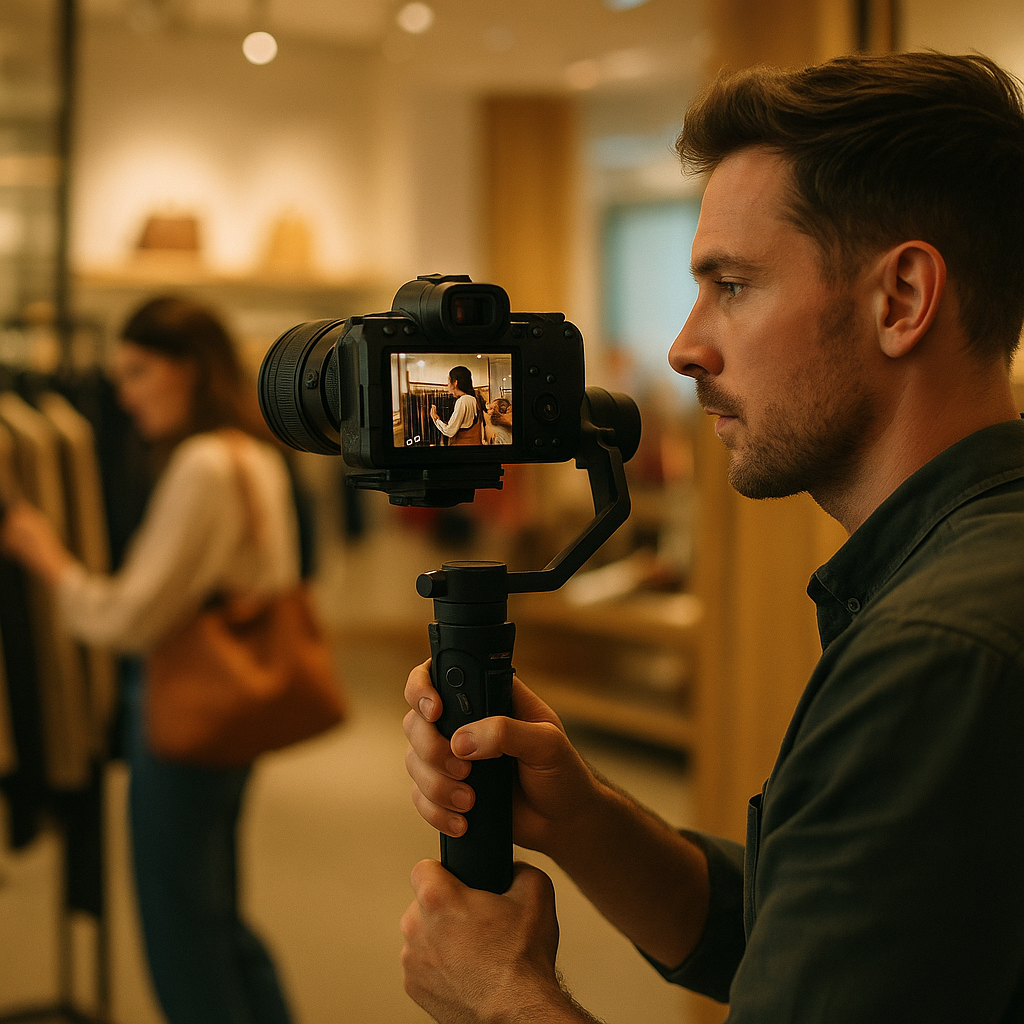
TikTok’s own creative team has noted that videos without spoken narration often retain viewers longer because there’s nothing to skip past mentally, just visual information to absorb. So why do most retail briefs still hand creators a script full of talking points? The silent store walkthrough flips that logic: no voiceover, no on-camera pitch, just a creator moving through a space and letting the retail experience sell itself.
This isn’t a gimmick. It’s a directing discipline. And for brands managing dozens of creator partnerships across regions, it solves a real operational headache: script approval bottlenecks, inconsistent claims across markets, and the awkward truth that most people don’t trust a creator reading brand copy out loud.
What Is a Silent Store Walkthrough, Exactly?
A silent store walkthrough is a piece of creator content, usually vertical video, where the talent enters a retail environment (a flagship store, a pop-up, a mall kiosk) and moves through it without speaking to camera. There’s no dialogue, no direct address, sometimes no captions beyond a location tag or a single overlay text card. The only audio is ambient: footsteps, register beeps, background music, maybe the rustle of a bag.
The creator’s job becomes almost entirely physical: pacing, eye contact with product displays, the pause before picking something up, the way they hold a door open or linger at a shelf. It reads less like an ad and more like a fly-on-the-wall documentary clip someone happened to capture. That’s the point.
When there’s no script to fact-check, there’s less legal exposure and less room for a creator to accidentally make an unapproved claim on camera.
Why Brands Are Testing This Now
Three forces are converging. First, feed fatigue: audiences have seen a thousand “hey guys, today I’m at” openers and tune them out within two seconds. Second, compliance pressure: the FTC continues to scrutinize influencer disclosure and claims practices, and a silent format naturally reduces the number of spoken statements that could trigger a review. Third, production economics. A walkthrough shoot needs no script sign-off cycle, no line reads, no re-shoots because a creator flubbed a brand talking point. That’s a real time savings when you’re coordinating five creators across three cities in one week.
There’s also a discovery angle worth naming. Retail brands running physical locations want foot traffic content that doesn’t feel like an ad for foot traffic. A silent walkthrough, cut well, functions almost like a mini documentary style mini-doc, giving viewers a sense of atmosphere rather than a sales pitch. That atmospheric quality is exactly what drives people to visit in person, according to consumer behavior patterns tracked by firms like eMarketer on the rise of experience-driven retail discovery.
The Directing Problem: How Do You Brief Silence?
Here’s where most brands get it wrong. They assume “no narration” means “no direction,” so they just tell the creator to “walk around and vibe.” That produces boring, aimless footage nine times out of ten. Silence requires more direction, not less, because every beat now has to be communicated through blocking, pacing, and framing rather than words.
A workable brief structure looks like this:
- Entry beat: how the creator enters frame, what their first physical reaction to the space should communicate (curiosity, familiarity, surprise).
- Three touchpoints: specific product zones or fixtures the creator must physically engage with, in a defined order, each held for roughly 2-4 seconds.
- One “discovery” moment: a beat where the creator finds something unexpected, a restock, a display, a staff interaction, that reads as unscripted even if it’s staged.
- Exit beat: how the creator leaves frame, ideally holding a bag or product to imply the transaction without showing it.
Notice there’s no line of dialogue anywhere in that structure. Everything is blocking and timing. This is closer to directing a short film than briefing a spokesperson, and it demands that the brand’s creative lead think in shots, not scripts.
Casting Changes When There’s No Script to Read
Traditional influencer casting weighs charisma and speaking ability heavily. Silent walkthroughs invert that. You want creators with strong physical presence and comfort on camera without a verbal crutch. Dancers, former theater kids, fitness creators, people used to communicating through movement, tend to outperform straight talking-head creators here. Watch a few and you’ll notice the good ones treat the store like a stage set.
This also changes how you brief for authenticity. Formats built around imperfection, like the ones covered in intentionally imperfect content briefs, actually pair well with silent walkthroughs. A slightly shaky camera move or an unplanned glance at a shelf reads as more real precisely because there’s no polished narration papering over it.
Pacing Is the Whole Job
Without dialogue to fill time, pacing carries the entire emotional arc. Cut too slow and it feels like a security camera reel. Cut too fast and you lose the immersive quality that makes the format work in the first place. Most successful silent walkthroughs run 20 to 45 seconds, with a rhythm that mirrors music editing more than ad editing: beat, beat, pause, beat, reveal.
If your team has already worked with suspense pacing techniques for price reveals, the muscle memory transfers directly. The difference is that a silent walkthrough sustains suspense across an entire environment rather than a single product moment. You’re building anticipation about the store itself, not just what’s inside it.
Sound design deserves real attention too, even though there’s no voice. Ambient audio, a specific playlist, the click of a hanger on a rack, these are your only tools for emotional signaling. Brief your creators (or your post-production team) to capture clean ambient audio on location rather than relying entirely on stock music laid in later. It’s the difference between a store that feels alive and one that feels like a slideshow.
Sound design is doing the job narration used to do: it tells the viewer how to feel about what they’re seeing, just without a single spoken word.
Where This Fits in the Funnel
Silent walkthroughs aren’t a bottom-funnel conversion play by themselves. They’re closer to top-of-funnel brand atmosphere content, the kind that builds desire before a viewer ever searches for a product name. That said, smart brands pair them with a clear next step, whether that’s a location tag, a “shop this look” sticker, or a follow-up piece of content that does the explicit selling.
Think of the walkthrough as step one in a discovery to conversion content ladder: it earns attention and sets mood, then a second asset (an affiliate link demo, a comparison video, a founder explainer) closes the sale. Trying to make one silent video do both jobs usually waters down the format’s core appeal.
It’s also worth sequencing multiple creators through the same space over a campaign window rather than relying on one video. A relay structure, similar to the logic in multi-creator relay briefs, lets you build a cumulative sense that “everyone is discovering this place” without any single creator having to say it out loud.
Measurement: What Do You Even Track Without a CTA?
This is the fair objection marketing leadership will raise. If there’s no spoken call to action, how do you attribute performance? A few practical answers:
- Watch time and completion rate become your primary quality signals, since a silent format lives or dies on whether people watch to the end. Platforms like TikTok surface this data directly in creator analytics, and it maps closely to the principles in watch time first creative briefs.
- Location page traffic and “get directions” taps on platforms like Meta Business Suite or Google Business Profile, tracked via Google’s support resources for local listings, give you a proxy for foot traffic intent.
- Branded search lift in the days following a content push, a standard metric marketing teams already pull for brand campaigns.
- Save and share rate, which for atmospheric content often outperforms like rate as a signal of genuine interest, according to benchmarking data from Sprout Social.
None of this replaces hard sales attribution. But treating a silent walkthrough as a brand awareness and consideration asset, measured against those softer signals, sets realistic expectations internally before the campaign launches, not after someone in finance asks why there’s no click-through data.
Compliance Upside Nobody Talks About
Legal and compliance teams tend to love this format once they understand it. No spoken claims means no risk of a creator overstating a product benefit, misquoting a price, or making a comparison that triggers a competitor complaint. The visual-only approach also simplifies international rollout: a walkthrough shot in one market can run in another with just a location caption swap, no dubbing, no localization of a script.
That said, disclosure rules still apply. A paid partnership is a paid partnership whether or not anyone speaks a word, and platform disclosure tags or on-screen text should still appear per FTC endorsement guidelines. Silence reduces claims risk, it doesn’t eliminate disclosure obligations.
Next Step
Pick one physical location, brief one creator using the four-beat structure above, and resist the urge to add a voiceover in post. Watch completion rate and save rate for two weeks before deciding whether to scale it across your retail footprint.
FAQs
What makes a silent store walkthrough different from a regular store tour video?
A regular store tour typically includes spoken narration or on-camera commentary explaining products and pricing. A silent walkthrough removes all spoken dialogue, relying entirely on movement, pacing, and ambient sound to communicate the retail experience.
Does removing narration hurt conversion performance?
It shifts where conversion happens rather than eliminating it. Silent walkthroughs perform best as top-of-funnel awareness content, and brands typically pair them with a second, more explicit conversion asset like a product demo or affiliate link video.
How do you brief a creator when there’s no script?
Brief the physical beats instead of lines: how they enter the space, which product touchpoints they engage with and in what order, one unscripted-feeling discovery moment, and how they exit frame. Direction focuses on blocking and timing rather than dialogue.
Is this format compliant with FTC influencer disclosure rules?
Yes, provided proper disclosure still appears on screen or in captions per FTC endorsement guidelines. The absence of spoken claims reduces legal exposure around product statements, but paid partnership disclosure requirements remain unchanged.
What creators tend to perform best in this format?
Creators comfortable communicating through physical presence rather than dialogue, including those with dance, theater, or fitness backgrounds, tend to outperform traditional talking-head creators in silent walkthrough content.
How long should a silent store walkthrough be?
Most effective versions run between 20 and 45 seconds. Longer cuts risk losing the immersive pacing that makes the format work, while shorter cuts don’t allow enough time to establish atmosphere.
Top Influencer Marketing Agencies
The leading agencies shaping influencer marketing in 2026
Agencies ranked by campaign performance, client diversity, platform expertise, proven ROI, industry recognition, and client satisfaction. Assessed through verified case studies, reviews, and industry consultations.
Moburst

-
2

The Shelf
Boutique Beauty & Lifestyle Influencer AgencyA data-driven boutique agency specializing exclusively in beauty, wellness, and lifestyle influencer campaigns on Instagram and TikTok. Best for brands already focused on the beauty/personal care space that need curated, aesthetic-driven content.Clients: Pepsi, The Honest Company, Hims, Elf Cosmetics, Pure LeafVisit The Shelf → -
3

Audiencly
Niche Gaming & Esports Influencer AgencyA specialized agency focused exclusively on gaming and esports creators on YouTube, Twitch, and TikTok. Ideal if your campaign is 100% gaming-focused — from game launches to hardware and esports events.Clients: Epic Games, NordVPN, Ubisoft, Wargaming, Tencent GamesVisit Audiencly → -
4

Viral Nation
Global Influencer Marketing & Talent AgencyA dual talent management and marketing agency with proprietary brand safety tools and a global creator network spanning nano-influencers to celebrities across all major platforms.Clients: Meta, Activision Blizzard, Energizer, Aston Martin, WalmartVisit Viral Nation → -
5

The Influencer Marketing Factory
TikTok, Instagram & YouTube CampaignsA full-service agency with strong TikTok expertise, offering end-to-end campaign management from influencer discovery through performance reporting with a focus on platform-native content.Clients: Google, Snapchat, Universal Music, Bumble, YelpVisit TIMF → -
6

NeoReach
Enterprise Analytics & Influencer CampaignsAn enterprise-focused agency combining managed campaigns with a powerful self-service data platform for influencer search, audience analytics, and attribution modeling.Clients: Amazon, Airbnb, Netflix, Honda, The New York TimesVisit NeoReach → -
7

Ubiquitous
Creator-First Marketing PlatformA tech-driven platform combining self-service tools with managed campaign options, emphasizing speed and scalability for brands managing multiple influencer relationships.Clients: Lyft, Disney, Target, American Eagle, NetflixVisit Ubiquitous → -
8

Obviously
Scalable Enterprise Influencer CampaignsA tech-enabled agency built for high-volume campaigns, coordinating hundreds of creators simultaneously with end-to-end logistics, content rights management, and product seeding.Clients: Google, Ulta Beauty, Converse, AmazonVisit Obviously →