


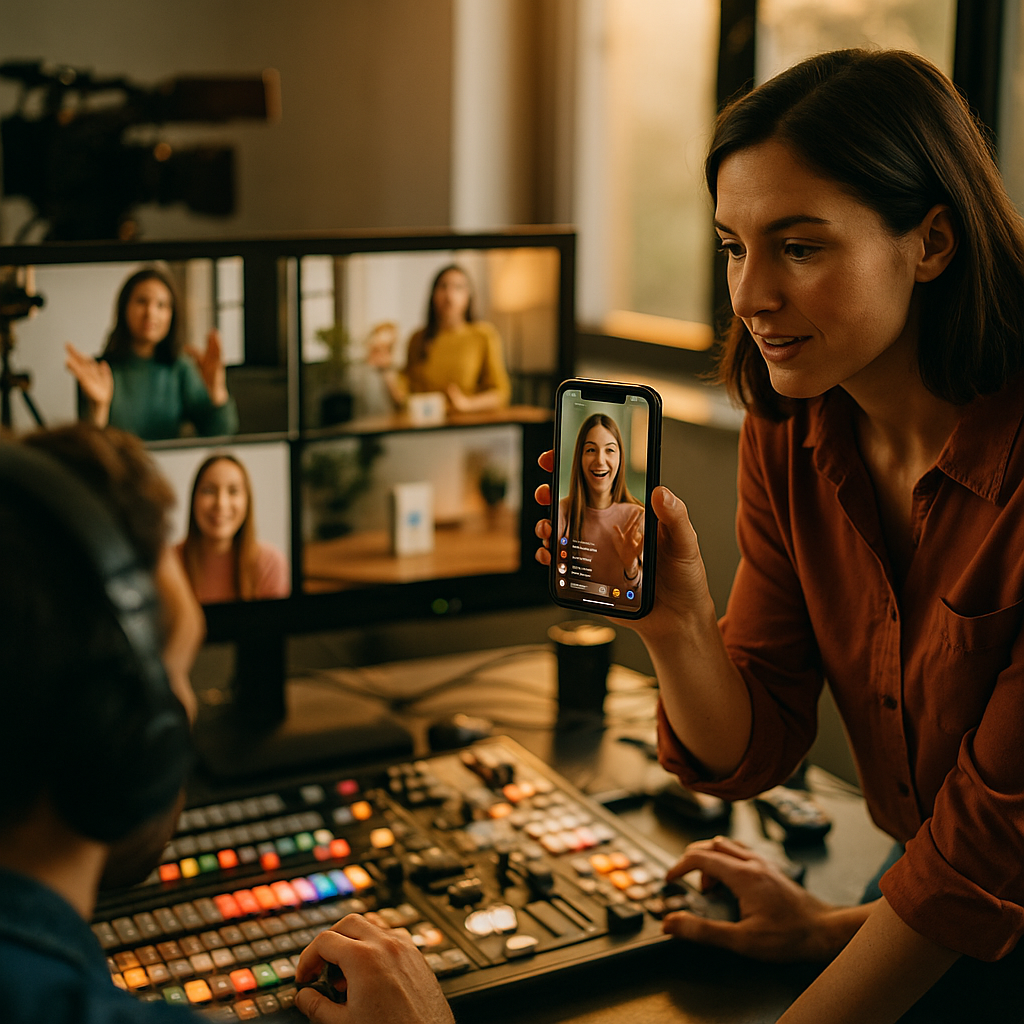
Snapflat pulled in over 40 million monthly viewers within its first year by making television feel like a feed. That number should make every brand strategist pause. Scripting brand moments for social-inspired TV formats like Snapflat is no longer a creative experiment, it’s becoming a core line item in upper-funnel media plans. The problem? Most brands are still writing TV spots and dropping them into a format that punishes anything that looks like a spot.
What Exactly Is a Social-Inspired TV Format?
Think vertical-first, episodic, algorithmically paced content that lives on connected TV but behaves like a social feed. Snapflat and its competitors (think Snap’s original shows reborn for CTV, or TikTok’s push into living-room screens) stitch together short segments, creator cameos, and swipeable overlays into something that watches like a show but scrolls like a timeline. Nielsen has reported rising CTV engagement among younger viewers who split attention between the big screen and a phone, and these formats are built specifically to capture that split attention rather than fight it.
The format matters because the viewing behavior is different. Nobody sits through a social-inspired TV episode the way they sat through a sitcom in 2005. They skip, they pause to screenshot, they jump episodes out of order. A brand moment that depends on sequential attention will simply get skipped.
Why Legacy TV Scripts Fail Here
Traditional commercial scripts assume a captive audience and a fixed 15 or 30 second block. Social-inspired formats assume the opposite: an audience that can leave at any second and a brand integration that has to earn its place inside the narrative, not interrupt it. This is the same shift we’ve covered in creator-run ad formats, just ported to a bigger screen with higher production stakes.
If a viewer can identify the exact moment the brand shows up, the integration has already failed. The goal is a moment that feels native to the story, not bolted onto it.
The Brand Integration Problem Nobody Talks About
Here’s the uncomfortable truth: most brand teams still approach these formats with a media-buying mindset. Pick a show, buy a slot, hand over a 15-second cut. That approach wastes the format entirely. Social-inspired TV shows are built around character arcs, running jokes, and creator personalities that viewers follow across episodes. A brand that parachutes in for one cutaway gets ignored the same way a banner ad gets ignored.
What works instead is scripting the brand into the show’s internal logic. That means treating the integration like a decision-led storytelling arc rather than a standalone ad unit. The product shows up because the character needs it to solve a problem the audience already cares about, not because a media plan called for a placement.
A Short Checklist Before You Script Anything
- Does the brand moment serve the plot, or does the plot bend around the brand?
- Can the integration survive being watched with the sound off (a huge share of CTV viewing still happens muted during the first few seconds)?
- Is there a clear, FTC-compliant disclosure path built into the script, not patched on in post?
- Does the moment work as a standalone clip if a viewer screenshots or shares it out of context?
Scripting Framework: Four Beats That Actually Hold Attention
Pulling from format patterns that have worked across Snapflat-style shows, a brand moment generally needs four beats to land without feeling like a commercial break.
- The setup beat. A character faces a small, relatable friction point. Not a crisis, just an annoyance the audience recognizes instantly.
- The discovery beat. The product or service enters organically, ideally through dialogue a creator would actually say, not a tagline a brand would write.
- The proof beat. This is where most scripts get lazy. Show the result, don’t narrate it. Social-inspired audiences trust what they see over what they’re told, the same instinct that powers product demo skits on shorter platforms.
- The exit beat. A quick button that lets the scene move on without lingering. Overstaying the brand moment is the single most common mistake in these scripts.
Four beats, usually delivered in under 20 seconds of actual screen time spread across a scene, not clustered. That pacing matters because Snapflat-style editing rewards rhythm over duration.
Writing Dialogue That Doesn’t Sound Like Copy
If your script department is writing lines a creator wouldn’t say in real life, the moment will read as paid before the disclosure tag even appears. Bring the creator or cast member into the scripting process early. This is the same lesson covered in scripting spontaneity without losing risk control: structure the beat, not the words. Let the talent say it in their own voice and build approval checkpoints around intent rather than exact phrasing.
Disclosure Still Applies, Even on the Big Screen
Brands sometimes assume that because a show airs on connected TV, it falls outside influencer disclosure norms. It doesn’t. The FTC’s endorsement guidelines apply regardless of screen size, and regulators have shown increasing interest in branded entertainment formats that blur the line between editorial and advertising. If a creator or character is endorsing a product on screen, that relationship needs a clear, legible disclosure, not a five-frame flash of text during a scene transition.
For UK-facing campaigns, the same caution applies under guidance from the Information Commissioner’s Office around data use in targeted or interactive placements, particularly when a format includes shoppable overlays tied to viewer profiles.
Build disclosure into the script, not the edit. Teams that treat it as a post-production patch tend to get it wrong, the same mistake we flagged in versus-format scripts built to pass FTC review. A line of dialogue like “thanks for sending this over” delivered naturally by the character, paired with an on-screen tag, clears the bar far better than a legal disclaimer wedged into the corner of the frame.
Measuring Moments That Don’t Have a Swipe-Up Button
This is where most brand teams get stuck. Connected TV doesn’t give you the same direct-response signals as a social feed. There’s no swipe-up, often no clickable overlay depending on the platform’s ad tech maturity. So how do you prove the brand moment worked?
Three measurement approaches tend to hold up:
- Lift studies tied to exposure. Compare brand awareness or search lift among households exposed to the episode versus a control group, similar to methodologies eMarketer has documented across CTV ad effectiveness studies.
- Social spillover tracking. If the brand moment is clip-worthy, it should generate organic re-shares on TikTok and Instagram. Track branded hashtag volume and screenshot-driven mentions in the 48 hours after an episode drops.
- QR and second-screen conversion. Many Snapflat-style formats now support an on-screen QR code during the exit beat. Scan rates are a blunt but honest signal of whether the moment actually held attention.
None of these replace hard click data. But together they give a directionally honest read on whether the scripted moment earned attention or just occupied screen time.
A brand moment that doesn’t generate any organic clip activity within 48 hours probably wasn’t written tightly enough. Clip-worthiness is the fastest proxy for whether the script actually worked.
Budgeting and Production Realities
These integrations cost more than a standard influencer post because they require coordination with a show’s writers’ room, continuity team, and legal review, not just a single creator and a brief. Expect production timelines that run four to eight weeks longer than a typical social campaign. Brands used to the speed of standard social content cycles often underestimate this, and the format punishes rushed integrations with clunky pacing that audiences notice immediately.
Smaller budgets can still participate through recurring cameo slots rather than one-off integrations. A recurring prop or background product across multiple episodes often outperforms a single heavily scripted moment, largely because it starts to feel like part of the show’s world instead of a sponsored interruption. This mirrors the logic behind life-stage storytelling formats, where repetition across a narrative arc builds familiarity that a single hit can’t match.
Where This Goes Next
Social-inspired TV formats are still young, and the brands getting this right right now are writing the playbook the rest of the industry will copy in two years. Platforms like Meta and TikTok are both investing in CTV extensions of their short-form ecosystems, which means the audience crossover between feed and screen will only deepen. Brands that treat this as a scripting discipline, not a media buy, will own the attention this format generates.
Next step: before your next Snapflat-style pitch, run the four-beat framework against your current script and cut anything that plays like a commercial. If it can’t survive being screenshotted out of context, it’s not ready for air.
FAQs
What makes a social-inspired TV format different from a standard streaming ad slot?
Social-inspired formats like Snapflat use feed-style pacing, vertical video, and creator-driven narratives instead of fixed commercial breaks, so brand moments have to be written into the story rather than inserted between scenes.
Do FTC disclosure rules apply to branded moments inside TV shows?
Yes. Any paid endorsement or brand partnership shown on screen needs a clear disclosure regardless of whether it airs on social media, connected TV, or a hybrid format.
How long should a scripted brand moment run in these formats?
Most effective integrations run under 20 seconds of actual screen time, spread across a scene using a setup, discovery, proof, and exit structure rather than one continuous block.
How do brands measure ROI without clickable overlays?
Teams typically combine exposure-based lift studies, organic social spillover tracking, and QR scan rates from the exit beat to gauge whether a brand moment actually held attention.
Is this format only viable for large budgets?
No. Smaller brands can use recurring cameo placements across multiple episodes instead of a single heavily produced integration, which often performs better because it feels native to the show’s world.
Top Influencer Marketing Agencies
The leading agencies shaping influencer marketing in 2026
Agencies ranked by campaign performance, client diversity, platform expertise, proven ROI, industry recognition, and client satisfaction. Assessed through verified case studies, reviews, and industry consultations.
Moburst

-
2

The Shelf
Boutique Beauty & Lifestyle Influencer AgencyA data-driven boutique agency specializing exclusively in beauty, wellness, and lifestyle influencer campaigns on Instagram and TikTok. Best for brands already focused on the beauty/personal care space that need curated, aesthetic-driven content.Clients: Pepsi, The Honest Company, Hims, Elf Cosmetics, Pure LeafVisit The Shelf → -
3

Audiencly
Niche Gaming & Esports Influencer AgencyA specialized agency focused exclusively on gaming and esports creators on YouTube, Twitch, and TikTok. Ideal if your campaign is 100% gaming-focused — from game launches to hardware and esports events.Clients: Epic Games, NordVPN, Ubisoft, Wargaming, Tencent GamesVisit Audiencly → -
4

Viral Nation
Global Influencer Marketing & Talent AgencyA dual talent management and marketing agency with proprietary brand safety tools and a global creator network spanning nano-influencers to celebrities across all major platforms.Clients: Meta, Activision Blizzard, Energizer, Aston Martin, WalmartVisit Viral Nation → -
5

The Influencer Marketing Factory
TikTok, Instagram & YouTube CampaignsA full-service agency with strong TikTok expertise, offering end-to-end campaign management from influencer discovery through performance reporting with a focus on platform-native content.Clients: Google, Snapchat, Universal Music, Bumble, YelpVisit TIMF → -
6

NeoReach
Enterprise Analytics & Influencer CampaignsAn enterprise-focused agency combining managed campaigns with a powerful self-service data platform for influencer search, audience analytics, and attribution modeling.Clients: Amazon, Airbnb, Netflix, Honda, The New York TimesVisit NeoReach → -
7

Ubiquitous
Creator-First Marketing PlatformA tech-driven platform combining self-service tools with managed campaign options, emphasizing speed and scalability for brands managing multiple influencer relationships.Clients: Lyft, Disney, Target, American Eagle, NetflixVisit Ubiquitous → -
8

Obviously
Scalable Enterprise Influencer CampaignsA tech-enabled agency built for high-volume campaigns, coordinating hundreds of creators simultaneously with end-to-end logistics, content rights management, and product seeding.Clients: Google, Ulta Beauty, Converse, AmazonVisit Obviously →