


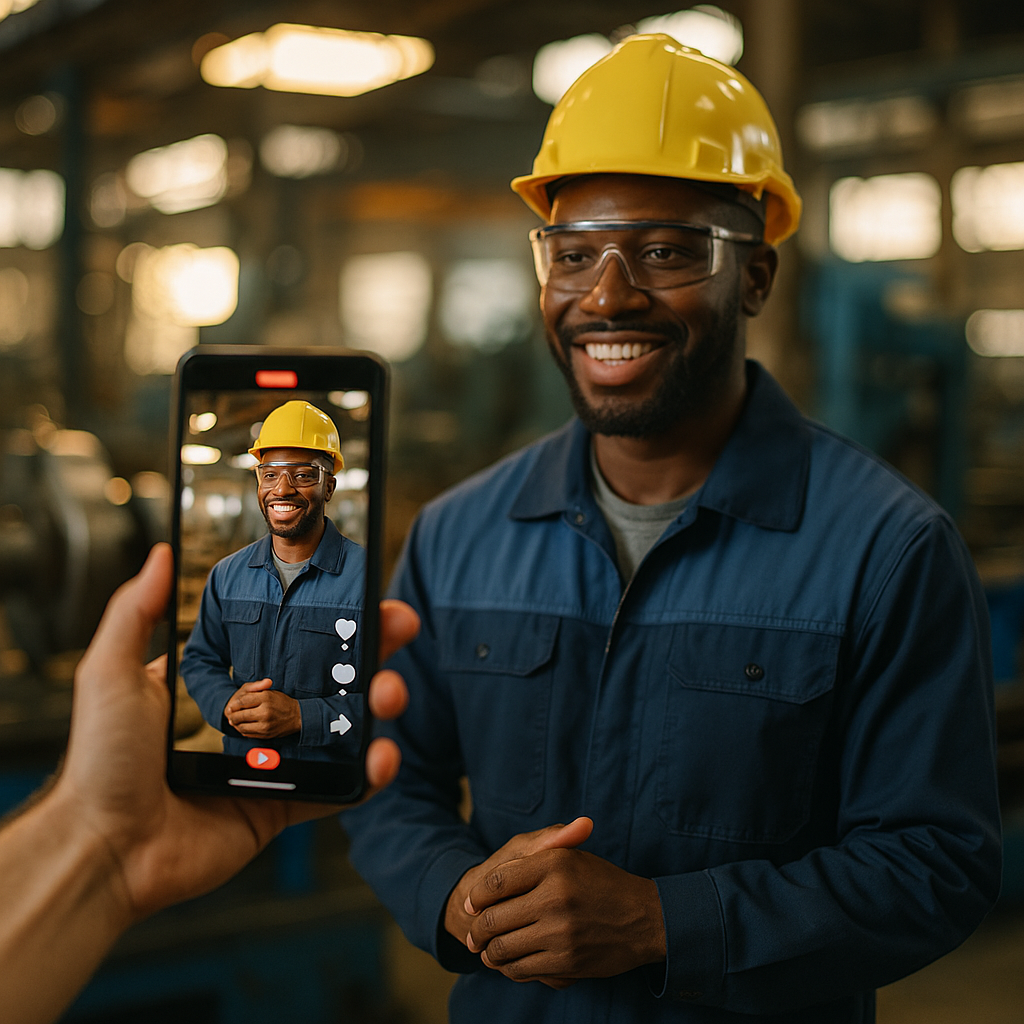
In 2026, hiring pressure remains intense for industrial employers competing against tech firms, logistics giants, and local labor shortages. This case study on social video recruitment shows how one traditional manufacturer changed perception, expanded reach, and improved applicant quality without abandoning its heritage. The lesson is practical, measurable, and highly repeatable for talent leaders ready to rethink visibility.
Why social video recruitment mattered for a legacy manufacturer
A mid-sized manufacturer in the industrial equipment sector faced a familiar problem: strong products, steady demand, and a weak employer brand outside its local market. The company had operated successfully for decades, but its hiring strategy still depended on job boards, staffing partners, and a basic careers page. That approach produced applicants, but not enough qualified ones. Hard-to-fill roles in maintenance, CNC machining, engineering, quality assurance, and shift supervision stayed open too long.
Leadership initially assumed compensation was the main barrier. Internal review showed a more complex reality. Candidate surveys, recruiter interviews, and social listening revealed three perception gaps:
- Many job seekers believed manufacturing work was outdated, repetitive, and disconnected from technology.
- Students and early-career workers had little awareness of modern plant environments, training paths, or advancement opportunities.
- Experienced tradespeople did not trust generic recruitment messaging that lacked proof of culture, safety, and stability.
The company needed to show, not tell. Social video offered that advantage. Short-form and mid-length videos could demonstrate automation, employee expertise, clean facilities, team dynamics, and community impact faster than written job descriptions ever could. Video also matched how candidates discovered employers in 2026: through mobile feeds, peer-shared content, and platform-native search.
From an EEAT perspective, the brand had to establish real-world experience and trustworthiness. That meant using actual employees, actual sites, and transparent answers to common hiring concerns. Rather than produce polished corporate ads, the team built a content strategy around authentic proof.
The employer branding strategy behind the campaign
The manufacturer did not begin by filming randomly. It started with a practical employer branding framework tied directly to hiring outcomes. HR, operations, plant leaders, and marketing aligned on three business goals:
- Increase qualified applications for skilled roles.
- Reduce time spent educating candidates during early screening.
- Improve offer acceptance by strengthening trust before interviews.
Next, the team identified audience segments. This step mattered because a single “we’re hiring” message would not resonate equally with all talent pools. The company prioritized:
- Skilled technicians with 3-10 years of experience
- Recent graduates from technical schools and community colleges
- Industrial engineers and quality specialists
- Passive candidates within commuting distance of the plant
Each audience had distinct concerns. Skilled technicians wanted reliable schedules, modern equipment, safe conditions, and competitive overtime policies. Students wanted training, mentorship, and clear advancement. Engineers cared about process improvement, technology stack, and leadership access. Passive candidates wanted a reason to switch employers without unnecessary risk.
The messaging pillars followed naturally:
- Modern manufacturing: robotics, data systems, precision tooling, and continuous improvement
- Career mobility: upskilling, apprenticeships, certifications, and internal promotion
- People and culture: team pride, supervisor support, and cross-functional collaboration
- Stability with purpose: long-term demand, essential products, and local economic impact
The company also created a content governance process. Every video needed a hiring objective, target role family, and measurable CTA. Plant managers reviewed technical accuracy. HR reviewed compliance, pay transparency rules where applicable, and candidate experience alignment. This prevented the common failure of employer brand content that looks attractive but creates mismatched expectations.
How short-form video content changed candidate perception
The strongest shift came from short-form video content distributed across LinkedIn, Instagram, TikTok, YouTube Shorts, and the careers site. The manufacturer committed to a steady publishing rhythm instead of a one-time brand film. That consistency trained the algorithm and the audience at the same time.
The content mix included six repeatable formats:
- Day-in-the-life clips: machinists, maintenance techs, engineers, and team leads walking through real tasks
- Myth-busting videos: “Is manufacturing dirty?” “Do you need a four-year degree?” “What does advancement look like here?”
- Facility walkthroughs: showing safety standards, automation, and workstations
- Employee Q&As: short answers about scheduling, onboarding, benefits, and culture
- Manager explainers: what hiring teams actually look for in interviews
- Training spotlights: apprenticeships, tuition support, certifications, and mentorship stories
Several execution choices improved performance. First, the first three seconds always showed a person, machine, or motion. Static title cards underperformed. Second, on-screen text carried key points because many viewers watched without sound. Third, videos avoided scripted corporate language. Employees spoke plainly about what they liked, what was challenging, and why they stayed.
This honesty mattered. Candidates are skilled at spotting overproduced messaging. By acknowledging realities such as shift work, quality standards, and physical expectations, the manufacturer increased trust. That trust translated into better-fit applicants.
The team also repurposed content intelligently. A 45-second technician interview became a vertical short, a careers-page embed, a recruiter follow-up asset, and a campus recruiting clip. This extended shelf life lowered production cost per asset and ensured message consistency across the funnel.
Most importantly, content answered likely follow-up questions before candidates asked them. What will I actually do? Who will I work with? Is the facility modern? Is there growth? Can I belong here if I am new to the industry? Strong recruitment video content reduces uncertainty. In hiring, reduced uncertainty often drives action.
Talent acquisition metrics that proved the approach worked
The campaign ran in phases, with baseline measurement established before launch. The company tracked platform analytics, careers-site behavior, pipeline conversion, and recruiter feedback rather than vanity engagement alone. That gave leaders evidence they could trust.
Within months, the manufacturer saw improvements across the hiring funnel:
- Higher video completion rates on role-specific clips than on generic company videos
- More traffic to the careers site from social platforms, especially mobile traffic
- Longer time on page for job postings embedded with employee video
- More applications from candidates who met minimum qualifications
- Higher interview show-up rates because candidates better understood the roles
- Improved offer acceptance in targeted departments
Recruiters reported an operational benefit as well: early conversations became more productive. Candidates arrived with fewer misconceptions and more informed questions. Instead of spending the first screening call correcting assumptions, recruiters could focus on fit, experience, and timeline.
The company attributed success to three metric disciplines:
- Segmenting by role type: technician videos were not judged by the same benchmarks as engineering content.
- Connecting content to outcomes: every post mapped to careers clicks, starts, completed applications, or interview actions.
- Using qualitative signals: recruiter notes, candidate comments, and manager feedback were reviewed alongside quantitative data.
Leadership initially wanted a single ROI number. The talent team pushed for a broader view. That was the right call. Hiring impact is rarely linear. A video may not generate an immediate application, but it can improve brand recall, increase referral confidence, or strengthen conversion later in the process. In this case, the evidence showed that social video was not just a top-of-funnel awareness tool. It influenced candidate quality and decision confidence all the way through offers.
What employee generated video taught the hiring team
The most effective content did not come from the marketing department alone. It came from employee generated video supported by clear guidance. Once workers began filming short clips, answering prompts, and sharing their routines, engagement and credibility improved.
That does not mean the company handed out phones and hoped for the best. It built a lightweight system:
- A simple consent and review process
- Prompt sheets with common questions candidates ask
- Basic filming guidance on lighting, framing, and safety
- A content calendar tied to priority openings
- Recognition for employees who participated regularly
This approach unlocked two advantages. First, the company captured voices from across shifts, tenure levels, and departments. That diversity widened candidate identification. A prospect could see someone who looked like them, had a similar background, or had advanced from an entry-level role. Second, it increased internal alignment. Employees began seeing recruitment as part of company growth, not just an HR task.
Some lessons were unexpected. Videos featuring supervisors discussing coaching style performed better than videos about perks alone. New hires explaining why they joined often resonated more than long-tenured veterans because their decision process felt current. Safety content, when practical and specific, increased confidence rather than making the workplace seem risky.
The hiring team also learned what not to do:
- Do not over-edit authentic footage until it feels artificial.
- Do not publish culture claims that the interview process cannot support.
- Do not rely on one viral post; build a library of useful content.
- Do not ignore comments and messages from candidates on social platforms.
These lessons reflect EEAT in action. Experience comes from real employees. Expertise comes from showing actual processes. Authoritativeness comes from consistency and clarity. Trust comes from transparency. That combination is especially important for manufacturers, where employer reputation often lags operational reality.
Recruitment marketing lessons other manufacturers can apply
This case study is not limited to one company. Other manufacturers can adapt the model without enterprise budgets. The key is operational discipline, not excessive production spend.
Here is a practical playbook:
- Audit candidate perception. Interview recruiters, recent hires, declined candidates, and local school partners. Find the belief gaps holding back applications.
- Prioritize a few critical roles. Start with jobs that are costly to leave open. Build role-specific content before expanding.
- Feature real work. Show machinery, collaboration, training, and problem-solving. Candidates need evidence.
- Answer objections directly. Discuss schedules, safety, growth, onboarding, and qualifications in plain language.
- Build for mobile first. Use vertical framing, captions, strong openings, and clear CTAs.
- Measure beyond views. Track qualified applies, interview rates, source quality, and offer acceptance.
- Refresh continuously. Facilities change, leaders change, and candidate expectations change. Your content should keep pace.
Manufacturers often ask whether social video is only useful for younger candidates. The answer is no. Different platforms and formats reach different audiences, but video as a medium works broadly because it reduces ambiguity. Experienced professionals value direct evidence too.
Another common question is whether authenticity lowers brand quality. In recruitment, authenticity usually improves brand quality when paired with thoughtful editing and accurate positioning. Candidates do not need a cinematic impression. They need confidence that what they see matches what they will experience.
The final takeaway from this manufacturer’s success is simple: if the market misunderstands your workplace, publish proof. Social video gave a traditional company a modern voice without forcing it to abandon its identity. That balance is what made the strategy durable.
FAQs about social video hiring for manufacturers
What is social video recruitment?
Social video recruitment is the use of video content on social platforms and career channels to attract, inform, and convert job candidates. It often includes employee stories, facility tours, manager explainers, and role previews.
Why does social video work well for manufacturing hiring?
Manufacturing suffers from outdated perceptions. Video lets employers show modern equipment, clean facilities, safety practices, teamwork, and career paths in a fast, credible format.
Which platforms are best for recruiting industrial talent in 2026?
LinkedIn remains important for professional and technical roles. Instagram, TikTok, and YouTube Shorts are effective for awareness, early-career recruiting, and mobile-first discovery. The best mix depends on the role and local labor market.
Do employers need expensive production to succeed?
No. Clear, authentic, well-structured videos often outperform highly polished content. Good lighting, understandable audio, captions, and relevant subject matter matter more than studio-level production.
What types of videos drive the best hiring results?
Role-specific day-in-the-life clips, employee Q&As, manager expectations, training explainers, and facility walkthroughs usually perform well because they answer candidate questions directly.
How should a manufacturer measure success?
Track qualified applications, careers-page engagement, interview show-up rates, source-to-hire quality, time to fill, and offer acceptance. Engagement metrics alone do not show hiring impact.
Can employee generated content create legal or brand risks?
Yes, if unmanaged. Use a review process, filming guidelines, safety rules, and consent procedures. Keep messages accurate and consistent with the real candidate experience.
How often should manufacturers post recruitment videos?
Consistency matters more than volume. A realistic schedule, such as weekly or biweekly posting tied to hiring priorities, usually works better than occasional bursts followed by silence.
The clearest lesson from this case study is that traditional manufacturers do not need to become trendy to compete for talent. They need to become visible, credible, and specific. Social video works because it closes the gap between perception and reality. When candidates can see the work, the people, and the opportunity, better hiring decisions follow.