


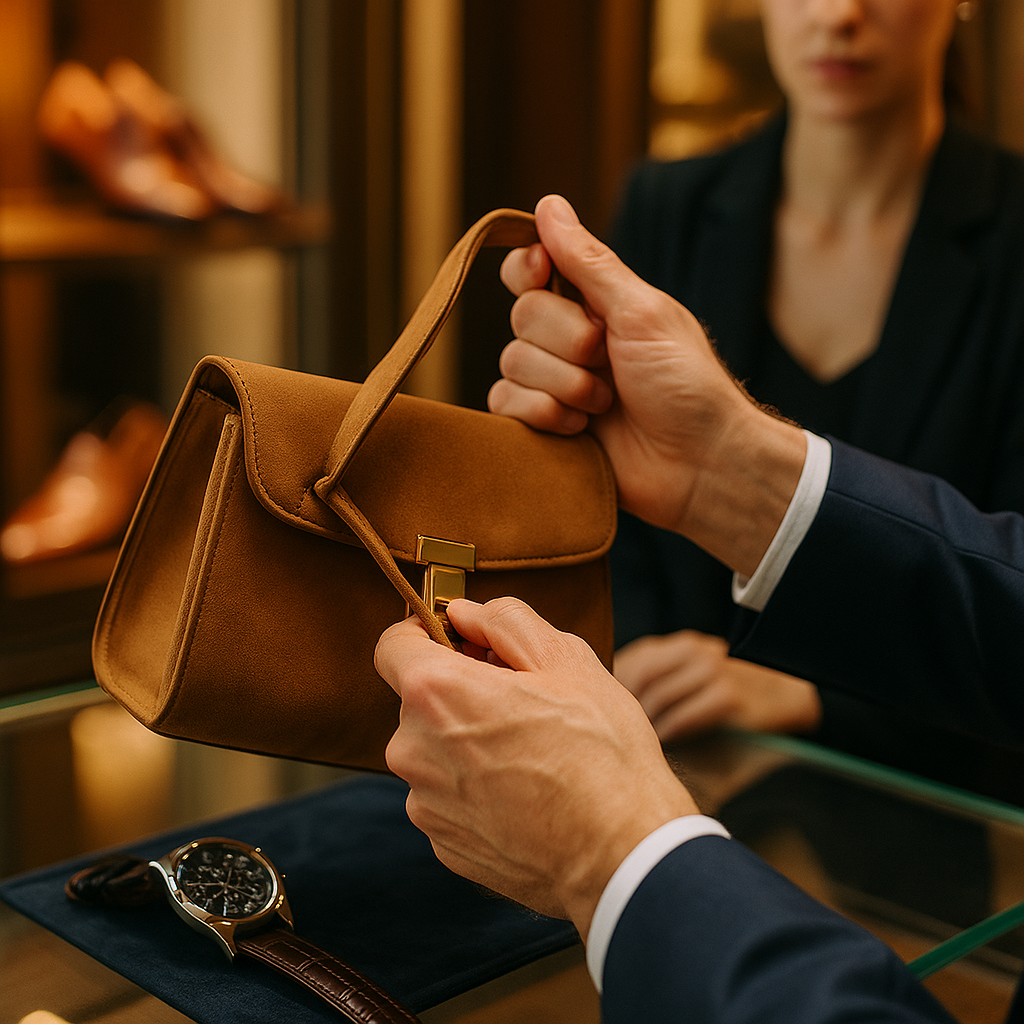
In luxury, ease is not always the goal. The psychology of friction in luxury design explains why effort, waiting, and deliberate complexity can increase desire, signal quality, and deepen emotional attachment. From heavy doors to limited access and handcrafted details, brands use friction to make experiences feel rarer and more meaningful. Why does difficulty so often feel premium?
Luxury consumer behavior and the value of effort
Luxury buyers rarely seek only function. They also seek meaning, status, identity, and emotional reward. That is why luxury consumer behavior often differs from mass-market behavior. In mainstream design, reducing effort usually improves conversion. In luxury, removing every barrier can lower perceived value.
This happens because people use effort as a cue. When something takes time to understand, obtain, or experience, the brain often interprets it as more valuable. In behavioral science, effort can increase attachment through mechanisms such as commitment, anticipation, and justification. If a person waits for a handcrafted bag, learns the story behind a watch movement, or enters a private salon by appointment only, the experience feels earned rather than merely purchased.
Luxury design turns that principle into a system. The friction is not accidental. It is shaped to communicate:
- Scarcity: not everyone can get in, buy in, or understand it immediately.
- Discrimination: the brand chooses carefully, and so does the customer.
- Craft: complexity suggests skilled labor, not industrial speed.
- Ritual: the process itself becomes part of the product.
That does not mean luxury customers enjoy inconvenience in every form. They do not want confusion, broken service, or slow support. They respond to meaningful friction, where the effort signals intention. A difficult clasp may feel satisfying if it is precise and beautifully engineered. A long wait list may feel desirable if the product is genuinely limited. The key distinction is whether the friction enhances the story and confirms the promise.
Brands that understand this do not chase smoothness at all costs. They design pathways that feel selective, tactile, and memorable. In 2026, when many digital experiences are optimized into sameness, this contrast matters more, not less.
Perceived exclusivity in design and why access should feel selective
Perceived exclusivity in design is one of the clearest reasons harder can be better. If luxury were always immediate, abundant, and fully transparent, it would lose some of its power. Selective access tells the customer that the product or experience is not trying to please everyone. That restraint increases allure.
Consider how many premium experiences rely on controlled entry:
- Private appointments instead of open browsing
- Invitation-only launches
- Membership screening
- Curated purchasing histories that unlock rare pieces
- Discreet storefronts with understated signage
These choices create friction, but they also create narrative. The customer does not simply buy. The customer enters. That transition matters because luxury is partly performative. It confirms identity both internally and socially.
Selective access works best when it feels coherent with the brand’s values. A heritage jewelry house can justify a ceremonial consultation because expertise and trust are central to the purchase. A high-end hospitality brand can justify a booking process that emphasizes personalization because anticipation is part of the pleasure. In both cases, the friction makes the experience feel shaped rather than automated.
There is also a practical psychological effect: scarcity sharpens attention. When access is not guaranteed, people devote more cognitive and emotional energy to the opportunity. They remember details. They imagine ownership. They discuss it with others. Friction extends desire across time, and time often intensifies value.
Still, exclusivity must feel credible. Artificial roadblocks with no clear purpose can backfire. If a brand claims rarity while flooding social feeds with discount codes, the friction looks staged. If a sign-up process is long but leads to a generic experience, the customer feels manipulated. Luxury brands need consistency between restricted access and elevated reward.
Luxury brand experience and the role of ritual, pace, and sensory detail
A strong luxury brand experience rarely feels rushed. It is paced. It uses sequence, ceremony, and sensory control to guide emotion. This is where friction becomes especially powerful. Rather than treating every second of delay as a problem, luxury design can treat time as material.
Think about what happens in a refined retail setting. The entrance may be heavy and quiet. The lighting may narrow your focus. The product may not be immediately reachable. An associate may present it slowly, often with gloves, layered packaging, or a story about its origin. These details introduce micro-frictions. They require patience and attention. In return, they heighten perception.
Ritual has several psychological benefits:
- It frames significance. A slower reveal tells the customer this object deserves focus.
- It increases memory. Distinctive steps are easier to recall than generic transactions.
- It reduces comparison shopping. Ritual shifts the purchase from price logic to experience logic.
- It supports trust. Careful handling implies care in production.
Digital luxury can use the same principle without feeling outdated. Not every premium website should be frictionless in the mass-market sense. Some can benefit from slower transitions, curated navigation, protected collections, or guided discovery. The goal is not to make the interface annoying. It is to preserve atmosphere, intentionality, and discernment.
For example, a luxury automotive configurator may work better when it encourages thoughtful choices rather than instant completion. A premium travel brand may benefit from a concierge-led inquiry flow instead of a stripped-down booking engine for top-tier packages. A fine fragrance brand may elevate desire through storytelling layers before revealing purchase options. In each case, friction helps transform browsing into immersion.
The lesson is simple: luxury customers do not only buy outcomes. They buy how the outcome is delivered. Design that slows the moment, when done with precision, can increase emotional payoff.
Emotional design in luxury and why tactile resistance feels premium
Emotional design in luxury often depends on resistance. Materials that have weight, buttons that require deliberate pressure, drawers that glide with controlled tension, and packaging that unfolds in stages can all create a stronger sense of quality. The body reads these cues before the mind explains them.
This matters because luxury is multisensory. Visual polish alone is not enough. People assess premium value through touch, sound, motion, and even silence. A soft-close mechanism, the click of a well-made clasp, or the drag of thick paper stock can signal engineering, cost, and care.
Why does this work psychologically?
- Resistance suggests durability. If an object yields too easily, it can feel cheap.
- Precision suggests mastery. Controlled movement feels crafted, not accidental.
- Weight suggests substance. Heavier materials often read as more valuable.
- Layering builds anticipation. Unboxing with several steps increases emotional tension and release.
Luxury packaging offers a clear example. Mass-market packaging is optimized for speed and efficiency. Luxury packaging often does the opposite. It may include ribbons, sleeves, magnetic closures, tissue wraps, certificates, and custom inserts. From a purely utilitarian angle, this is inefficient. From a psychological angle, it creates a moment of ceremony that justifies the premium and extends delight.
The same principle applies to product interfaces. In high-end hardware, subtle resistance can make interaction feel more controlled and satisfying. In interiors, materials that age gracefully can reward long-term ownership rather than instant novelty. In hospitality, slower table-side rituals can make service feel attentive rather than hurried.
Of course, tactile friction should never compromise usability for core needs. A luxury product still needs to function beautifully. The strongest designs balance ease and resistance. They remove pointless struggle while preserving moments that create emotional texture.
Scarcity marketing psychology without manipulation
Scarcity marketing psychology is often discussed in terms of urgency tactics, but luxury uses it differently. The aim is not just to trigger impulse. It is to support a believable world where rarity, patience, and discernment are part of the brand promise.
That distinction matters for trust. In helpful, high-quality content and brand design alike, credibility comes from honesty, expertise, and consistency. If a brand uses waiting lists, limited drops, or restricted editions, those signals need to reflect real limitations or real curation. Otherwise, customers eventually detect the performance.
Ethical scarcity in luxury tends to follow a few rules:
- Explain the why. If production is limited by handcraft, materials, or personalization, say so clearly.
- Match service to scarcity. A harder-to-get product should come with a correspondingly elevated experience.
- Avoid false countdowns. Manufactured urgency can damage premium positioning.
- Reward loyalty meaningfully. Early access should feel earned, not random.
- Maintain quality at every touchpoint. Exclusivity cannot compensate for poor execution.
Readers often ask whether friction harms conversion. In some cases, yes. But that is not always the right metric. Luxury brands should measure not only immediate sales, but also average order value, repeat engagement, referral quality, client lifetime value, and brand equity. A more selective path can reduce volume while increasing desirability and long-term profitability.
Another common question is whether younger affluent audiences still want friction. In 2026, many do, especially when it feels authentic. Digital natives are used to instant access everywhere. That makes well-designed restraint more distinctive. They may reject snobbery, but they still respond to craft, insider knowledge, personalization, and experiences that do not feel mass produced.
Premium UX design: how to add the right friction and remove the wrong kind
Premium UX design succeeds when it separates meaningful friction from bad friction. This is where strategy matters most. Harder is better only when the difficulty reinforces value. If it creates anxiety, confusion, or wasted effort, it weakens the brand.
Useful friction in luxury often includes:
- Appointment-only consultations for complex or high-consideration purchases
- Layered storytelling that reveals provenance, craft, or customization options gradually
- Selective access to rare collections based on relationship history
- Deliberate pacing in checkout or inquiry flows for bespoke services
- Physical and digital touchpoints that emphasize tactile or ceremonial interaction
Bad friction usually includes:
- Unclear navigation
- Slow page performance
- Opaque pricing when transparency is expected
- Poor customer support
- Complicated returns or service policies
- Security or authentication steps that feel clumsy rather than protective
A practical framework helps. Ask four questions about every friction point:
- What does this obstacle signal? Craft, rarity, personalization, privacy, or nothing at all?
- What emotion does it create? Anticipation, confidence, intrigue, or irritation?
- Is the reward proportional? The harder the path, the stronger the payoff must be.
- Does it fit the category? A bespoke watch service can ask more of the customer than a luxury skincare reorder flow.
Design teams should test for perception, not just efficiency. Qualitative interviews, concierge feedback, mystery shopping, and post-purchase surveys often reveal more than clickstream data alone. Ask customers whether the process felt premium, personal, and worth the effort. Those answers uncover whether friction is functioning as a value signal or failing as an operational flaw.
The strongest luxury brands do not confuse hardness with hostility. They use discipline. They make some things slower, quieter, heavier, rarer, or more private because those qualities support meaning. They remove friction where trust and care require simplicity. That balance is the real craft.
FAQs about luxury design psychology
What is the psychology of friction in luxury design?
It is the idea that effort, delay, and controlled complexity can increase perceived value in luxury. When friction feels intentional and rewarding, customers often interpret it as a sign of rarity, craft, and status.
Why can harder experiences feel more premium?
Harder experiences can create anticipation, commitment, and a sense of achievement. They also signal that the brand is not built for mass access. In luxury, that selectivity can strengthen desire and emotional attachment.
Is friction the same as bad user experience?
No. Bad UX creates confusion and frustration. Useful luxury friction creates meaning. The difference lies in whether the obstacle supports the brand story and leads to a better, more memorable reward.
How do luxury brands use scarcity without damaging trust?
They connect scarcity to real limitations such as craftsmanship, material availability, or personalization. They avoid fake urgency and make sure the elevated access or waiting period leads to an experience that feels genuinely exceptional.
Can digital luxury experiences include friction?
Yes. Digital luxury can use guided discovery, private access, concierge support, and paced storytelling. The goal is not to make technology difficult, but to prevent the experience from feeling generic or purely transactional.
What types of friction should luxury brands remove?
They should remove friction that harms trust or usability, including poor support, technical slowness, confusing navigation, and unclear policies. Luxury customers accept effort when it feels purposeful, not when it feels careless.
Do all luxury customers want exclusivity?
Not in the same way, but many want signals of discernment, quality, and distinction. Some prefer privacy and service, while others value rarity and insider access. Effective luxury design reflects the motivations of its specific audience.
Luxury works because it resists the logic of instant convenience. The best brands understand that carefully designed friction can signal rarity, deepen emotion, and make ownership feel earned. Harder is better only when the effort is purposeful, coherent, and rewarding. Remove friction that creates doubt. Keep friction that creates meaning, memory, and unmistakable premium value for customers.
Top Influencer Marketing Agencies
The leading agencies shaping influencer marketing in 2026
Agencies ranked by campaign performance, client diversity, platform expertise, proven ROI, industry recognition, and client satisfaction. Assessed through verified case studies, reviews, and industry consultations.
Moburst

-
2

The Shelf
Boutique Beauty & Lifestyle Influencer AgencyA data-driven boutique agency specializing exclusively in beauty, wellness, and lifestyle influencer campaigns on Instagram and TikTok. Best for brands already focused on the beauty/personal care space that need curated, aesthetic-driven content.Clients: Pepsi, The Honest Company, Hims, Elf Cosmetics, Pure LeafVisit The Shelf → -
3

Audiencly
Niche Gaming & Esports Influencer AgencyA specialized agency focused exclusively on gaming and esports creators on YouTube, Twitch, and TikTok. Ideal if your campaign is 100% gaming-focused — from game launches to hardware and esports events.Clients: Epic Games, NordVPN, Ubisoft, Wargaming, Tencent GamesVisit Audiencly → -
4

Viral Nation
Global Influencer Marketing & Talent AgencyA dual talent management and marketing agency with proprietary brand safety tools and a global creator network spanning nano-influencers to celebrities across all major platforms.Clients: Meta, Activision Blizzard, Energizer, Aston Martin, WalmartVisit Viral Nation → -
5

The Influencer Marketing Factory
TikTok, Instagram & YouTube CampaignsA full-service agency with strong TikTok expertise, offering end-to-end campaign management from influencer discovery through performance reporting with a focus on platform-native content.Clients: Google, Snapchat, Universal Music, Bumble, YelpVisit TIMF → -
6

NeoReach
Enterprise Analytics & Influencer CampaignsAn enterprise-focused agency combining managed campaigns with a powerful self-service data platform for influencer search, audience analytics, and attribution modeling.Clients: Amazon, Airbnb, Netflix, Honda, The New York TimesVisit NeoReach → -
7

Ubiquitous
Creator-First Marketing PlatformA tech-driven platform combining self-service tools with managed campaign options, emphasizing speed and scalability for brands managing multiple influencer relationships.Clients: Lyft, Disney, Target, American Eagle, NetflixVisit Ubiquitous → -
8

Obviously
Scalable Enterprise Influencer CampaignsA tech-enabled agency built for high-volume campaigns, coordinating hundreds of creators simultaneously with end-to-end logistics, content rights management, and product seeding.Clients: Google, Ulta Beauty, Converse, AmazonVisit Obviously →