


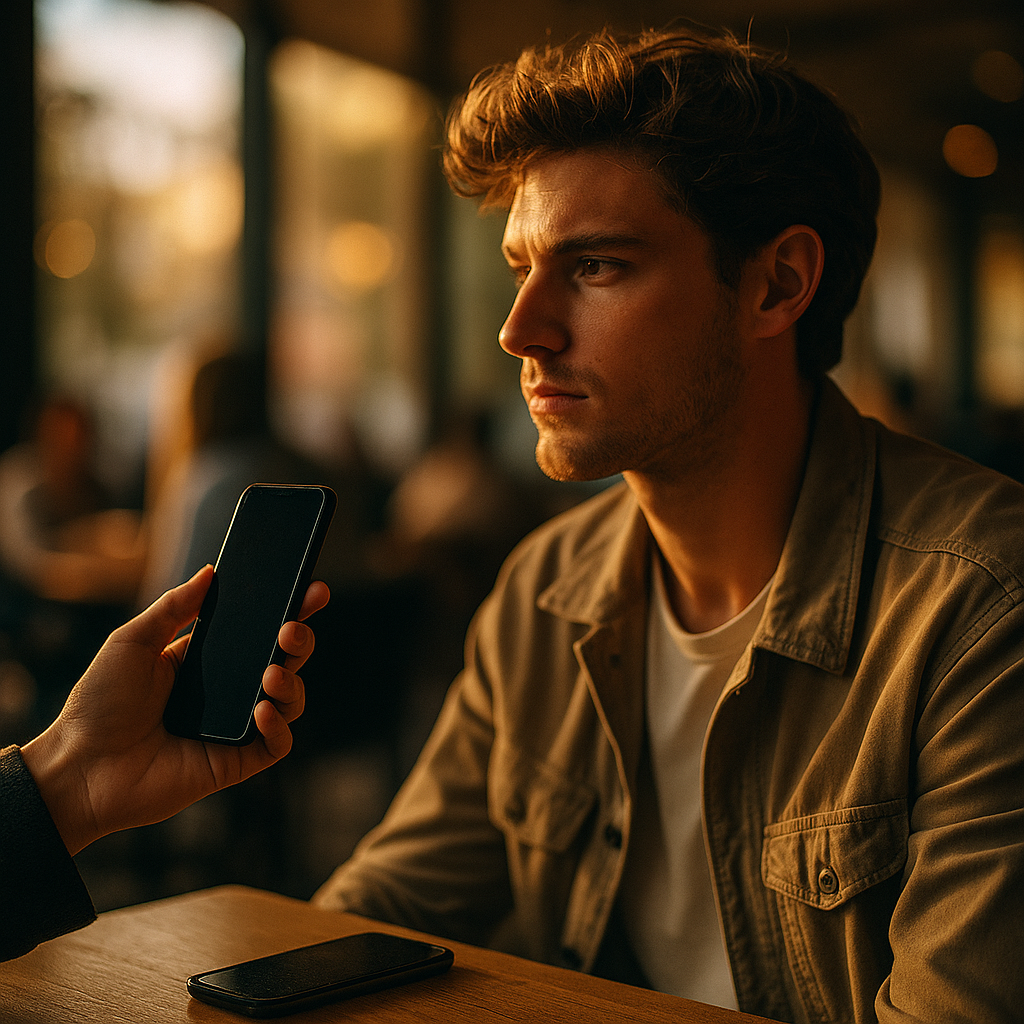
In 2025, abundance is digital. Scarcity is human time, attention, and access. The Offline Premium explains why in-person moments now carry more status than another online badge, purchase, or post. As remote work normalizes and AI compresses content creation, physical presence becomes the costly signal people can’t fake at scale. What happens when “showing up” becomes the new flex?
Luxury signaling in a digital-first world
Luxury has always been about signals: evidence you can afford what others can’t. In a digital-first world, many traditional signals have been diluted. A beautifully edited photo, a “private” online community, or a limited digital drop can be reproduced, automated, or approximated with far less effort than it appears to require.
That doesn’t mean digital status is dead; it means it’s noisier. When everyone can broadcast, the audience becomes skeptical. When AI can generate “taste” instantly, taste has to be demonstrated in ways that resist copy-paste.
Physical events reintroduce friction—travel time, scheduling constraints, limited seating, social accountability, and real-world etiquette. These frictions make the signal more credible. They also create a rare ingredient: shared context. A room of people who all made the same effort to be there is inherently more meaningful than a feed that’s passively scrolled.
Follow-up question most people ask: Isn’t this just “FOMO marketing”? It can be, but the Offline Premium isn’t about manufactured scarcity. It’s about authentic constraint: you can’t “attend” dinner, a salon, a workshop, or a backstage tour at infinite scale without the experience breaking.
Physical events as status symbols
Status symbols work when they are recognizable, legible, and hard to counterfeit. Physical events now meet all three criteria.
Recognizable: Event attendance is easy to understand socially. “I was at that closed-door talk” communicates more than “I watched the replay.”
Legible: Many premium gatherings have visible markers—guest lists, invite codes, wristbands, seating tiers, or members-only venues. These are not merely aesthetic; they create a clear boundary between insiders and outsiders.
Hard to counterfeit: You can buy followers, but you can’t buy the same depth of interaction with a founder during a small dinner, or the trust built after hours in a workshop where everyone contributes.
This is why categories that once relied on objects—watches, bags, cars—are increasingly complemented by experiences: brand-hosted retreats, culinary residencies, artist-led studio visits, private tastings, and micro-conferences where the “content” is the people you meet.
Readers often wonder: Does this exclude people without big budgets? Not always. The luxury signal is not only money; it’s prioritization. A local, thoughtfully curated event with a selective audience can feel more premium than a costly but generic arena experience. The offline premium is about intentional access, not just price.
Experiential marketing and the attention economy
In 2025, attention is the limiting factor for growth. Ads face saturation, and algorithms change without warning. Experiential marketing performs because it creates what digital channels struggle to deliver: sustained focus, emotional resonance, and high-trust engagement.
Offline experiences also generate high-quality first-party signals—the kind brands can ethically collect with consent: attendance, session choices, in-person feedback, repeat participation, and referrals. Compared to anonymous impressions, these signals map directly to real relationships.
Recent industry reporting from major event platforms and associations continues to show strong rebound and growth in business events and live experiences, driven by networking value and brand differentiation. While individual statistics vary by market, the consistent insight is qualitative: decision-makers attend to compress trust-building into hours rather than months of calls.
To make experiential marketing earn its cost, brands must design for outcomes beyond “buzz”:
- Time well spent: tight agendas, minimal filler, and clear reasons to be in the room.
- Distinctive memory: a setting, ritual, or interaction that people can describe later without exaggeration.
- Social portability: moments that guests want to share because they reflect well on them—without feeling staged.
- Post-event continuity: introductions, follow-ups, and access to future rooms that extend the relationship arc.
Common follow-up: Do hybrid events undermine the Offline Premium? Not if the design is honest. Hybrid can widen reach, but keep the highest-value interactions—small-group Q&A, workshops, private tours, mentor hours—exclusive to physical attendance. That preserves the premium while still serving a broader audience.
Community building through in-person gatherings
Communities thrive when members feel known, useful, and safe. Online spaces can support that, but they struggle with churn, performative posting, and shallow ties. In-person gatherings strengthen communities because they force a different mode of communication: fewer masks, more nuance, and higher accountability.
The Offline Premium emerges when gatherings are built around contribution, not consumption. The best events treat guests as participants with something at stake. That creates belonging that survives beyond a single night.
Practical structures that reliably build community:
- Small-format design: salons, dinners, roundtables, and studio sessions where everyone is visible.
- Clear membership filters: not elitism for its own sake, but alignment on purpose, values, or craft.
- Facilitated introductions: hosts who actively connect people based on goals, not randomness.
- Rituals and continuity: recurring meetups, seasonal gatherings, and shared traditions that create identity.
- Rules that protect trust: consent-based photography, confidentiality options, and respectful conduct standards.
Follow-up: How do you avoid events feeling transactional? By explicitly rewarding generosity. Give guests ways to help each other—skill swaps, curated asks, office hours, or “who can introduce me to…” sessions. When people leave having been useful, the event feels premium in the deepest sense: it increased their agency.
High-touch networking benefits for leaders and brands
Not all networking is equal. High-touch networking is targeted, contextual, and paced for real conversation. It is especially valuable for founders, executives, creators, and investors because it reduces noise and increases the quality of serendipity.
In high-stakes environments, people choose the room that protects their time. The Offline Premium signals that protection: curated attendance, thoughtful programming, and a host willing to say “no” to preserve the experience.
For leaders, the benefits are practical:
- Faster trust: body language, tone, and shared experience accelerate credibility.
- Better information: informal conversations reveal constraints and priorities that emails hide.
- Cleaner deals: alignment is tested quickly through real dialogue, reducing later friction.
- Reputation compounding: being seen in the right rooms creates durable social proof.
For brands, the playbook is clear: treat the event as a product, not a campaign. That means:
- Host expertise: use credible speakers and practitioners with real-world results, not just big followings.
- Operational excellence: check-in, accessibility, sound, seating, and pacing must feel effortless.
- Ethical data practices: be transparent about how attendee information is used and offer opt-outs.
- Measured outcomes: track attendee satisfaction, qualified introductions, repeat attendance, and post-event actions.
Follow-up: How do you prove ROI without vanity metrics? Agree on a small set of leading indicators before the event: number of target attendees reached, number of meaningful conversations facilitated, number of follow-up meetings booked, and conversion within a defined window. Qualitative feedback also matters—especially when it comes from senior buyers or respected operators.
Curated experiences and exclusivity: how to design the Offline Premium
The Offline Premium is not created by velvet ropes alone. It comes from thoughtful constraints, high standards, and a clear point of view. Exclusivity should protect experience quality, not inflate ego.
Design principles that consistently produce a premium signal:
- Purpose-first curation: define exactly who the event is for, what problem it solves, and what guests should leave with.
- Limited, meaningful capacity: size the room to the interaction you want. If you want conversation, keep it small enough that people can actually meet.
- Distinctive environment: a venue with character or relevance to the theme beats generic luxury. Context is the new opulence.
- Time respect: start on time, end on time, and avoid bloated agendas. Premium means disciplined.
- Human craftsmanship: great hosting, thoughtful seating, and real hospitality matter more than expensive décor.
- Privacy options: allow guests to choose whether they can be photographed or tagged. Many high-value attendees avoid events that feel like content farms.
To align with Google’s EEAT expectations—experience, expertise, authoritativeness, and trust—your event content should reflect real competence and verifiable outcomes:
- Show real operators: prioritize speakers who have built, shipped, led, or measured the thing they teach.
- Use transparent claims: avoid inflated promises; share what’s included and what isn’t.
- Document responsibly: publish attendee learnings, frameworks, and key takeaways without violating privacy.
- Prioritize safety and access: clear policies, accessibility considerations, and professional conduct standards.
Follow-up: What if my brand can’t host expensive events? Start with a micro-format: a 12-person dinner, a studio tour, a two-hour workshop, a walk-and-talk salon. Premium is created by curation and care. As demand grows, scale through frequency and satellites, not by inflating one event until it loses intimacy.
FAQs
What does “Offline Premium” mean?
It’s the added value and status that comes from physically attending curated, high-quality experiences. Because real-world attendance requires time, effort, and access, it signals commitment and credibility more strongly than many digital markers.
Are physical events really a luxury signal in 2025?
Yes. As digital content becomes cheaper to produce and easier to imitate, being present in selective rooms becomes a harder-to-fake indicator of social capital, priorities, and network quality.
How do I make an event feel premium without being flashy?
Use tight curation, excellent hosting, a clear purpose, and respectful constraints. Start on time, design for real interaction, protect guest privacy, and deliver a takeaway that changes what attendees can do next.
What kinds of events create the strongest Offline Premium?
Small, curated formats: dinners, salons, workshops, founder roundtables, studio visits, tastings, and retreats. The key is limited capacity paired with high relevance and meaningful interaction.
Does exclusivity hurt brand perception?
It can if it’s arbitrary. Exclusivity works when it protects experience quality and aligns with the event’s purpose. Transparent criteria and thoughtful guest care prevent the “gatekeeping for its own sake” effect.
How can companies measure ROI from in-person events?
Track outcomes tied to your goal: qualified conversations, follow-up meetings booked, pipeline influenced, retention or upsell, and repeat attendance. Combine these with structured feedback to capture learning and intent.
Physical events are becoming the clearest proof of taste, access, and intent because they impose real constraints: time, presence, and social accountability. That is the Offline Premium in action. In 2025, the brands and leaders who win won’t just publish more; they will convene better rooms. The takeaway: design gatherings that respect attention, protect trust, and make attendance genuinely worth the effort.