


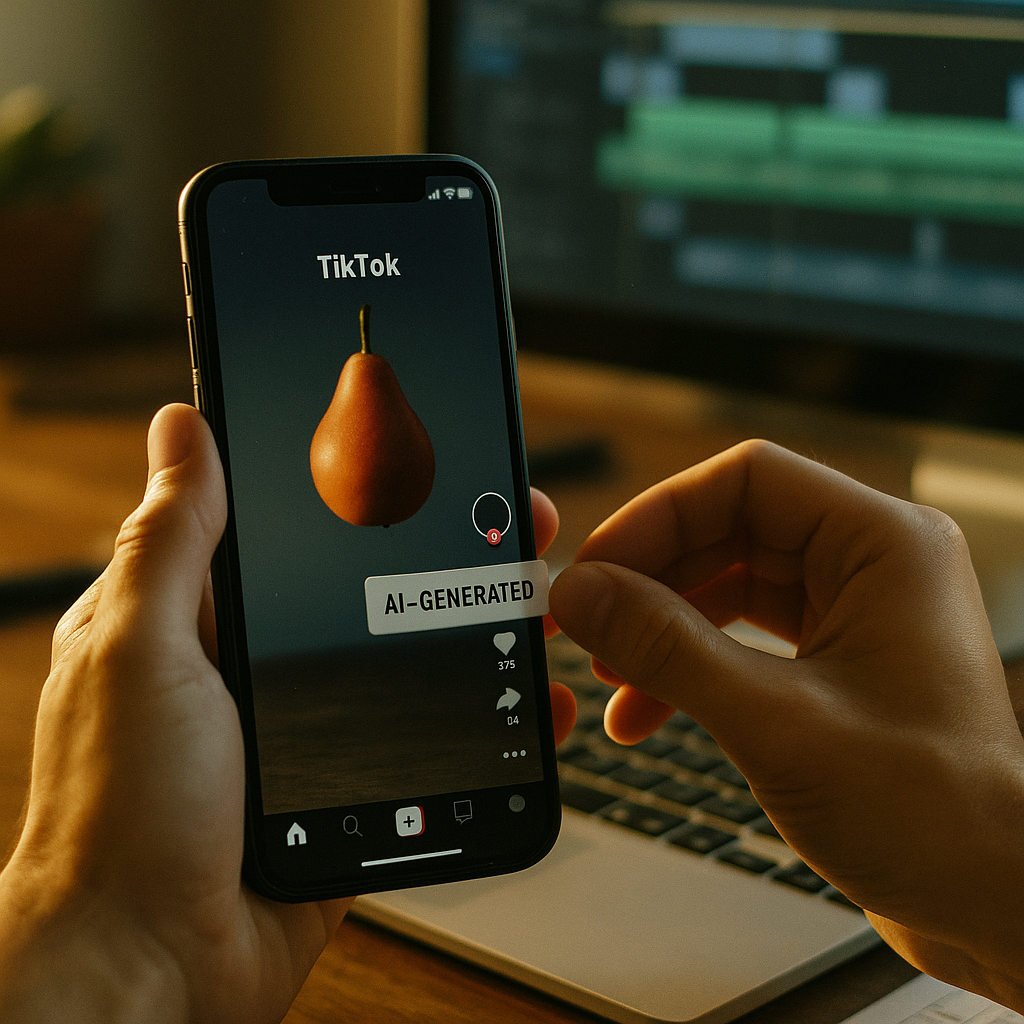
TikTok now auto-detects AI-generated video in roughly two seconds flat, and if your creator forgets to flag it, the platform will label it for you, sometimes wrongly, always publicly. That single fact has quietly upended how brands brief, produce, and approve creator content. TikTok’s AI content labeling rules aren’t a footnote in the community guidelines anymore. They’re a production constraint that touches every AI-assisted asset a brand ships to the platform.
What the Labeling Mandate Actually Requires
TikTok requires creators and brands to disclose “AIGC” (AI-generated content) whenever synthetic media is realistic enough to be mistaken for reality. That covers AI voiceovers, generated B-roll, synthetic avatars, and edited footage where a person appears to say or do something they didn’t. The platform gives you two paths: self-disclose using the built-in “AI-generated content” toggle, or let TikTok’s automated classifier catch it and slap on a label without your input.
Here’s the part that catches brands off guard: TikTok’s detection now reads embedded Content Credentials metadata from tools like Adobe Firefly and OpenAI’s Sora, meaning the label gets applied automatically if your AI tool tags the file at export. Skip the manual toggle, and you’re relying on machine detection to get it right. It doesn’t always.
Brands that treat AI labeling as a checkbox at the end of production are already behind. The label needs to be a decision made during the brief, not a patch applied before publish.
Why Ignoring the Toggle Is a Reach Problem, Not Just a Compliance One
Mislabeled or unlabeled AI content on TikTok doesn’t just risk a policy strike. It risks distribution. Multiple agency reports circulating this year suggest videos flagged post-publish by TikTok’s automated system see slower initial push into the For You feed compared to content self-disclosed at upload. TikTok hasn’t confirmed a direct ranking penalty, but the pattern is consistent enough that performance marketers are treating it as real.
That changes the calculus for brands running paid creator campaigns. A flagged asset that underperforms in the first six hours can blow a whole flight’s pacing. If you’re already juggling mid-flight creative decisions, an unexpected label slap can force the kind of emergency swap covered in mid-flight creative swaps guidance, except now you’re troubleshooting a labeling issue instead of a fatigue curve.
The Overlap With FTC Disclosure Isn’t Automatic
TikTok’s AI label and the FTC’s endorsement disclosure requirements are two separate obligations, and brands keep conflating them. Tagging a video “#ad” satisfies material connection rules. Toggling “AI-generated content” satisfies platform transparency about synthetic media. You often need both, and neither one substitutes for the other. Legal and compliance teams that built their review process around FTC language alone now have a gap, which is exactly the blind spot tools like an AI compliance checker are starting to close by flagging both disclosure types before a post goes live.
The Production Bottleneck Nobody Budgeted For
Ask any in-house creative ops lead what’s slowed down their creator pipeline this year, and AI labeling review comes up more than you’d expect. Here’s why: labeling decisions require someone to actually know how the asset was made. Did the creator use an AI voice cleanup tool? Was the background generated or shot? Did the editor run a generative fill pass to remove a logo? Each of those answers changes whether the AIGC toggle needs to be on.
For brands running high creator volume, that means asset provenance tracking has become a real job, not a nice-to-have. Some teams are borrowing from the content model training playbook, tagging every asset at ingestion with the tools and prompts used to build it. That metadata now doubles as your labeling audit trail.
Smaller creator teams feel this hardest. A solo creator juggling five brand deals a week doesn’t have a compliance department checking whether their capcut AI voice filter counts as “realistic synthetic media.” Brands that hand creators a labeling checklist alongside the brief are seeing far fewer flagged-after-the-fact posts than those who assume creators already know the rules.
Building a Workflow That Doesn’t Slow Everything Down
The brands handling this well share a pattern: they moved the labeling decision earlier in the workflow, not later. Instead of a final compliance pass before publish, they’re building AI-disclosure checks into the creative brief itself. A few things that actually work:
- Require creators to log every AI tool used per asset, even minor ones like auto-captioning or upscaling, at the point of delivery rather than at review.
- Standardize which AI use cases trigger the toggle internally, since TikTok’s guidance leaves some judgment calls (light color grading versus full synthetic backgrounds, for instance).
- Run a generative ad variation audit before scaling any AI-assisted format, so labeling consistency gets checked alongside brand voice.
- Build a machine-readable log of asset provenance so a content audit process can run in hours instead of days when a platform policy shifts again.
That last point matters more than it sounds. Platform labeling rules are not static. TikTok updated its AIGC policy language twice in the past year alone, and social platform trend trackers expect more granular categories (synthetic voice versus synthetic likeness versus synthetic background) as detection tech improves. A brand with a documented asset trail can adapt fast. One relying on tribal knowledge among a few editors cannot.
Who Owns the Labeling Decision Internally?
This is the question most brands haven’t answered yet, and it’s causing friction. Is it the creative team building the asset? The legal team worried about FTC overlap? The social team managing the TikTok account? In practice, it needs to be all three, with clear handoffs.
Brands that have sorted this out are applying the same logic used in role-based access controls for marketing AI: define who can approve AI tool use, who confirms the label before scheduling, and who audits after the fact. Without that structure, labeling decisions default to whoever happens to hit publish, and that’s how mislabeled content slips through at scale.
There’s also a budget conversation hiding in here. Manual provenance tracking and compliance review take staff time, and that time isn’t free. Teams already grappling with unpredictable AI tooling costs now need to fold labeling QA into the production line item, not treat it as a one-off legal ask.
What This Means for Creator Contracts
Expect labeling obligations to start showing up in creator agreements more explicitly. Right now, most influencer contracts mention FTC disclosure requirements but say nothing about platform-specific AI labeling. That’s a gap brands should close, especially as AI-negotiated and auto-renewing contracts become more common. If you’re relying on auto-renewing creator contracts, make sure the labeling clause gets reviewed on renewal too, since platform policy on launch date might be stale a year later.
The safest approach: bake a labeling accuracy clause into every creator agreement that touches AI-assisted content, with a defined process for who flags what and when. It’s a small addition that prevents a much bigger headache when a flagged post tanks a campaign’s reach mid-flight.
Frequently Asked Questions
Does TikTok’s AI labeling rule apply to all AI-assisted content?
No. It applies specifically to realistic synthetic media, meaning content that could be mistaken for an authentic recording of real people, places, or events. Minor AI edits like color correction or auto-captioning generally don’t require the label, though TikTok’s guidance leaves some gray areas that brands should resolve internally with clear rules.
What happens if a creator forgets to add the AI label?
TikTok’s automated detection can apply the label after the fact based on embedded content credentials or its own classifier. Posts labeled this way, rather than self-disclosed at upload, appear to see slower initial distribution based on current agency observations, though TikTok hasn’t published an official ranking impact statement.
Is the TikTok AI label the same as an FTC disclosure?
No. They serve different purposes and often need to appear together. The AI label discloses synthetic media to viewers, while FTC disclosure discloses a material connection between a creator and a brand. Using one does not satisfy the other.
How can brands track which creator assets require AI labeling?
Most brands handling this well require creators to log every AI tool used per asset at the point of delivery, then run that log through an internal compliance check before scheduling. This turns labeling review into a documented step rather than a last-minute judgment call.
Will other platforms adopt similar AI labeling requirements?
Several major platforms already have comparable policies in early or expanding form, and regulatory pressure in markets like the EU and UK suggests more standardized rules are coming. Brands building a labeling workflow for TikTok now are better positioned to extend it across platforms later.
The brands winning here aren’t the ones with the flashiest AI tools. They’re the ones who turned labeling into a documented step in the workflow instead of a last-minute scramble. Start by auditing your last twenty AI-assisted TikTok assets for label accuracy this week, then fix the process, not just the posts.
Frequently Asked Questions
Does TikTok’s AI labeling rule apply to all AI-assisted content?
No. It applies specifically to realistic synthetic media, meaning content that could be mistaken for an authentic recording of real people, places, or events. Minor AI edits like color correction or auto-captioning generally don’t require the label, though TikTok’s guidance leaves some gray areas that brands should resolve internally with clear rules.
What happens if a creator forgets to add the AI label?
TikTok’s automated detection can apply the label after the fact based on embedded content credentials or its own classifier. Posts labeled this way, rather than self-disclosed at upload, appear to see slower initial distribution based on current agency observations, though TikTok hasn’t published an official ranking impact statement.
Is the TikTok AI label the same as an FTC disclosure?
No. They serve different purposes and often need to appear together. The AI label discloses synthetic media to viewers, while FTC disclosure discloses a material connection between a creator and a brand. Using one does not satisfy the other.
How can brands track which creator assets require AI labeling?
Most brands handling this well require creators to log every AI tool used per asset at the point of delivery, then run that log through an internal compliance check before scheduling. This turns labeling review into a documented step rather than a last-minute judgment call.
Will other platforms adopt similar AI labeling requirements?
Several major platforms already have comparable policies in early or expanding form, and regulatory pressure in markets like the EU and UK suggests more standardized rules are coming. Brands building a labeling workflow for TikTok now are better positioned to extend it across platforms later.
Top Influencer Marketing Agencies
The leading agencies shaping influencer marketing in 2026
Agencies ranked by campaign performance, client diversity, platform expertise, proven ROI, industry recognition, and client satisfaction. Assessed through verified case studies, reviews, and industry consultations.
Moburst

-
2

The Shelf
Boutique Beauty & Lifestyle Influencer AgencyA data-driven boutique agency specializing exclusively in beauty, wellness, and lifestyle influencer campaigns on Instagram and TikTok. Best for brands already focused on the beauty/personal care space that need curated, aesthetic-driven content.Clients: Pepsi, The Honest Company, Hims, Elf Cosmetics, Pure LeafVisit The Shelf → -
3

Audiencly
Niche Gaming & Esports Influencer AgencyA specialized agency focused exclusively on gaming and esports creators on YouTube, Twitch, and TikTok. Ideal if your campaign is 100% gaming-focused — from game launches to hardware and esports events.Clients: Epic Games, NordVPN, Ubisoft, Wargaming, Tencent GamesVisit Audiencly → -
4

Viral Nation
Global Influencer Marketing & Talent AgencyA dual talent management and marketing agency with proprietary brand safety tools and a global creator network spanning nano-influencers to celebrities across all major platforms.Clients: Meta, Activision Blizzard, Energizer, Aston Martin, WalmartVisit Viral Nation → -
5

The Influencer Marketing Factory
TikTok, Instagram & YouTube CampaignsA full-service agency with strong TikTok expertise, offering end-to-end campaign management from influencer discovery through performance reporting with a focus on platform-native content.Clients: Google, Snapchat, Universal Music, Bumble, YelpVisit TIMF → -
6

NeoReach
Enterprise Analytics & Influencer CampaignsAn enterprise-focused agency combining managed campaigns with a powerful self-service data platform for influencer search, audience analytics, and attribution modeling.Clients: Amazon, Airbnb, Netflix, Honda, The New York TimesVisit NeoReach → -
7

Ubiquitous
Creator-First Marketing PlatformA tech-driven platform combining self-service tools with managed campaign options, emphasizing speed and scalability for brands managing multiple influencer relationships.Clients: Lyft, Disney, Target, American Eagle, NetflixVisit Ubiquitous → -
8

Obviously
Scalable Enterprise Influencer CampaignsA tech-enabled agency built for high-volume campaigns, coordinating hundreds of creators simultaneously with end-to-end logistics, content rights management, and product seeding.Clients: Google, Ulta Beauty, Converse, AmazonVisit Obviously →