


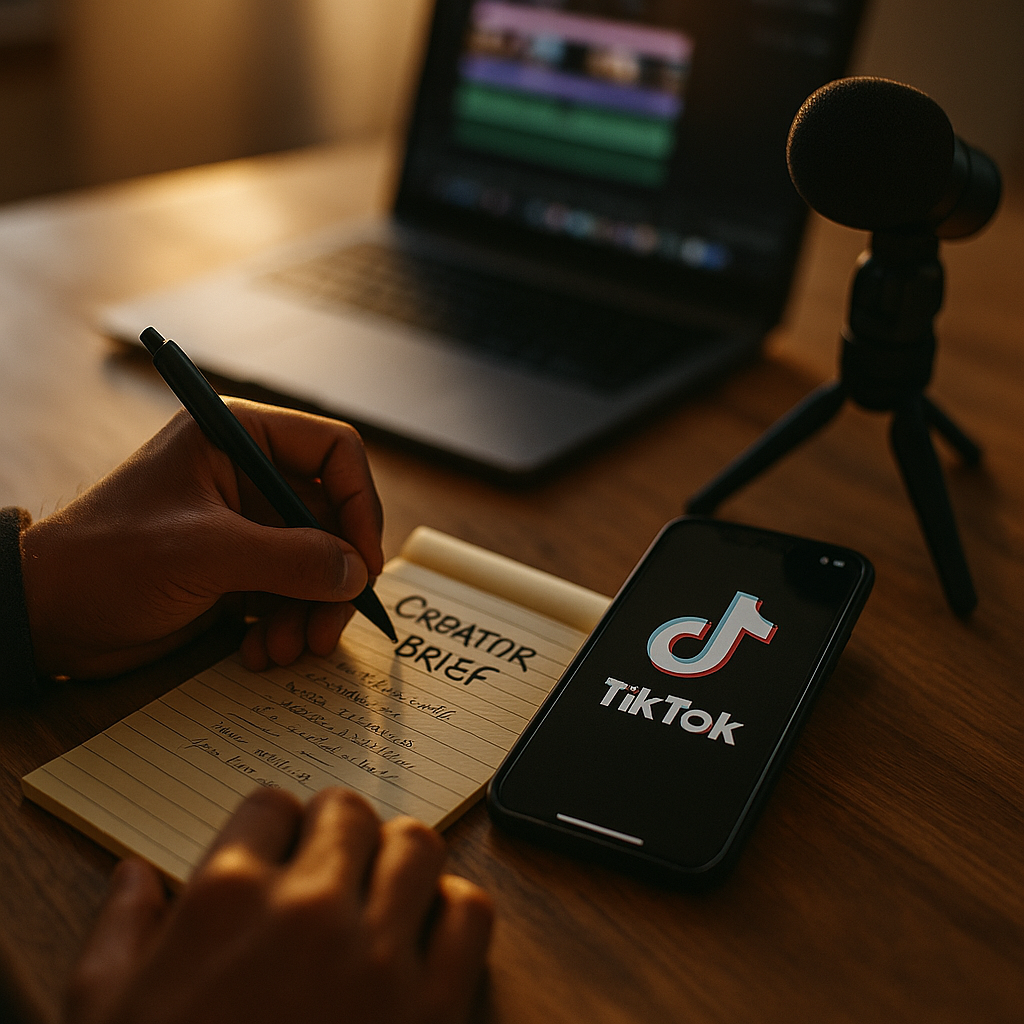
Most TikTok Sponsored Posts Never Leave the Follower Feed
Only 10% of TikTok videos reach the watch-time threshold that triggers broad algorithmic distribution. If your creator brief isn’t engineered around that signal, you’re paying for follower-feed impressions and calling it a campaign.
TikTok’s recommendation engine doesn’t distribute content based on follower count or posting frequency. It distributes based on relative watch-time performance: specifically, whether a video lands in the top 10% of watch-time completion for its content category. That 90th-percentile signal is the gate. Everything else, engagement rate, hashtags, caption length, is downstream noise. Brands and agencies that understand this restructure their briefs accordingly. Those that don’t keep wondering why their CPMs are climbing while organic reach stagnates.
What the 90th-Percentile Signal Actually Measures
TikTok’s system doesn’t measure raw watch time in seconds. It measures relative completion rate against comparable content in your niche. A 45-second skincare tutorial competes against other 45-second skincare tutorials. A 90-second product demo competes against other 90-second product demos. The algorithm normalizes for video length and category, then sorts. If your creator’s video lands in the top decile for its peer group, TikTok pushes it to a broader test audience, then a broader one, until engagement signals flatten.
This is why a small creator with 80,000 followers can generate 4 million views on a single post while a macro-influencer with 2 million followers sees 60,000. The follower graph is nearly irrelevant. Watch-time performance against category peers is everything.
TikTok’s algorithm compares your video against similar content in the same niche and length bracket. A video that ranks in the top 10% for relative watch time earns exponential distribution. Everything below that threshold stays contained in the follower feed.
For brands, this has a direct implication: your creative brief is now a technical document as much as a brand document. You need to specify structural retention mechanics, not just messaging pillars and product mentions.
Why Most Creator Briefs Fail on TikTok
The standard brand brief tells creators what to say. It covers key messages, mandatory disclosures, product features to highlight, and maybe a call to action. What it almost never covers is how to hold attention through the structural mechanics of the video itself.
That gap is expensive. According to Sprout Social research, branded content on TikTok consistently underperforms organic creator content on completion rate, not because the product is less interesting, but because the video structure prioritizes brand messaging over viewer psychology. The first three seconds are often spent on a logo card or product reveal. The middle section is a flat feature list. The call to action arrives at the end, after most viewers have already scrolled.
Compare that to a creator’s organic content. The hook creates an open loop. The middle escalates tension or curiosity. The resolution arrives just late enough to keep viewers watching. That structure is learnable, and it belongs in your brief.
If you’re investing in TikTok Shop campaigns, the stakes are even higher: watch-time performance directly affects product link visibility and Shop tab placement, making retention engineering a revenue issue, not just a reach issue.
Briefing for Retention: The Four Structural Levers
Here’s what high-performing creator briefs specify that standard brand briefs don’t.
1. Hook architecture, not just a hook line. The first 1.5 seconds need a visual or auditory disruption that creates cognitive dissonance. Brief creators to open on something unresolved: a question mid-sentence, a result before the process, a surprising outcome that demands explanation. Specify this as a structural requirement, not a style suggestion.
2. Curiosity gaps at the 20% and 50% marks. Viewer drop-off on TikTok follows a predictable decay curve, with the steepest exits happening around the 5-second and 20-second marks. Brief creators to insert a secondary hook or information tease at those inflection points. “I’ll show you exactly why in a second” or a visual cut to an unexpected element resets the viewer’s decision to scroll. This isn’t manipulative; it’s pacing.
3. Product integration after the first curiosity gap, not at the top. Brands reflexively want the product on screen immediately. That instinct kills watch time. The viewer hasn’t been given a reason to care yet. Brief creators to introduce the product as the answer to the hook, not as the opening premise. The product becomes the resolution, which means it appears at the point when viewer intent is highest.
4. Pattern interrupts: visual, auditory, or structural. A cut, a text overlay, a sudden silence, a POV shift. These micro-interrupts reset viewer attention and prevent the passive drift that leads to scrolling. Brief creators to include at least one every 8 to 12 seconds for videos under 90 seconds. For longer formats, every 15 seconds is workable.
For deeper context on how hook sequencing compounds retention across a content series, see the TikTok creator series and hook sequences framework, which covers multi-video retention strategy at the campaign level.
The Brief Format That Actually Delivers These Mechanics
Structural retention requirements need to live in a specific section of your brief, separate from brand messaging. Call it “Retention Architecture” or “Watch-Time Mechanics.” Make it concrete. Avoid adjectives like “engaging” or “dynamic.” Use timestamps and behavioral instructions instead.
A workable format for a 60-second sponsored video looks like this:
- 0:00 to 0:03: Open with the result, conflict, or an unanswered question. No logo, no product reveal, no greeting.
- 0:03 to 0:12: Establish context or tension. First product mention allowed here, framed as the mechanism, not the message.
- 0:12 to 0:20: Insert secondary curiosity gap. Reference something coming later in the video.
- 0:20 to 0:50: Main content body with pattern interrupts every 8 to 10 seconds.
- 0:50 to 0:60: Resolution plus CTA. The CTA should feel like a natural next step from the story, not an appended instruction.
This level of specificity does not constrain creator voice. It constrains structure, which is exactly what creators need from brand partners to make sponsored content perform at the same level as their organic work. Many creators appreciate this kind of guidance because it gives them a framework to defend their creative choices internally when working with brand approval teams.
For fashion and lifestyle brands managing creator relationships across both platforms, the Instagram and TikTok creator briefs comparison is worth reviewing, particularly for how retention mechanics differ between the two platforms’ algorithms.
Measuring Whether It’s Working
You won’t see the 90th-percentile label in TikTok’s native analytics dashboard or in most third-party tools. What you will see are the downstream signals: video views relative to follower count, “For You Page” reach percentage (available in TikTok Business Center), and the velocity of view accumulation in the first 24 hours after posting.
A video that earns algorithmic push will show a non-linear view accumulation curve: slow for the first 2 to 4 hours as TikTok tests in a small pool, then a rapid acceleration if the watch-time signal clears the threshold. A video stuck in the follower feed shows a flat, linear decay from the moment it’s posted.
Track both patterns across your creator roster. Within three to five campaigns, you’ll have enough data to identify which creators consistently generate that acceleration curve, and those are the partners worth deeper investment. TikTok Ads Manager also allows you to whitelist high-performing organic posts as Spark Ads, which means a video that already cleared the watch-time threshold can be amplified with paid budget behind an already-validated signal.
A video that has already hit the 90th-percentile watch-time threshold organically is the highest-confidence asset you can put paid budget behind. You’re amplifying a proven signal, not gambling on a creative hypothesis.
For brands managing cross-platform distribution strategy, understanding how sponsored content algorithms interact with paid reach across Meta and TikTok helps clarify where watch-time engineering has the highest leverage.
Platform-Level Context Worth Knowing
TikTok has publicly acknowledged that its recommendation system prioritizes content quality signals over account authority, which aligns with everything above. TikTok’s Newsroom has documented the layered audience testing model, where videos are successively shown to larger cohorts based on performance in smaller ones. The eMarketer data on TikTok’s US daily active user engagement confirms that average session length continues to hold above 30 minutes, meaning there’s genuine inventory for high-retention content to capture. The competition is real, but the upside for brands that brief correctly is disproportionate.
Also worth understanding: TikTok’s AI-driven content matching has become significantly more sophisticated. The system now factors in rewatch rate (viewers who watch a video more than once), which is a strong secondary signal. Brief creators to produce content with genuinely re-watchable moments: a visual reveal that rewards a second view, layered text overlays that can’t be absorbed in one pass, or a punchline that lands better with context. Rewatch rate is increasingly the differentiator between 90th-percentile content and 99th-percentile content.
If your brand runs TikTok LIVE as part of the creator mix, the watch-time logic extends there too, with session duration and gifting behavior feeding a parallel distribution algorithm. The TikTok LIVE creator brief framework covers how to structure those sessions for sustained algorithmic favor.
Check your last five creator briefs against the retention architecture framework above, identify which structural lever is missing from each, and add that single requirement to your next brief before it goes out.
Frequently Asked Questions
What is TikTok’s 90th-percentile watch-time threshold?
TikTok’s algorithm distributes content beyond the follower feed based on relative watch-time performance within a video’s content category and length bracket. Videos that land in the top 10% of watch-time completion for their peer group receive progressive distribution to larger test audiences. This threshold is commonly referred to as the 90th-percentile watch-time signal.
How does a brand brief trigger better watch-time performance?
A brand brief that specifies retention architecture, including hook structure, curiosity gaps at key drop-off points, strategic product placement, and pattern interrupts, gives creators a structural framework that improves relative completion rates. Brands that brief for messaging only, without retention mechanics, consistently underperform on watch-time relative to organic creator content in the same category.
Does follower count affect whether a TikTok video reaches the 90th percentile?
Follower count has minimal direct influence on algorithmic distribution. TikTok evaluates watch-time performance against comparable content, not against the creator’s account authority. A micro-creator with strong retention architecture can consistently outperform macro-influencers whose sponsored content doesn’t hold viewer attention past the 15-second mark.
What metrics indicate a TikTok video has cleared the algorithmic threshold?
The clearest indicators are a non-linear view accumulation curve in the first 24 hours, a high ratio of total views to follower count, and a strong “For You Page” reach percentage visible in TikTok Business Center analytics. Videos stuck in the follower feed show linear view decay from the moment of posting rather than the acceleration pattern associated with algorithmic push.
Should brands use Spark Ads on videos that have already performed organically?
Yes. A video that has already demonstrated strong organic watch-time performance has validated its retention signal with real audiences. Amplifying it with Spark Ads through TikTok Ads Manager layers paid reach onto a proven creative asset, which is significantly lower risk than running paid budget on untested creative. This approach also preserves the authentic engagement signals on the original post.
How does rewatch rate factor into TikTok’s distribution algorithm?
Rewatch rate, the proportion of viewers who watch a video more than once, functions as a strong secondary distribution signal on TikTok. Content with genuinely re-watchable elements, such as layered visual information, surprise reveals, or multi-layer text overlays, generates higher rewatch rates that can push a video from the 90th percentile toward the top 1% of distribution performance for its category.
Top Influencer Marketing Agencies
The leading agencies shaping influencer marketing in 2026
Agencies ranked by campaign performance, client diversity, platform expertise, proven ROI, industry recognition, and client satisfaction. Assessed through verified case studies, reviews, and industry consultations.
Moburst

-
2

The Shelf
Boutique Beauty & Lifestyle Influencer AgencyA data-driven boutique agency specializing exclusively in beauty, wellness, and lifestyle influencer campaigns on Instagram and TikTok. Best for brands already focused on the beauty/personal care space that need curated, aesthetic-driven content.Clients: Pepsi, The Honest Company, Hims, Elf Cosmetics, Pure LeafVisit The Shelf → -
3

Audiencly
Niche Gaming & Esports Influencer AgencyA specialized agency focused exclusively on gaming and esports creators on YouTube, Twitch, and TikTok. Ideal if your campaign is 100% gaming-focused — from game launches to hardware and esports events.Clients: Epic Games, NordVPN, Ubisoft, Wargaming, Tencent GamesVisit Audiencly → -
4

Viral Nation
Global Influencer Marketing & Talent AgencyA dual talent management and marketing agency with proprietary brand safety tools and a global creator network spanning nano-influencers to celebrities across all major platforms.Clients: Meta, Activision Blizzard, Energizer, Aston Martin, WalmartVisit Viral Nation → -
5

The Influencer Marketing Factory
TikTok, Instagram & YouTube CampaignsA full-service agency with strong TikTok expertise, offering end-to-end campaign management from influencer discovery through performance reporting with a focus on platform-native content.Clients: Google, Snapchat, Universal Music, Bumble, YelpVisit TIMF → -
6

NeoReach
Enterprise Analytics & Influencer CampaignsAn enterprise-focused agency combining managed campaigns with a powerful self-service data platform for influencer search, audience analytics, and attribution modeling.Clients: Amazon, Airbnb, Netflix, Honda, The New York TimesVisit NeoReach → -
7

Ubiquitous
Creator-First Marketing PlatformA tech-driven platform combining self-service tools with managed campaign options, emphasizing speed and scalability for brands managing multiple influencer relationships.Clients: Lyft, Disney, Target, American Eagle, NetflixVisit Ubiquitous → -
8

Obviously
Scalable Enterprise Influencer CampaignsA tech-enabled agency built for high-volume campaigns, coordinating hundreds of creators simultaneously with end-to-end logistics, content rights management, and product seeding.Clients: Google, Ulta Beauty, Converse, AmazonVisit Obviously →