


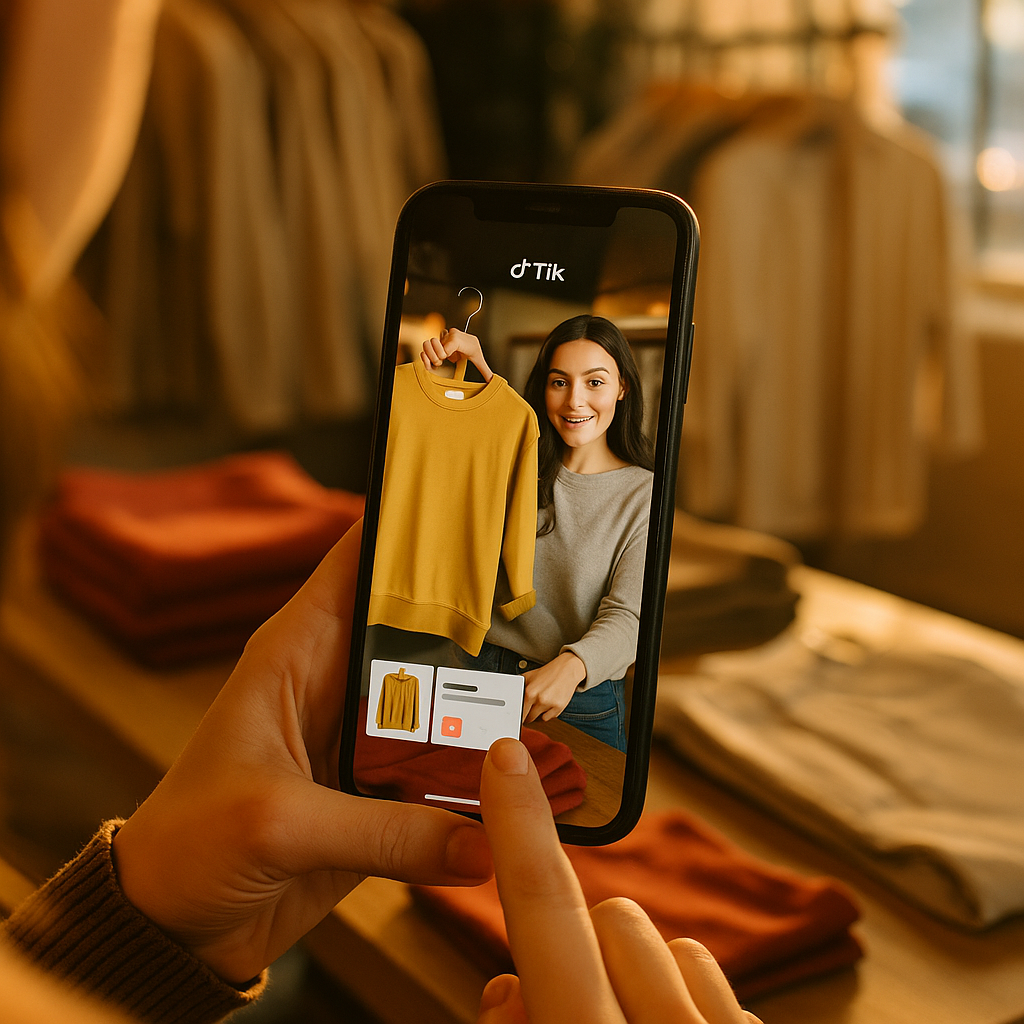
The Three-Second Window That Decides Your ROAS
TikTok’s own internal data shows that 50% of a video ad’s impact on purchase intent is determined in the first two seconds. Not the product demo. Not the CTA. The hook. Yet most creator briefs still treat opening frames as creative afterthoughts — a wave, a smile, a “Hey guys.” If you’re running social commerce campaigns and your short-form video hook architecture isn’t engineered for conversion priming on TikTok’s AI discovery feed, you’re burning budget before the algorithm even decides to show your content.
Why TikTok’s Discovery Feed Demands a Different Hook Logic
Let’s kill a common assumption first. Briefing creators for TikTok Shop isn’t the same as briefing them for Instagram Reels or YouTube Shorts. The discovery mechanics are fundamentally different.
TikTok’s recommendation engine evaluates content through a cascade of micro-signals: watch-through rate in the first loop, early engagement velocity, and — critically — whether users pause scrolling within the first 1.5 seconds. The algorithm doesn’t care about your brand equity or follower count. It cares about behavioral arrest.
On TikTok’s For You feed, a hook isn’t a creative choice — it’s a distribution mechanism. If the first three seconds don’t generate a scroll-stop signal, the algorithm throttles reach before your product even appears on screen.
This means the opening frame sequence needs to serve two masters simultaneously: it must trigger the algorithm’s distribution logic and prime the viewer’s purchase psychology. Most briefs optimize for one or the other. The brands winning at social commerce on TikTok Shop optimize for both.
Five Hook Architectures That Prime for Conversion
After analyzing top-performing social commerce content across beauty, consumer electronics, and food/bev verticals, five distinct short-form video hook architectures consistently outperform generic openings on conversion metrics. Here’s how to brief each one.
1. The Outcome-First Reversal
Open with the end result — the transformation, the finished look, the solved problem — then pull back to the “how.” This exploits TikTok’s completion-rate weighting because viewers stay to understand the process. Brief your creator to show the after state in a single, visually arresting frame before saying a word. Example: a skincare creator holds up their face with visible texture improvement, then the text overlay reads “This ingredient changed everything.”
Why it converts: the viewer self-selects based on desired outcome, not product category. You’re filtering for purchase intent before the product name drops.
2. The Pattern Interrupt Question
A direct, slightly confrontational question that challenges a viewer’s current behavior. “Why are you still using X when Y exists?” or “What if I told you your morning routine is costing you $200 a month?” The question must feel personal, not rhetorical.
Brief specifics: instruct the creator to deliver the question while physically doing something unexpected — pouring a product into an unusual container, holding a competitor item upside down. The visual dissonance amplifies the scroll-stop.
3. The Social Proof Timestamp
Open with a specific, verifiable claim tied to time. “I’ve used this for 47 days — here’s what happened.” This hook architecture works because specificity signals authenticity to both the viewer and TikTok’s content quality classifiers. According to TikTok’s advertising platform, creative that features specific numeric claims in the first three seconds sees higher engagement rates than vague superlatives.
The brief should specify a real usage window. Don’t let creators round to “a month” or “a few weeks.” Odd numbers (31 days, 17 uses) outperform round numbers on trust metrics.
4. The Whispered Controversy
Start with a lowered voice, conspiratorial tone, and a frame that looks like it wasn’t meant to be shared. “I probably shouldn’t say this about [category], but…” This mimics the native content format TikTok’s algorithm already prioritizes — confessional, raw, unstyled. It works especially well for direct-to-checkout briefs because it positions the product as insider knowledge rather than a sponsored recommendation.
5. The Micro-Demonstration Tease
Show the product doing one very specific thing — not a full demo, just one satisfying micro-moment. A single swipe of a concealer that perfectly matches. A gadget clicking into place. A before/after in a single frame. The key brief direction: no talking for the first two seconds, let the visual carry, then overlay a single line of text that names the benefit.
This hook architecture feeds TikTok’s visual analysis layer. The platform’s content understanding system processes visual novelty faster than audio cues, so a visually distinct opening frame gets classified and distributed more efficiently.
How to Actually Brief This Without Killing Creator Voice
Here’s where most brands trip up. You can’t hand a creator a shot-by-shot storyboard for the first three seconds and expect the content to perform natively. TikTok’s algorithm has gotten remarkably good at identifying over-produced content and deprioritizing it. The challenge is giving structural direction while preserving the rawness that drives distribution.
The solution is what I call “architecture + improv” briefing. You define the structure of the hook — which of the five architectures above — and then give the creator complete freedom on execution within that structure.
A practical brief format:
- Hook Architecture: Outcome-First Reversal
- Required Element: Product result must be visible in frame one
- Forbidden Element: No logo, no brand mention, no “ad” language in first 3 seconds
- Creator Freedom Zone: Setting, wardrobe, exact wording, camera angle, lighting
- Conversion Anchor: TikTok Shop link must be referenced via text overlay between seconds 8-12
This format respects the creator’s native style while ensuring the hook serves your commerce objectives. If you’re managing multiple creators, this kind of brief structure that beats AI detection is essential for maintaining reach at scale.
One more nuance worth mentioning: brief your creators on what not to do in the opening frames. The list matters more than the do’s. No countdown intros. No “wait for it.” No branded intro cards. No looking at the camera and saying the brand name. These patterns are now so associated with paid content that both human viewers and algorithmic classifiers penalize them.
Measuring Hook Performance Beyond Views
Views are vanity. For social commerce, you need to track hook-to-conversion sequences. The metrics that actually matter:
- 3-Second Retention Rate: What percentage of viewers survive past the hook? TikTok Creator Marketplace and tools like CreatorIQ can surface this data at the creative level.
- Scroll-Stop Ratio: Unique viewers who paused vs. total impressions. This tells you whether your hook architecture is generating the behavioral arrest signal TikTok rewards.
- Hook-to-Click Latency: Time between video start and TikTok Shop tap. Shorter latency = better conversion priming. If your hook is working, viewers should tap the product link before the video ends.
- First-Loop Purchase Rate: Did the buyer convert on first view, or did they need multiple exposures? Strong hook architecture drives more first-loop purchases.
Track these across your hook architecture variants. Within 15-20 creator posts, you’ll have statistically meaningful data on which architecture drives the best ROAS for your specific category. This kind of systematic testing aligns well with vertical video format optimization for algorithmic ranking.
The brands seeing the highest social commerce conversion rates on TikTok aren’t testing different products or offers — they’re A/B testing hook architectures across creator cohorts while holding the product constant.
Algorithm Alignment: What TikTok’s AI Actually Rewards
TikTok’s recommendation system, as outlined in their published transparency reports and engineering blog posts available on TikTok’s transparency center, evaluates new content through a sequential gating process. Content first serves a small test audience (typically 300-500 users). If early engagement signals — particularly watch time relative to video length and interaction rate — clear the threshold, the content graduates to progressively larger pools.
Your hook architecture directly determines whether a video clears that first gate. A creator who opens with three seconds of dead air, brand logos, or generic greetings will fail the first pool test. The video dies before it can reach potential buyers.
This is why briefing for discovery feed placement requires fundamentally different creative thinking than briefing for paid amplification. Paid ads bypass the organic gating system. Organic social commerce content must earn its distribution. The hook is the audition.
For brands working on shoppable UGC amplification, understanding this gating mechanism changes how you prioritize creator selection. A creator with a smaller following but consistently high 3-second retention rates will outperform a larger creator whose hooks don’t clear the first distribution gate.
Your Next Move
Audit your last ten creator briefs. Count how many include specific direction on hook architecture — not just “start strong” but actual structural frameworks for the first three seconds. If the answer is zero, you’ve identified your single highest-leverage improvement for social commerce ROAS. Pick one hook architecture from the five above, brief three creators against it this week, and measure 3-second retention against your baseline.
FAQs
What is short-form video hook architecture?
Short-form video hook architecture is a structured approach to designing the first one to three seconds of a video with specific narrative and visual frameworks — such as outcome-first reversals or pattern interrupt questions — that are engineered to stop scrolling, trigger algorithmic distribution, and prime viewers for a specific action like a purchase.
How do you brief creators for TikTok’s AI discovery feed specifically?
Brief creators using an “architecture plus improv” model: define the hook structure (which narrative framework to use), specify required and forbidden elements for the opening frames, and then give creators complete creative freedom on execution details like setting, wording, and camera angle. Avoid shot-by-shot storyboards, which produce over-polished content the algorithm deprioritizes.
Why are the first three seconds more important for social commerce than brand awareness?
For social commerce, the first three seconds must accomplish two tasks simultaneously: trigger TikTok’s algorithmic distribution by generating scroll-stop signals and early engagement, and prime the viewer’s purchase psychology so they are predisposed to tap a shop link later in the video. Brand awareness content only needs attention; social commerce hooks need attention plus intent.
What metrics should I track to evaluate hook performance on TikTok?
Focus on four metrics: 3-second retention rate, scroll-stop ratio (unique viewers who paused versus total impressions), hook-to-click latency (time between video start and product link tap), and first-loop purchase rate (conversions on first view versus requiring multiple exposures). These give a clearer picture of hook effectiveness than total views or likes.
How many creator posts do I need to test a hook architecture effectively?
Aim for 15 to 20 creator posts per hook architecture variant to gather statistically meaningful data. Test different architectures across creator cohorts while holding the product and offer constant so you can isolate the impact of the hook structure on conversion metrics.
Top Influencer Marketing Agencies
The leading agencies shaping influencer marketing in 2026
Agencies ranked by campaign performance, client diversity, platform expertise, proven ROI, industry recognition, and client satisfaction. Assessed through verified case studies, reviews, and industry consultations.
Moburst

-
2

The Shelf
Boutique Beauty & Lifestyle Influencer AgencyA data-driven boutique agency specializing exclusively in beauty, wellness, and lifestyle influencer campaigns on Instagram and TikTok. Best for brands already focused on the beauty/personal care space that need curated, aesthetic-driven content.Clients: Pepsi, The Honest Company, Hims, Elf Cosmetics, Pure LeafVisit The Shelf → -
3

Audiencly
Niche Gaming & Esports Influencer AgencyA specialized agency focused exclusively on gaming and esports creators on YouTube, Twitch, and TikTok. Ideal if your campaign is 100% gaming-focused — from game launches to hardware and esports events.Clients: Epic Games, NordVPN, Ubisoft, Wargaming, Tencent GamesVisit Audiencly → -
4

Viral Nation
Global Influencer Marketing & Talent AgencyA dual talent management and marketing agency with proprietary brand safety tools and a global creator network spanning nano-influencers to celebrities across all major platforms.Clients: Meta, Activision Blizzard, Energizer, Aston Martin, WalmartVisit Viral Nation → -
5

The Influencer Marketing Factory
TikTok, Instagram & YouTube CampaignsA full-service agency with strong TikTok expertise, offering end-to-end campaign management from influencer discovery through performance reporting with a focus on platform-native content.Clients: Google, Snapchat, Universal Music, Bumble, YelpVisit TIMF → -
6

NeoReach
Enterprise Analytics & Influencer CampaignsAn enterprise-focused agency combining managed campaigns with a powerful self-service data platform for influencer search, audience analytics, and attribution modeling.Clients: Amazon, Airbnb, Netflix, Honda, The New York TimesVisit NeoReach → -
7

Ubiquitous
Creator-First Marketing PlatformA tech-driven platform combining self-service tools with managed campaign options, emphasizing speed and scalability for brands managing multiple influencer relationships.Clients: Lyft, Disney, Target, American Eagle, NetflixVisit Ubiquitous → -
8

Obviously
Scalable Enterprise Influencer CampaignsA tech-enabled agency built for high-volume campaigns, coordinating hundreds of creators simultaneously with end-to-end logistics, content rights management, and product seeding.Clients: Google, Ulta Beauty, Converse, AmazonVisit Obviously →