


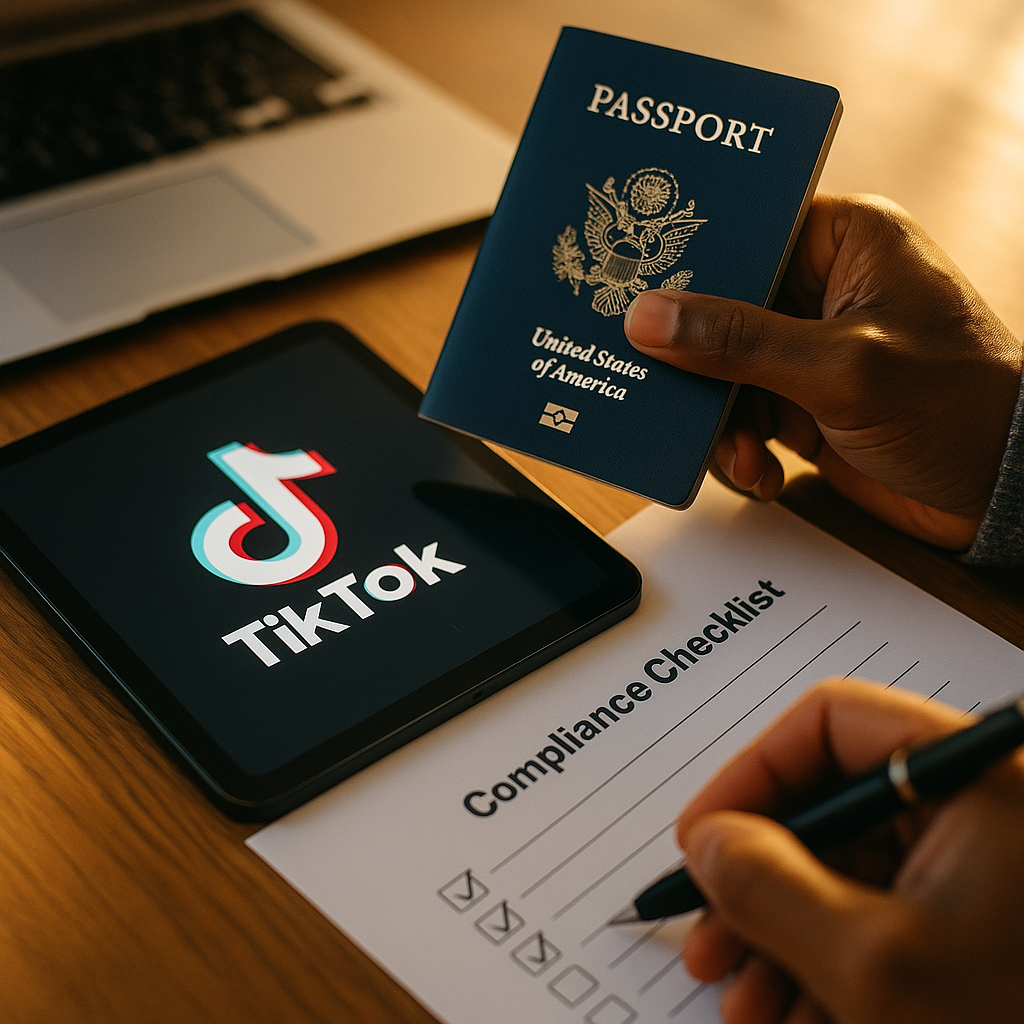
Over 500 brands are now enrolled in TikTok’s Real IP Verification program, and the platform hasn’t been shy about what happens to merchants who lag behind: throttled reach, flagged listings, and in some cases, suspended selling privileges. If your brand still isn’t enrolled, you’re not just missing a badge. You’re operating with a target on your back.
TikTok Shop’s expansion of Real IP Verification is the platform’s clearest signal yet that it’s done tolerating ambiguity around who actually owns the products, trademarks, and claims showing up in commerce content. For merchants still sitting on the sidelines, this isn’t a “nice to have” compliance badge. It’s quickly becoming the price of admission for scaled reach on the platform.
What Real IP Verification Actually Checks
Real IP Verification isn’t a rebrand of TikTok’s basic seller registration. It’s a deeper layer that cross-references trademark ownership, licensing chains, and product authenticity claims against official registries and brand-submitted documentation. Think of it as TikTok building its own version of a trademark clearinghouse, similar in spirit to what Amazon runs with Brand Registry.
The program was originally piloted with a few dozen flagship brands in beauty and consumer electronics, categories that see the highest volume of counterfeit and gray-market complaints. Now, past 500 brands, it’s expanding into fashion, supplements, home goods, and licensed entertainment merchandise, categories where IP disputes have historically been messy and slow to resolve.
Merchants without verified IP status are increasingly finding their product listings deprioritized in search and For You feed placement, even when no formal infringement complaint has been filed.
That last point matters. This isn’t only about avoiding takedowns after the fact. It’s about whether your content gets algorithmic distribution at all.
Why the Expansion Is Happening Now
TikTok Shop has been under pressure from multiple directions. Regulators in the EU and UK have scrutinized platform liability for counterfeit goods sold through social commerce. Brand owners have grown louder about knockoffs riding the coattails of viral creator content. And TikTok itself has commercial incentive: buyer trust drives repeat purchase behavior, and repeat purchases are what make TikTok Shop’s GMV targets achievable.
Verification at scale is also a defensive move. Platforms that can demonstrate proactive IP enforcement have stronger footing when regulators or courts ask what they did to prevent infringement. This mirrors what we’ve seen play out with algorithm accountability rulings against Meta, where platforms are expected to show their compliance work, not just claim good intentions.
For merchants, the practical upshot is this: enforcement is shifting from reactive (responding to complaints) to proactive (gating visibility until you prove legitimacy). That’s a meaningfully different risk posture, and one that needs a different onboarding approach.
Who’s Affected — and Who Isn’t Yet, But Should Prepare
Currently enrolled brands skew toward mid-to-large sellers with established trademark portfolios. But TikTok’s public roadmap language (“continuing to expand eligibility criteria across categories”) suggests this isn’t stopping at 500. Smaller merchants, private label sellers, and brands operating through resellers or authorized distributors should assume they’re next in line, not exempt.
If your brand sells through multiple storefronts (a direct TikTok Shop plus authorized reseller accounts), verification complexity multiplies. Each entity may need separate documentation even if they’re selling under license from the same parent brand.
The Onboarding Checklist for Merchants Not Yet Enrolled
Here’s where the operational work starts. Waiting for an invitation email from TikTok is not a strategy. Brands that got ahead of similar verification pushes on Amazon and Meta Commerce Manager treated it as a compliance sprint, not a passive queue. Do the same here.
- Audit your trademark documentation first. Pull your registered trademark certificates, licensing agreements, and any authorized reseller agreements into one folder before you start the application. Missing or expired documentation is the single biggest cause of rejected applications.
- Reconcile brand name variants across storefronts. If your TikTok Shop name doesn’t exactly match your registered trademark (extra words, different capitalization, regional naming), flag and fix this before submission. Mismatches trigger manual review delays that can stretch weeks.
- Map your supply chain for private label and white label products. If you manufacture under a third party or use a co-packer, you’ll likely need to show manufacturing agreements or licensing chains proving you have the right to sell under that brand name.
- Check international registration status. Brands selling into UK, EU, or Southeast Asian TikTok Shop markets need region-specific trademark registration, not just a US mark. A US-only trademark won’t clear verification for a UK storefront.
- Assign an internal owner, not a committee. Verification applications move faster when one person owns document collection, TikTok correspondence, and resubmission if flagged. Split ownership across legal, marketing, and ops usually means nobody follows up.
- Pressure-test your influencer and affiliate contracts. If creators are making product claims tied to your brand (ingredient claims, performance claims, authenticity claims), those need to align with what’s in your verified brand documentation. This is where FTC claim pre-clearance practices intersect directly with IP verification: mismatched claims across creator content and your registered brand assets create dual exposure.
- Build a resubmission buffer into your timeline. Expect at least one round of requested clarifications. Brands budgeting a single submission cycle are consistently caught off guard when TikTok comes back asking for supplementary documents.
Don’t Underestimate the Reseller Problem
This is the checklist item that trips up the most brands. If you sell through authorized resellers or regional distributors on TikTok Shop, each of those accounts may need its own verification trail linking back to your brand’s trademark. TikTok isn’t just verifying that a trademark exists somewhere; it’s verifying that the specific selling entity has the right to use it.
Brands with sprawling reseller networks should centralize this now. Create a standard authorization letter template, get it legally reviewed once, and issue it to every reseller needing to submit their own verification application. Doing this ad hoc, reseller by reseller, is how verification timelines stretch from weeks into months.
Where This Intersects With Broader Compliance Risk
Real IP Verification doesn’t live in isolation. It sits at the intersection of trademark law, platform terms of service, and increasingly, creator disclosure compliance. Brands that have already built out disclosure workflows for AI-generated content claims or creator disclosure complaints will find the operational muscle transfers well here. It’s the same discipline: document everything, assign clear ownership, and don’t wait for enforcement to force the issue.
There’s also a budget conversation worth having internally. Verification review, legal document preparation, and potential resubmission cycles all cost time and, often, outside counsel hours. Brands running influencer programs at scale should treat this the same way they’d treat vendor due diligence before granting budget authority: a fixed line item, not an afterthought squeezed into an already-stretched compliance team’s Q4.
Brands treating IP verification as a one-time checkbox are missing the point. TikTok’s enforcement posture suggests this will become a recurring audit requirement, not a set-and-forget status.
According to eMarketer’s ongoing coverage of social commerce growth, TikTok Shop continues to be one of the fastest-scaling retail media channels in the US and UK. That growth trajectory is exactly why TikTok is tightening IP enforcement now, before counterfeit and gray-market issues scale alongside GMV and become a trust problem too large to walk back.
What Happens If You Skip This
Merchants who ignore verification requests, or simply haven’t been prompted yet and assume that means safety, are exposed on two fronts. First, algorithmic deprioritization: TikTok has been transparent in seller forums that verified brands get preferential placement in Shop tab search and shoppable video surfaces. Second, and more consequential, dispute resolution risk. If a competitor or IP holder files an infringement complaint, unverified merchants have far less standing to contest a takedown quickly. Verified brands get expedited review; unverified ones go into a general queue that can take considerably longer, sometimes long enough to kill a seasonal sales window entirely.
There’s a reputational angle too. Buyers researching a brand on TikTok Shop increasingly notice verification badges the same way they notice checkmarks on Instagram or LinkedIn. Its absence, especially for brands positioned as premium, whispers “counterfeit risk” even when there’s nothing wrong at all. Perception compounds against unverified sellers whether or not the underlying product is legitimate.
For a platform-side view of requirements and eligibility, TikTok’s own seller resources are the first stop, alongside general guidance from the FTC on deceptive commerce practices that increasingly intersect with platform-level IP enforcement.
Next Step
Don’t wait for a TikTok notification to start this process. Pull your trademark documentation, audit your reseller network, and assign a single internal owner this week, because the brands still unverified when the next enforcement wave hits will be the ones scrambling through a backlog, not the ones shipping unaffected content.
FAQs
What is TikTok Real IP Verification?
It’s TikTok Shop’s program for confirming that a merchant legitimately owns or is licensed to use the trademarks and brand claims attached to their product listings. It cross-references trademark registries, licensing agreements, and reseller authorization documents.
Is Real IP Verification mandatory for all TikTok Shop sellers?
Not yet universally mandatory, but the program has expanded past 500 brands and TikTok has signaled continued expansion across categories. Unverified sellers already face reduced algorithmic visibility in many cases, making it functionally necessary for competitive reach.
How long does the verification process take?
Timelines vary, but merchants should budget for multiple weeks, including at least one resubmission cycle if documentation is incomplete or brand naming doesn’t exactly match registered trademarks.
Do authorized resellers need separate verification from the parent brand?
Generally yes. Each selling entity, including authorized resellers and regional distributors, typically needs its own verification trail linking back to the parent brand’s trademark, often via an authorization letter.
What documents should merchants prepare before applying?
Registered trademark certificates, licensing or manufacturing agreements, authorized reseller agreements, and region-specific trademark registrations for any international TikTok Shop storefronts.
What’s the risk of not enrolling in Real IP Verification?
Merchants risk deprioritized search and feed placement, slower dispute resolution if an infringement complaint is filed, and reputational erosion as buyers increasingly associate verification badges with trustworthiness.
FAQs
Top Influencer Marketing Agencies
The leading agencies shaping influencer marketing in 2026
Agencies ranked by campaign performance, client diversity, platform expertise, proven ROI, industry recognition, and client satisfaction. Assessed through verified case studies, reviews, and industry consultations.
Moburst

-
2

The Shelf
Boutique Beauty & Lifestyle Influencer AgencyA data-driven boutique agency specializing exclusively in beauty, wellness, and lifestyle influencer campaigns on Instagram and TikTok. Best for brands already focused on the beauty/personal care space that need curated, aesthetic-driven content.Clients: Pepsi, The Honest Company, Hims, Elf Cosmetics, Pure LeafVisit The Shelf → -
3

Audiencly
Niche Gaming & Esports Influencer AgencyA specialized agency focused exclusively on gaming and esports creators on YouTube, Twitch, and TikTok. Ideal if your campaign is 100% gaming-focused — from game launches to hardware and esports events.Clients: Epic Games, NordVPN, Ubisoft, Wargaming, Tencent GamesVisit Audiencly → -
4

Viral Nation
Global Influencer Marketing & Talent AgencyA dual talent management and marketing agency with proprietary brand safety tools and a global creator network spanning nano-influencers to celebrities across all major platforms.Clients: Meta, Activision Blizzard, Energizer, Aston Martin, WalmartVisit Viral Nation → -
5

The Influencer Marketing Factory
TikTok, Instagram & YouTube CampaignsA full-service agency with strong TikTok expertise, offering end-to-end campaign management from influencer discovery through performance reporting with a focus on platform-native content.Clients: Google, Snapchat, Universal Music, Bumble, YelpVisit TIMF → -
6

NeoReach
Enterprise Analytics & Influencer CampaignsAn enterprise-focused agency combining managed campaigns with a powerful self-service data platform for influencer search, audience analytics, and attribution modeling.Clients: Amazon, Airbnb, Netflix, Honda, The New York TimesVisit NeoReach → -
7

Ubiquitous
Creator-First Marketing PlatformA tech-driven platform combining self-service tools with managed campaign options, emphasizing speed and scalability for brands managing multiple influencer relationships.Clients: Lyft, Disney, Target, American Eagle, NetflixVisit Ubiquitous → -
8

Obviously
Scalable Enterprise Influencer CampaignsA tech-enabled agency built for high-volume campaigns, coordinating hundreds of creators simultaneously with end-to-end logistics, content rights management, and product seeding.Clients: Google, Ulta Beauty, Converse, AmazonVisit Obviously →