


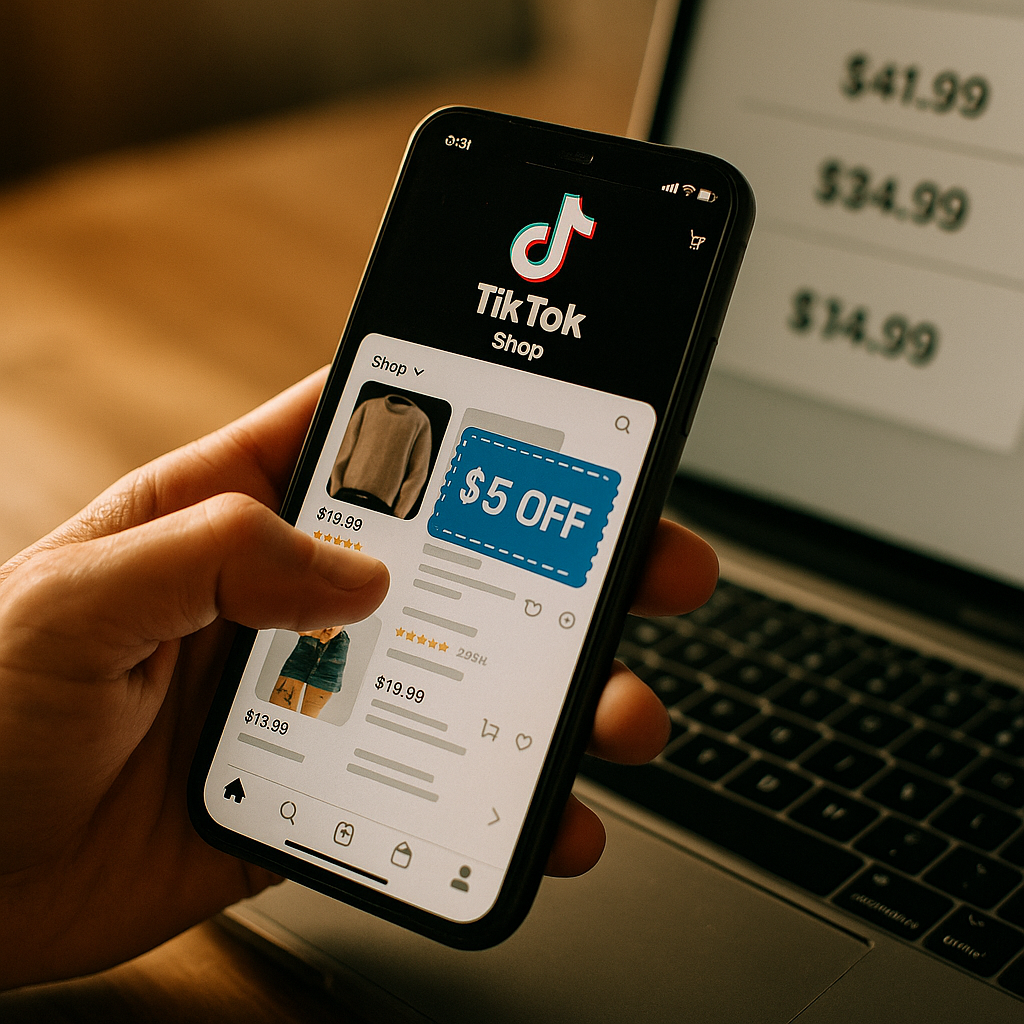
Two shoppers see the same TikTok Shop product. One gets a code for 15% off. The other gets nothing. Neither knows why. That’s not a glitch, it’s the algorithm doing exactly what it was trained to do, and it’s precisely the kind of FTC personalized pricing scenario regulators have started circling. Brands running TikTok Shop promotions need to understand where automated discounting ends and legal exposure begins.
The FTC Put Personalized Pricing on Notice, Not Just Surveillance Pricing
In its recent staff perspective on algorithmic and surveillance pricing, the FTC drew a distinction that a lot of marketers glossed over: the concern isn’t just that companies use personal data to set prices. It’s that consumers have no visibility into when, why, or how much their price differs from someone else’s. The agency’s public guidance on pricing practices frames this as a fairness and transparency issue tied back to Section 5 of the FTC Act, the same broad “unfair or deceptive practices” authority that underpins most influencer marketing enforcement.
Here’s the part brands keep missing: the FTC hasn’t banned personalized pricing outright. What it’s signaled is that opaque, undisclosed, data-driven price discrimination, especially when it disproportionately affects certain demographics or exploits behavioral data, invites scrutiny. Discounting itself isn’t the problem. The black box is.
If your brand can’t explain in plain language why one customer got a coupon and another didn’t, you don’t have a marketing tactic. You have a liability waiting for a complaint.
TikTok Shop’s Discount Engine Wasn’t Built With This in Mind
TikTok Shop’s coupon and voucher system is algorithmically distributed by default. Merchants set parameters, budget caps, eligibility windows, minimum spend thresholds, but TikTok’s backend decides which shoppers actually see which codes, often based on browsing behavior, purchase history, engagement with specific creators, and predicted conversion likelihood. That’s the entire point of the system: maximize redemption and GMV per dollar of discount spend.
From a performance marketing lens, it’s brilliant. From a compliance lens, it’s a black box wearing a coupon costume.
Most brand teams treat these discount codes as a media buying decision, something the growth or performance team configures and forgets. Nobody’s asking whether the targeting logic creates disparate pricing outcomes across protected classes, income brackets inferred from device data, or geographic regions. Nobody’s documenting the “why” behind the algorithm’s choices, because in most cases, the brand doesn’t actually know the why. TikTok’s model does the deciding.
Where the Two Collide
The friction point is straightforward once you spell it out. The FTC’s enforcement posture increasingly expects companies to be able to answer: what data drove this price difference, and did we disclose that pricing could vary? TikTok Shop’s infrastructure, by design, doesn’t hand brands that answer on a silver platter. Discount code eligibility is a live, shifting output of a recommendation engine, not a static rule set a compliance officer can audit in a spreadsheet.
That gap matters more than most brand leaders realize, especially with livestream shopping accelerating checkout velocity and leaving little room for real-time compliance review. We’ve covered how livestream price claims already carry their own substantiation risk. Algorithmic discounting stacks a second layer of exposure on top.
Consider a mid-size beauty brand running a TikTok Shop campaign with a tiered coupon strategy: 10% for new followers, 20% for cart abandoners, 25% for lapsed customers flagged by TikTok’s churn model. On paper, that’s smart segmentation. In practice, if the churn model’s inputs correlate with age, location, or spending patterns that map onto protected characteristics, the brand has inherited a discrimination risk it didn’t design and can’t fully see.
Why “TikTok Controls the Algorithm” Isn’t a Defense
Brand legal teams sometimes assume the platform bears responsibility since TikTok’s system makes the targeting decision. That’s not how FTC enforcement typically works. The agency has consistently held brands accountable for practices executed on their behalf by platforms, agencies, or automated tools, the same logic that applies to AI-generated talking points creating liability even when a brand didn’t write the script itself. If your product, your storefront, and your promotional budget are involved, you own the outcome, regardless of which black box made the call.
What “Reasonable Transparency” Actually Looks Like Here
Nobody expects brands to publish their entire discounting logic. That’s neither realistic nor commercially sensible. But the FTC’s expectations point toward a few concrete, achievable standards:
- Disclose that prices or offers may vary. A simple, visible statement in shop terms or checkout flow noting that discount eligibility can differ by customer covers a meaningful amount of ground.
- Document your targeting parameters. Even if TikTok’s engine makes the final call, brands should log the inputs they configured (audience segments, budget rules, eligibility windows) so there’s a paper trail if a regulator or customer asks.
- Audit for disparate impact periodically. Pull redemption data and check whether discount distribution skews unexpectedly across demographics you can observe, like geography or device type.
- Avoid using sensitive inferred data as a targeting input. If TikTok’s tools let you layer in signals tied to health, financial status, or similarly sensitive categories, don’t. That’s the fastest way to turn a discounting strategy into an enforcement case study.
This isn’t dramatically different from the discipline brands should already be applying to checkout data minimization on TikTok Shop and Instagram. Personalized pricing compliance is really a subset of the same broader question: what data are you letting the platform use on your behalf, and can you defend that choice if asked?
Regulators don’t need you to control the algorithm. They need you to be able to explain what it’s doing with your product and your customers’ data.
Build the Escalation Path Before You Need It
Most brands don’t have a defined internal process for what happens when a customer complains about seeing a worse price than a friend, or when a journalist starts asking why TikTok Shop coupons seem to favor certain zip codes. That’s a mistake. Treat this the way you’d treat any consumer-facing pricing dispute: with a documented escalation matrix, similar in spirit to the livestream pricing compliance escalation matrix brands are already building for flash sales and countdown promotions.
At minimum, your team needs a designated owner (usually someone straddling growth marketing and legal/compliance), a defined response window, and a template explanation that doesn’t sound evasive. “Our pricing may vary based on personalized offers, consistent with our terms of service” is a defensible answer. Silence, or a shrug toward TikTok’s algorithm, is not.
It’s also worth stress testing your coupon strategy against the FTC personalized pricing compliance checklist before your next major TikTok Shop campaign launch, not after a complaint lands in your inbox. Retroactive compliance is expensive compliance.
The GMV Pressure Problem
Here’s the uncomfortable truth nobody on the growth team wants to say out loud: algorithmic discounting works because it’s aggressive, and aggressive is exactly what triggers regulatory attention. TikTok Shop’s incentive structure rewards merchants who let the algorithm optimize freely. Compliance teams, meanwhile, want guardrails that slow that optimization down. That tension isn’t going away, and pretending it doesn’t exist is how brands end up explaining themselves to a state attorney general instead of a customer service rep.
The fix isn’t turning off algorithmic discounting entirely, that would be commercially self-defeating given TikTok Shop’s scale, cited by eMarketer’s retail media research as one of the fastest-growing social commerce channels in the US. The fix is building a compliance layer that runs parallel to the growth engine instead of trying to override it after the fact.
Practical Steps for the Next Ninety Days
Marketing leaders don’t need a total overhaul. They need a few specific moves, done properly:
- Add a plain-language pricing variability disclosure to your TikTok Shop storefront terms and checkout confirmation flow.
- Pull a redemption report by segment and eyeball it for anything that looks like unintentional demographic skew.
- Assign clear ownership for pricing-related customer complaints, with a documented response template ready to go.
- Review your TikTok Shop coupon configuration settings with whoever manages the account, and confirm no sensitive data categories are feeding targeting logic.
- Loop in legal before your next major discount campaign, not after launch, especially for anything tied to livestream events where velocity is high and review time is short.
None of this requires slowing down your commerce strategy. It requires making sure someone in the building can answer the question the FTC is actually asking: can you explain your pricing, and did you tell people it might differ? Brand teams that treat this as a checkbox rather than an operating discipline are the ones who’ll get caught flat-footed when a state regulator or a viral TikTok complaint forces the issue. For a broader view of how platform-specific disclosure obligations are diverging, it’s worth comparing notes with how TikTok, Instagram, and YouTube disclosure rules already differ by platform. Personalized pricing is shaping up to be the next front in that same divergence.
Frequently Asked Questions
Does the FTC ban personalized pricing on platforms like TikTok Shop?
No. The FTC hasn’t issued a rule banning personalized pricing. Its recent staff perspective raises concerns about opacity and undisclosed use of consumer data in pricing decisions, not the existence of discounts or promotions themselves. Brands remain free to run tiered or targeted offers, provided they can explain the logic and disclose that pricing may vary.
Is TikTok or the brand responsible if algorithmic discounting causes a compliance problem?
The brand generally carries the primary risk. Regulators have consistently held companies accountable for outcomes generated by platforms and tools acting on their behalf, even when the brand didn’t directly control the underlying algorithm. Brands should assume they own the compliance burden for any TikTok Shop discount strategy they configure or approve.
What should a TikTok Shop pricing disclosure actually say?
A short, plain-language statement noting that discounts, coupons, or offers may vary by customer based on factors like browsing activity or account history is generally sufficient. It should appear in storefront terms and ideally be visible near checkout, not buried in a lengthy terms-of-service document nobody reads.
How often should brands audit their discount code distribution?
A quarterly review is a reasonable baseline for most mid-size TikTok Shop programs, with more frequent checks during major campaign periods or livestream events where discount velocity spikes. The goal is catching unintended demographic or geographic skew before it becomes a pattern a regulator or journalist could point to.
Does this apply to smaller brands running limited TikTok Shop promotions?
Yes, though enforcement risk scales with visibility and volume. Smaller brands face lower probability of direct FTC action but still carry reputational and customer trust risk if shoppers notice inconsistent pricing without explanation. Building basic disclosure and documentation habits early is cheaper than retrofitting them after a complaint.
Top Influencer Marketing Agencies
The leading agencies shaping influencer marketing in 2026
Agencies ranked by campaign performance, client diversity, platform expertise, proven ROI, industry recognition, and client satisfaction. Assessed through verified case studies, reviews, and industry consultations.
Moburst

-
2

The Shelf
Boutique Beauty & Lifestyle Influencer AgencyA data-driven boutique agency specializing exclusively in beauty, wellness, and lifestyle influencer campaigns on Instagram and TikTok. Best for brands already focused on the beauty/personal care space that need curated, aesthetic-driven content.Clients: Pepsi, The Honest Company, Hims, Elf Cosmetics, Pure LeafVisit The Shelf → -
3

Audiencly
Niche Gaming & Esports Influencer AgencyA specialized agency focused exclusively on gaming and esports creators on YouTube, Twitch, and TikTok. Ideal if your campaign is 100% gaming-focused — from game launches to hardware and esports events.Clients: Epic Games, NordVPN, Ubisoft, Wargaming, Tencent GamesVisit Audiencly → -
4

Viral Nation
Global Influencer Marketing & Talent AgencyA dual talent management and marketing agency with proprietary brand safety tools and a global creator network spanning nano-influencers to celebrities across all major platforms.Clients: Meta, Activision Blizzard, Energizer, Aston Martin, WalmartVisit Viral Nation → -
5

The Influencer Marketing Factory
TikTok, Instagram & YouTube CampaignsA full-service agency with strong TikTok expertise, offering end-to-end campaign management from influencer discovery through performance reporting with a focus on platform-native content.Clients: Google, Snapchat, Universal Music, Bumble, YelpVisit TIMF → -
6

NeoReach
Enterprise Analytics & Influencer CampaignsAn enterprise-focused agency combining managed campaigns with a powerful self-service data platform for influencer search, audience analytics, and attribution modeling.Clients: Amazon, Airbnb, Netflix, Honda, The New York TimesVisit NeoReach → -
7

Ubiquitous
Creator-First Marketing PlatformA tech-driven platform combining self-service tools with managed campaign options, emphasizing speed and scalability for brands managing multiple influencer relationships.Clients: Lyft, Disney, Target, American Eagle, NetflixVisit Ubiquitous → -
8

Obviously
Scalable Enterprise Influencer CampaignsA tech-enabled agency built for high-volume campaigns, coordinating hundreds of creators simultaneously with end-to-end logistics, content rights management, and product seeding.Clients: Google, Ulta Beauty, Converse, AmazonVisit Obviously →