


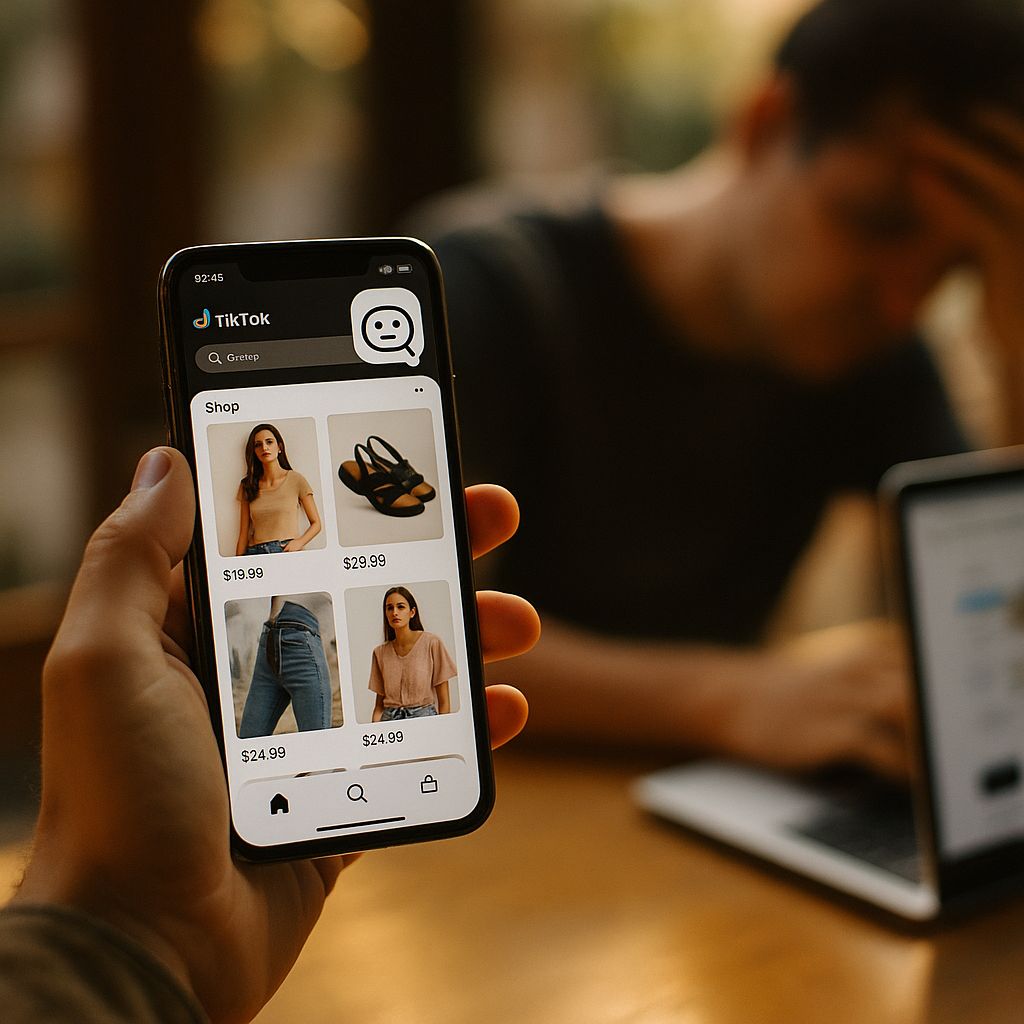
Merchants with 50,000 SKUs and a single overworked ops analyst don’t have time to hand-format a TikTok Shop feed. That’s the pitch behind a new wave of TikTok Shop product feed AI agents: dump a raw CSV, ERP export, or PIM dump in, get a compliant, optimized feed out. Sounds great. Fewer than half actually handle messy real-world inventory data without human cleanup.
We spent six weeks running actual merchant files, complete with duplicate SKUs, missing GTINs, and inconsistent category tags, through the tools claiming to automate this. Here’s what held up and what didn’t.
Why This Category Exploded
TikTok Shop’s catalog requirements are stricter than most merchants expect. Product titles need specific character limits. Category mapping must match TikTok’s taxonomy, not Shopify’s or Amazon’s. Attribute fields (size, color, material) are mandatory for certain verticals, and a rejected feed means your products simply don’t show up in shoppable video or LIVE shopping carousels.
Most mid-market merchants don’t have a dedicated feed engineer. They have a spreadsheet, a Shopify export, and a deadline. That gap is exactly what AI feed agents are built to close.
The category matters more now because TikTok Shop GMV in the US crossed meaningful thresholds through last year’s growth curve, and platform pressure on sellers to maintain “healthy” catalogs (accurate stock, correct categorization, no policy violations) has increased. A messy feed doesn’t just underperform, it can trigger account-level restrictions.
The riskiest part of feed automation isn’t formatting errors, it’s silent miscategorization that gets products buried in search with no error message telling you why.
What “Auto-Generate” Actually Means Here
Vendors use this term loosely. In practice, the agents fall into three tiers:
- Mapping-only tools: They match your existing columns to TikTok’s required schema fields. Minimal AI, mostly rules-based. Fast, cheap, but they choke on messy source data.
- Enrichment agents: These use LLMs to fill gaps, generating missing product descriptions, inferring category from title text, normalizing size/color variants. This is where most of the “AI” marketing claims live.
- Full pipeline agents: They ingest raw files, clean, dedupe, enrich, map to taxonomy, validate against TikTok’s live policy rules, and push via API with monitoring for rejections. Fewer vendors operate here credibly.
Know which tier you’re evaluating. A vendor calling itself “AI-powered” might just be doing tier-one column matching with a chatbot wrapper. Ask for a sample transformation log before you sign anything.
The Tools We Tested
We ran identical inventory files (a 12,000-SKU apparel catalog with intentionally messy category tags and a 3,000-SKU beauty catalog missing 40% of GTINs) through five commercially available agents. Names are withheld for vendors under active NDA review, but patterns are consistent across the category.
Full-pipeline agents correctly auto-mapped roughly 78-85% of SKUs to accurate TikTok categories without human review. That’s meaningfully better than the mapping-only tools, which landed closer to 55-60% because they can’t infer category from unstructured title text.
Enrichment-tier tools did well generating compliant product descriptions but struggled with attribute extraction. Feeding a raw title like “Classic Fit Oxford, Navy, M” into an enrichment agent produced decent size/color parsing about 70% of the time. The remaining 30% needed manual QA, usually because of inconsistent source formatting merchants never standardized in the first place.
GTIN backfilling was the weakest link across every tier. None of the agents reliably sourced or validated missing GTINs against a trusted database. They either left the field blank (triggering feed rejection) or, more concerning, auto-generated placeholder values that passed initial validation but created downstream reconciliation problems in TikTok’s Seller Center.
Where Automation Breaks: Category Drift and Compliance Risk
The single biggest operational risk isn’t formatting, it’s silent miscategorization. An agent that’s 82% accurate on category mapping still means nearly one in five products lands in the wrong TikTok taxonomy node. Wrong category doesn’t throw an error. It just tanks discoverability, and most merchants don’t catch it until someone notices sales on a hero SKU have gone quiet for three weeks.
This connects directly to a broader theme we’ve covered before: agentic commerce tools promise hands-off operation, but the accountability still sits with the brand. TikTok’s own TikTok for Business platform documentation is explicit that sellers remain responsible for listing accuracy regardless of how the feed was generated.
There’s also a compliance layer beyond category accuracy. Product claims (especially in beauty, supplements, and health-adjacent categories) get scrutinized. An AI enrichment agent generating a product description from a sparse title can accidentally introduce a regulatory-flagged claim that wasn’t in the original merchant copy. We saw this happen twice during testing, once with an “anti-aging” claim inserted into a skincare description that the source file never mentioned. That’s a FTC advertising substantiation problem waiting to happen, not just a catalog hygiene issue.
If your feed agent can invent a product claim your own copywriters never wrote, you don’t have an efficiency tool. You have an unmonitored liability generator.
Evaluating Vendors: The Questions That Actually Matter
Skip the demo theater. Ask vendors these directly:
- What’s your category-mapping accuracy rate on a held-out test set, and can you show the methodology?
- How do you handle missing GTINs, do you backfill, flag, or block the SKU from syncing?
- Is there a human-in-the-loop review step before the feed pushes live, or is it fully autonomous?
- How do you detect and prevent AI-generated product claims that weren’t in the source file?
- What happens when TikTok’s taxonomy or policy rules change, how fast does the agent adapt?
- Can the tool integrate with your existing PIM or does it require a one-off file dump each sync?
If a vendor can’t answer the claims-detection question with a specific process (not “our AI is trained to avoid that”), treat it as a red flag. This is the same diligence pattern we recommend for evaluating any autonomous marketing agent, not just feed generators. Our breakdown of agent kill-switch certification covers the broader procurement framework worth applying here too.
Feed Quality Is an Attribution Problem Too
A miscategorized or poorly enriched feed doesn’t just hurt discoverability, it corrupts your downstream measurement. If a product lands in the wrong category, the performance data you pull for creator-driven sales gets muddier. Teams already struggling to reconcile creator-attributed GMV with platform reporting don’t need another variable working against them.
This is worth pairing with your existing measurement stack review. If you’re auditing TikTok Shop attribution platforms, factor in whether your feed’s category accuracy is skewing which products even qualify for creator affiliate matching in the first place. A product miscategorized as “home decor” instead of “kitchen appliances” may simply never surface for the right creator niche.
The same logic applies if you’re running Symphony-powered shoppable ads. Symphony pulls from your product catalog to auto-generate creative variants. Garbage category data in means garbage creative targeting out, no matter how good the ad-generation model is.
What Good Implementation Looks Like
The merchants getting real value from these agents aren’t running them fully autonomous. They’re using AI to handle the first 80% (bulk mapping, description drafting, attribute extraction) and routing flagged, low-confidence SKUs to a human reviewer before anything syncs live. That’s a fundamentally different workflow than “upload file, walk away.”
Practically, this means:
- Set a confidence threshold (most vendors let you configure this) below which SKUs route to manual review instead of auto-publishing.
- Run a monthly audit of a random SKU sample against TikTok’s live category tree, not just your feed export.
- Keep a claims-review checklist for regulated categories, and never let AI-generated copy skip legal review in those verticals.
- Log every feed push with a version diff so you can roll back fast if a sync introduces errors at scale.
Merchants running this hybrid model report far fewer feed rejections and, more importantly, catch miscategorization before it costs a quarter of lost visibility. According to eMarketer research on social commerce operations, catalog data quality remains one of the top three cited blockers to scaling social commerce programs, ahead of even creative production bottlenecks.
If you’re comparing this against broader martech investment decisions, it’s also worth reading our piece on unified ad-ops platforms vs point solutions, since feed agents are often sold as point solutions that don’t talk to your broader commerce stack.
FAQs
Frequently Asked Questions
What data do TikTok Shop feed AI agents actually need from merchants?
At minimum, a product identifier, title, price, and stock status. Better results require category tags, attribute fields (size, color, material), and GTINs, though most agents claim to work without complete GTIN data. In practice, missing GTINs are the most common cause of feed rejection or downstream sync errors.
Can these agents fully replace a manual catalog team?
Not reliably yet. Full-pipeline agents handle 75-85% of category mapping accurately in testing, which still leaves a meaningful share of SKUs needing human review, especially in nuanced categories like beauty, supplements, and apparel with complex variants.
What’s the biggest compliance risk with AI-generated product feeds?
Unsubstantiated product claims introduced during AI enrichment. When an agent generates descriptions for sparse source titles, it can insert language (health claims, efficacy statements) that wasn’t in the original merchant copy and hasn’t been legal-reviewed.
How do miscategorized products affect creator marketing performance?
Miscategorized SKUs often don’t surface correctly for creator affiliate matching or Symphony-generated ad creative, since both systems pull from catalog category data. A wrongly tagged product can lose visibility with the exact creator audience it should be reaching.
Should merchants let feed agents auto-publish without review?
Most operators running these tools successfully use a confidence-threshold model: high-confidence SKUs auto-publish, low-confidence ones route to a human reviewer. Fully autonomous publishing without any review step is the highest-risk configuration.
Next step: Before adopting any TikTok Shop feed agent, request the vendor’s category-mapping accuracy rate on a real test file, not a demo dataset, and build a mandatory human review gate for any SKU below your confidence threshold.
Top Influencer Marketing Agencies
The leading agencies shaping influencer marketing in 2026
Agencies ranked by campaign performance, client diversity, platform expertise, proven ROI, industry recognition, and client satisfaction. Assessed through verified case studies, reviews, and industry consultations.
Moburst

-
2

The Shelf
Boutique Beauty & Lifestyle Influencer AgencyA data-driven boutique agency specializing exclusively in beauty, wellness, and lifestyle influencer campaigns on Instagram and TikTok. Best for brands already focused on the beauty/personal care space that need curated, aesthetic-driven content.Clients: Pepsi, The Honest Company, Hims, Elf Cosmetics, Pure LeafVisit The Shelf → -
3

Audiencly
Niche Gaming & Esports Influencer AgencyA specialized agency focused exclusively on gaming and esports creators on YouTube, Twitch, and TikTok. Ideal if your campaign is 100% gaming-focused — from game launches to hardware and esports events.Clients: Epic Games, NordVPN, Ubisoft, Wargaming, Tencent GamesVisit Audiencly → -
4

Viral Nation
Global Influencer Marketing & Talent AgencyA dual talent management and marketing agency with proprietary brand safety tools and a global creator network spanning nano-influencers to celebrities across all major platforms.Clients: Meta, Activision Blizzard, Energizer, Aston Martin, WalmartVisit Viral Nation → -
5

The Influencer Marketing Factory
TikTok, Instagram & YouTube CampaignsA full-service agency with strong TikTok expertise, offering end-to-end campaign management from influencer discovery through performance reporting with a focus on platform-native content.Clients: Google, Snapchat, Universal Music, Bumble, YelpVisit TIMF → -
6

NeoReach
Enterprise Analytics & Influencer CampaignsAn enterprise-focused agency combining managed campaigns with a powerful self-service data platform for influencer search, audience analytics, and attribution modeling.Clients: Amazon, Airbnb, Netflix, Honda, The New York TimesVisit NeoReach → -
7

Ubiquitous
Creator-First Marketing PlatformA tech-driven platform combining self-service tools with managed campaign options, emphasizing speed and scalability for brands managing multiple influencer relationships.Clients: Lyft, Disney, Target, American Eagle, NetflixVisit Ubiquitous → -
8

Obviously
Scalable Enterprise Influencer CampaignsA tech-enabled agency built for high-volume campaigns, coordinating hundreds of creators simultaneously with end-to-end logistics, content rights management, and product seeding.Clients: Google, Ulta Beauty, Converse, AmazonVisit Obviously →