


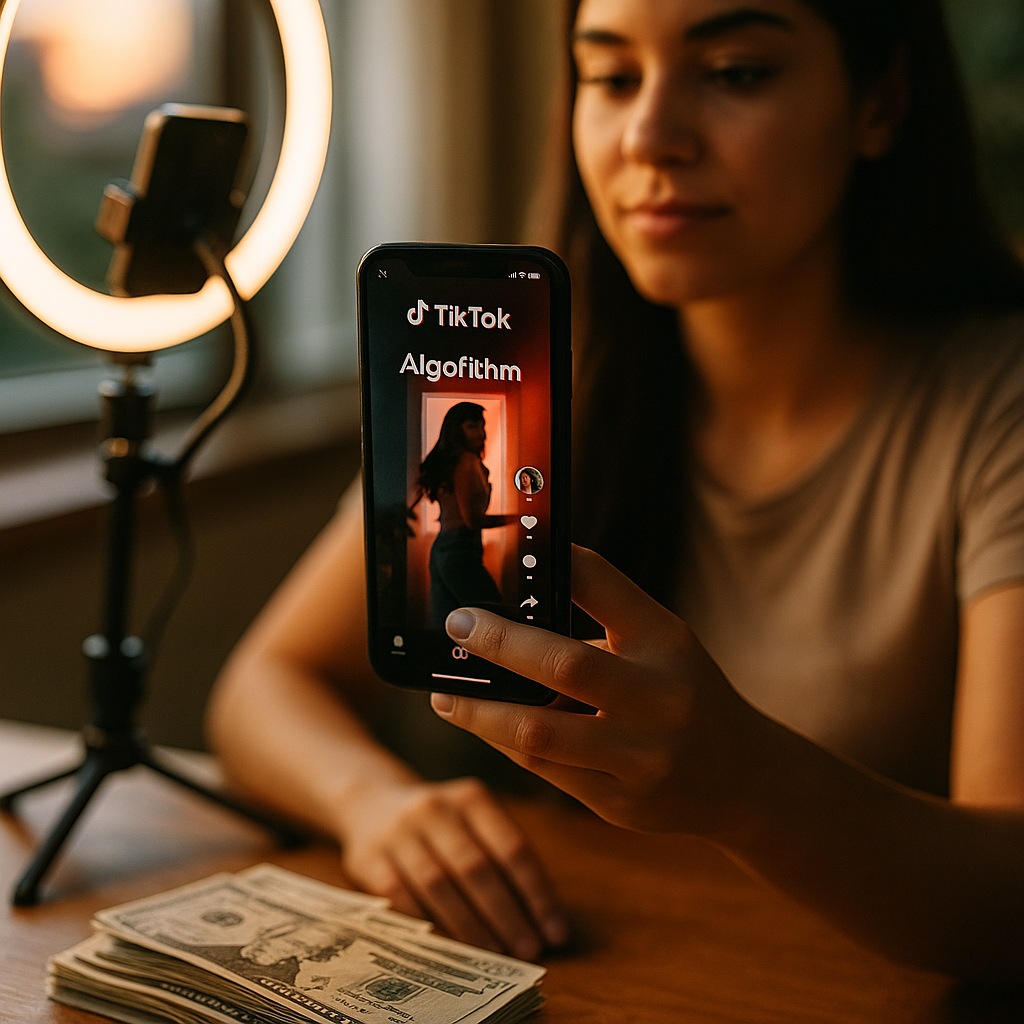
A creator with 8,000 followers is out-earning one with 800,000 on a per-view basis. That’s not an anomaly anymore — it’s the new baseline. Micro-creator pricing power has quietly become the most disruptive force in influencer budgeting, and it’s TikTok’s own algorithm doing the disrupting. If your media plan still leads with follower count, you’re already overpaying.
The Algorithm Doesn’t Care About Your Follower Count
TikTok’s For You Page has never been a subscriber-based distribution system. Unlike Instagram or YouTube, where audience size historically correlated with reach, TikTok rewards content, not accounts. A video from a creator with 5,000 followers can outperform one from a creator with 5 million, purely because the completion rate, watch time, and share velocity were stronger.
That structural quirk has always existed. What’s changed is how aggressively brands are now exploiting it. Marketers who once treated micro-creators as a cheap testing ground are discovering they’re actually the highest-leverage line item in the budget.
On TikTok, a creator’s follower count predicts almost nothing about reach. Content velocity does. That single fact is rewriting how brands allocate influencer budgets in real time.
This is long-tail amplification in action: instead of concentrating reach in a handful of mega-accounts, the algorithm spreads discovery across thousands of smaller creators, each capturing a sliver of viral distribution. Aggregate that sliver across a diversified roster, and the reach-per-dollar math flips hard in favor of micro talent.
Macro Talent’s Margins Are Getting Squeezed
Macro and celebrity-tier creators are still commanding premium rates, in some cases higher than ever. But the ROI conversation has shifted. Brands are increasingly asking: are we paying for reach, or paying for a name? On TikTok specifically, that premium doesn’t reliably translate into proportional impressions.
Consider the math agencies are running now. A macro creator with 2 million followers might charge $15,000-$25,000 for a branded video. A cohort of 25 micro-creators, each charging $600-$900, can produce comparable or greater aggregate reach, with better engagement rates and — critically — more usable content variations for testing. That’s not a hypothetical; it mirrors findings from eMarketer’s ongoing creator spend research showing engagement-rate decay at the top of the follower pyramid.
Our earlier coverage on the creator middle class outperforming top talent flagged this shift before TikTok’s algorithm updates made it undeniable. What was a retention story is now also a pricing story.
Why 2026 Is the Inflection Point
Three things converged this year to make micro-creator pricing power impossible to ignore:
- TikTok Shop’s affiliate infrastructure matured. Micro-creators now have direct commerce rails, meaning brands can pay performance-based rates instead of flat fees, and the data consistently favors long-tail accounts on conversion efficiency, as shown in our analysis of TikTok Shop live commerce conversion rates.
- Overall creator budgets expanded sharply. With creator budgets up 171 percent industry-wide, brands have more room to run diversified micro-creator programs instead of betting everything on a few big names.
- Creator supply exploded. With over 100 million active creators competing for attention, per our creator supply glut analysis, buyer leverage has shifted decisively toward brands at the micro tier, where competition for deals is fiercest and rates remain suppressed.
None of these forces are TikTok-exclusive, but TikTok’s amplification model is the accelerant. Instagram Reels and YouTube Shorts are chasing similar mechanics, but their legacy follower-graph biases still blunt the effect.
What “Pricing Power” Actually Means Here
Pricing power isn’t just about micro-creators charging more (though many are). It’s about brands recalculating what a unit of reach, engagement, or conversion should cost — and micro-creators winning that recalculation. A few data points worth internalizing:
- Micro-creator engagement rates on TikTok frequently run 3-5x higher than macro accounts, per benchmarks tracked by Sprout Social.
- Cost-per-engagement for micro tiers has held flat or declined even as overall creator spend has risen, because supply at that tier keeps growing.
- Brands running full-funnel programs are shifting budget mix from roughly 60/40 macro-to-micro two years ago to closer to 30/70 today, according to agency buyers we’ve spoken with across multiple holding companies.
That last shift is the one CFOs care about. It’s not a creative preference. It’s a reallocation of media dollars toward the channel with better measurable return, which is exactly the kind of shift covered in our look at creator ad spend outpacing broader digital budgets.
The Risk Side Nobody Wants to Talk About
Micro-creator programs carry real operational overhead. Managing 50 small creators is not the same lift as managing five big ones. Contracting, briefing, payment processing, and compliance all multiply. Brands that chase the ROI upside without solving the operational layer end up drowning in admin, or worse, in FTC exposure.
Disclosure compliance gets harder at scale, not easier. Each micro-creator needs the same FTC endorsement guideline adherence as a celebrity partner, but with far less institutional experience navigating it. Agencies that skip standardized contracts and disclosure training are setting themselves up for regulatory headaches, particularly as UK advertisers face parallel scrutiny from the ICO on data handling in influencer campaigns.
Payment infrastructure is another bottleneck. Micro-creator programs often mean weekly or milestone-based payouts across dozens of accounts, a logistical challenge that’s pushing brands toward automated systems, a trend we detailed in AI-driven instant payout demands from creators.
Cheap doesn’t mean simple. Micro-creator programs shift cost from media spend to operational overhead — and brands that don’t budget for that shift end up eroding the ROI gains they were chasing.
Platform Concentration Is Its Own Risk
There’s an obvious tension here: the entire micro-creator pricing thesis rests on TikTok’s specific algorithmic behavior. That’s a single point of failure. Regulatory pressure, ownership changes, or algorithm shifts could reshape this dynamic overnight. Brands leaning hard into TikTok-native micro-creator strategy without a contingency plan are repeating a mistake we’ve flagged before in platform risk and creator strategy diversification.
The pragmatic move: treat TikTok’s long-tail amplification as a current opportunity to exploit, not a permanent market structure to build an entire budget around. Diversify creator relationships across platforms even while concentrating spend where the algorithm currently rewards you.
How to Actually Rebuild Your Budget Allocation
For brands and agencies ready to act on this, the operational shift looks like this:
- Audit current spend by cost-per-engagement, not cost-per-follower. Most legacy media plans are still built on reach tiers that no longer reflect TikTok’s actual distribution mechanics.
- Build a micro-creator management layer before scaling spend. That means templated contracts, batch briefing systems, and automated payment rails — not spreadsheets.
- Test performance-based deals over flat fees. TikTok Shop’s affiliate model makes this easier than it’s ever been, and it shifts risk away from the brand.
- Keep 15-20 percent of budget in macro or mid-tier talent for brand awareness and campaign anchoring — micro-creators are excellent for velocity and conversion, less reliable for singular big cultural moments.
- Reassess quarterly. Algorithmic amplification patterns shift; what works this quarter on TikTok may rebalance by next.
This isn’t a call to abandon macro talent. It’s a call to stop pricing influencer deals like it’s still 2021, when follower count was a reasonable reach proxy. It no longer is.
Next Step
Run a side-by-side cost-per-engagement audit of your last three TikTok campaigns, macro versus micro, before you set next quarter’s budget. The number will likely make the reallocation decision for you.
FAQs
What is micro-creator pricing power?
It refers to the growing ability of creators with smaller followings (roughly 1,000 to 100,000 followers) to command competitive rates and deliver superior ROI compared to macro-influencers, largely because platform algorithms like TikTok’s amplify content based on engagement rather than audience size.
Why does TikTok favor micro-creators over macro influencers?
TikTok’s For You Page distribution is content-first, not follower-graph-first. It ranks videos by engagement signals like completion rate and shares, meaning a small account can reach a large audience if the content performs well, independent of subscriber count.
Should brands cut macro-influencer budgets entirely?
No. Macro and celebrity creators still serve brand awareness and cultural moment goals that micro-creators typically can’t replicate alone. The recommended approach is rebalancing budget mix, not full elimination, keeping a smaller allocation for macro talent while shifting the majority toward diversified micro-creator rosters.
What are the operational risks of scaling micro-creator programs?
Managing dozens or hundreds of small creator relationships increases contracting, disclosure compliance, and payment complexity significantly compared to a handful of macro deals. Brands need standardized workflows and automated systems to avoid administrative costs eating into ROI gains.
How should brands measure micro-creator ROI accurately?
Shift measurement from cost-per-follower to cost-per-engagement and cost-per-conversion metrics. These better reflect actual algorithmic performance and commerce outcomes, particularly for TikTok Shop affiliate and live-selling campaigns.
Top Influencer Marketing Agencies
The leading agencies shaping influencer marketing in 2026
Agencies ranked by campaign performance, client diversity, platform expertise, proven ROI, industry recognition, and client satisfaction. Assessed through verified case studies, reviews, and industry consultations.
Moburst

-
2

The Shelf
Boutique Beauty & Lifestyle Influencer AgencyA data-driven boutique agency specializing exclusively in beauty, wellness, and lifestyle influencer campaigns on Instagram and TikTok. Best for brands already focused on the beauty/personal care space that need curated, aesthetic-driven content.Clients: Pepsi, The Honest Company, Hims, Elf Cosmetics, Pure LeafVisit The Shelf → -
3

Audiencly
Niche Gaming & Esports Influencer AgencyA specialized agency focused exclusively on gaming and esports creators on YouTube, Twitch, and TikTok. Ideal if your campaign is 100% gaming-focused — from game launches to hardware and esports events.Clients: Epic Games, NordVPN, Ubisoft, Wargaming, Tencent GamesVisit Audiencly → -
4

Viral Nation
Global Influencer Marketing & Talent AgencyA dual talent management and marketing agency with proprietary brand safety tools and a global creator network spanning nano-influencers to celebrities across all major platforms.Clients: Meta, Activision Blizzard, Energizer, Aston Martin, WalmartVisit Viral Nation → -
5

The Influencer Marketing Factory
TikTok, Instagram & YouTube CampaignsA full-service agency with strong TikTok expertise, offering end-to-end campaign management from influencer discovery through performance reporting with a focus on platform-native content.Clients: Google, Snapchat, Universal Music, Bumble, YelpVisit TIMF → -
6

NeoReach
Enterprise Analytics & Influencer CampaignsAn enterprise-focused agency combining managed campaigns with a powerful self-service data platform for influencer search, audience analytics, and attribution modeling.Clients: Amazon, Airbnb, Netflix, Honda, The New York TimesVisit NeoReach → -
7

Ubiquitous
Creator-First Marketing PlatformA tech-driven platform combining self-service tools with managed campaign options, emphasizing speed and scalability for brands managing multiple influencer relationships.Clients: Lyft, Disney, Target, American Eagle, NetflixVisit Ubiquitous → -
8

Obviously
Scalable Enterprise Influencer CampaignsA tech-enabled agency built for high-volume campaigns, coordinating hundreds of creators simultaneously with end-to-end logistics, content rights management, and product seeding.Clients: Google, Ulta Beauty, Converse, AmazonVisit Obviously →