


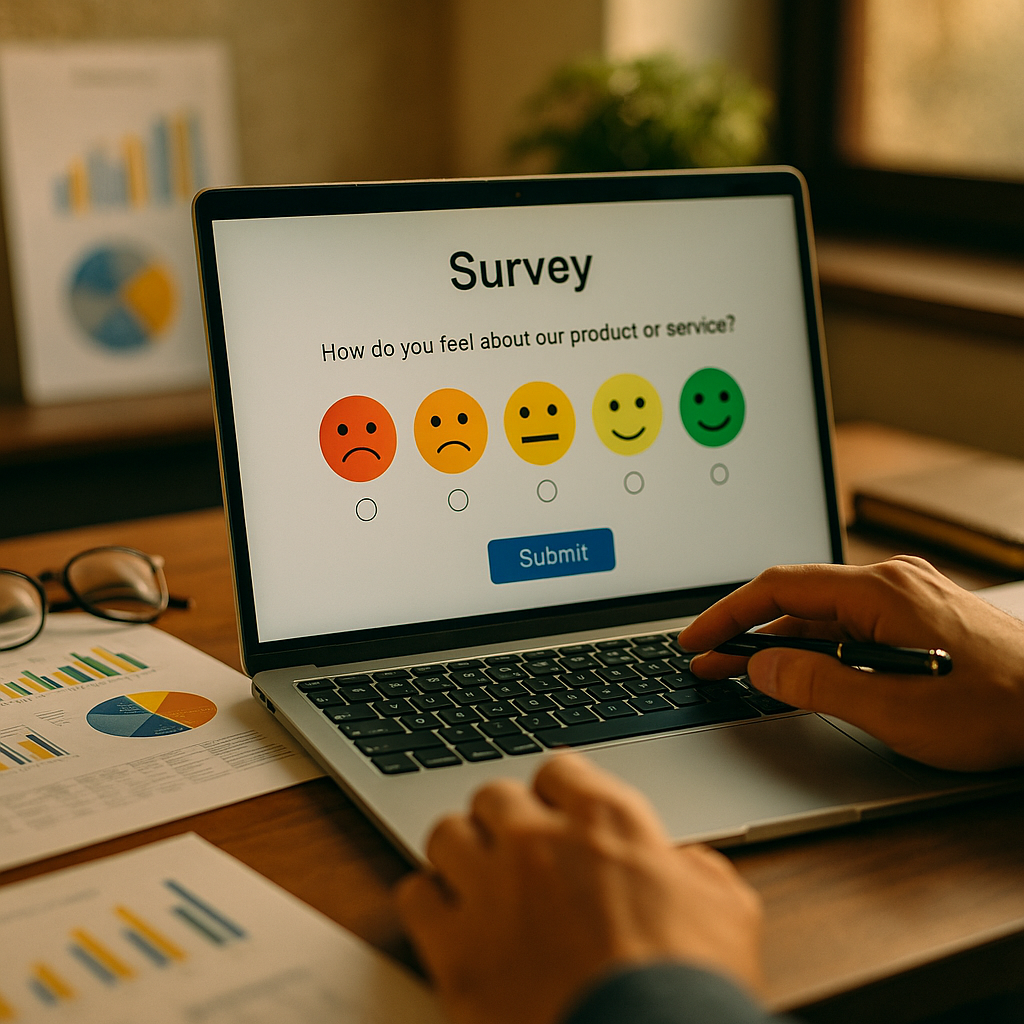
Survey and feedback tools with sentiment analysis features have become pivotal for businesses aiming to understand customer opinions at scale. These innovative solutions combine response gathering with real-time emotional insights, shaping smarter business decisions. How do the top platforms compare, and what unique advantages do they offer? Discover which tools best fit your organization’s evolving needs.
Understanding Sentiment Analysis in Customer Feedback Software
Sentiment analysis leverages artificial intelligence to identify emotional tones within customer feedback. This feature enables organizations to assess not just what respondents say, but how they feel about products, services, or experiences. By embedding sentiment analysis within survey tools, businesses gain actionable insights into customer satisfaction, loyalty drivers, and areas requiring improvement—almost instantly.
The most effective platforms use natural language processing (NLP) to classify responses as positive, negative, or neutral. More advanced solutions even detect nuanced emotions such as frustration or delight. In 2025, as customer expectations soar, these analytical capabilities have become essential for maintaining competitive advantage and brand reputation.
Top Survey Platforms Featuring AI-Driven Sentiment Analysis
Several leading survey and feedback tools stand out for their robust sentiment analysis functionalities. Some, like Qualtrics XM and SurveyMonkey, have integrated advanced machine learning models to interpret text-based responses automatically. These tools not only categorize sentiment but also visualize trends and flag critical issues for review.
- Qualtrics XM: Renowned for enterprise-grade feedback analysis, Qualtrics offers real-time sentiment scoring and predictive analytics. Its AI engine parses open-text fields, giving granular breakdowns by topic, emotion, and urgency.
- SurveyMonkey: Balancing usability and intelligence, SurveyMonkey incorporates AI to tag responses by sentiment and generate easy-to-read dashboards. SMEs and growing businesses appreciate its affordable plans and seamless workflow integrations.
- Medallia Experience Cloud: Medallia excels in omnichannel experience management, providing deep sentiment analytics from web, mobile, and social platforms. Its algorithms regularly update to reflect linguistic trends and regional differences, ensuring accuracy across global markets.
- Zonka Feedback: With custom survey forms and real-time emotion tracking, Zonka Feedback appeals to organizations seeking flexibility. The sentiment dashboard correlates scores with customer journey stages, supporting targeted follow-ups.
When selecting a tool, businesses should evaluate integration options, ease of use, and the transparency of sentiment algorithms.
Comparing Real-World Performance and Data Accuracy
EEAT demands that survey solutions provide trustworthy and reliable outputs. Sentiment analysis engines are only as useful as their underlying data quality. Leading vendors regularly benchmark their AI models against large and diverse datasets to reduce misclassification, particularly with slang or domain-specific terminology.
In real-world usage, Qualtrics and Medallia receive high marks for accuracy—frequently scoring above 90% in independent validation studies conducted in late 2024. SurveyMonkey performs exceptionally well on structured feedback but may require user oversight for ambiguous input. Customizable sentiment dictionaries, available in platforms like Zonka Feedback, address industry-specific language, increasing precision.
It’s crucial for organizations to regularly calibrate sentiment models with feedback unique to their audience. This reduces bias and ensures emotionally nuanced responses aren’t misinterpreted.
Integrations and Automation: Streamlining Action From Insights
Survey and feedback tools with sentiment analysis gain immense value when integrated with the broader analytics and CRM ecosystem. Automatic ticket creation, workflow triggers, and personalized follow-ups based on sentiment are now standard offerings with mature platforms. For instance, negative sentiment detected in Qualtrics or Medallia can instantly alert support teams, enabling preemptive engagement.
APIs and plug-ins are vital for connecting survey insights to tools like Salesforce, Slack, or Zendesk. Some solutions, such as SurveyMonkey, feature out-of-the-box automation with popular business suites, while enterprise-focused platforms offer custom integration options and data export capabilities. Organizations should assess the scalability of these integrations for long-term use.
Emerging Trends in Sentiment-Enriched Feedback Tools
By 2025, sentiment analysis technology has matured, but innovation persists. Multilingual and cross-cultural sentiment detection are priorities, as companies expand internationally. Some vendors now offer real-time emotional mapping that pinpoints not only sentiment polarity but also intensity, helping prioritize customer follow-up actions effectively.
Another key trend is the use of generative AI to summarize large volumes of feedback. Advanced platforms synthesize survey results, highlighting sentiment-based themes and suggesting recommended actions right in the dashboard. Mobile-first feedback and the incorporation of voice and video sentiment analytics are also growing, broadening the reach and richness of insights.
Security and ethical AI usage are top concerns as well. Leaders in the field now provide detailed transparency reports on model training and data usage for compliance and trust.
Choosing the Best Sentiment Analysis Survey Solution for Your Needs
Selecting an optimal survey and feedback tool with sentiment analysis features depends on your organization’s scale, industry, and technical landscape. Larger enterprises benefit from platforms with customizable AI models and enterprise integrations, like Qualtrics or Medallia. Small to medium businesses may prefer intuitive, plug-and-play options from SurveyMonkey or Zonka Feedback.
Consider the following when deciding:
- Accuracy and model transparency: How reliable are sentiment scores for your use case?
- Integration capabilities: Can the tool connect seamlessly to your tech stack?
- Usability: Is the interface accessible for your team without extensive training?
- Security and compliance: Does the vendor comply with relevant data regulations, like GDPR?
- Support and scalability: Will the platform adapt as your feedback programs grow?
A thorough trial using your typical survey content is the best way to test both sentiment analysis accuracy and workflow compatibility before committing long-term.
FAQs About Survey and Feedback Tools With Sentiment Analysis Features
- Q: What is sentiment analysis in survey tools?
A: Sentiment analysis in survey tools uses AI and NLP techniques to evaluate the emotional tone of open-ended responses, categorizing feedback as positive, negative, or neutral. This helps businesses gauge customer mood and satisfaction more precisely than traditional scoring methods. - Q: Can sentiment analysis platforms handle multiple languages?
A: Yes, leading platforms such as Qualtrics and Medallia support multilingual sentiment analysis, using language-specific models. However, accuracy can vary, so always vet solutions based on your target language and region. - Q: How accurate is automated sentiment analysis?
A: Many modern survey tools achieve over 90% accuracy on general text, according to recent independent benchmarks. Performance can decline with industry jargon or slang, so regular calibration and custom dictionary options improve accuracy further. - Q: How do these tools integrate with existing business systems?
A: Most survey and feedback platforms offer direct integrations with CRMs, ticketing systems, and email marketing tools via APIs, plug-ins, or native connectors. This enables automated action based on sentiment outcomes, improving customer response management. - Q: Are there privacy risks with using AI sentiment analysis?
A: Reputable platforms adhere to strict data protection policies and provide details on AI usage and training data. When selecting a vendor, ensure they comply with relevant standards such as GDPR and maintain transparent security practices.
Survey and feedback tools with sentiment analysis features offer powerful, real-time insights into customer emotions, enabling smarter action and better service. By choosing the right platform and ensuring ongoing calibration, organizations can reliably transform raw feedback into meaningful improvements in 2025 and beyond.
Top Influencer Marketing Agencies
The leading agencies shaping influencer marketing in 2026
Agencies ranked by campaign performance, client diversity, platform expertise, proven ROI, industry recognition, and client satisfaction. Assessed through verified case studies, reviews, and industry consultations.
Moburst

-
2

The Shelf
Boutique Beauty & Lifestyle Influencer AgencyA data-driven boutique agency specializing exclusively in beauty, wellness, and lifestyle influencer campaigns on Instagram and TikTok. Best for brands already focused on the beauty/personal care space that need curated, aesthetic-driven content.Clients: Pepsi, The Honest Company, Hims, Elf Cosmetics, Pure LeafVisit The Shelf → -
3

Audiencly
Niche Gaming & Esports Influencer AgencyA specialized agency focused exclusively on gaming and esports creators on YouTube, Twitch, and TikTok. Ideal if your campaign is 100% gaming-focused — from game launches to hardware and esports events.Clients: Epic Games, NordVPN, Ubisoft, Wargaming, Tencent GamesVisit Audiencly → -
4

Viral Nation
Global Influencer Marketing & Talent AgencyA dual talent management and marketing agency with proprietary brand safety tools and a global creator network spanning nano-influencers to celebrities across all major platforms.Clients: Meta, Activision Blizzard, Energizer, Aston Martin, WalmartVisit Viral Nation → -
5

The Influencer Marketing Factory
TikTok, Instagram & YouTube CampaignsA full-service agency with strong TikTok expertise, offering end-to-end campaign management from influencer discovery through performance reporting with a focus on platform-native content.Clients: Google, Snapchat, Universal Music, Bumble, YelpVisit TIMF → -
6

NeoReach
Enterprise Analytics & Influencer CampaignsAn enterprise-focused agency combining managed campaigns with a powerful self-service data platform for influencer search, audience analytics, and attribution modeling.Clients: Amazon, Airbnb, Netflix, Honda, The New York TimesVisit NeoReach → -
7

Ubiquitous
Creator-First Marketing PlatformA tech-driven platform combining self-service tools with managed campaign options, emphasizing speed and scalability for brands managing multiple influencer relationships.Clients: Lyft, Disney, Target, American Eagle, NetflixVisit Ubiquitous → -
8

Obviously
Scalable Enterprise Influencer CampaignsA tech-enabled agency built for high-volume campaigns, coordinating hundreds of creators simultaneously with end-to-end logistics, content rights management, and product seeding.Clients: Google, Ulta Beauty, Converse, AmazonVisit Obviously →