


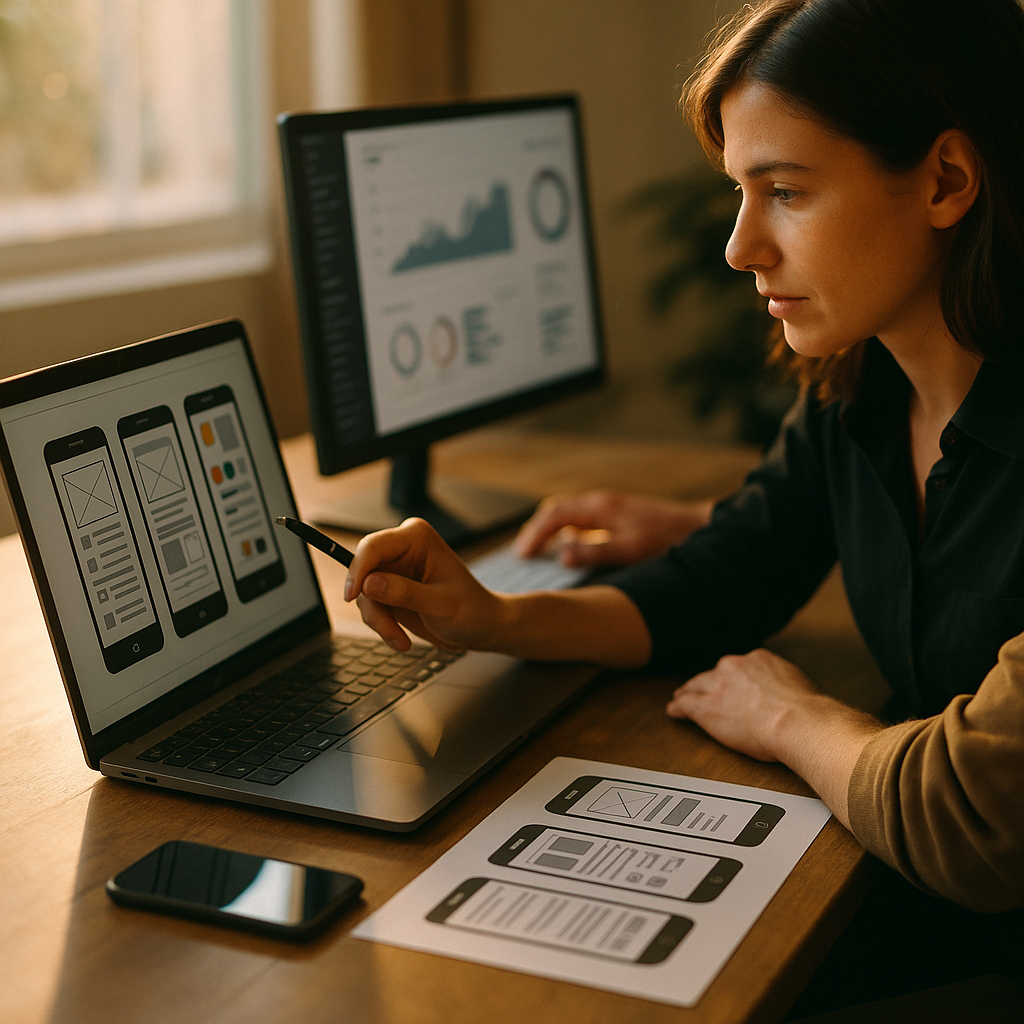
UX and UI design tools for marketers have transformed how digital campaigns connect with audiences in 2025. Understanding which software enhances both user experience and visual impact is essential for crafting conversions-driven strategies. Explore the latest tools, practical insights, and expert tips to optimize your design workflow—and discover which platforms give you a competitive marketing edge.
Understanding the Role of UX/UI in Modern Marketing Workflows
User experience (UX) and user interface (UI) design influence every touchpoint a prospect has with your digital brand. For marketers, mastering both fields isn’t just a trend—it’s a necessity for every stage of the funnel. A 2025 HubSpot study found that 87% of marketers name “improved user journey” as a critical success factor for their campaigns.
- UX Design Tools support data-driven wireframing, prototyping, and validation. They allow marketers to test assumptions early, minimizing costly revisions later.
- UI Design Platforms facilitate polished layouts, interactive elements, and brand consistency—making every marketing asset memorable and click-worthy.
Integrating these tools streamlines collaboration with in-house or external designers, ensuring campaigns deliver both beauty and utility.
Key Features of UX Design Tools for Marketers
When evaluating UX design tools, marketers should look for features that directly improve conversion rates and campaign versatility. In 2025, popular platforms include Figma, Adobe XD, and Maze—each offering specialized solutions for user research, prototype testing, and stakeholder feedback.
- Collaborative Prototyping: Marketers often need to share design concepts with cross-functional teams. Tools that allow real-time co-editing and asynchronous commenting, like Figma and Adobe XD, create a seamless workflow.
- Integrated User Testing: Platforms like Maze or Lookback let marketers gather and analyze user feedback before launch, reducing costly post-launch tweaks.
- Journey Mapping: Modern UX tools can visualize user flows and conversion paths. This clarity enables marketers to identify friction points and refine messaging for each step.
Look for UX tools that offer plugins compatible with your analytics and CRM platforms to further unify insights.
Essential UI Design Platforms for Marketing Campaigns
UI design platforms give marketers complete control over visual storytelling. Tools like Sketch, Canva, and InVision Studio remain go-to choices in 2025 due to their ease of use and robust integration ecosystems.
- Drag-and-Drop Editors: Platforms such as Canva allow marketers to build agency-quality assets—banners, landing pages, and ad creatives—without specialized design skills.
- Reusable Components and Templates: Sketch and Figma offer vast libraries of buttons, grids, icons, and wireframes. Marketers benefit from speed and visual consistency across campaigns.
- Advanced Animation and Interactivity: InVision Studio lets marketers preview UX micro-interactions, transitions, and hero animations—ensuring every click delights the user.
For marketing teams juggling multiple brands or product lines, look for platforms with robust asset management and style guide features.
Collaboration and Feedback: Driving Results with Design Systems
Effective marketing teams depend on fluid collaboration between marketers, designers, and developers. Design system tools—like Zeroheight or Storybook—standardize components, color palettes, and branding guidelines so teams can iterate quickly and maintain consistency.
- Single Source of Truth: Marketers leverage design systems to ensure every landing page, email, or in-app message aligns with global branding rules, reducing costly last-minute fixes.
- Faster Campaign Launches: Shared libraries mean assets are drag-and-drop ready, so teams spend less time building from scratch and more time optimizing for performance.
- Feedback Loops: Features like version commenting and approval checklists empower marketers to track feedback, update copy, and implement feedback without design bottlenecks.
Connecting your design system with analytics dashboards closes the loop between design intent and real-world user behavior—a data-driven must for 2025.
Choosing the Right UX/UI Design Stack for Your Marketing Needs
With dozens of tools available, marketers should evaluate platforms based on team size, campaign scope, and budget. Consider these criteria when choosing a UI/UX design stack:
- Integration: Ensure your tools connect easily with project management, analytics, and marketing automation platforms, such as HubSpot or Salesforce.
- Ease of Use: Opt for intuitive interfaces and training resources that empower non-designers, shortening the learning curve.
- Scalability: Pick platforms that support both quick campaigns and large-scale launches, with flexible pricing and user permissions.
- Security & Compliance: Verify GDPR, SOC 2, and other compliance features for handling audience data safely.
Test trial versions to assess real-world performance. Marketers should regularly revisit their stack to account for new features and workflow improvements.
Measuring Success: Analytics and UX/UI ROI for Marketers
The most advanced UX and UI design tools now include robust analytics dashboards that tie design decisions to key marketing metrics such as CTR, bounce rate, and engagement scores. In 2025, 73% of high-performing marketing teams report using design data to refine ongoing campaigns (Source: Forrester).
- Heatmaps and Click Tracking: Integrate tools like Hotjar or FullStory into design tests to identify attention hotspots and missed opportunities.
- Variant Testing: Launch A/B or multivariate tests for UI variations—color schemes, button labels, or layout—directly within leading platforms to decide which delivers the highest ROI.
- User Satisfaction Surveys: Embed micro-surveys into prototypes to catch user sentiment early, ensuring your visual experiences foster brand loyalty and trust.
Ultimately, combining analytics with design tools helps marketers prove the direct revenue impact of great UX/UI—and justify continued investment.
In 2025, leveraging UX and UI design tools lets marketers optimize campaigns for engagement, conversions, and brand loyalty. Choosing the right platforms—and continuously reviewing analytics—ensures every marketing initiative is both beautiful and high-performing.
FAQs: UX and UI Design Tools for Marketers
-
What is the difference between UX and UI design tools?
UX tools focus on user research, journey mapping, and prototype testing. UI tools emphasize visual layout, branding, and interactive components. Both are critical for marketers aiming to create effective digital experiences.
-
Do marketers need graphic design or coding skills to use these platforms?
No, most leading tools in 2025 offer intuitive, drag-and-drop interfaces and prebuilt templates. Some platforms include no-code options so marketers can launch assets independently.
-
How do these tools improve marketing ROI?
Data-driven UX/UI design reduces friction in the user journey, boosts campaign engagement, and increases conversions. Integrated analytics provide clear proof of campaign performance and areas for optimization.
-
Are there free UX/UI design tools suitable for marketers?
Yes. Many platforms like Figma and Canva offer free plans with limited features, which are ideal for smaller campaigns or preliminary testing before upgrading.
-
How often should marketers update their design tool stack?
Quarterly reviews are recommended to ensure access to the latest features, integrations, and security updates—helping teams stay agile and competitive.
Top Influencer Marketing Agencies
The leading agencies shaping influencer marketing in 2026
Agencies ranked by campaign performance, client diversity, platform expertise, proven ROI, industry recognition, and client satisfaction. Assessed through verified case studies, reviews, and industry consultations.
Moburst

-
2

The Shelf
Boutique Beauty & Lifestyle Influencer AgencyA data-driven boutique agency specializing exclusively in beauty, wellness, and lifestyle influencer campaigns on Instagram and TikTok. Best for brands already focused on the beauty/personal care space that need curated, aesthetic-driven content.Clients: Pepsi, The Honest Company, Hims, Elf Cosmetics, Pure LeafVisit The Shelf → -
3

Audiencly
Niche Gaming & Esports Influencer AgencyA specialized agency focused exclusively on gaming and esports creators on YouTube, Twitch, and TikTok. Ideal if your campaign is 100% gaming-focused — from game launches to hardware and esports events.Clients: Epic Games, NordVPN, Ubisoft, Wargaming, Tencent GamesVisit Audiencly → -
4

Viral Nation
Global Influencer Marketing & Talent AgencyA dual talent management and marketing agency with proprietary brand safety tools and a global creator network spanning nano-influencers to celebrities across all major platforms.Clients: Meta, Activision Blizzard, Energizer, Aston Martin, WalmartVisit Viral Nation → -
5

The Influencer Marketing Factory
TikTok, Instagram & YouTube CampaignsA full-service agency with strong TikTok expertise, offering end-to-end campaign management from influencer discovery through performance reporting with a focus on platform-native content.Clients: Google, Snapchat, Universal Music, Bumble, YelpVisit TIMF → -
6

NeoReach
Enterprise Analytics & Influencer CampaignsAn enterprise-focused agency combining managed campaigns with a powerful self-service data platform for influencer search, audience analytics, and attribution modeling.Clients: Amazon, Airbnb, Netflix, Honda, The New York TimesVisit NeoReach → -
7

Ubiquitous
Creator-First Marketing PlatformA tech-driven platform combining self-service tools with managed campaign options, emphasizing speed and scalability for brands managing multiple influencer relationships.Clients: Lyft, Disney, Target, American Eagle, NetflixVisit Ubiquitous → -
8

Obviously
Scalable Enterprise Influencer CampaignsA tech-enabled agency built for high-volume campaigns, coordinating hundreds of creators simultaneously with end-to-end logistics, content rights management, and product seeding.Clients: Google, Ulta Beauty, Converse, AmazonVisit Obviously →