


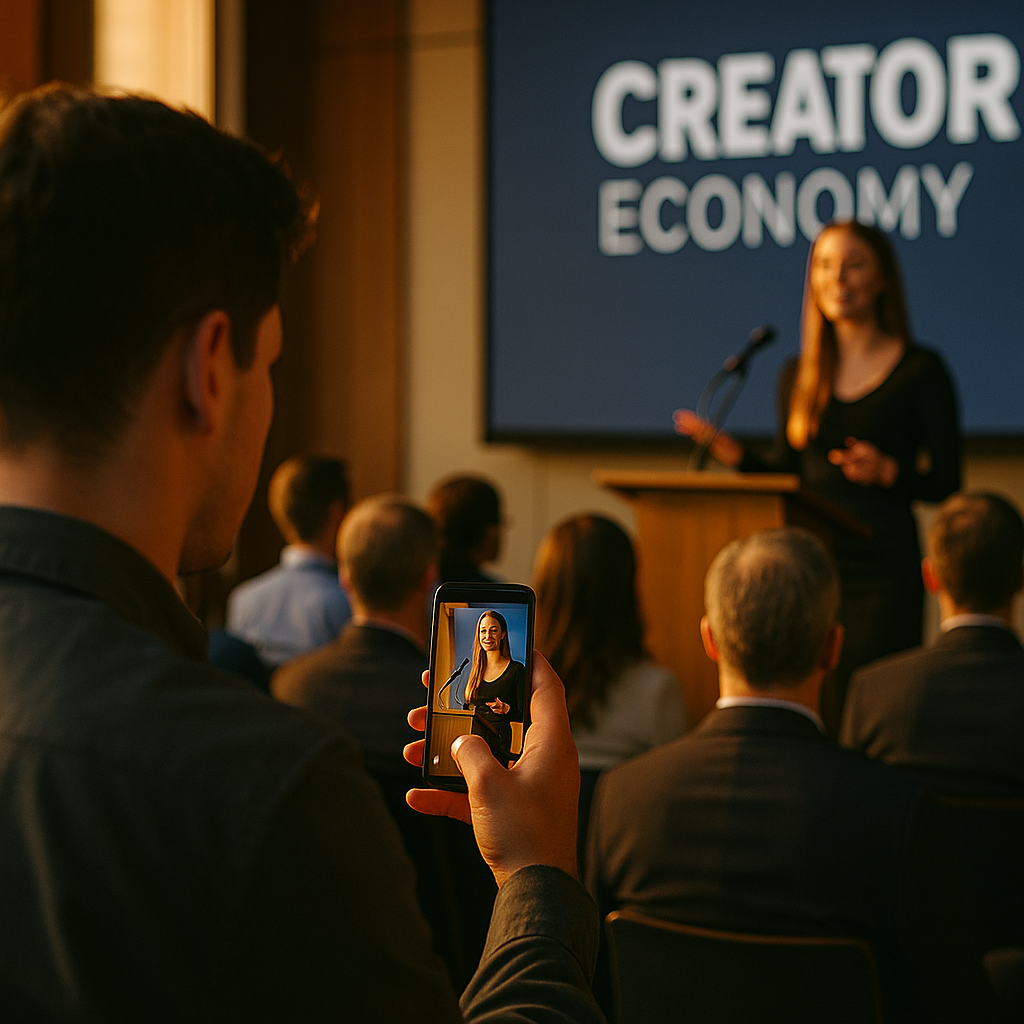
Ticket sales for creator-economy meetups have quietly outpaced growth in the platforms they orbit. TopFan, the community events series drawing thousands of creators, agencies, and brand marketers into hotel ballrooms and coworking spaces across major markets, is the clearest signal yet that this industry has stopped acting like a fad and started acting like an asset class. Why does that matter to the person signing off on next quarter’s creator budget?
The Meetup Economy Nobody Budgeted For
Five years ago, “creator economy event” meant a brand-sponsored influencer trip to a resort, heavy on content capture and light on substance. TopFan and its peers look different. They function more like trade conferences: panel discussions on contract structures, workshops on FTC disclosure compliance, breakout sessions on AI content tools, and a trade-show floor packed with MCNs, talent agencies, and martech vendors pitching to a room of buyers who actually control budget.
That shift from content-capture junket to working conference is the tell. Professionalized industries build convening infrastructure. Marketing had MarTech and Cannes Lions. SaaS had Dreamforce and SaaStr. The creator economy is now building its own version, and TopFan is riding the front of that wave.
When an industry starts producing recurring, ticketed, agenda-driven events with paying B2B attendees, it has crossed from “trend” to “vertical.” That’s the line the creator economy just crossed.
What TopFan Actually Signals About Maturity
Look at the attendee mix, not just the headline talent. Early creator conferences skewed heavily toward the creators themselves, plus a handful of platform reps hunting for testimonials. TopFan’s audience breakdown looks different: brand-side marketing directors, procurement leads, legal and compliance staff from agencies, and a growing bloc of finance people trying to model creator spend against traditional media.
That’s not an influencer meetup anymore. That’s a B2B trade show with a creator skin. And it tracks with where the money is going. Forecasts put creator economy investment north of $21 billion in the coming year, a figure covered in our own creator investment forecast breakdown. Money that size doesn’t move without procurement processes, vendor vetting, and — yes — in-person relationship building, because nobody wants to wire six figures to a talent agency they’ve only met over Zoom.
Compliance Panels Are Standing-Room Only
The most telling sessions at recent creator-economy gatherings aren’t the celebrity fireside chats. They’re the compliance workshops. Sessions on FTC disclosure rules, FTC.gov guidance on material connections, and platform-specific labeling requirements are pulling crowds that legal teams used to send one junior associate to check out. Now it’s the head of brand safety, sitting in the front row, taking notes.
That interest correlates directly with brand behavior on the ground. Nearly a third of brands have trimmed creator spend recently, and the driving factor wasn’t waning belief in the channel; it was trust and risk management, according to our reporting on why brands are cutting creator spend. Events like TopFan give risk-averse buyers a low-stakes way to vet vendors, ask compliance questions face-to-face, and avoid the kind of contract disasters that make legal departments nervous.
Why In-Person Networking Beats the DM
Ask any agency buyer why they still fly across the country for a two-day event when Slack and email exist, and you’ll get a version of the same answer: contracts move faster after a handshake. Creator deals, unlike traditional ad buys, hinge on personal trust between brand, agency, and talent. A single bad match — a creator whose audience doesn’t convert, or a brand safety miss — costs real money and reputational capital.
In-person events compress the vetting timeline. A marketing director can meet three potential talent-agency partners in an afternoon, ask pointed questions about performance reporting, and walk away with a shortlist, something that might take weeks of scheduled calls otherwise. That efficiency gain is why TopFan-style events keep growing even as remote work becomes the default everywhere else.
There’s also a pricing intelligence angle nobody talks about publicly. Walking the floor at a creator conference is one of the fastest ways to benchmark rates, because agencies and creators talk, panels reference real numbers, and side conversations reveal what competitors are actually paying. That kind of market intelligence rarely surfaces cleanly on LinkedIn.
The Agency Land Grab Happening on the Show Floor
Watch who’s buying booth space and you’ll see where the industry’s power is consolidating. Full-service UGC production shops, once scrappy startups, now run polished booths next to legacy talent agencies. That’s consistent with the broader vendor category shift we’ve tracked in how to vet full-service UGC shops. Buyers walking the floor aren’t just looking for creators anymore; they’re shopping for production partners who can script, shoot, edit, and license content at scale.
Performance-based payment structures are another recurring topic at these gatherings, and for good reason. As covered in our piece on performance-based creator contracts, brands increasingly want pay tied to outcomes, not just deliverables. Negotiating that kind of contract structure benefits enormously from an actual conversation, not a cold email.
The Data Behind the Handshake
Skeptics might ask: isn’t this just conference-industrial-complex nostalgia dressed up as insight? Fair question. But the numbers back the behavioral shift. Event-industry research from Statista has repeatedly shown B2B event attendance climbing across marketing verticals even as digital ad spend efficiency declines, a pattern eMarketer has linked to buyers wanting more due diligence before committing budget in uncertain economic climates.
That due-diligence instinct maps cleanly onto what’s happening in influencer marketing generally. Trust, not reach, is now the primary purchase driver for brands selecting creator partners — 67% say so directly, per Sprout Social data referenced in our trust-versus-reach analysis. You don’t build trust through a media kit PDF. You build it in a conversation, ideally one that happens somewhere other than a comment section.
Trust has replaced reach as the top purchase driver in creator partnerships, and trust is built face-to-face far faster than it’s built through cold outreach.
What This Means for Budget Planning
If you’re the person who owns creator budget lines, TopFan-style events deserve a line item, not an afterthought. Treat them the way you’d treat any B2B trade show: set meeting goals in advance, bring a compliance or legal stakeholder if contract negotiation is on the table, and budget for follow-up, because the real ROI shows up in deals signed weeks later, not badge scans at the door.
A few practical moves worth considering before your next event:
- Send a mixed delegation. Marketing alone misses the compliance and finance conversations happening on the floor. Pair a brand marketer with someone from legal or procurement.
- Pre-book vendor meetings. The best agency and UGC-shop conversations happen by appointment, not by chance encounter near the coffee station.
- Benchmark rates actively. Use panel sessions and side conversations to sanity-check what you’re paying against current market rates, especially as creator and publisher CPMs continue converging.
- Track attribution commitments. Any agency pitching you at these events should be ready to talk sales-attributed reporting, not just impressions. If they can’t, that’s a red flag worth noting.
None of this replaces digital-first discovery tools or platform data. But it supplements them in a way spreadsheets can’t. A rate card tells you what a creator charges. A hallway conversation tells you whether they’ll actually show up for your brand when a campaign goes sideways.
Where This Goes Next
Expect consolidation. Just as MarTech events eventually narrowed to a handful of dominant players, the creator-economy event circuit will likely thin out, with TopFan-scale gatherings absorbing smaller regional meetups. Expect tighter integration with martech vendors too, given how much of the industry’s near-term investment is flowing toward consolidated AI and attribution stacks rather than standalone content tools.
For brand-side marketers, the practical takeaway is simple: the creator economy has grown a professional infrastructure around it, and showing up in person is no longer optional if you want first access to the best partners, the sharpest rate intelligence, and the compliance clarity your legal team keeps asking for.
Put a TopFan-style event on next quarter’s calendar, send someone from legal along with marketing, and measure success by signed contracts thirty days out, not by how many photos made it onto LinkedIn.
FAQs
What is TopFan in the context of the creator economy?
TopFan is a recurring community events series that brings together creators, talent agencies, brand marketers, and martech vendors for in-person networking, panels, and deal-making, functioning more like a B2B trade show than a traditional influencer meetup.
Why are brands sending compliance and legal staff to creator-economy events?
Because disclosure and contract risk have become top concerns for brands scaling creator spend, legal and compliance staff now attend sessions on FTC guidelines and contract structures to vet partners before budget commits, reducing risk before it becomes a liability.
Do in-person creator events actually improve ROI on influencer budgets?
They shorten vendor vetting timelines, improve rate benchmarking, and build the trust that now drives 67% of influencer purchase decisions, which typically translates into faster deal cycles and fewer mismatched partnerships than cold digital outreach alone.
How is the creator economy events landscape different from a few years ago?
Earlier events centered on brand-sponsored content trips for creators. Current events resemble professional conferences, with compliance workshops, contract-structure panels, and vendor floors serving brand-side procurement and finance teams, not just creators chasing exposure.
Should smaller brands or agencies attend these events, or are they only for enterprise players?
Smaller teams often get outsized value because in-person meetings let them compete for agency and creator attention on trust and relationship quality rather than budget size alone, something harder to achieve through cold digital outreach.
Top Influencer Marketing Agencies
The leading agencies shaping influencer marketing in 2026
Agencies ranked by campaign performance, client diversity, platform expertise, proven ROI, industry recognition, and client satisfaction. Assessed through verified case studies, reviews, and industry consultations.
Moburst

-
2

The Shelf
Boutique Beauty & Lifestyle Influencer AgencyA data-driven boutique agency specializing exclusively in beauty, wellness, and lifestyle influencer campaigns on Instagram and TikTok. Best for brands already focused on the beauty/personal care space that need curated, aesthetic-driven content.Clients: Pepsi, The Honest Company, Hims, Elf Cosmetics, Pure LeafVisit The Shelf → -
3

Audiencly
Niche Gaming & Esports Influencer AgencyA specialized agency focused exclusively on gaming and esports creators on YouTube, Twitch, and TikTok. Ideal if your campaign is 100% gaming-focused — from game launches to hardware and esports events.Clients: Epic Games, NordVPN, Ubisoft, Wargaming, Tencent GamesVisit Audiencly → -
4

Viral Nation
Global Influencer Marketing & Talent AgencyA dual talent management and marketing agency with proprietary brand safety tools and a global creator network spanning nano-influencers to celebrities across all major platforms.Clients: Meta, Activision Blizzard, Energizer, Aston Martin, WalmartVisit Viral Nation → -
5

The Influencer Marketing Factory
TikTok, Instagram & YouTube CampaignsA full-service agency with strong TikTok expertise, offering end-to-end campaign management from influencer discovery through performance reporting with a focus on platform-native content.Clients: Google, Snapchat, Universal Music, Bumble, YelpVisit TIMF → -
6

NeoReach
Enterprise Analytics & Influencer CampaignsAn enterprise-focused agency combining managed campaigns with a powerful self-service data platform for influencer search, audience analytics, and attribution modeling.Clients: Amazon, Airbnb, Netflix, Honda, The New York TimesVisit NeoReach → -
7

Ubiquitous
Creator-First Marketing PlatformA tech-driven platform combining self-service tools with managed campaign options, emphasizing speed and scalability for brands managing multiple influencer relationships.Clients: Lyft, Disney, Target, American Eagle, NetflixVisit Ubiquitous → -
8

Obviously
Scalable Enterprise Influencer CampaignsA tech-enabled agency built for high-volume campaigns, coordinating hundreds of creators simultaneously with end-to-end logistics, content rights management, and product seeding.Clients: Google, Ulta Beauty, Converse, AmazonVisit Obviously →