


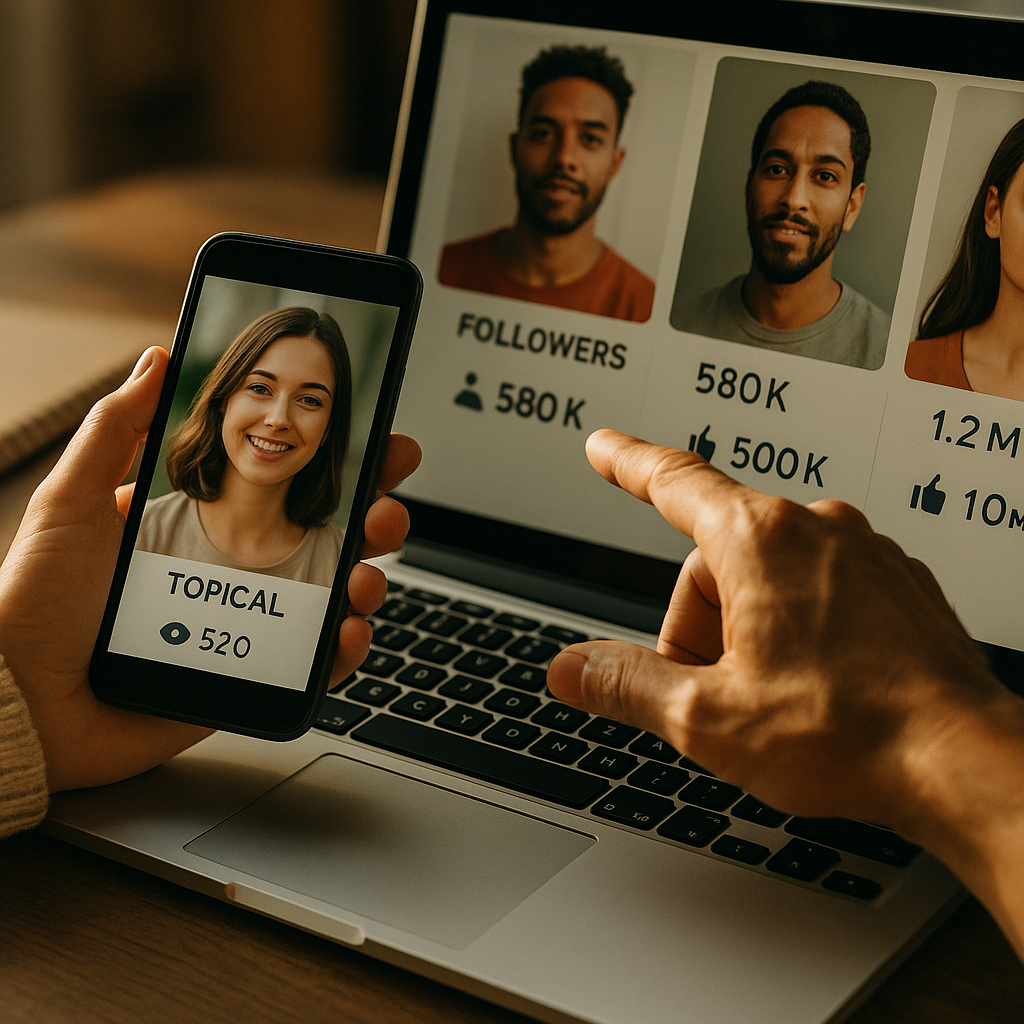
What if the fastest way to boost campaign views had nothing to do with follower count? New data shows niche aligned creator campaigns drive 77 percent more views than broad, reach-first placements. That number should stop every media planner mid-scroll. It suggests the entire “go big or go home” logic behind creator selection has been backwards for years.
The Number Everyone in the Industry Should Be Talking About
A 77 percent lift in views isn’t a rounding error. It’s the difference between a campaign that gets buried in a feed and one that actually gets watched. The research, detailed in a recent niche alignment data study, compared campaigns matched tightly to a creator’s established content vertical against campaigns run on creators chosen mainly for audience size or general appeal.
The gap wasn’t marginal. It was structural.
Campaigns built around topical fit consistently outperformed reach-first placements by 77 percent on views, even when the reach-first creators had larger followings.
Why does this matter now, specifically? Because brands have spent three years pouring budget into follower count as a proxy for value. The ANA has already flagged that 29 percent of influencer spend gets wasted, and misaligned creator selection is a big part of that leak. If niche fit drives nearly 80 percent more views, then a huge chunk of that wasted spend is sitting in campaigns that picked the wrong creator for the wrong reason.
Why Algorithms Reward Relevance, Not Just Reach
Platform recommendation engines have quietly shifted the game. TikTok, Instagram, and YouTube all weight content distribution based on topical consistency signals: watch time within a category, completion rate against similar content, and audience overlap with adjacent niches. A fitness creator posting a skincare ad gets judged differently by the algorithm than a beauty creator posting the exact same ad copy.
This isn’t speculation. It’s how modern recommendation systems function. Platforms are trying to keep users inside content loops they already engage with, and a mismatched sponsor post breaks that loop. The algorithm notices, and it throttles distribution accordingly.
- Audiences on niche accounts already expect category-specific content, so a relevant ad reads as native rather than interruptive.
- Completion rates rise when content matches established viewing patterns, which signals quality to the platform.
- Comment sentiment tends to be more constructive on aligned content, reducing the negative engagement that can suppress reach.
Put simply: the platforms are doing the vetting for you, whether you asked them to or not. Fight that signal with a mismatched creator, and you’re paying full price for a fraction of the distribution.
The ROI Case: Fewer Creators, Better Fit, Bigger Numbers
Here’s where this gets interesting for anyone holding a budget line. A niche-first strategy often means working with fewer, smaller creators rather than a handful of broad-reach names. That sounds like a downgrade until you run the math.
Nano and micro creators already post stronger engagement numbers than their larger counterparts. Nano creator engagement has hit 2.61 percent, well above what most mid-tier and macro accounts deliver. Combine that baseline engagement advantage with a 77 percent views lift from topical alignment, and the ROI curve bends sharply in favor of smaller, sharper casting decisions.
Stacking niche alignment on top of already strong nano and micro engagement rates compounds the advantage rather than simply adding to it.
This is the same logic driving brands like those covered in our piece on nano creators outperforming macro talent. It’s not that big creators don’t work. It’s that the premium paid for reach frequently buys you views that never convert, while a smaller, tightly matched creator delivers an audience that was already primed to care.
What “Niche Aligned” Actually Means in a Brief
Vague briefs are the enemy here. “Find a lifestyle creator with 50k plus followers” is not a niche alignment strategy, it’s a numbers filter. Real alignment means matching category, tone, and even sub-niche audience behavior.
A skincare brand targeting acne-prone users shouldn’t just pick “beauty creators.” It should pick creators whose existing content already centers on acne, sensitive skin, or dermatology-adjacent topics. A B2B SaaS brand shouldn’t pick “tech creators” broadly, it should target creators whose audience already discusses workflow tools, productivity systems, or the specific job function the product serves.
This level of specificity used to be hard to source at scale. It’s gotten easier. Vetting tools and platforms now let teams filter by content history and audience affinity, not just follower count and location. Brands building in-house casting functions, like the approach detailed in Coty’s in-house creator casting model, are doing this specifically because agency-sourced lists often prioritize reach and availability over topical fit.
Some practical filters that separate real alignment from surface-level category matching:
- Does the creator’s last 10 to 15 posts already sit within the product category, or is this a one-off pivot?
- Does the audience comment section show topic-specific language, or generic engagement (“love this!”)?
- Has the creator run brand deals in adjacent categories before, and how did those posts perform relative to their organic content?
The Agency Layer Isn’t Always Helping
It’s worth saying plainly: a lot of agency-sourced creator lists still default to reach-based sorting because it’s faster to justify to a client. A spreadsheet of follower counts is an easy sell. A spreadsheet of “audience affinity scores” requires more explanation, and more trust in the process.
That default has a cost. Our earlier reporting on how agency fees eat into influencer budgets found that a meaningful share of program spend goes to sourcing and management rather than media, and reach-first sourcing compounds the inefficiency because the underlying creator pick is already suboptimal.
This doesn’t mean agencies are obsolete. It means the brief needs to change. Brands should be asking agencies for topical alignment scoring alongside reach and rate, not instead of it. If an agency partner can’t produce that data, that’s a signal worth acting on.
Where This Fits Into the Bigger Budget Conversation
Niche alignment isn’t a standalone tactic, it’s part of a broader shift in how brands justify creator spend to finance teams. CFOs don’t care about views for their own sake, but they do care about cost per meaningful engagement, and a 77 percent views lift at similar or lower cost is a straightforward efficiency story to tell upstairs.
This connects directly to the metrics conversation playing out across the industry right now. Programs are moving away from vanity numbers, as covered in the shift away from vanity metrics, toward retention and intent-based measurement, discussed in retention metrics giving CMOs leverage with CFOs. Niche alignment data slots neatly into that argument because it’s a leading indicator: better fit drives better views, which historically correlates with better downstream engagement and conversion.
For teams building longer-term creator infrastructure rather than one-off campaigns, the case gets stronger. Brands treating creator marketing as permanent infrastructure need a repeatable vetting standard, and topical alignment scoring is a far more durable filter than chasing whichever creator has the biggest audience this quarter.
How to Actually Implement This Next Quarter
None of this requires ripping up an existing program. It requires re-weighting the scoring model used to pick creators.
- Audit your last two quarters of creator campaigns and tag each one by topical fit (tight, loose, mismatched).
- Cross-reference views and engagement against that tagging to see if the 77 percent pattern shows up in your own data.
- Rebuild your vetting scorecard to weight content history and audience affinity at least as heavily as follower count.
- Push agency partners for alignment scoring, not just reach and CPM estimates, in every proposal going forward.
Tools from platforms like Sprout Social and reporting benchmarks from eMarketer can help quantify audience affinity at scale, and FTC disclosure guidance from the FTC still applies regardless of how tightly a creator is matched to category, so compliance review shouldn’t get skipped in the rush to optimize for fit.
Frequently Asked Questions
What does “niche aligned” mean in creator marketing?
It means selecting creators whose existing content, audience, and posting history already sit within the brand’s product category or use case, rather than choosing creators primarily for follower count or general popularity.
Why do niche aligned campaigns get more views?
Platform algorithms reward content that matches a creator’s established topical patterns because it keeps audiences engaged within a consistent content loop, which increases distribution compared to mismatched sponsored content.
Does niche alignment work better with smaller creators?
Yes, in most cases. Nano and micro creators tend to have tighter, more defined niches and stronger baseline engagement, which compounds with the alignment effect to produce outsized views relative to spend.
How can brands measure niche alignment before signing a creator?
Review the creator’s recent content history for category consistency, check comment sentiment for topic-specific language, and look at past brand deal performance in adjacent categories rather than relying on follower count alone.
Does this replace the need for reach-based creators entirely?
No. Reach still matters for awareness-stage campaigns, but niche alignment should be weighted as heavily as reach in the vetting process, especially for consideration and conversion-focused campaigns.
Frequently Asked Questions
Next step: Pull your last quarter’s creator campaign data, tag each placement by topical fit, and see if the 77 percent pattern shows up in your own numbers before you write the next brief.
Top Influencer Marketing Agencies
The leading agencies shaping influencer marketing in 2026
Agencies ranked by campaign performance, client diversity, platform expertise, proven ROI, industry recognition, and client satisfaction. Assessed through verified case studies, reviews, and industry consultations.
Moburst

-
2

The Shelf
Boutique Beauty & Lifestyle Influencer AgencyA data-driven boutique agency specializing exclusively in beauty, wellness, and lifestyle influencer campaigns on Instagram and TikTok. Best for brands already focused on the beauty/personal care space that need curated, aesthetic-driven content.Clients: Pepsi, The Honest Company, Hims, Elf Cosmetics, Pure LeafVisit The Shelf → -
3

Audiencly
Niche Gaming & Esports Influencer AgencyA specialized agency focused exclusively on gaming and esports creators on YouTube, Twitch, and TikTok. Ideal if your campaign is 100% gaming-focused — from game launches to hardware and esports events.Clients: Epic Games, NordVPN, Ubisoft, Wargaming, Tencent GamesVisit Audiencly → -
4

Viral Nation
Global Influencer Marketing & Talent AgencyA dual talent management and marketing agency with proprietary brand safety tools and a global creator network spanning nano-influencers to celebrities across all major platforms.Clients: Meta, Activision Blizzard, Energizer, Aston Martin, WalmartVisit Viral Nation → -
5

The Influencer Marketing Factory
TikTok, Instagram & YouTube CampaignsA full-service agency with strong TikTok expertise, offering end-to-end campaign management from influencer discovery through performance reporting with a focus on platform-native content.Clients: Google, Snapchat, Universal Music, Bumble, YelpVisit TIMF → -
6

NeoReach
Enterprise Analytics & Influencer CampaignsAn enterprise-focused agency combining managed campaigns with a powerful self-service data platform for influencer search, audience analytics, and attribution modeling.Clients: Amazon, Airbnb, Netflix, Honda, The New York TimesVisit NeoReach → -
7

Ubiquitous
Creator-First Marketing PlatformA tech-driven platform combining self-service tools with managed campaign options, emphasizing speed and scalability for brands managing multiple influencer relationships.Clients: Lyft, Disney, Target, American Eagle, NetflixVisit Ubiquitous → -
8

Obviously
Scalable Enterprise Influencer CampaignsA tech-enabled agency built for high-volume campaigns, coordinating hundreds of creators simultaneously with end-to-end logistics, content rights management, and product seeding.Clients: Google, Ulta Beauty, Converse, AmazonVisit Obviously →