


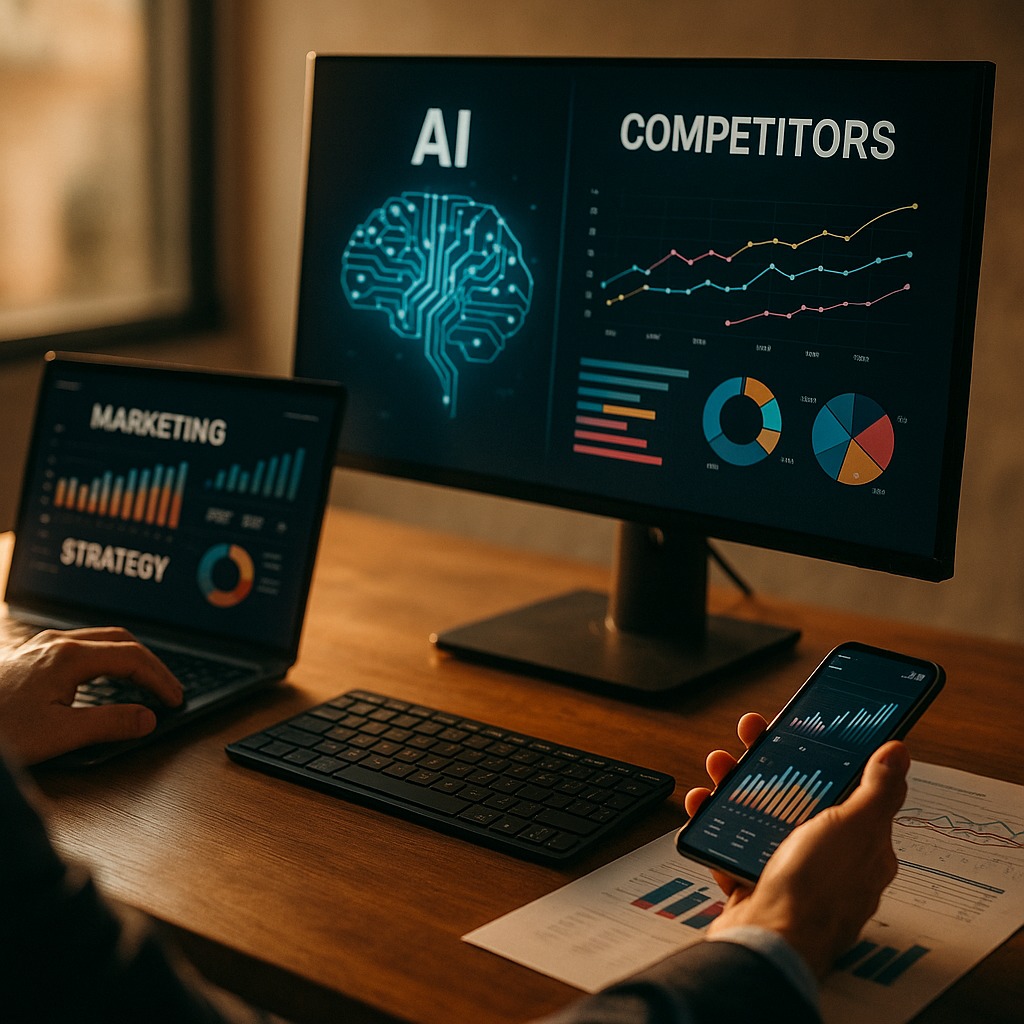
The rise of AI-powered competitive intelligence in marketing is transforming how brands outperform their rivals. Through precise data analysis, automation, and real-time insights, organizations can now spot opportunities and threats faster than ever. As competitive landscapes evolve rapidly in 2025, understanding these AI-driven tools isn’t just smart—it’s essential for sustainable growth. Ready to redefine your marketing strategy?
Understanding AI-Driven Competitive Intelligence Tools
AI-powered competitive intelligence platforms leverage machine learning, natural language processing, and analytics to monitor competitors and market dynamics. Unlike traditional manual research, these solutions automate data collection from sources like websites, social media, news, and pricing engines. With near-instant analysis, marketing teams gain actionable insights, uncover emerging trends, and react quickly to changes.
Leading platforms in 2025 parse vast volumes of unstructured data, recognizing patterns no human could detect at scale. These tools provide dashboards, predictive alerts, and even recommendations, empowering marketers to make informed, timely decisions. As data expands exponentially, AI becomes indispensable for maintaining a true competitive edge.
The Impact of AI Competitive Analysis on Marketing Strategies
AI competitive analysis is revolutionizing how companies devise successful marketing strategies. By continuously tracking competitor campaigns, SEO tactics, audience engagement, and pricing strategies, AI surfaces critical intelligence for your tactical planning. Predictive analytics even anticipates your rivals’ moves, allowing proactive adjustments.
Recent studies indicate that companies using AI for competitive analysis improved their campaign ROI by over 30% and reduced time-to-market for new offers. AI empowers marketers to benchmark performance, optimize spend, and capitalize on shifting market sentiment. For example, real-time competitor ad monitoring reveals gaps you can exploit and saturation points to avoid.
Leveraging Machine Learning for Market Trend Analysis
Machine learning algorithms are the engine behind advanced market trend analysis. These systems mine structured and unstructured data, including customer reviews, competitor product updates, and macroeconomic signals, to identify patterns early. Marketers use these insights to anticipate shifts in customer preferences, identify emerging niches, and adjust messaging or product features accordingly.
For instance, in e-commerce, AI-powered market trend analysis forecasts surges in demand for particular product categories before they happen, guiding inventory and promotional planning. In B2B, machine learning identifies buyers’ evolving needs based on competitive content and messaging shifts. By leveraging machine learning, brands in 2025 mitigate risk and capture more market share.
Integrating Real-Time Intelligence Tools into Marketing Workflows
Real-time intelligence tools enable marketers to respond instantly to competitor actions and market developments. AI solutions now offer live alerts on pricing changes, new product launches, campaign activations, or sudden spikes in competitor engagement. Integration with collaboration platforms means teams can align swiftly, modifying campaigns or communications in minutes—not days.
Brands leading in 2025 weave these AI tools into every stage of the marketing workflow—campaign planning, creative optimization, and post-launch analysis. Doing so requires a collaborative culture and robust data governance. When executed well, real-time intelligence drastically shortens reaction times and fosters agility throughout the marketing organization.
AI-Powered Deep Dives: Beyond Surface-Level Data
One significant advantage of AI-powered competitive intelligence is its capacity for deep analysis beyond what’s readily apparent. Instead of relying solely on surface-level indicators, AI can perform sentiment analysis, detect hidden pricing models, unravel influencer networks, and map the competitive web of partnerships underlying your market.
By blending external data with your internal performance metrics, AI can run scenario planning and “what if” analyses. For example, if a competitor adjusts pricing, AI can predict downstream effects on your conversion rates and customer retention, recommending optimized responses. This depth of insight fosters more confident, evidence-based decision-making at every marketing level.
Challenges and Ethical Considerations in AI-Driven Competitive Intelligence
While the advantages are clear, marketers must navigate several challenges when deploying AI in competitive intelligence. Key concerns include:
- Data privacy: Ensuring that monitored data sources comply with evolving regulations such as GDPR-equivalent and local protections.
- Bias and data quality: AI is only as effective as the data it receives. Poor data input or biased training sets can result in misleading conclusions.
- Ethical data collection: Marketers must safeguard competitor confidentiality and avoid scraping private or protected information.
- Maintaining human oversight: While automation accelerates workflows, human judgment and context remain essential for interpreting nuanced market dynamics.
In 2025, organizations are prioritizing transparent practices, continual review of AI outputs, and upskilling teams to collaborate effectively with these new technologies.
How to Get Started with AI-Powered Competitive Intelligence in 2025
For businesses eager to adopt AI-powered competitive intelligence, the first step is to define clear objectives—such as improving campaign effectiveness, accelerating response times, or entering new markets. Next, evaluate vendors based on data coverage, accuracy, user interface, and integration capabilities with your existing martech stack.
Begin with pilot projects focused on one or two competitive insights, gradually scaling as your team grows more comfortable. Invest in training marketers to interpret AI outputs and maintain regular audits for data accuracy and relevance. By establishing a solid foundation, your organization can unlock significant competitive advantages rapidly and sustainably.
Conclusion: Embracing AI Competitive Intelligence for Future Growth
AI-powered competitive intelligence is no longer a futuristic tool—it’s a marketing necessity in 2025. With heightened agility, deeper insights, and the ability to foresee market shifts, marketers equipped with AI consistently outpace their competitors. Start adopting these solutions today to transform your marketing strategy and secure lasting, data-driven growth.
FAQs on AI-Powered Competitive Intelligence in Marketing
-
What is AI-powered competitive intelligence?
AI-powered competitive intelligence uses artificial intelligence to automate the collection and analysis of competitor and market data. This provides timely, actionable insights for making strategic marketing decisions.
-
How does AI competitive analysis benefit marketing teams?
It enables faster identification of opportunities and threats, improves campaign ROI, streamlines competitor monitoring, and supports real-time decision-making to maintain a competitive edge.
-
What types of data do these AI tools analyze?
AI tools analyze a range of sources, including competitor websites, advertisements, social media activity, pricing, customer reviews, and market news.
-
How can companies ensure ethical use of AI-powered competitive intelligence?
Organizations should comply with all privacy laws, avoid scraping protected data, ensure data sources are legitimate, and include human oversight to maintain ethical standards.
-
Is AI-powered competitive intelligence suitable for all types of businesses?
Yes, from startups to large enterprises, any business seeking insight into its competitive landscape can benefit—provided tools are selected and scaled to the company’s needs and capabilities.