


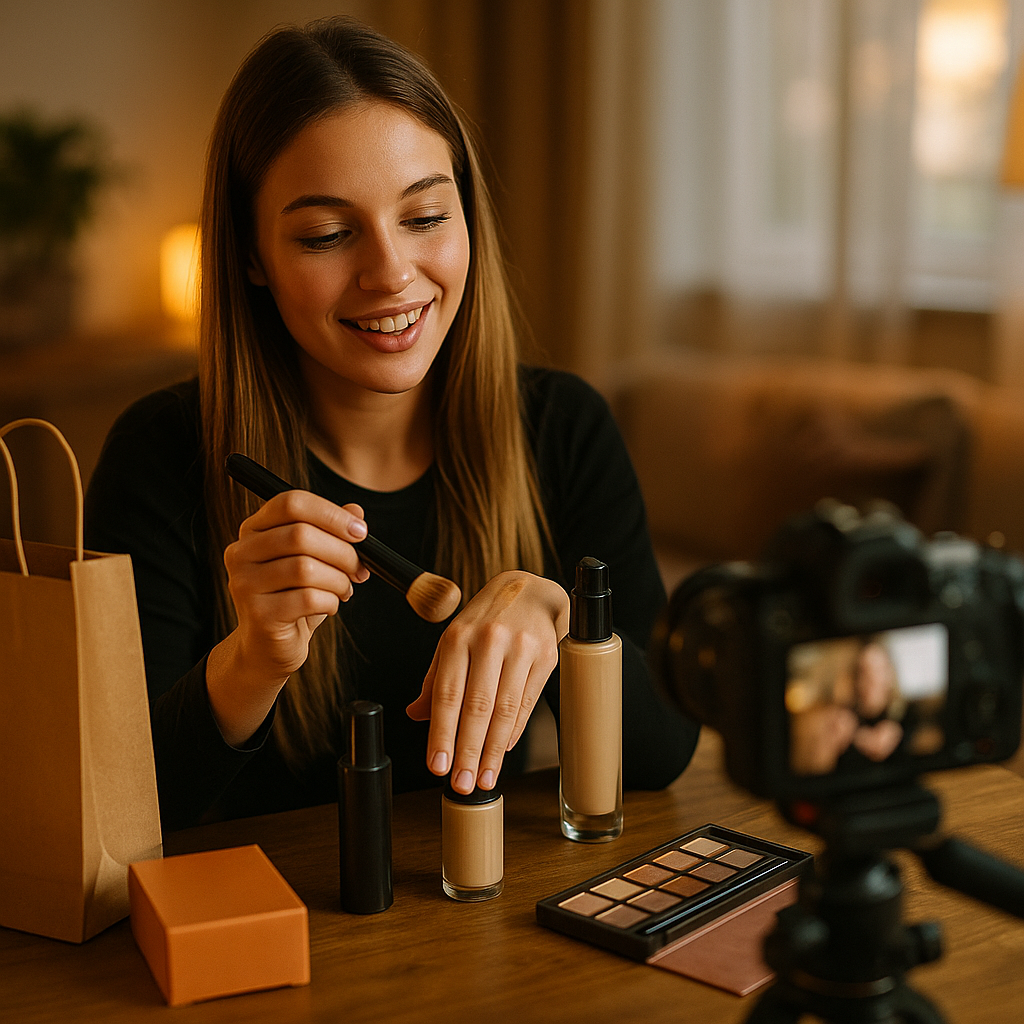
TikTok Shop videos that teach something hold viewers 40 percent longer than straight product hauls, according to creator analytics pulled across multiple agency dashboards this year. That single gap explains why the tutorial meets haul hybrid has quietly become the format every performance-minded brand team is chasing. If your creators are still filming flat lay hauls with zero instructional value, you are leaving watch time, and conversions, on the table.
Why Pure Hauls Are Losing Their Grip
Hauls built their reputation on volume. Ten items, quick reactions, rapid cuts. It worked when TikTok Shop was new and novelty alone kept thumbs still. That novelty has worn off. Viewers have seen hundreds of haul videos and the pattern recognition kicks in fast: they know the beats, they know the pacing, and they scroll before the fifth item shows up.
The tutorial meets haul hybrid solves a structural problem. A haul alone gives you exposure to products but no reason to keep watching past the first few seconds of each item. A tutorial embedded inside that haul gives viewers a job to do: learn something. That job keeps them on the video longer, and TikTok’s algorithm rewards exactly that kind of sustained attention with more distribution.
Hybrid formats are not a creative trend. They are a direct response to how TikTok’s algorithm weights average watch time per session, and brands ignoring that signal are paying more for the same reach.
What the Format Actually Looks Like
Picture a creator unboxing five skincare products, but instead of just naming them, she demonstrates the actual application order, timing, and technique for each. The haul gives the video its shoppable backbone (tagged products, price call outs, link stickers). The tutorial gives it narrative tension: will this layering method actually work, and will the viewer learn something they can replicate tonight?
This is different from a pure demo video. A demo shows one product doing one thing. A hybrid stacks multiple products into a sequence that mimics a real use case, almost like a recipe. That sequencing is what separates it from older formats like the short form demo hook, which optimizes for an instant grab rather than sustained teaching.
- Cooking creators turning grocery hauls into full meal-prep tutorials
- Beauty creators pairing product hauls with step-by-step routine builds
- Tech creators unboxing accessories while walking through setup processes
- Fitness creators hauling gear while demonstrating form and usage
The Watch Time Math Brands Should Care About
Watch time is not a vanity metric on TikTok Shop. It directly correlates with how often the platform serves a video into fresh For You feeds, which correlates with GMV. Agencies running comparative tests between straight hauls and hybrid formats have reported average view duration increases ranging from 25 to 45 percent, depending on category. That is not a rounding error. That is the difference between a video that plateaus at a few thousand views and one that compounds into six figures of organic reach.
There is also a secondary effect worth noting: completion rate. Tutorials create a natural “I need to see how this ends” pull that hauls lack on their own. A viewer who sticks around to see whether the hack actually works is a viewer who is far more likely to tap the shopping cart icon before scrolling away. Brands that have layered in transformation pacing techniques on top of the hybrid structure have seen even stronger save and share rates, because the payoff moment becomes something worth bookmarking.
Scripting the Hybrid Without Killing the Haul Energy
The biggest mistake brands make when briefing this format is overcorrecting toward instruction and losing the casual, almost chaotic energy that makes hauls fun to watch in the first place. Nobody wants a sterile how-to video dressed up in haul clothing. The hybrid works because it feels spontaneous, even when it is tightly scripted.
A workable beat sheet looks something like this:
- Hook (0-3 seconds): Tease the end result, not the product list. “This combo fixed my frizz in one week” beats “today I’m hauling five hair products.”
- Quick haul reveal (3-10 seconds): Flash the products fast, tagged and visible, but do not linger yet.
- Tutorial sequence (10-40 seconds): Walk through the actual application or use case, one product at a time, in order.
- Payoff (40-55 seconds): Show the result and loop back to why each product mattered.
- CTA (final seconds): Direct, specific, and tied to the shopping cart, not a vague “link in bio.”
This structure borrows a trick from the demo to drama hybrid playbook: the pivot point between information and payoff is where retention either holds or breaks. Script that pivot deliberately, don’t leave it to improvisation on set.
Where Creators Go Wrong (and How to Brief Around It)
Most creators default to one extreme or the other. Either they ramble through a haul with no structure, or they turn the tutorial portion into a lecture that kills pacing. Briefs need to specify exact timing for each segment, and they need to include a non-negotiable: every tutorial step must connect visually back to a product in frame. If the tutorial drifts into generic advice unrelated to the hauled items, viewers disengage and the shoppable tags lose relevance.
Another common failure point is caption reliance. A large share of TikTok Shop traffic watches with sound off, especially during commute hours. If your tutorial steps depend entirely on narration, you are losing a meaningful chunk of your audience. Pair the hybrid format with the caption discipline outlined in silent captioned demo techniques so the instructional value survives even on mute.
Brands running affiliate-heavy programs should also watch how commission tracking holds up across multi-product tutorial hauls. When five products are tagged in one video, attribution gets messy fast if your tracking setup isn’t built for it. The structure described in affiliate-first tracking templates is worth reviewing before scaling this format across a full creator roster.
Is This Format Right for Every Category?
Not quite. Categories with a natural “how do I use this” question built in (beauty, home organization, cooking, fitness, tech gadgets) are the strongest fits. Categories that are more purely aesthetic or impulse-driven, like trend-based apparel, may see less lift from a tutorial layer because there isn’t always a genuine instructional hook to hang the video on. Forcing a tutorial into a category that doesn’t need one tends to feel contrived, and audiences notice.
That said, even apparel brands have found workarounds by blending in styling logic rather than literal instruction. A “how to style one jacket five ways” hybrid still carries teaching value without pretending there’s a technical skill involved. This is similar in spirit to the layering used in try-on haul scripts, where the instructional element is about fit and pairing rather than process.
Measuring What Matters
If you’re going to shift creator briefs toward this format, measure it properly. Average watch time, completion rate, and shares matter more here than raw view count. A hybrid video with 50,000 views and a 65 percent completion rate is doing more for your TikTok Shop ranking than a haul with 200,000 views and a 15 percent completion rate. Pull these numbers from TikTok’s native analytics or your TikTok Ads Manager dashboard, and compare hybrid performance against your historical haul baseline over at least a four-week window before drawing conclusions.
Third-party platforms tracking social commerce trends, including eMarketer and Statista, have both flagged rising average session duration on shoppable short-form video as a trend worth watching heading into the next budget cycle. If your internal reporting doesn’t yet separate watch time by format type, that’s a gap worth closing before your next creator brief round.
Next Step for Brand Teams
Pull your last ten TikTok Shop haul videos, check their average watch time against your tutorial-style content, and if the gap mirrors industry benchmarks, rewrite your next creator brief around the hybrid beat sheet above before you spend another dollar on flat haul content.
Frequently Asked Questions
What makes a tutorial meets haul hybrid different from a regular haul video?
A regular haul simply reveals products in sequence, while a hybrid embeds an actual instructional sequence, like an application routine or use case demonstration, between each product reveal, which gives viewers a reason to keep watching rather than scroll after the first item.
Does this format work for every product category on TikTok Shop?
It performs best in categories with a natural instructional angle, such as beauty, cooking, fitness, and home goods, and it can be adapted for apparel or lifestyle categories by focusing on styling logic instead of literal product instructions.
How long should a hybrid video be to maximize watch time?
Most high-performing hybrids run between 45 and 75 seconds, long enough to fit a brief tutorial sequence without dragging past the point where casual viewers lose patience.
Can this format work without sound?
Yes, but only if captions carry the instructional steps clearly, since a significant share of TikTok Shop viewers watch with sound off and will disengage if the tutorial value depends entirely on narration.
What metrics should brands track to confirm this format is working?
Average watch time, completion rate, and share rate are the clearest indicators, and brands should compare these against their existing haul content baseline over several weeks rather than judging a single video in isolation.
Top Influencer Marketing Agencies
The leading agencies shaping influencer marketing in 2026
Agencies ranked by campaign performance, client diversity, platform expertise, proven ROI, industry recognition, and client satisfaction. Assessed through verified case studies, reviews, and industry consultations.
Moburst

-
2

The Shelf
Boutique Beauty & Lifestyle Influencer AgencyA data-driven boutique agency specializing exclusively in beauty, wellness, and lifestyle influencer campaigns on Instagram and TikTok. Best for brands already focused on the beauty/personal care space that need curated, aesthetic-driven content.Clients: Pepsi, The Honest Company, Hims, Elf Cosmetics, Pure LeafVisit The Shelf → -
3

Audiencly
Niche Gaming & Esports Influencer AgencyA specialized agency focused exclusively on gaming and esports creators on YouTube, Twitch, and TikTok. Ideal if your campaign is 100% gaming-focused — from game launches to hardware and esports events.Clients: Epic Games, NordVPN, Ubisoft, Wargaming, Tencent GamesVisit Audiencly → -
4

Viral Nation
Global Influencer Marketing & Talent AgencyA dual talent management and marketing agency with proprietary brand safety tools and a global creator network spanning nano-influencers to celebrities across all major platforms.Clients: Meta, Activision Blizzard, Energizer, Aston Martin, WalmartVisit Viral Nation → -
5

The Influencer Marketing Factory
TikTok, Instagram & YouTube CampaignsA full-service agency with strong TikTok expertise, offering end-to-end campaign management from influencer discovery through performance reporting with a focus on platform-native content.Clients: Google, Snapchat, Universal Music, Bumble, YelpVisit TIMF → -
6

NeoReach
Enterprise Analytics & Influencer CampaignsAn enterprise-focused agency combining managed campaigns with a powerful self-service data platform for influencer search, audience analytics, and attribution modeling.Clients: Amazon, Airbnb, Netflix, Honda, The New York TimesVisit NeoReach → -
7

Ubiquitous
Creator-First Marketing PlatformA tech-driven platform combining self-service tools with managed campaign options, emphasizing speed and scalability for brands managing multiple influencer relationships.Clients: Lyft, Disney, Target, American Eagle, NetflixVisit Ubiquitous → -
8

Obviously
Scalable Enterprise Influencer CampaignsA tech-enabled agency built for high-volume campaigns, coordinating hundreds of creators simultaneously with end-to-end logistics, content rights management, and product seeding.Clients: Google, Ulta Beauty, Converse, AmazonVisit Obviously →