


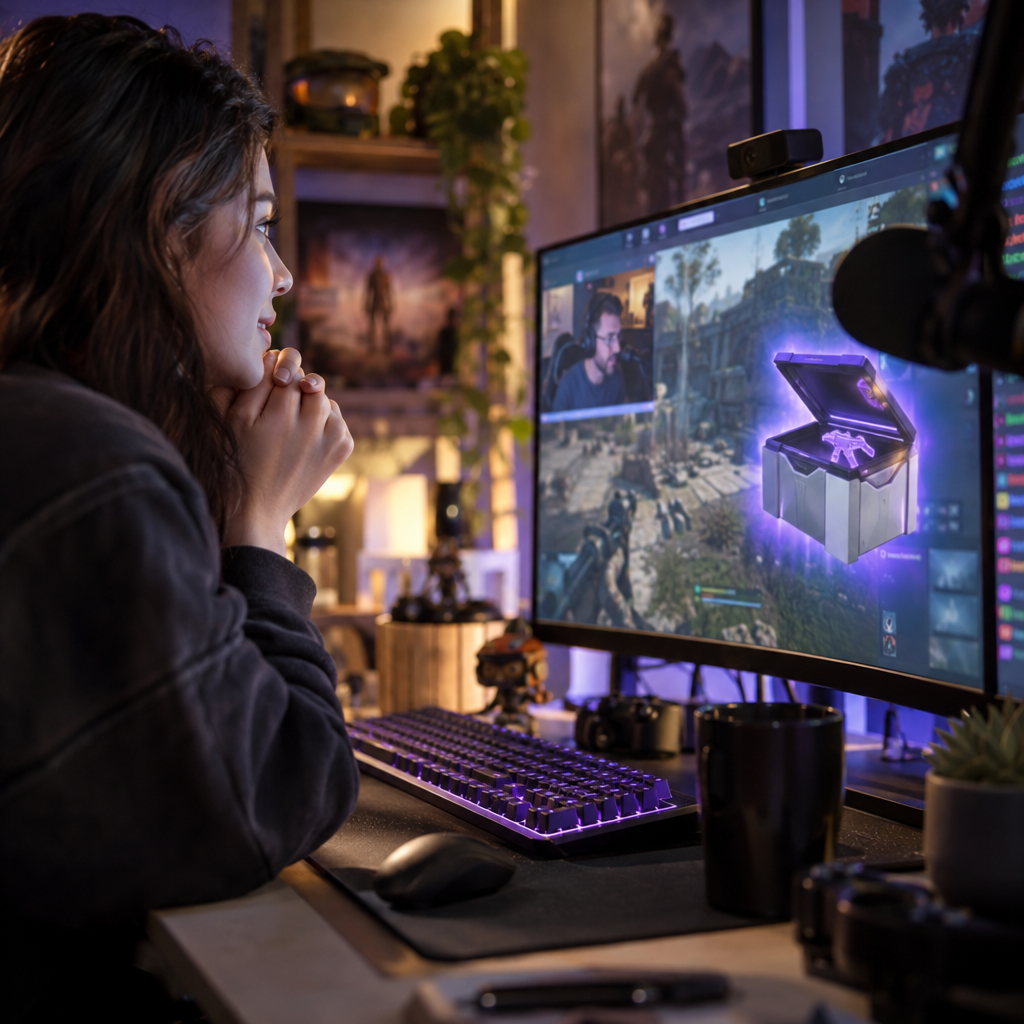
Twitch viewers watched over 1.1 billion hours of content last month alone, and a growing share of that time is now tied to a reward they can see ticking toward completion. Twitch Drops campaigns have quietly become one of the most efficient watch-time mechanics in the creator economy, yet most brand marketers still treat Twitch as a gaming afterthought rather than a programmable engagement channel. That’s a mistake worth correcting before your competitors lock in the inventory.
What a Drops Campaign Actually Does
A Twitch Drop is a reward, an item, currency, a beta key, a discount code, that viewers unlock by watching a designated stream for a set amount of time. Twitch’s backend tracks watch minutes per account and triggers the reward automatically once the threshold is hit. No code to screenshot, no DM to a bot, no manual redemption friction. The viewer just watches, and the platform does the bookkeeping.
For brands, this is the appeal: Drops convert passive lurking into measurable, timestamped engagement. You’re not hoping someone remembers your sponsored segment. You’re gating a reward behind it.
Drops campaigns shift the incentive structure from “watch if you feel like it” to “watch because the clock is literally counting down to your reward,” which is a fundamentally different retention mechanic than a standard pre-roll or host-read ad.
Why Brands Outside Gaming Are Paying Attention Now
Drops started as a game-publisher tool, Fortnite skins, League of Legends loot, the usual suspects. But the format has expanded. Beauty brands have run Drops tied to product launches during sponsored beauty streams. CPG brands have tested Drops offering coupon codes during cooking and lifestyle streams. Even B2B software companies have dabbled in Drops for free trial extensions during dev-focused streams.
Why the expansion? Because attention is fragmenting everywhere else. eMarketer has repeatedly flagged declining completion rates on standard pre-roll video, and marketers are hunting for formats that force genuine dwell time rather than just impressions. Twitch’s Drops infrastructure does exactly that, and it does it with first-party verification baked in.
Compare this to the broader shift happening across platforms. Watch time has become the dominant currency across short-form video too, but Twitch’s Drops system is unique in actually rewarding the viewer directly for sticking around, not just rewarding the algorithm for ranking the content higher.
How the Mechanics Actually Work
Setting up a Drops campaign isn’t something you do through a self-serve ad dashboard. Twitch requires brands and developers to apply for access to the Drops system through their developer and partnerships channels, then configure campaigns through the Twitch Developer Console. The basic flow looks like this:
- Define the reward (in-game item, code, digital asset, or physical prize fulfillment trigger)
- Set the watch-time threshold, often tiered (10 minutes for a small reward, 2 hours for a premium one)
- Whitelist which channels or categories qualify, this can be a curated creator roster or an entire game category
- Link viewer Twitch accounts to the brand’s platform or game account so the reward actually lands in the right place
- Monitor claim rates and watch-time data in near real time through the dashboard
That account-linking step matters more than brands expect. If a viewer hasn’t connected their Twitch account to your platform (a game client, a loyalty program, an email), the Drop can’t be delivered. This is also why Drops campaigns double as a quiet first-party data collection mechanism. You’re not just buying attention, you’re building a permissioned list of engaged users who took an action to connect accounts.
Picking Creators: It’s Not Just Follower Count
Here’s where a lot of brand teams get Drops campaigns wrong. They approach creator selection the same way they’d approach a sponsored YouTube video, chase the biggest channel, negotiate a flat fee, move on. Drops reward sustained watch time, so the creators who matter most are the ones with high average concurrent viewer retention, not just peak viewership spikes.
A streamer with 8,000 average concurrents who holds viewers for three-hour sessions is worth more to a Drops campaign than a streamer who spikes to 40,000 for a ten-minute highlight moment and then bleeds viewers. Pull VOD retention curves before you sign anyone. Twitch’s own analytics, plus third-party tools like StreamElements and SullyGnome, will show you average view duration, not just peak numbers.
This is the same discipline brands apply when vetting creators on other platforms for sustained engagement rather than vanity reach. The mid-tier creator sourcing logic that works for YouTube BrandConnect campaigns applies almost identically here: retention and audience quality beat raw subscriber or follower counts every time.
Budget Reality: What Drops Campaigns Actually Cost
Drops campaigns have two cost centers brands need to separate: the technical setup and the creator activation.
Technical setup (reward fulfillment infrastructure, Developer Console configuration, QA testing across reward tiers) typically runs through an internal dev team or an agency partner, and costs vary wildly depending on whether the reward is digital (cheap, scalable) or physical (expensive, logistics-heavy). Digital rewards, codes, in-app currency, exclusive cosmetic items, are dramatically cheaper to fulfill at scale than anything requiring shipping.
Creator activation costs follow a similar logic to standard Twitch sponsorship rates. Mid-tier streamers (3,000 to 15,000 average concurrents) typically negotiate flat fees plus a Drops-specific bonus tied to claim volume or watch-time hours generated. Some brands structure this as a hybrid: a base retainer plus a CPM-style bonus calculated on verified watch hours, which Twitch’s reporting dashboard can confirm.
The brands getting the best ROI from Drops aren’t the ones with the biggest reward budgets, they’re the ones who pay creators based on verified watch-time delivery rather than flat fees negotiated on follower count alone.
Compliance: Don’t Skip the Disclosure Conversation
A reward-gated watch-time mechanic is still a paid partnership, and the FTC treats it that way. If a streamer is running a Drops campaign because a brand paid them to feature it, that’s a material connection requiring clear disclosure, same as any sponsored content. Twitch has its own branded content guidelines requiring streamers to tag sponsored broadcasts, but brands shouldn’t assume the platform’s native tools cover every regulatory requirement.
This matters more now that regulators are paying closer attention to gamified and incentive-based marketing specifically, since the reward mechanic itself can blur lines around what counts as an ad versus a promotional game. Review the FTC’s endorsement guidelines before finalizing creator contracts, and build disclosure language into the brief rather than leaving it to the streamer’s discretion.
Brands running influencer programs across multiple platforms already know this drill. The same scrutiny applied to disclosure requirements on YouTube Shorts or sponsored LinkedIn content applies to Twitch Drops, arguably with higher stakes given the real-time, interactive nature of the reward mechanic.
Measuring Success: Beyond Claim Rate
Claim rate (the percentage of eligible viewers who actually unlocked the reward) is the headline metric Twitch’s dashboard surfaces first, and it’s tempting to treat it as the whole scorecard. Resist that. A high claim rate on a low watch-time threshold tells you almost nothing about engagement depth. A 10-minute Drop will always claim higher than a 2-hour one.
Smarter brand teams track a fuller set:
- Average watch time per claiming viewer, not just total hours
- Account-link conversion rate (how many viewers completed the linking step versus abandoned it)
- Post-campaign retention, do linked accounts keep engaging with the brand’s product or platform after the campaign ends
- Chat sentiment and mention volume during Drops windows, pulled via tools like StreamElements or Chatty
- Cost per verified watch hour, calculated against total campaign spend
That last metric is the one finance teams actually care about. It translates a gaming-platform mechanic into a number that sits comfortably next to CPM and CPV benchmarks from other channels, which makes budget renewal conversations far easier.
Where This Fits in a Broader Creator Strategy
Twitch Drops shouldn’t operate as an isolated tactic. The strongest campaigns treat Drops as one layer in a broader livestream and creator ecosystem play, often paired with clip-based distribution on other platforms once the live moment passes. A well-timed Drop during a stream can generate clip-worthy reactions that get cross-posted, extending the campaign’s shelf life well past the live broadcast window.
Brands already running structured influencer testing programs on emerging or volatile platforms will recognize the pattern. The same early-mover testing discipline applied to platform migration experiments or algorithm-volatile retainer testing applies here: start small, measure watch-time and claim data rigorously, then scale the creator roster once you have a benchmark that justifies bigger spend.
Platforms like Sprout Social and HubSpot both publish ongoing creator economy benchmarking that’s useful for sanity-checking your Drops ROI against broader influencer marketing spend patterns.
FAQs
Frequently Asked Questions
What is a Twitch Drops campaign?
A Twitch Drops campaign is a reward mechanic where viewers unlock in-game items, codes, or other digital rewards automatically after watching a designated stream for a set amount of time, with Twitch tracking the watch minutes on the backend.
How much does a Twitch Drops campaign cost for a brand?
Costs vary based on reward type (digital rewards are far cheaper than physical fulfillment) and creator activation fees, which typically combine a flat retainer with a bonus tied to verified watch-time hours or claim volume.
Do brands need Twitch’s approval to run Drops?
Yes. Drops campaigns require access to Twitch’s Developer Console and typically go through a partnerships or developer relations application process rather than a self-serve ad dashboard.
Are Twitch Drops campaigns only for gaming brands?
No. While Drops originated with game publishers, beauty, CPG, and software brands have all run Drops campaigns tied to coupon codes, trial extensions, or exclusive content during relevant category streams.
How do brands measure ROI on a Drops campaign?
Beyond basic claim rate, brands should track average watch time per claiming viewer, account-link conversion, post-campaign retention, and cost per verified watch hour to get a full ROI picture.
Do Drops campaigns require FTC disclosure?
Yes. If a brand pays a creator to run a Drops campaign, that’s a material connection requiring clear disclosure under FTC endorsement guidelines, regardless of Twitch’s own branded content tagging tools.
Next step: Pull VOD retention data on your shortlisted Twitch creators before committing budget, then structure creator payment around verified watch hours rather than flat fees so your Drops campaign ROI holds up in the next budget review.
Top Influencer Marketing Agencies
The leading agencies shaping influencer marketing in 2026
Agencies ranked by campaign performance, client diversity, platform expertise, proven ROI, industry recognition, and client satisfaction. Assessed through verified case studies, reviews, and industry consultations.
Moburst

-
2

The Shelf
Boutique Beauty & Lifestyle Influencer AgencyA data-driven boutique agency specializing exclusively in beauty, wellness, and lifestyle influencer campaigns on Instagram and TikTok. Best for brands already focused on the beauty/personal care space that need curated, aesthetic-driven content.Clients: Pepsi, The Honest Company, Hims, Elf Cosmetics, Pure LeafVisit The Shelf → -
3

Audiencly
Niche Gaming & Esports Influencer AgencyA specialized agency focused exclusively on gaming and esports creators on YouTube, Twitch, and TikTok. Ideal if your campaign is 100% gaming-focused — from game launches to hardware and esports events.Clients: Epic Games, NordVPN, Ubisoft, Wargaming, Tencent GamesVisit Audiencly → -
4

Viral Nation
Global Influencer Marketing & Talent AgencyA dual talent management and marketing agency with proprietary brand safety tools and a global creator network spanning nano-influencers to celebrities across all major platforms.Clients: Meta, Activision Blizzard, Energizer, Aston Martin, WalmartVisit Viral Nation → -
5

The Influencer Marketing Factory
TikTok, Instagram & YouTube CampaignsA full-service agency with strong TikTok expertise, offering end-to-end campaign management from influencer discovery through performance reporting with a focus on platform-native content.Clients: Google, Snapchat, Universal Music, Bumble, YelpVisit TIMF → -
6

NeoReach
Enterprise Analytics & Influencer CampaignsAn enterprise-focused agency combining managed campaigns with a powerful self-service data platform for influencer search, audience analytics, and attribution modeling.Clients: Amazon, Airbnb, Netflix, Honda, The New York TimesVisit NeoReach → -
7

Ubiquitous
Creator-First Marketing PlatformA tech-driven platform combining self-service tools with managed campaign options, emphasizing speed and scalability for brands managing multiple influencer relationships.Clients: Lyft, Disney, Target, American Eagle, NetflixVisit Ubiquitous → -
8

Obviously
Scalable Enterprise Influencer CampaignsA tech-enabled agency built for high-volume campaigns, coordinating hundreds of creators simultaneously with end-to-end logistics, content rights management, and product seeding.Clients: Google, Ulta Beauty, Converse, AmazonVisit Obviously →