


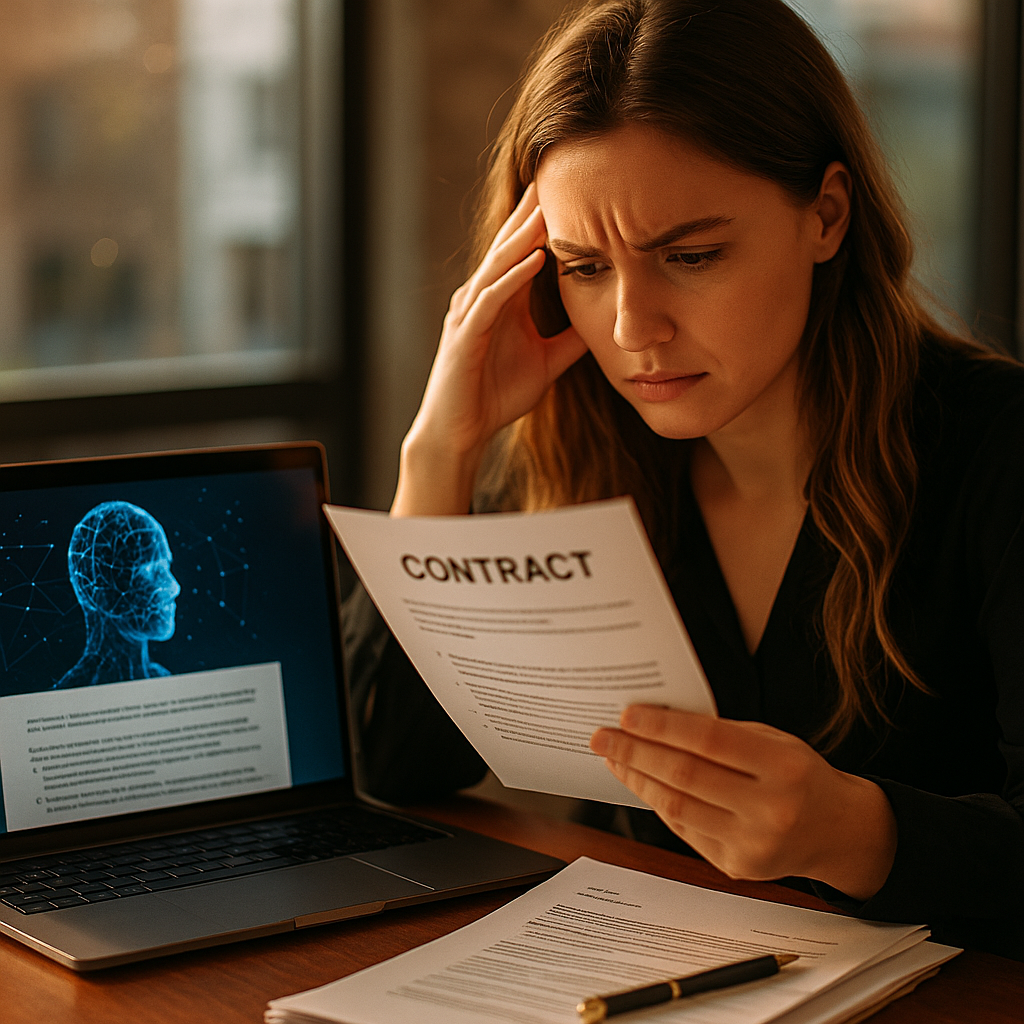
One unreviewed clause. That’s all it takes to unravel a creator contract in court. As legal teams lean on AI to draft influencer agreements faster, a new defense is emerging in creator disputes: unconscionability, the claim that a contract was so one-sided a court shouldn’t enforce it. Documenting human review of AI-drafted creator contracts isn’t a nice-to-have anymore. It’s the difference between a defensible agreement and a costly rescission fight.
Why Unconscionability Is Suddenly a Live Issue
Unconscionability has always been a sleepy corner of contract law, reserved for wildly lopsided consumer agreements. But creator contracts are starting to look a lot like consumer adhesion contracts: take-it-or-leave-it terms, boilerplate morality clauses, indemnification stacked entirely on one side, and now, AI-generated language nobody on the brand side actually read closely before sending.
Add generative drafting tools to that mix, and you’ve created a plausible new argument for creator-side attorneys: “This wasn’t negotiated. It wasn’t even reviewed. It was generated by a model trained to protect the brand, and no human meaningfully checked the output.” That’s a procedural unconscionability argument (unfair bargaining process) paired with a substantive one (unfair terms). Courts look for both.
The legal risk isn’t that AI drafted the contract. It’s that nobody can prove a human meaningfully evaluated what the AI produced before a creator signed it.
This matters more as creator deal volume scales. Brands running always-on ambassador programs might generate dozens of contracts a week through templated AI workflows. Multiply thin review by high volume, and you’ve got a systemic exposure problem, not an isolated one.
What Courts Actually Look For
Unconscionability claims typically require both procedural and substantive elements, though the exact test varies by state. Procedural unconscionability looks at the circumstances of formation: Was there a real opportunity to negotiate? Was the weaker party sophisticated enough to understand the terms? Was there a significant power imbalance?
Substantive unconscionability asks whether the actual terms are unreasonably favorable to one side. Uncapped indemnification, perpetual usage rights with no compensation adjustment, one-sided termination rights, or morality clauses that let a brand walk away for almost any reason can all become substantive red flags, especially when stacked together.
Here’s the twist AI introduces: a well-documented human negotiation process is strong evidence against procedural unconscionability, even when the substantive terms are aggressive. Courts have historically been more forgiving of tough terms when both sides had counsel, time to review, and a genuine chance to push back. Take away visible human involvement, and you weaken that defense considerably.
The Nano-Creator Problem
This risk is sharpest with nano and micro-creators who sign without legal representation. A macro-influencer with a talent manager and entertainment attorney is unlikely to win an unconscionability claim. A 19-year-old with 40,000 TikTok followers signing a brand’s AI-drafted template, with no redlines and no counsel, is a much more sympathetic plaintiff. Programs built around nano-creator seeding deals should treat this as a live compliance issue, not a theoretical one.
Building a Human Review Record That Holds Up
Documentation is the whole game here. If your review process isn’t written down somewhere discoverable, it’s legally indistinguishable from no review at all. Here’s what a defensible record actually needs.
- Timestamped review logs. Capture who reviewed the AI-drafted contract, when, and how long they spent on it. A five-minute rubber stamp on a 12-page agreement is its own red flag, and opposing counsel will find that timestamp.
- Clause-level annotations. Generic “reviewed and approved” sign-off isn’t enough. Reviewers should flag which clauses were AI-generated versus human-drafted, and note any edits made and why. This mirrors the kind of granular tracking already recommended for AI-generated creator scripts, and the same discipline applies to contract terms.
- Version control with diffs. Keep every draft version, not just the final signed copy. If a human materially softened an AI-generated indemnification clause, that diff is your best evidence of meaningful review.
- Named reviewer accountability. “Legal reviewed” is not a defense. “Associate General Counsel Jane Kim reviewed Sections 4, 7, and 9 on [date] and revised the termination clause” is a defense.
- A documented escalation path. Show that unusually aggressive AI-generated terms get flagged for senior review before going out. This demonstrates the organization actively guards against overreach rather than passively accepting whatever the model outputs.
Don’t Let the Tool Vendor Define Your Standard
Legal teams often assume that using a reputable AI contract tool is itself evidence of diligence. It isn’t. The tool’s output quality says nothing about whether a human at your company actually engaged with that output. Courts care about your process, not the vendor’s marketing copy. Keep those two things separate in your documentation.
Where AI-Drafted Terms Tend to Overreach
Certain clause types show up disproportionately in unconscionability disputes because AI models, trained on aggressive precedent language, tend to draft toward maximum brand protection by default. Watch these closely:
- Morality and termination clauses. AI models often generate sweeping, vague morality language that gives brands near-unlimited discretion to terminate without pay. Pair review of these clauses with guidance on cross-platform morality clause scope to avoid drafting something a court reads as a one-way escape hatch.
- Perpetual usage rights. AI drafts frequently default to “in perpetuity, worldwide, all media” language for content usage, with no additional compensation trigger. That’s a classic substantive unconscionability flag when paired with flat, one-time fees.
- Indemnification asymmetry. Templates often make the creator indemnify the brand for nearly everything while offering the creator no reciprocal protection.
- Data and attribution rights. AI-drafted terms sometimes fail to specify what happens to performance data and audience insights when a deal ends, an issue closely related to the data portability concerns brands should already be addressing contractually.
- Autonomous obligations. As more brands deploy AI agents to manage parts of the creator relationship, contracts need clear boundaries on what an agent can commit to without human sign-off, similar to the caps discussed in AI agent spend-cap clauses.
None of these clauses are automatically unenforceable. The problem arises when they’re combined, undisclosed, unexplained, and unreviewed by anyone with authority to change them.
A Practical Review Workflow Legal Teams Can Actually Run
You don’t need a 40-step process. You need one that’s consistent, documented, and proportionate to deal size.
- Tier your contracts by risk. A $500 gifting agreement doesn’t need the same scrutiny as a six-figure multi-year ambassador deal. Set clear thresholds for when senior counsel must personally review AI output versus when a checklist-based paralegal review suffices.
- Require a standing clause checklist. Build a fixed list of high-risk clause types (morality, indemnification, IP/usage rights, termination, data rights) that must be manually confirmed on every contract, regardless of deal size.
- Log the “why,” not just the “what.” When a reviewer accepts an AI-generated clause as-is, have them note briefly why it was acceptable. This creates an evidentiary trail showing active judgment, not passive approval.
- Give creators a real negotiation window. Procedural unconscionability claims get much weaker when there’s a documented offer to negotiate, even if the creator doesn’t take it. A dated email saying “let us know if you’d like to discuss any terms” is cheap insurance.
- Audit the audit. Periodically sample signed contracts and check whether the documented review process was actually followed. This mirrors the internal control logic behind audit log standards used elsewhere in the marketing stack.
A five-line review log, consistently applied to every contract, will do more to defeat an unconscionability claim than a brilliant legal argument written after the lawsuit is filed.
The Cost of Getting This Wrong
Rescinded contracts don’t just create legal fees. They create campaign disruption, PR exposure, and precedent. If one creator successfully argues a contract was unconscionable because it was AI-drafted and unreviewed, expect a wave of similar challenges from creators in your existing roster, especially if your program relies heavily on templated agreements at scale.
There’s also a regulatory overlay to consider. The FTC has been increasingly aggressive about creator disclosure and contract terms that shift compliance risk unfairly onto influencers, a theme that runs through the FTC disclosure audit checklist many legal teams already use. Unconscionability and regulatory compliance are converging: a contract that looks bad to the FTC often looks bad to a judge evaluating fairness, too.
Industry data reinforces the stakes. Influencer marketing spend continues to climb, with eMarketer tracking sustained double-digit growth in creator ad budgets, and Statista putting the global creator economy well into the hundreds of billions. More dollars flowing through creator contracts means more scrutiny, more disputes, and more incentive for plaintiff-side attorneys to test novel theories like this one.
Getting Ahead of It
Legal teams that treat AI drafting as a starting point, not an endpoint, are the ones who’ll survive the first real unconscionability test case. Build the documentation habit now, before a dispute forces you to reconstruct a review process that never really happened. Resources like HubSpot’s contract and legal ops guidance, alongside your own outside counsel, can help formalize workflows that hold up under scrutiny.
FAQs
What is unconscionability in the context of creator contracts?
Unconscionability is a legal doctrine allowing courts to refuse to enforce a contract, or specific clauses, that are so unfair or one-sided that enforcing them would be unjust. It requires both an unfair bargaining process (procedural) and unreasonably one-sided terms (substantive).
Does using AI to draft a contract automatically make it unenforceable?
No. AI drafting alone isn’t grounds for unenforceability. The risk arises when there’s no meaningful, documented human review of the AI output, combined with substantively unfair terms and a creator who lacked negotiating power or counsel.
How much human review is “enough” to defeat an unconscionability claim?
There’s no fixed legal standard, but documented, clause-level review by a named person, with a record of edits made and reasoning given, is far stronger evidence than a blanket approval stamp. Proportionality matters too: higher-value or higher-risk deals warrant deeper review.
Which clauses are most likely to trigger an unconscionability challenge?
Morality and termination clauses, perpetual content usage rights without added compensation, one-sided indemnification, and vague data or attribution terms are the most common flashpoints, particularly when several appear together in one contract.
Are nano and micro-creators more likely to bring these claims?
They’re a more plausible plaintiff class because they typically lack legal representation and negotiating leverage compared to managed macro-influencers, making procedural unconscionability arguments easier to support.
How does this connect to FTC compliance work legal teams already do?
Both areas focus on fairness and transparency in the brand-creator relationship. Contract terms that shift compliance risk unfairly onto creators often raise red flags in both an FTC review and an unconscionability analysis, so aligning the two review processes saves duplicated effort.
Next step: Audit your last quarter of signed creator contracts, check whether a named human reviewer’s edits and reasoning are actually documented, and if they’re not, fix that workflow before your next contract batch goes out, not after a dispute lands on your desk.
FAQs
What is unconscionability in the context of creator contracts?
Unconscionability is a legal doctrine allowing courts to refuse to enforce a contract, or specific clauses, that are so unfair or one-sided that enforcing them would be unjust. It requires both an unfair bargaining process (procedural) and unreasonably one-sided terms (substantive).
Does using AI to draft a contract automatically make it unenforceable?
No. AI drafting alone isn’t grounds for unenforceability. The risk arises when there’s no meaningful, documented human review of the AI output, combined with substantively unfair terms and a creator who lacked negotiating power or counsel.
How much human review is “enough” to defeat an unconscionability claim?
There’s no fixed legal standard, but documented, clause-level review by a named person, with a record of edits made and reasoning given, is far stronger evidence than a blanket approval stamp. Proportionality matters too: higher-value or higher-risk deals warrant deeper review.
Which clauses are most likely to trigger an unconscionability challenge?
Morality and termination clauses, perpetual content usage rights without added compensation, one-sided indemnification, and vague data or attribution terms are the most common flashpoints, particularly when several appear together in one contract.
Are nano and micro-creators more likely to bring these claims?
They’re a more plausible plaintiff class because they typically lack legal representation and negotiating leverage compared to managed macro-influencers, making procedural unconscionability arguments easier to support.
How does this connect to FTC compliance work legal teams already do?
Both areas focus on fairness and transparency in the brand-creator relationship. Contract terms that shift compliance risk unfairly onto creators often raise red flags in both an FTC review and an unconscionability analysis, so aligning the two review processes saves duplicated effort.
Top Influencer Marketing Agencies
The leading agencies shaping influencer marketing in 2026
Agencies ranked by campaign performance, client diversity, platform expertise, proven ROI, industry recognition, and client satisfaction. Assessed through verified case studies, reviews, and industry consultations.
Moburst

-
2

The Shelf
Boutique Beauty & Lifestyle Influencer AgencyA data-driven boutique agency specializing exclusively in beauty, wellness, and lifestyle influencer campaigns on Instagram and TikTok. Best for brands already focused on the beauty/personal care space that need curated, aesthetic-driven content.Clients: Pepsi, The Honest Company, Hims, Elf Cosmetics, Pure LeafVisit The Shelf → -
3

Audiencly
Niche Gaming & Esports Influencer AgencyA specialized agency focused exclusively on gaming and esports creators on YouTube, Twitch, and TikTok. Ideal if your campaign is 100% gaming-focused — from game launches to hardware and esports events.Clients: Epic Games, NordVPN, Ubisoft, Wargaming, Tencent GamesVisit Audiencly → -
4

Viral Nation
Global Influencer Marketing & Talent AgencyA dual talent management and marketing agency with proprietary brand safety tools and a global creator network spanning nano-influencers to celebrities across all major platforms.Clients: Meta, Activision Blizzard, Energizer, Aston Martin, WalmartVisit Viral Nation → -
5

The Influencer Marketing Factory
TikTok, Instagram & YouTube CampaignsA full-service agency with strong TikTok expertise, offering end-to-end campaign management from influencer discovery through performance reporting with a focus on platform-native content.Clients: Google, Snapchat, Universal Music, Bumble, YelpVisit TIMF → -
6

NeoReach
Enterprise Analytics & Influencer CampaignsAn enterprise-focused agency combining managed campaigns with a powerful self-service data platform for influencer search, audience analytics, and attribution modeling.Clients: Amazon, Airbnb, Netflix, Honda, The New York TimesVisit NeoReach → -
7

Ubiquitous
Creator-First Marketing PlatformA tech-driven platform combining self-service tools with managed campaign options, emphasizing speed and scalability for brands managing multiple influencer relationships.Clients: Lyft, Disney, Target, American Eagle, NetflixVisit Ubiquitous → -
8

Obviously
Scalable Enterprise Influencer CampaignsA tech-enabled agency built for high-volume campaigns, coordinating hundreds of creators simultaneously with end-to-end logistics, content rights management, and product seeding.Clients: Google, Ulta Beauty, Converse, AmazonVisit Obviously →