


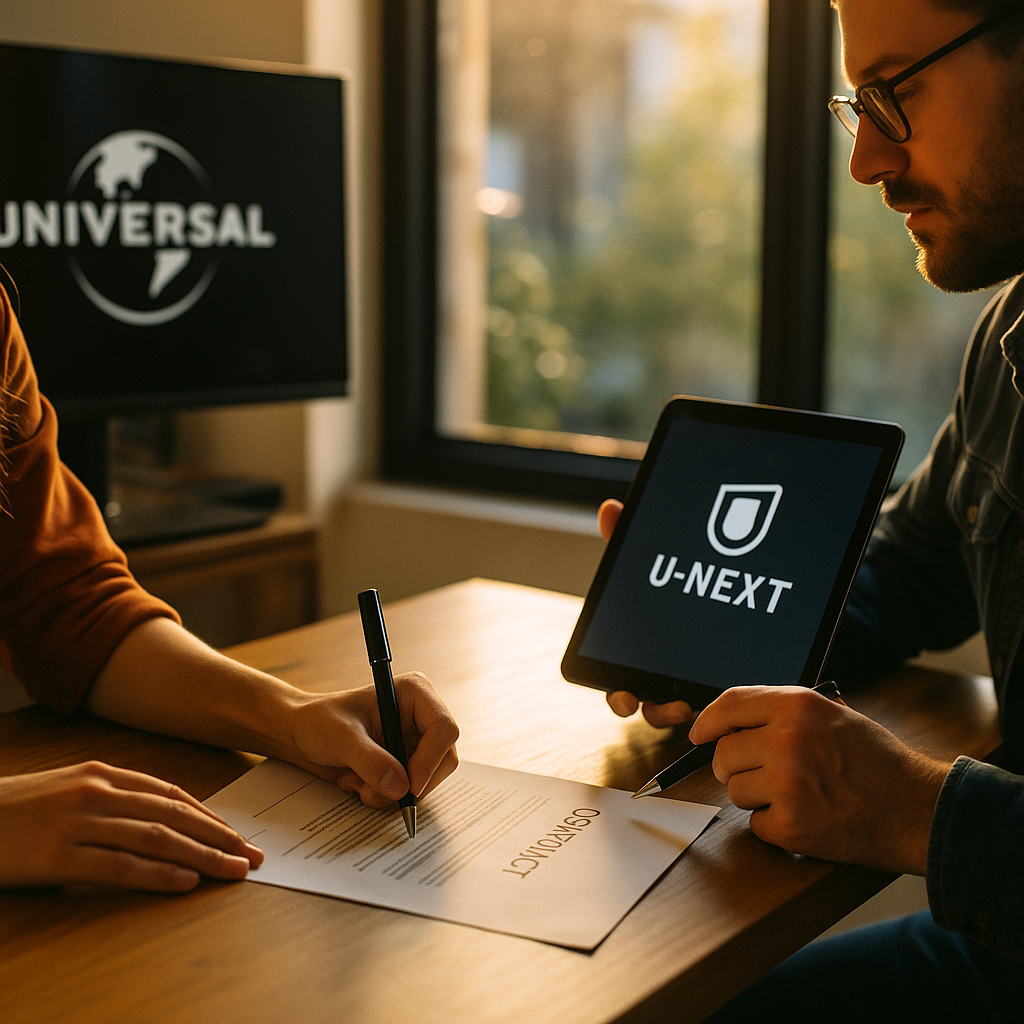
Universal+ just did something no major label has managed at scale: it turned a streaming platform partnership into a repeatable template for creator distribution deals. In Japan, Universal Music’s joint venture with U-Next isn’t just another content licensing arrangement. It’s a signal that the old influencer contract, one post, one fee, one expiration date, is being replaced by something closer to a media rights deal.
That distinction matters more than it sounds. For brands and agencies still negotiating creator partnerships like one-off sponsorships, Universal+ is a preview of where the leverage is moving.
What Universal+ Actually Is
Universal+ is Universal Music Group’s streaming-native content arm built specifically for the Japanese market, developed in partnership with U-Next, one of Japan’s largest subscription video platforms. Rather than licensing music catalog the way UMG typically does with Spotify or Apple Music, Universal+ produces original artist content, docuseries, behind-the-scenes footage, exclusive performances, and packages it for distribution inside U-Next’s existing subscriber base.
The mechanics look less like a record label deal and more like a studio output arrangement. UMG supplies talent and IP. U-Next supplies distribution infrastructure, subscriber data, and a monetization layer already trusted by Japanese consumers. Our earlier coverage of the Universal Plus and U-Next partnership broke down the initial deal terms, but the bigger story is what it implies for creator economics outside Japan.
Universal+ treats creator and artist content as a licensable asset with recurring value, not a single campaign line item that disappears after 30 days.
Why Streaming-Native Deals Change the Math for Brands
Here’s the uncomfortable truth most brand marketers already suspect: platform-native creator deals (think TikTok Creator Fund payouts or YouTube ad revenue splits) were never designed to reward long-tail value. A creator video that performs well in week one typically dies in the algorithm by week three, regardless of quality.
Streaming platforms operate on a different incentive structure. Subscription models reward content that keeps people paying month over month, which means platforms like U-Next have every reason to keep creator and artist content discoverable long after launch. That’s a fundamentally different risk profile for anyone allocating budget.
Consider what this means operationally:
- Longer content lifecycle: Streaming-hosted creator content doesn’t face the same feed-decay problem as social posts, so the cost-per-impression math improves over time rather than degrading.
- Bundled distribution rights: Brands negotiating with creators tied to streaming-native deals can potentially secure usage rights across both the platform and paid media, similar to how TikTok’s Symphony Agent merges whitelisting and dark posting into one workflow.
- Subscriber data access: Unlike open social platforms, subscription services can offer richer first-party audience insight, useful for brands trying to justify influencer spend to finance teams.
According to eMarketer’s ongoing creator economy tracking, marketers increasingly cite content longevity and measurement clarity as top barriers to scaling influencer budgets. Streaming-native models directly address both.
The Japan Test Case: Why This Market Matters
Japan isn’t a random pilot market. It’s one of the few major economies where subscription video adoption, music streaming penetration, and creator-driven fandom culture overlap almost perfectly. U-Next already competes directly with Netflix and Amazon Prime Video domestically, and Japanese consumers show notably higher willingness to pay for exclusive artist content compared to Western markets, per Statista’s regional streaming data.
That combination makes Japan an ideal proving ground for a model UMG likely wants to export. If Universal+ can demonstrate that streaming-hosted creator content drives measurable subscriber retention for U-Next, expect similar joint ventures to surface in South Korea, and eventually in North American and European markets where music labels already have leverage with platforms hungry for exclusive content.
For global brand strategists, that timeline matters. Waiting until the model is fully mature in your home market means missing the early-mover pricing advantage that always exists before a distribution channel gets crowded.
What This Means for Creator Distribution Deals Generally
The Universal+ blueprint offers a template that extends well beyond music. Any brand or agency structuring creator distribution deals should be asking three questions right now:
- Who owns the long-tail rights? If a platform is hosting content indefinitely rather than letting it expire in a feed, the licensing terms need to reflect that extended value, not a flat one-time fee.
- Is the platform investing in discoverability? Subscription services have direct financial incentive to surface content that retains subscribers. Ad-supported social feeds do not share that incentive once a post stops generating fresh engagement.
- Can measurement follow the content? This is where most brands still struggle. Streaming platforms generally offer more granular watch-time and retention data than open social feeds, but that data rarely integrates cleanly with existing influencer measurement stacks.
That third point is exactly why agencies with dedicated influencer infrastructure have an edge right now. Moburst, a global growth agency that has worked with over 900 clients and won 45+ international awards, has built its influencer marketing partners practice around repurposing creator content into paid media assets rather than letting organic posts expire, which is precisely the operating logic streaming-native deals like Universal+ are trying to formalize at the platform level.
Brands still measuring influencer ROI by single-post engagement rates are going to miss what’s actually happening here. The value isn’t in the initial view count, it’s in whether the content keeps earning attention six months later. Our recent breakdown of the YouTube Instant Play Views shift covers a related measurement problem: platforms changing what counts as a “view” faster than brand reporting frameworks can adapt.
If your influencer KPIs still treat every platform’s “view” the same way, you’re already measuring against a moving target, and streaming-native deals only widen that gap.
Risk Mitigation: What Could Go Wrong
None of this is risk-free. Streaming-native creator deals introduce a few operational headaches brands haven’t fully priced in yet.
First, exclusivity clauses. If a creator’s best content lives behind a subscription paywall as part of a Universal+-style arrangement, brands lose the open-reach benefit that made influencer marketing attractive in the first place. Negotiating carve-outs for paid media usage rights becomes essential, not optional.
Second, disclosure compliance gets more complicated when content moves across platforms with different regulatory expectations. The FTC’s endorsement guidelines already require clear disclosure regardless of where sponsored content lives, and streaming environments haven’t been tested at the same scale as social feeds. Brands should assume regulators will eventually scrutinize subscription-hosted sponsored content with the same rigor applied to Instagram and TikTok.
Third, measurement fragmentation. Every new distribution channel adds another dashboard, another data export, another reconciliation headache for the analytics team. Tools like HubSpot and Sprout Social are adapting to cross-platform creator reporting, but streaming-native content still sits somewhat outside standard influencer analytics workflows. Budget time for that integration gap before committing serious spend.
Where Brands Should Start
You don’t need a UMG-scale partnership to apply this thinking. Start by auditing existing creator contracts for content lifecycle assumptions. Are you paying for a single post, or for ongoing usage rights that could extend into paid media, streaming placements, or licensed distribution down the line? Renegotiate toward the latter wherever creator leverage allows it.
Second, watch which streaming platforms are actively courting creator and label partnerships in your core markets. Early movers typically get better terms and more flexible rights structures before platforms standardize pricing once the model proves out.
The Bottom Line
Universal+ isn’t a Japan-only curiosity. It’s an early signal that creator distribution deals are shifting from disposable social content toward licensed, recurring-value media assets. Brands that renegotiate their creator contracts now, before this model standardizes, will lock in better terms than those who wait for the playbook to become common knowledge.
Frequently Asked Questions
What is Universal+ in the context of Japan’s streaming market?
Universal+ is Universal Music Group’s streaming-native content venture in Japan, developed with U-Next, that produces original artist content and distributes it through U-Next’s subscription platform rather than through traditional social or music streaming channels.
How is a streaming-native creator deal different from a standard influencer contract?
Standard influencer contracts typically pay for a single post or campaign with a defined expiration. Streaming-native deals treat content as a licensable, recurring asset hosted on a subscription platform with ongoing discoverability incentives, changing both the pricing model and the rights negotiation.
Why does Japan matter as a test market for this model?
Japan combines high subscription video adoption, strong music streaming penetration, and consumer willingness to pay for exclusive artist content, making it an efficient proving ground before similar partnerships expand into other regions.
What should brands negotiate differently because of this shift?
Brands should push for extended usage rights covering paid media repurposing, clarify who owns long-tail content value once it moves beyond the original platform, and confirm that measurement data from streaming placements can integrate with existing influencer reporting tools.
Does this model apply outside the music industry?
Yes. Any brand or agency structuring creator distribution deals can apply the same logic: negotiate for recurring value rather than one-time fees, and prioritize platforms with a financial incentive to keep content discoverable long after launch.
Top Influencer Marketing Agencies
The leading agencies shaping influencer marketing in 2026
Agencies ranked by campaign performance, client diversity, platform expertise, proven ROI, industry recognition, and client satisfaction. Assessed through verified case studies, reviews, and industry consultations.
Moburst

-
2

The Shelf
Boutique Beauty & Lifestyle Influencer AgencyA data-driven boutique agency specializing exclusively in beauty, wellness, and lifestyle influencer campaigns on Instagram and TikTok. Best for brands already focused on the beauty/personal care space that need curated, aesthetic-driven content.Clients: Pepsi, The Honest Company, Hims, Elf Cosmetics, Pure LeafVisit The Shelf → -
3

Audiencly
Niche Gaming & Esports Influencer AgencyA specialized agency focused exclusively on gaming and esports creators on YouTube, Twitch, and TikTok. Ideal if your campaign is 100% gaming-focused — from game launches to hardware and esports events.Clients: Epic Games, NordVPN, Ubisoft, Wargaming, Tencent GamesVisit Audiencly → -
4

Viral Nation
Global Influencer Marketing & Talent AgencyA dual talent management and marketing agency with proprietary brand safety tools and a global creator network spanning nano-influencers to celebrities across all major platforms.Clients: Meta, Activision Blizzard, Energizer, Aston Martin, WalmartVisit Viral Nation → -
5

The Influencer Marketing Factory
TikTok, Instagram & YouTube CampaignsA full-service agency with strong TikTok expertise, offering end-to-end campaign management from influencer discovery through performance reporting with a focus on platform-native content.Clients: Google, Snapchat, Universal Music, Bumble, YelpVisit TIMF → -
6

NeoReach
Enterprise Analytics & Influencer CampaignsAn enterprise-focused agency combining managed campaigns with a powerful self-service data platform for influencer search, audience analytics, and attribution modeling.Clients: Amazon, Airbnb, Netflix, Honda, The New York TimesVisit NeoReach → -
7

Ubiquitous
Creator-First Marketing PlatformA tech-driven platform combining self-service tools with managed campaign options, emphasizing speed and scalability for brands managing multiple influencer relationships.Clients: Lyft, Disney, Target, American Eagle, NetflixVisit Ubiquitous → -
8

Obviously
Scalable Enterprise Influencer CampaignsA tech-enabled agency built for high-volume campaigns, coordinating hundreds of creators simultaneously with end-to-end logistics, content rights management, and product seeding.Clients: Google, Ulta Beauty, Converse, AmazonVisit Obviously →