


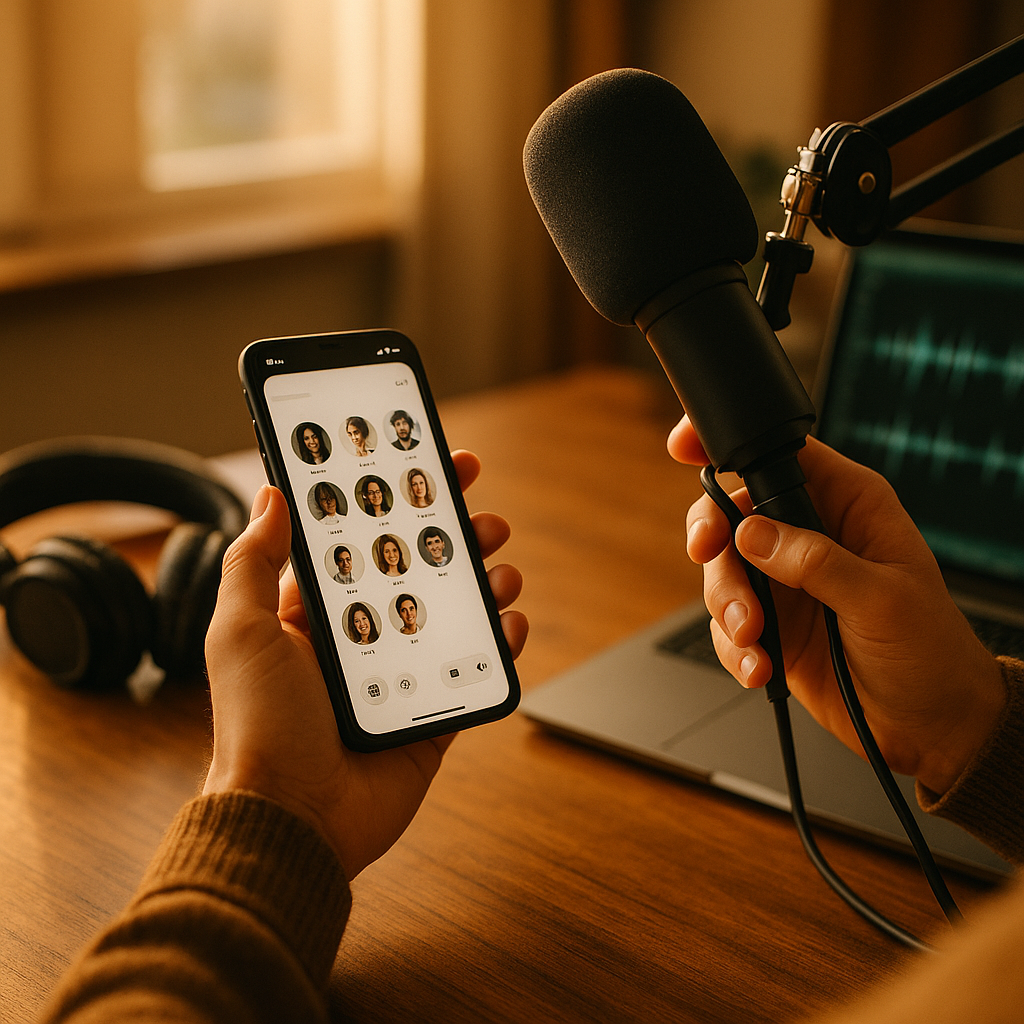
Marketing on audio-first platforms beyond podcasts, such as Callin and Stereo, is reshaping how brands reach audiences in 2025. These interactive, live audio apps foster community, immediacy, and authenticity. Are you ready to leverage the potential of real-time audio marketing for your brand’s growth?
Understanding Audio-First Social Media: Live Engagement at Scale
Audio-first social media platforms represent the next wave of digital storytelling, going beyond static podcasts or pre-recorded content. Apps like Callin and Stereo allow users and brands to hold interactive, live conversations with audiences. Listeners can join, ask questions, react in real-time, and even become co-hosts.
This live engagement model addresses several marketing trends:
- Authenticity: Real conversations build trust, with audiences valuing transparency and spontaneity.
- Community: Audio rooms foster a sense of belonging, allowing listeners to participate actively, not just passively consume.
- Accessibility: Voice-first content is more inclusive, letting users participate hands-free and on-the-go.
According to Soundwise’s 2024 Audio Summit, more than 54% of young adults in North America now prefer live audio interactions over traditional podcasts. Adapting to audio-first platforms aligns your marketing with shifting user preferences.
Choosing the Right Audio-First Platforms for Brand Awareness
Not all audio apps have the same focus, audience, or features. While Clubhouse pioneered the live drop-in audio room model, newcomers like Callin and Stereo bring advanced interaction tools and niche communities.
- Callin: Blending live audio rooms with podcasting, Callin lets brands host, record, and publish discussions in one workflow. Ideal for thought leadership, community building, and multi-format content.
- Stereo: This platform specializes in live, interactive talk shows. Its gamified environment—with audience questions, voting, and co-hosting—drives higher retention among Gen Z and Millennials.
- Other platforms: Emerging voice-chat networks like Wisdom and Twitter Spaces offer unique discovery tools and creator monetization options. Research where your audience is most active.
To choose effectively, analyze platform demographics, user behaviors, and moderation standards. Brands in tech, lifestyle, education, and entertainment especially benefit from these dynamic spaces. Vet each app’s brand safety and privacy policies to align with your audience values and compliance needs.
Building Your Audio Brand Voice and Host Persona
Succeeding on audio-first platforms requires a distinctive audio brand voice. Without visuals to assist, your company’s ethos and expertise must shine through conversation style, tone, and hosting skills.
- Define your goals: Are you aiming for thought leadership, customer support, or product community? Each goal shapes your host approach and show format.
- Select engaging hosts: Choose personalities who embody your brand values and can handle live Q&A. Consistent, skilled hosts build audience loyalty and trust.
- Develop show formats: Experiment with panel debates, open Q&As, interviews, or product demonstrations. Repetition helps listeners know what to expect each week.
- Train for live interaction: Not every host is a natural at moderating or fielding live commentary. Invest in basic media coaching or run practice sessions before going live.
An audio-first approach requires careful prep and post-session review. Download analytics after each session, track listener feedback, and continuously refine your brand sound and engagement style.
Maximizing Reach: Promotion and Community Engagement
Audio-first apps thrive on live participation, but building an audience requires consistent outreach before, during, and after your shows.
- Cross-promotion: Announce upcoming audio events on your email lists, social networks, and website banners. Tap platform tools for scheduling and alerting followers.
- Live reminders: Send push notifications or SMS updates just before broadcasts to increase attendance. Many platforms now automate RSVP reminders.
- Repurpose content: Record conversations, edit highlights, and distribute as short audiograms or show notes across your blog and socials.
- Foster backchannel discussion: Create branded chat groups or forums for deeper engagement outside live sessions. Invite listener suggestions for future topics or guests.
- Partner with creators: Collaborate with known voices in your industry for guest slots or co-hosted episodes, leveraging their audience for greater reach.
According to a 2025 Edison Research report, live audio events promoted through three or more channels see 68% higher average attendance than those relying on in-app notifications alone. Make promotion a core part of your strategy.
Monetizing and Measuring Success on Audio-First Networks
In the era of audio-first marketing, return on investment (ROI) matters. Platforms like Callin and Stereo now offer built-in brand partnership tools, sponsorships, and tipping. Marketers should define clear success metrics and leverage these features.
- Audience growth: Track unique live attendees, subscribers, listener retention, and overall reach across sessions. Compare to your baseline podcast or social media stats.
- Engagement rates: Measure live questions, co-host requests, poll participation, and real-time reactions as proxies for message resonance.
- Lead generation: Use call-to-actions (CTAs), branded rooms, or sponsor mentions to drive listeners to landing pages or sign-up forms.
- Monetization features: Explore platform-specific monetization, such as exclusive supporter rooms, premium content, or tipping functionality for hosts.
As of 2025, brand-owned audio events that integrate clear CTAs report an average conversion rate of 7%, outpacing many traditional podcast ad campaigns. Ensure all campaigns align with business objectives and integrate tracking tools for actionable insights.
Trends and Future Outlook for Interactive Audio Advertising
The landscape for audio-first marketing continues to evolve rapidly, with several trends shaping 2025 and beyond:
- Voice commerce integrations: Some platforms now enable direct purchases through voice prompts or live shopping links during sessions.
- Advanced analytics: Real-time audience sentiment and demographic tracking allow refined targeting of future campaigns.
- AI-powered moderation: Automated tools ensure brand safety and streamline community management for marketers leveraging user-generated content.
- Augmented audio engagement: Expect richer interactive formats, from choose-your-own-adventure audio to multi-room games and branded experiences.
Embracing these trends puts forward-thinking marketers ahead of emerging competition, positioning their brands as innovative leaders within the audio space.
In summary, marketing on audio-first platforms like Callin and Stereo offers brands direct, authentic engagement with audiences. Crafting a unique audio identity, strategic promotion, and data-driven measurement are the keys to sustainable success in this fast-growing, interactive arena.
FAQs: Marketing on Audio-First Platforms Beyond Podcasts
-
What are audio-first platforms beyond podcasts?
These are interactive, social audio apps like Callin and Stereo where users, brands, and creators host live conversations with real-time audience participation, going beyond one-way pre-recorded podcasting.
-
How do I promote my live audio events?
Promote across your existing social channels, email list, and website. Use in-app tools to schedule events and send reminders. Collaborate with creators to co-host and amplify reach.
-
Can businesses monetize on audio-first platforms?
Yes, through sponsorships, branded rooms, affiliate mentions, tipping features, and premium content subscriptions, depending on the platform’s toolkit and audience fit.
-
Are audio platforms suitable for B2B marketing?
Absolutely. B2B brands use audio-first platforms for expert panels, customer Q&A, and industry networking, positioning themselves as thought leaders and fostering engaging communities.
-
What metrics should I track?
Monitor listener counts, engagement actions, audience growth, lead generation sources, and conversions from audio-driven CTAs to assess campaign effectiveness.
Top Influencer Marketing Agencies
The leading agencies shaping influencer marketing in 2026
Agencies ranked by campaign performance, client diversity, platform expertise, proven ROI, industry recognition, and client satisfaction. Assessed through verified case studies, reviews, and industry consultations.
Moburst

-
2

The Shelf
Boutique Beauty & Lifestyle Influencer AgencyA data-driven boutique agency specializing exclusively in beauty, wellness, and lifestyle influencer campaigns on Instagram and TikTok. Best for brands already focused on the beauty/personal care space that need curated, aesthetic-driven content.Clients: Pepsi, The Honest Company, Hims, Elf Cosmetics, Pure LeafVisit The Shelf → -
3

Audiencly
Niche Gaming & Esports Influencer AgencyA specialized agency focused exclusively on gaming and esports creators on YouTube, Twitch, and TikTok. Ideal if your campaign is 100% gaming-focused — from game launches to hardware and esports events.Clients: Epic Games, NordVPN, Ubisoft, Wargaming, Tencent GamesVisit Audiencly → -
4

Viral Nation
Global Influencer Marketing & Talent AgencyA dual talent management and marketing agency with proprietary brand safety tools and a global creator network spanning nano-influencers to celebrities across all major platforms.Clients: Meta, Activision Blizzard, Energizer, Aston Martin, WalmartVisit Viral Nation → -
5

The Influencer Marketing Factory
TikTok, Instagram & YouTube CampaignsA full-service agency with strong TikTok expertise, offering end-to-end campaign management from influencer discovery through performance reporting with a focus on platform-native content.Clients: Google, Snapchat, Universal Music, Bumble, YelpVisit TIMF → -
6

NeoReach
Enterprise Analytics & Influencer CampaignsAn enterprise-focused agency combining managed campaigns with a powerful self-service data platform for influencer search, audience analytics, and attribution modeling.Clients: Amazon, Airbnb, Netflix, Honda, The New York TimesVisit NeoReach → -
7

Ubiquitous
Creator-First Marketing PlatformA tech-driven platform combining self-service tools with managed campaign options, emphasizing speed and scalability for brands managing multiple influencer relationships.Clients: Lyft, Disney, Target, American Eagle, NetflixVisit Ubiquitous → -
8

Obviously
Scalable Enterprise Influencer CampaignsA tech-enabled agency built for high-volume campaigns, coordinating hundreds of creators simultaneously with end-to-end logistics, content rights management, and product seeding.Clients: Google, Ulta Beauty, Converse, AmazonVisit Obviously →