


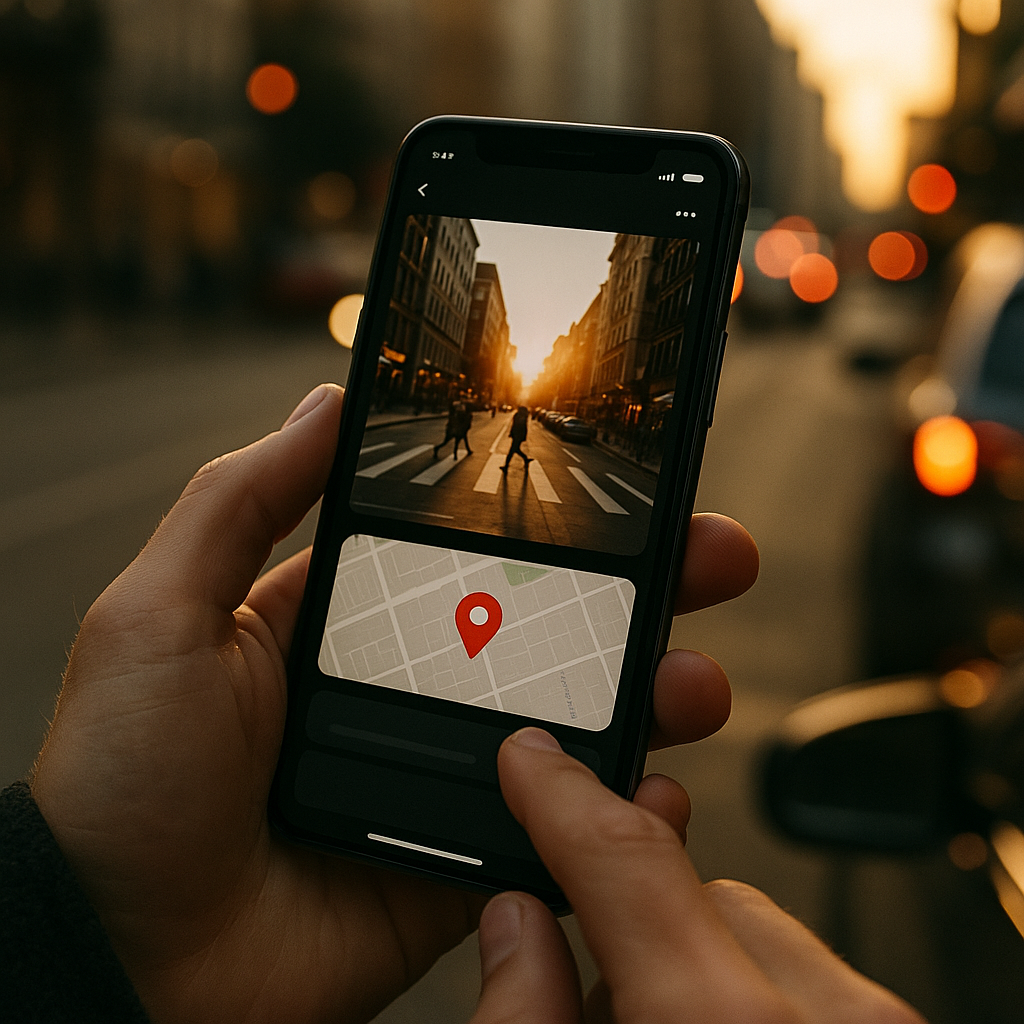
Ask a traveler where they trust their next destination pick to come from, and the answer is rarely a polished ad. It’s a hashtag search, a geotag pin, a wall of strangers’ vacation photos. Veel’s bet is that this behavior can be productized into a searchable UGC library — and that brands can lean on it as a trust signal. The question worth asking: is a hashtag-and-geotag UGC aggregation model actually a durable trust asset, or just a prettier content dump?
What Veel Is Actually Building
Veel positions itself as a travel-content discovery layer. It pulls user-generated posts tagged with specific hashtags or geotagged at specific locations, then organizes them into searchable, browsable libraries by destination, activity, or even hotel property. Think of it as a Pinterest-meets-TripAdvisor hybrid, except the content is sourced entirely from real travelers rather than commissioned creators or brand-owned assets.
For destination marketing organizations (DMOs), hospitality brands, and travel platforms, this matters because search behavior has shifted. Travelers increasingly bypass traditional search engines in favor of visual, social-native discovery — scrolling geotagged posts to see what a resort actually looks like before booking. Veel essentially indexes that behavior and wraps it in a searchable interface, positioning itself as an authenticity layer between raw social content and brand decision-making.
Why Geotag Aggregation Reads as “Trust” to Brands
The pitch is straightforward: content that’s organically tagged by real visitors carries more credibility than staged influencer campaigns. There’s some truth to that. According to Sprout Social’s ongoing research on brand trust, consumers consistently rate peer content and unpaid UGC higher on authenticity metrics than sponsored posts. Aggregating that content into a searchable library, rather than leaving it scattered across individual profiles, makes it easier for a brand to point to as social proof at scale.
But “easier to find” isn’t the same as “verified.” That’s the gap brand teams need to interrogate before treating a Veel-style library as a genuine trust signal rather than a volume metric.
A searchable library of geotagged content proves reach and volume. It does not, by itself, prove sentiment, safety, or brand fit — those still require human review.
The Verification Problem Nobody’s Solved Yet
Hashtags and geotags are self-reported. Anyone can tag a location they’ve never visited, or hijack a branded hashtag with unrelated or negative content. Aggregation platforms inherit this noise. A luxury resort’s geotag library might include a genuinely glowing guest photo right next to a complaint post, a spam account, or content from a competing property piggybacking on the tag.
This isn’t a hypothetical risk — it’s the same moderation challenge that plagued early UGC rights-clearance tools before brands demanded better filtering. If Veel (or any similar aggregator) doesn’t have robust sentiment filtering, duplicate detection, and rights-management workflows baked in, brands are just outsourcing their content moderation problem to an interface that looks more credible than it is.
Before rolling a searchable UGC library into a brand trust strategy, marketing teams should ask three things: How is content vetted for authenticity (not just tag matching)? What’s the rights-clearance process for reuse in paid media? And how quickly can flagged or negative content be suppressed from a public-facing library? If those answers are vague, the “trust signal” is really just a search index with a nice UI.
Where This Fits in the Broader UGC Pipeline
Veel’s model sits adjacent to a trend Influencers Time has tracked closely: the shift toward documenting rather than producing content. Our coverage of CPM-priced UGC pipelines found that brands are increasingly paying for volume and authenticity signals rather than polished production value. Hashtag-and-geotag aggregation is the logical extension of that: instead of paying creators to document, you’re mining what travelers already documented for free.
That’s operationally efficient. It’s also risky if the aggregation layer can’t distinguish signal from noise. Compare this to shoppable UGC widget platforms — our comparison of Tagshop, LTK, and ShopMy found that the winners in that category succeed because they combine aggregation with rights management and commerce integration, not just discovery. Veel’s long-term value to brands will hinge on whether it builds that same layer of operational rigor, or stays a browsing tool.
The ROI Case: Does It Actually Move Bookings?
Here’s where brand teams need to get concrete. A searchable content library is nice, but does it convert? Travel marketers should be pressure-testing a few operational questions before allocating budget or integration resources to a platform like Veel:
- Attribution clarity: Can you tie library engagement (searches, saves, click-throughs) to actual booking behavior, or is it a black box?
- Rights and usage terms: Does surfacing a traveler’s geotagged photo in your searchable library require explicit consent, or are you relying on implied permission from public hashtag use? This matters legally, not just ethically — the FTC’s endorsement guidance increasingly scrutinizes how brands repurpose consumer content in marketing contexts.
- Content freshness: Stale geotagged content from years-old trips can misrepresent a property that’s since renovated or rebranded. How often does the library refresh or expire content?
- Integration cost: Does embedding a searchable UGC library require engineering lift comparable to a CDP integration, or is it a lightweight widget?
Without clear answers, “trust signal” becomes marketing language for “we have a lot of photos.” That’s not nothing, but it’s not the same as verified brand advocacy either.
A Reasonable Way to Pilot It
None of this means brands should ignore hashtag-and-geotag aggregation models outright. The underlying insight, that travelers trust peer-documented content more than staged campaigns, is sound and well-supported by platform data from Meta’s own creator research and industry benchmarks published by eMarketer. The smart move is piloting narrowly: pick a single destination or property, run a 60-90 day test, and measure whether library engagement correlates with any downstream metric you actually care about — inquiry volume, direct booking clicks, or email signups sourced from the library.
Treat it the way you’d treat any new martech vendor claim: verify before you scale. That same discipline applies whether you’re evaluating MCP adoption vendor claims or a UGC aggregation platform — ask for a pilot, ask for raw data access, and don’t let a slick front-end substitute for your own attribution tracking.
Fraud and authenticity vetting is another parallel worth drawing. Just as brands now run AI fraud-detection tools before signing influencer contracts, they should expect similar rigor from any platform claiming to aggregate “authentic” traveler content. If Veel or a competitor can’t show you how they filter bot-generated geotags or paid engagement farms, that’s a red flag worth escalating before signing an enterprise contract.
What Brand Teams Should Actually Do Next
Searchable travel-content libraries are a genuinely useful discovery layer, but they’re not an automatic trust upgrade. Pilot narrowly, demand transparency on content moderation and rights clearance, and tie library engagement to a real conversion metric before calling it a brand trust signal rather than a browsing feature.
Frequently Asked Questions
What is Veel’s hashtag-and-geotag UGC aggregation model?
It’s a platform approach that collects user-generated travel content based on hashtags and location tags, then organizes it into searchable libraries by destination, property, or activity, making it browsable for both travelers and brands.
Is aggregated UGC more trustworthy than influencer content?
It’s perceived as more authentic by many consumers because it’s unpaid and organic, but authenticity perception isn’t the same as verified accuracy. Aggregated content still needs moderation, sentiment filtering, and rights clearance before brands can reliably call it a trust signal.
What are the biggest risks of using geotag-based content libraries in marketing?
The main risks are self-reported tag accuracy (anyone can geotag a location), lack of sentiment filtering (negative content can surface alongside positive), stale content misrepresenting current conditions, and unclear rights for commercial reuse.
How should brands measure ROI from a UGC content library?
Tie library engagement metrics, like searches, saves, and click-throughs, to a concrete downstream action such as booking inquiries or email signups. Run a time-boxed pilot before committing to a full integration or long-term contract.
Do brands need consent to reuse geotagged UGC in paid campaigns?
Generally yes, especially for paid or owned-media reuse. Public hashtag or geotag use doesn’t automatically grant commercial licensing rights, and regulatory guidance from bodies like the FTC increasingly scrutinizes how brands source and disclose consumer content in marketing.
Top Influencer Marketing Agencies
The leading agencies shaping influencer marketing in 2026
Agencies ranked by campaign performance, client diversity, platform expertise, proven ROI, industry recognition, and client satisfaction. Assessed through verified case studies, reviews, and industry consultations.
Moburst

-
2

The Shelf
Boutique Beauty & Lifestyle Influencer AgencyA data-driven boutique agency specializing exclusively in beauty, wellness, and lifestyle influencer campaigns on Instagram and TikTok. Best for brands already focused on the beauty/personal care space that need curated, aesthetic-driven content.Clients: Pepsi, The Honest Company, Hims, Elf Cosmetics, Pure LeafVisit The Shelf → -
3

Audiencly
Niche Gaming & Esports Influencer AgencyA specialized agency focused exclusively on gaming and esports creators on YouTube, Twitch, and TikTok. Ideal if your campaign is 100% gaming-focused — from game launches to hardware and esports events.Clients: Epic Games, NordVPN, Ubisoft, Wargaming, Tencent GamesVisit Audiencly → -
4

Viral Nation
Global Influencer Marketing & Talent AgencyA dual talent management and marketing agency with proprietary brand safety tools and a global creator network spanning nano-influencers to celebrities across all major platforms.Clients: Meta, Activision Blizzard, Energizer, Aston Martin, WalmartVisit Viral Nation → -
5

The Influencer Marketing Factory
TikTok, Instagram & YouTube CampaignsA full-service agency with strong TikTok expertise, offering end-to-end campaign management from influencer discovery through performance reporting with a focus on platform-native content.Clients: Google, Snapchat, Universal Music, Bumble, YelpVisit TIMF → -
6

NeoReach
Enterprise Analytics & Influencer CampaignsAn enterprise-focused agency combining managed campaigns with a powerful self-service data platform for influencer search, audience analytics, and attribution modeling.Clients: Amazon, Airbnb, Netflix, Honda, The New York TimesVisit NeoReach → -
7

Ubiquitous
Creator-First Marketing PlatformA tech-driven platform combining self-service tools with managed campaign options, emphasizing speed and scalability for brands managing multiple influencer relationships.Clients: Lyft, Disney, Target, American Eagle, NetflixVisit Ubiquitous → -
8

Obviously
Scalable Enterprise Influencer CampaignsA tech-enabled agency built for high-volume campaigns, coordinating hundreds of creators simultaneously with end-to-end logistics, content rights management, and product seeding.Clients: Google, Ulta Beauty, Converse, AmazonVisit Obviously →