


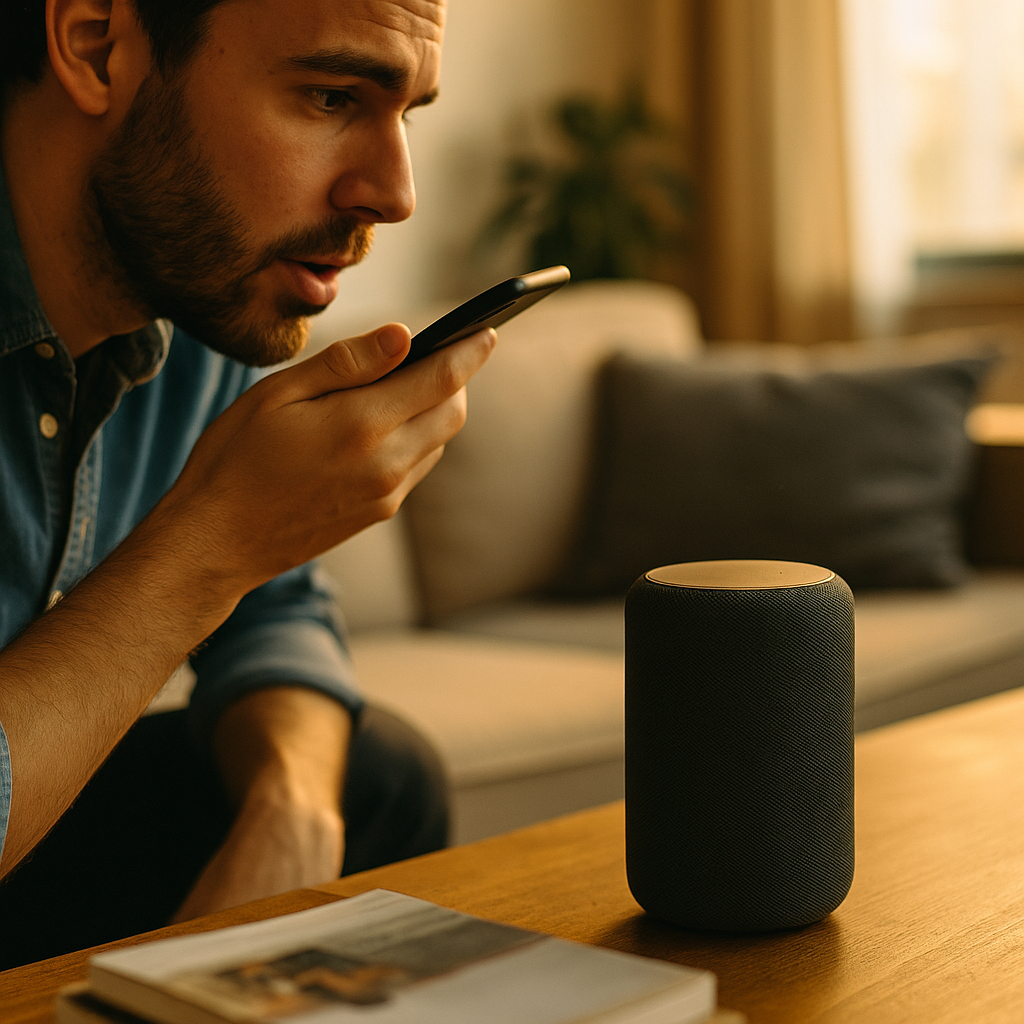
By some estimates, over half of smartphone users now trigger voice search weekly, yet fewer than one in ten brands have a voice discovery strategy. That gap is the opportunity. Voice-activated content discovery is quietly becoming the third major distribution channel, sitting alongside text and video search, and most marketing teams are treating it as an afterthought.
That’s a mistake. Smart speakers, AI assistants, and in-car voice systems aren’t just answering questions anymore. They’re recommending podcasts, surfacing product reviews, and increasingly, pointing users toward creator content. If your brand isn’t optimized for that layer, you’re invisible to a growing slice of discovery traffic.
Why Voice Discovery Is Different From Voice Search
Let’s clear up a common confusion first. Voice search — “what’s the weather” or “call mom” — has been around for a decade and mostly serves utility. Voice-activated content discovery is a different animal. It’s Alexa suggesting a creator’s cooking series based on your last three dinners ordered through a grocery app. It’s Google Assistant queuing up a YouTube explainer because you asked “how do I fix a squeaky door” instead of typing it.
The distinction matters for budget allocation. Search optimization is about answering a query. Discovery optimization is about getting recommended when the user didn’t ask for you by name. That’s a fundamentally different mechanic, closer to how vertical feed algorithms work than to traditional SEO.
Voice discovery rewards content that’s structured for machine comprehension first and human listening second — a reversal of how most brands still produce content.
The Numbers Behind the Shift
Smart speaker penetration in U.S. households has plateaued around 35%, according to data tracked by Statista, but the real growth is happening in voice-enabled ecosystems that don’t look like speakers at all: cars, TVs, wearables, and AI assistants embedded in phones. Amazon, Google, and Apple have all pushed generative AI into their assistants, which means these systems now summarize, recommend, and rank content rather than just retrieving a single fact.
That’s the part brands are sleeping on. When Alexa+ or Google Gemini gives a conversational answer, it’s often pulling from a narrow set of sources it trusts. Getting into that consideration set is the new SEO battle, and almost nobody has a playbook for it yet.
Consider the parallel to how social teams use AI daily but not strategically — most marketers are dabbling with the tools without rethinking distribution architecture. Voice is heading the same way. Everyone’s aware it exists. Almost nobody has restructured content around it.
Where This Shows Up in Real Campaigns
Podcast discovery is the clearest early example. Spotify and Apple Podcasts both use voice commands for playback and recommendation, and creators who structure episode titles and descriptions conversationally are seeing better pickup in voice-triggered suggestions. Recipe and how-to content is another obvious frontier: smart displays in kitchens are becoming a genuine distribution surface for creator content, not just a novelty.
Retail media is catching on too. Voice commerce assistants increasingly reference influencer reviews when a shopper asks “is this a good blender” through a connected device. If your creator partnerships haven’t produced structured, quotable review content, you won’t get cited.
What “Optimizing for Voice” Actually Means for Brands
Forget keyword stuffing. Voice discovery optimization is about three things: conversational structure, source authority, and answer-ready formatting.
- Conversational structure: Write and brief creators to answer questions the way people actually speak them, not how they’d type them into Google.
- Source authority: Assistants pull from sources they trust — publications, verified brand sites, and creators with consistent topical authority. One-off influencer posts rarely qualify.
- Answer-ready formatting: Short, direct answers near the top of content, followed by depth. This mirrors featured snippet optimization but tuned for spoken delivery.
None of this replaces your existing content strategy. It layers on top of it. Think of it as an additional lens you run briefs through, not a parallel production pipeline.
The Compliance Angle Nobody’s Talking About
Here’s where it gets interesting for risk-conscious teams. When a voice assistant recommends a product based on creator content, disclosure gets murky fast. Did the assistant surface a sponsored review? Does the user know? The FTC has been clear that endorsement disclosure rules apply regardless of format, but voice interfaces don’t have an obvious visual space for a “#ad” tag.
Brands running influencer campaigns need to think ahead here. If your creator content is being ingested and repurposed by AI-driven voice assistants without disclosure carrying through, that’s a compliance gap waiting to become a headline. This connects directly to the broader trust issues raised in AI content disclosure policy discussions — voice is just the newest surface where the same problem resurfaces.
If disclosure doesn’t survive the jump from screen to speaker, brands inherit the liability, not the platform.
Building a Voice Discovery Strategy Without Blowing Up Your Budget
You don’t need a standalone voice team. Most mid-size brands can fold this into existing content and creator workflows with a few adjustments:
- Audit your top creator content for question-based framing. Does it answer “how,” “what,” or “why” queries directly and early?
- Prioritize structured data. FAQ schema, how-to schema, and review schema all feed voice assistants directly. If your brand site and creator landing pages skip this, you’re leaving discovery traffic on the table.
- Track a new metric. Most attribution stacks don’t capture voice-driven discovery yet. Start logging referral spikes after podcast mentions or smart-display features, even if it’s manual for now.
- Brief creators differently. Ask for a spoken-language summary at the top of long-form video or blog content. It costs nothing extra and pays off across both voice and traditional search.
This is a low-cost, high-upside adjustment. You’re not reallocating major budget, you’re refining briefs and tagging. Compare that to the bigger reallocation questions brands are already wrestling with in vertical media budget planning — voice discovery is a much smaller lift with a real first-mover advantage attached.
Platforms to Watch
Amazon’s Alexa+ overhaul, Google’s Gemini-powered Assistant, and Apple’s revamped Siri are the three ecosystems worth monitoring closely through the rest of the year. Each is racing to become the default “ask and get an answer” layer for consumers, and each sources recommendations differently. Google’s support documentation already outlines how structured data influences assistant responses — that’s a practical starting point for technical teams auditing readiness.
Smart TVs and connected car systems deserve attention too. Automakers are integrating generative voice assistants that recommend podcasts and audio content during commutes, a genuinely new advertising surface that didn’t exist in any meaningful way a few years back.
What This Means for Creator Partnerships
Agencies negotiating creator contracts should start asking a new question: does this creator’s content get picked up by voice assistants? Creators who consistently rank in featured snippets or get cited by AI Overviews are more likely to show up in voice recommendations too, since the underlying source-trust signals overlap heavily.
This favors creators with strong topical authority over one-off viral hits. It’s another data point supporting the shift toward vetted micro-influencer networks that build depth in a niche rather than chasing reach. Voice assistants, like AI search tools, tend to reward consistency and expertise over one-hit virality.
Budget-wise, this doesn’t mean new line items. It means adjusting creator selection criteria and content briefs to account for a channel that’s about to start showing up in your analytics whether you planned for it or not.
FAQs
Frequently Asked Questions
What is voice-activated content discovery?
It’s the process by which AI-powered voice assistants — like Alexa, Google Assistant, or Siri — recommend content, products, or creators to users without an explicit search query, based on context, habits, and trusted sources.
How is this different from voice search optimization?
Voice search answers a direct question. Voice discovery surfaces content proactively or through indirect prompts, relying more on source authority and structured data than on keyword matching.
Do brands need a separate content strategy for voice discovery?
Not a separate strategy, but adjusted briefs. Adding structured data, conversational framing, and answer-ready summaries to existing content and creator campaigns is usually enough to start.
What compliance risks does voice discovery introduce?
Disclosure requirements from bodies like the FTC still apply, but voice interfaces often lack a clear visual space for sponsorship tags, creating a gap brands need to manage proactively.
Which platforms matter most right now?
Amazon’s Alexa+, Google’s Gemini-powered Assistant, and Apple’s Siri are the primary ecosystems, alongside emerging voice interfaces in smart TVs and connected vehicles.
How should brands measure success in this channel?
Most attribution platforms don’t track voice discovery natively yet. Start by manually logging referral traffic spikes tied to podcast mentions, smart display features, or assistant-driven recommendations.
Next step: Pick your three highest-performing creator content pieces this quarter, add FAQ schema and a spoken-language summary to each, and track referral behavior for 60 days before deciding whether to formalize a voice discovery budget line.
Top Influencer Marketing Agencies
The leading agencies shaping influencer marketing in 2026
Agencies ranked by campaign performance, client diversity, platform expertise, proven ROI, industry recognition, and client satisfaction. Assessed through verified case studies, reviews, and industry consultations.
Moburst

-
2

The Shelf
Boutique Beauty & Lifestyle Influencer AgencyA data-driven boutique agency specializing exclusively in beauty, wellness, and lifestyle influencer campaigns on Instagram and TikTok. Best for brands already focused on the beauty/personal care space that need curated, aesthetic-driven content.Clients: Pepsi, The Honest Company, Hims, Elf Cosmetics, Pure LeafVisit The Shelf → -
3

Audiencly
Niche Gaming & Esports Influencer AgencyA specialized agency focused exclusively on gaming and esports creators on YouTube, Twitch, and TikTok. Ideal if your campaign is 100% gaming-focused — from game launches to hardware and esports events.Clients: Epic Games, NordVPN, Ubisoft, Wargaming, Tencent GamesVisit Audiencly → -
4

Viral Nation
Global Influencer Marketing & Talent AgencyA dual talent management and marketing agency with proprietary brand safety tools and a global creator network spanning nano-influencers to celebrities across all major platforms.Clients: Meta, Activision Blizzard, Energizer, Aston Martin, WalmartVisit Viral Nation → -
5

The Influencer Marketing Factory
TikTok, Instagram & YouTube CampaignsA full-service agency with strong TikTok expertise, offering end-to-end campaign management from influencer discovery through performance reporting with a focus on platform-native content.Clients: Google, Snapchat, Universal Music, Bumble, YelpVisit TIMF → -
6

NeoReach
Enterprise Analytics & Influencer CampaignsAn enterprise-focused agency combining managed campaigns with a powerful self-service data platform for influencer search, audience analytics, and attribution modeling.Clients: Amazon, Airbnb, Netflix, Honda, The New York TimesVisit NeoReach → -
7

Ubiquitous
Creator-First Marketing PlatformA tech-driven platform combining self-service tools with managed campaign options, emphasizing speed and scalability for brands managing multiple influencer relationships.Clients: Lyft, Disney, Target, American Eagle, NetflixVisit Ubiquitous → -
8

Obviously
Scalable Enterprise Influencer CampaignsA tech-enabled agency built for high-volume campaigns, coordinating hundreds of creators simultaneously with end-to-end logistics, content rights management, and product seeding.Clients: Google, Ulta Beauty, Converse, AmazonVisit Obviously →