


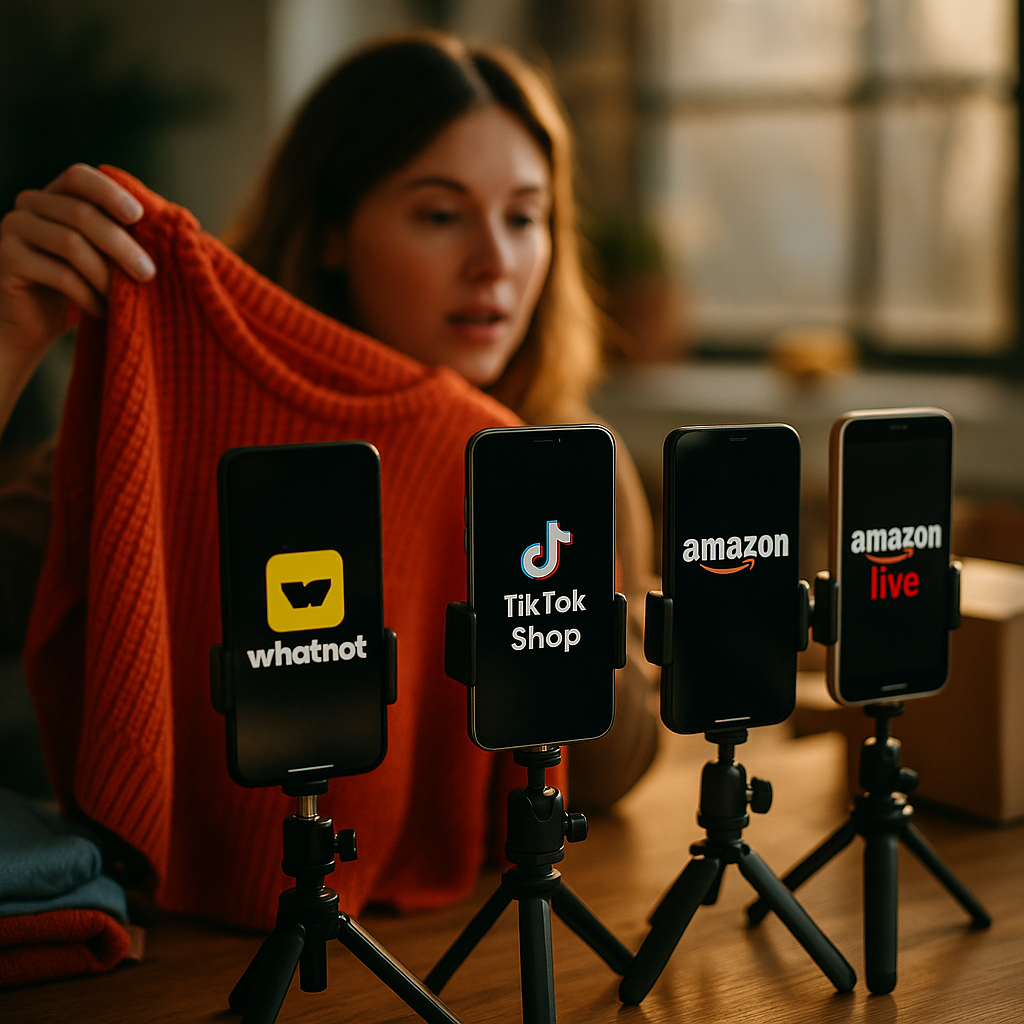
Livestream shopping drove more than $1 trillion in sales globally last year, and most brands still can’t tell you which platform actually moved the needle. If your team is still treating livestream as a vanity experiment instead of a revenue channel, you’re already behind. Livestream shopping software isn’t one category anymore. It’s three distinct operating models wearing the same marketing label.
Whatnot, TikTok Shop, and Amazon Live each solve a different problem for a different kind of seller. Pick the wrong one and you’ll burn budget chasing an audience that was never going to buy from you there. This piece breaks down what each platform actually does well, where the hidden costs live, and how to match your product category to the right tool before you commit a quarter’s budget.
Why the Platform Choice Matters More Than the Content
Brands love to say “we’ll test all three.” That’s a fine instinct with a bad budget reality. Livestream production, host fees, and commerce integrations aren’t cheap, and running a mediocre stream on three platforms simultaneously usually produces three mediocre results instead of one strong one.
Each platform has a fundamentally different relationship between audience intent, discovery mechanics, and payout structure. TikTok Shop is built on algorithmic discovery: people aren’t looking for your brand, the For You feed is finding them. Whatnot is built on collector and category communities who showed up specifically to buy. Amazon Live sits inside a marketplace where shoppers already have purchase intent but almost zero patience for entertainment.
The brands winning at livestream commerce aren’t the ones with the biggest production budgets. They’re the ones who matched their product category to the platform’s native buying behavior before spending a dollar on hosts or ads.
Whatnot: Built for Community, Not Reach
Whatnot started in collectibles and resale, and that DNA still shapes everything about the platform. It’s auction-driven, community-dense, and rewards sellers who can hold a live audience for forty-plus minutes at a stretch. Categories like trading cards, sneakers, vintage apparel, and pop culture memorabilia dominate the top-seller lists, and for good reason: those buyers are already comfortable with live auction dynamics from eBay and in-person conventions.
For brands outside those core categories, Whatnot is a harder sell. The platform’s discovery algorithm favors established sellers with strong ratings and repeat buyers, which means new brand accounts face a slower climb than they would on TikTok Shop’s more aggressive feed-push model. That said, Whatnot’s seller tools, built-in bidding, buyer protection, payout tracking, are genuinely mature. It feels like software built by people who understand resale commerce, not a bolted-on shopping layer.
The tradeoff is scale. Whatnot’s total audience is a fraction of TikTok’s, so if your category doesn’t fit the collector mold, you’re fighting for attention in a smaller pond with a very loyal, very specific crowd.
Who Should Actually Use Whatnot
- Resale, collectibles, and limited-drop apparel brands with a built-in community
- Sellers comfortable with auction-style pricing rather than fixed-price checkout
- Mid-sized brands that can commit to regular, long-format streaming cadence
TikTok Shop: Discovery at Scale, Attribution at a Cost
TikTok Shop is the opposite bet: maximum reach, minimum guaranteed intent. The algorithm will absolutely put your livestream in front of people who’ve never heard of your brand, which is both the appeal and the trap. Conversion rates on cold discovery traffic are lower than on platforms where shoppers arrive already intending to buy, but the sheer volume of impressions can still produce strong absolute sales numbers for the right product.
Where TikTok Shop gets complicated is attribution and payout accuracy. Multiple creators can touch the same sale through different links, affiliate codes, and live tags, and reconciling who gets credit (and commission) has been a persistent operational headache for brands running affiliate-heavy programs. We’ve covered this in detail in our breakdown of TikTok Shop attribution tools, and the short version is: don’t assume the native dashboard tells you the full story.
Brand safety is the other consideration. TikTok’s creator pool is massive and largely self-onboarded, which means vetting matters more here than on a curated platform like Amazon Live. If you’re running paid partnerships alongside organic livestream content, it’s worth reviewing how brand safety vetting tools handle TikTok’s specific risk profile before you scale spend.
TikTok Shop will give you reach no other platform can match. It will not give you a clean, single-source-of-truth attribution report without you building that layer yourself.
There’s also the checkout friction question. TikTok has been iterating on in-app purchase flow, including biometric checkout options, which changes conversion math in ways brands haven’t fully modeled yet. Our analysis of TikTok Shop’s biometric checkout is worth a read if you’re trying to forecast conversion lift or drop from recent UX changes.
Amazon Live: Intent Is High, Entertainment Value Is Low
Amazon Live is the quiet workhorse of the three. Nobody is tuning in for entertainment. Shoppers land there because they’re already on a product page, already comparing options, already holding a credit card. That changes the creative brief entirely: Amazon Live content performs best when it’s demonstrative and answers objections (how does it fit, how loud is it, does it really remove stains) rather than trying to build a parasocial relationship with a host.
The upside is that Amazon Live sits inside the purchase funnel that already converts best for product categories like home goods, beauty, and small appliances. You’re not fighting for discovery, you’re reinforcing a decision the shopper has mostly already made. The downside is reach. Amazon doesn’t push livestream content the way TikTok’s algorithm does, so you’re largely responsible for driving your own traffic to the stream through existing listings, sponsored product placements, or influencer partnerships that link back.
Amazon Live also integrates more cleanly with existing seller central data than the other two platforms, which matters if your team already lives inside Amazon’s reporting ecosystem. For brands running dashboards across multiple commerce channels, that consolidation can meaningfully reduce manual reconciliation work, a problem we’ve examined in the context of GMV dashboard double counting.
Comparing the Core Mechanics
Strip away the marketing copy and the three platforms differ on four operational dimensions that actually affect your P&L: discovery model, commission structure, creator vetting, and reporting depth.
- Discovery: TikTok Shop pushes content algorithmically to cold audiences. Whatnot relies on community and seller reputation. Amazon Live depends on existing product page traffic.
- Commission and fees: All three take a cut of GMV, but TikTok Shop’s affiliate commission stacking can erode margin faster than brands expect if multiple creators touch one sale.
- Creator vetting: Amazon Live and Whatnot have tighter seller onboarding. TikTok Shop’s open creator marketplace means brands need their own vetting layer.
- Reporting depth: Amazon Live integrates with Seller Central reporting. TikTok Shop and Whatnot require third-party tools or manual reconciliation for anything beyond platform-native dashboards.
If your organization is already managing multiple influencer and commerce platforms, the real question isn’t “which livestream tool is best.” It’s whether your existing martech data infrastructure can actually unify reporting across whichever ones you choose. Running three platforms with three separate spreadsheets isn’t a strategy, it’s a liability waiting to surface in a budget review.
What About Measurement and Attribution Across Platforms?
This is where most livestream programs quietly fail. Brands get excited about GMV numbers on the dashboard, present them to leadership, and then can’t explain six months later whether that revenue was incremental or just cannibalized from existing channels. Before you scale any livestream investment, build out the measurement layer first.
That means establishing clear UTM and affiliate code discipline before launch, not after. It means deciding upfront how you’ll treat cross-platform attribution when a shopper discovers a product on TikTok but completes the purchase days later on Amazon. And it means holding your performance reporting to a standard that survives scrutiny from finance, not just marketing.
For brands running affiliate-style commerce across multiple platforms, comparing how commerce platforms handle ROI attribution can offer a useful benchmark for what “good” reporting infrastructure actually looks like, since the livestream-specific tools from TikTok, Whatnot, and Amazon are still playing catch-up on this front compared to dedicated affiliate commerce software.
Industry benchmarking resources like Sprout Social’s social commerce research and HubSpot’s ecommerce reporting guides are also useful starting points if your team is building attribution frameworks from scratch.
Compliance Isn’t Optional Just Because It’s “Live”
Live content doesn’t get a pass on disclosure requirements. The FTC’s endorsement guidelines apply whether a creator is talking about your product in a prerecorded post or mid-stream during a live auction. The real-time nature of livestream shopping actually makes compliance harder to monitor, not easier, since there’s no edit pass before the content goes out. Brands running programs at scale need clear contractual language with hosts about disclosure language, plus a monitoring process for streams as they happen, not just after the fact.
If you’re building out affiliate or seeding programs that feed into livestream content, it’s worth reviewing how reporting APIs for creator campaigns handle real-time compliance flags, since catching a disclosure gap during a live stream is a very different operational challenge than catching it in a scheduled post.
Making the Call for Your Team
There’s no universal winner here, and anyone telling you otherwise is selling something. The decision comes down to three questions: Does your product category match a platform’s native buyer intent? Can your team sustain the production cadence the platform rewards? And do you have the reporting infrastructure to prove ROI once finance starts asking harder questions?
Start with one platform, run it for a full quarter with real measurement discipline, and only expand once you can show clean, defensible attribution. Chasing all three livestream formats at once before you’ve nailed one is the fastest way to spend a full year’s test budget without a single data point you can actually trust.
Frequently Asked Questions
Which livestream shopping platform has the best conversion rate?
Amazon Live typically shows the highest conversion rates because shoppers arrive with existing purchase intent, often already on a product page. TikTok Shop has lower conversion on cold discovery traffic but higher overall reach, and Whatnot converts well within its collector and resale niches but has a much smaller total audience.
Is Whatnot only for collectibles and resale brands?
No, but those categories dominate the platform’s top sellers because the auction format and community dynamics fit resale buying behavior naturally. Brands outside those categories can succeed on Whatnot, but they typically need a longer runway to build seller reputation and audience trust than they would on TikTok Shop.
How does TikTok Shop handle creator commission and payout accuracy?
TikTok Shop’s affiliate system allows multiple creators to receive commission credit on a single sale through different links or live tags, which can create reconciliation challenges for brands running larger affiliate programs. Many brands supplement TikTok’s native dashboard with third-party attribution tools to verify payout accuracy.
Do FTC disclosure rules apply to livestream shopping content?
Yes. The FTC’s endorsement guidelines apply to live content the same way they apply to prerecorded posts, requiring clear and conspicuous disclosure of any material connection between a brand and a host or creator. Because livestreams happen in real time, brands need proactive monitoring rather than post-publication review to catch disclosure gaps.
Can brands run the same livestream content across all three platforms?
Technically yes, but it rarely performs well because each platform rewards different content styles and buyer behaviors. TikTok Shop favors entertainment-driven discovery content, Amazon Live favors demonstrative product content, and Whatnot favors long-format community and auction content, so repurposing one stream across all three usually underperforms a platform-specific approach.
FAQPage Schema
Top Influencer Marketing Agencies
The leading agencies shaping influencer marketing in 2026
Agencies ranked by campaign performance, client diversity, platform expertise, proven ROI, industry recognition, and client satisfaction. Assessed through verified case studies, reviews, and industry consultations.
Moburst

-
2

The Shelf
Boutique Beauty & Lifestyle Influencer AgencyA data-driven boutique agency specializing exclusively in beauty, wellness, and lifestyle influencer campaigns on Instagram and TikTok. Best for brands already focused on the beauty/personal care space that need curated, aesthetic-driven content.Clients: Pepsi, The Honest Company, Hims, Elf Cosmetics, Pure LeafVisit The Shelf → -
3

Audiencly
Niche Gaming & Esports Influencer AgencyA specialized agency focused exclusively on gaming and esports creators on YouTube, Twitch, and TikTok. Ideal if your campaign is 100% gaming-focused — from game launches to hardware and esports events.Clients: Epic Games, NordVPN, Ubisoft, Wargaming, Tencent GamesVisit Audiencly → -
4

Viral Nation
Global Influencer Marketing & Talent AgencyA dual talent management and marketing agency with proprietary brand safety tools and a global creator network spanning nano-influencers to celebrities across all major platforms.Clients: Meta, Activision Blizzard, Energizer, Aston Martin, WalmartVisit Viral Nation → -
5

The Influencer Marketing Factory
TikTok, Instagram & YouTube CampaignsA full-service agency with strong TikTok expertise, offering end-to-end campaign management from influencer discovery through performance reporting with a focus on platform-native content.Clients: Google, Snapchat, Universal Music, Bumble, YelpVisit TIMF → -
6

NeoReach
Enterprise Analytics & Influencer CampaignsAn enterprise-focused agency combining managed campaigns with a powerful self-service data platform for influencer search, audience analytics, and attribution modeling.Clients: Amazon, Airbnb, Netflix, Honda, The New York TimesVisit NeoReach → -
7

Ubiquitous
Creator-First Marketing PlatformA tech-driven platform combining self-service tools with managed campaign options, emphasizing speed and scalability for brands managing multiple influencer relationships.Clients: Lyft, Disney, Target, American Eagle, NetflixVisit Ubiquitous → -
8

Obviously
Scalable Enterprise Influencer CampaignsA tech-enabled agency built for high-volume campaigns, coordinating hundreds of creators simultaneously with end-to-end logistics, content rights management, and product seeding.Clients: Google, Ulta Beauty, Converse, AmazonVisit Obviously →