


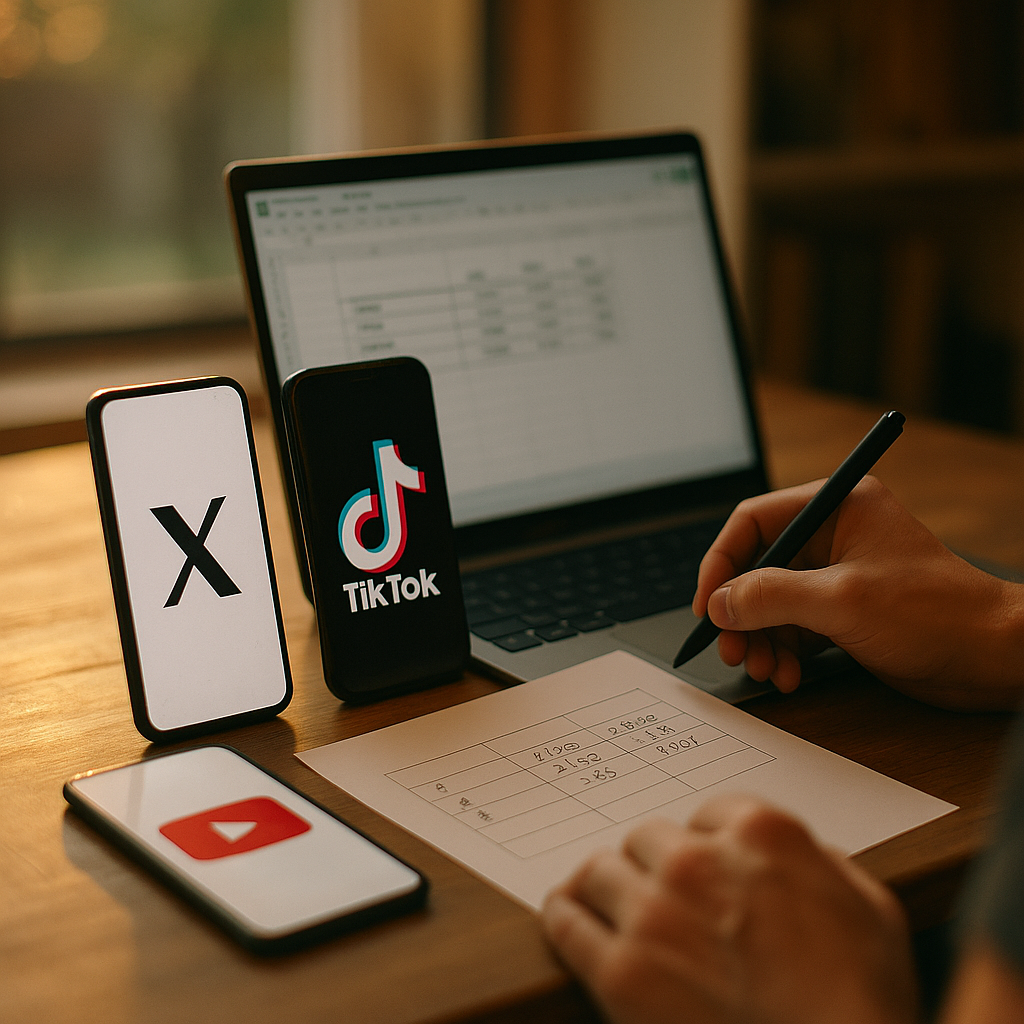
Three creator monetization programs, three completely different definitions of “getting paid.” X’s Original Content Rewards Program pays out based on engagement from verified accounts only. TikTok’s old Creator Fund famously paid fractions of a cent per view. YouTube Partner Program still runs on a revenue-share model tied to actual ad dollars. If you’re advising creators or building brand partnerships around these programs, the differences in payout structure and verification requirements aren’t cosmetic — they change your entire ROI model.
Why This Comparison Matters Right Now
Creator monetization has quietly become a brand strategy issue, not just a creator issue. When brands run ambassador programs or amplify creator content through paid boosts, the underlying platform payout mechanics determine who shows up, what they post, and how sustainable the relationship is. A creator earning steady income from YouTube ad share behaves differently than one chasing viral spikes for X’s engagement bonuses.
Marketers evaluating where to place creator budget need to understand not just reach and demographics, but the economic incentives baked into each platform’s reward system. Get this wrong and you’re optimizing for the wrong content format.
X’s Original Content Rewards Program: The Basics
X restructured its creator payout system to reward engagement among verified subscribers, replacing the older ad-revenue-share model that paid out based on impressions in reply threads. The current program calculates payouts primarily from engagement — replies, reposts, likes, bookmarks — generated specifically from other verified accounts. Engagement from unverified users generally doesn’t count toward payout calculations.
This is the single biggest structural difference from TikTok and YouTube. X essentially gates its reward pool behind a paywall on both ends: creators need X Premium verification to qualify, and much of the qualifying engagement needs to come from other paying subscribers too.
X’s model rewards engagement density within a verified, paying user base — not raw reach — which fundamentally changes what “going viral” is worth to a creator’s bank account.
Payout amounts aren’t published as a fixed rate card. X calculates a shared revenue pool and distributes it based on relative engagement performance, meaning your actual per-post earnings fluctuate month to month depending on how many other creators are competing for the same pool. That opacity makes budgeting difficult for creators and unpredictable for brands trying to forecast influencer costs tied to platform bonuses.
Verification Requirements on X
To qualify, creators generally need:
- An active X Premium or Premium+ subscription
- A minimum follower threshold (historically set around 500 followers, though thresholds have shifted)
- A minimum number of impressions on organic posts over a trailing three-month window
- An account in good standing, with no recent policy strikes
Notice what’s missing: no rigorous identity verification, no tax documentation deep-dive beyond standard payment processor KYC, and no content-category restrictions as granular as YouTube’s. That’s both a feature and a risk. It lowers the barrier to entry but also raises brand safety questions we’ll get to shortly.
TikTok’s Creator Fund Legacy (and What Replaced It)
TikTok’s original Creator Fund is largely legacy at this point, phased out in most major markets in favor of the Creativity Program and, more significantly, TikTok Shop’s affiliate and commission-based earnings. But the comparison still matters because a lot of creators and brand teams still reference “the Creator Fund” as shorthand for TikTok’s payout philosophy, and the successor programs kept some of the same DNA.
The original fund paid creators based on video views, engagement, and authenticity signals, with widely reported rates in the range of two to four cents per thousand views. That’s dramatically lower than YouTube’s ad-share equivalent, and creators complained loudly about it for years. The Creativity Program improved payout rates for longer-form content (over one minute) and factored in original content bonuses, but TikTok’s earnings ceiling per video remains lower than YouTube’s for comparable view counts, according to figures widely cited by eMarketer.
Where TikTok actually competes is volume and discoverability. The For You algorithm can push a single video to millions of views overnight in a way YouTube’s subscription-driven model rarely does for new creators. So while per-view rates are lower, the ceiling on total payout from a single viral moment can still be substantial.
Verification on TikTok
TikTok’s requirements for its monetization programs are more standardized than X’s:
- Minimum age of 18 (in most markets)
- Minimum follower count, typically 10,000 for Creativity Program eligibility
- A minimum number of video views in the trailing 30 days
- Compliance with community guidelines, with automated and manual content review
- Account based in an eligible country/region
TikTok also runs identity verification through its payment partners for tax reporting purposes, which is more rigorous than X’s baseline KYC but less exhaustive than YouTube’s. For brands, this matters because TikTok Shop’s server-side attribution now layers on top of creator payouts, meaning affiliate commission tracking has become just as important as the base Creativity Program rate when you’re calculating true creator economics.
YouTube Partner Program: The Gold Standard for Predictability
YouTube Partner Program (YPP) remains the most mature and, frankly, the most transparent of the three. Creators earn a share of actual ad revenue generated against their content, typically around 55% for standard ad revenue, a split that’s been stable for over a decade. That predictability is why so many full-time creators still treat YouTube as their financial backbone, even while chasing TikTok and Shorts reach for discovery.
YPP also includes Shorts monetization, channel memberships, Super Chat, and YouTube Shopping affiliate commissions, giving creators multiple concurrent revenue streams rather than a single bonus pool. This diversification is a meaningful risk-mitigation factor for brands: a creator with five monetization streams on one platform is less desperate for brand deals, and arguably less likely to compromise editorial integrity for a quick sponsorship check.
YouTube’s Verification Gauntlet
YPP has by far the strictest onboarding bar of the three:
- 1,000 subscribers minimum
- 4,000 valid public watch hours in the trailing 12 months (or 10 million Shorts views in 90 days as an alternative path)
- Compliance with YouTube’s monetization policies and community guidelines
- An AdSense account linked and verified, including tax identity documentation
- Residency in an eligible country
- Manual human review of the channel before approval
That manual review step is the real differentiator. Google isn’t just checking boxes algorithmically. Human reviewers assess whether content is “advertiser-friendly,” which is Google’s polite way of saying they’re doing brand safety screening on your behalf before a single ad dollar changes hands. For brand teams building creative safety audits into procurement, that’s a meaningful pre-filter you don’t get natively on X.
Payout Structure, Side by Side
Strip away the marketing language and the three programs boil down to different bets on what should drive payout:
- X: Engagement volume from verified/paying accounts, distributed from a pooled fund with no fixed rate. Highly variable, hard to forecast.
- TikTok: View count and watch time, with modest per-thousand-view rates plus affiliate commission upside through TikTok Shop. Predictable floor, unpredictable ceiling.
- YouTube: Direct revenue share tied to actual ad sales against content, plus diversified income streams. Most stable, most transparent, slowest to scale for new creators.
For brand strategists, this translates into a simple diagnostic: if you need creators optimizing for sustained community engagement, X’s model theoretically rewards that (assuming your audience overlaps with Premium subscribers). If you need creators optimizing for discovery and viral reach, TikTok’s incentive structure still wins, even post-Creator Fund. If you need creators who behave like long-term brand partners with financial stability and lower churn risk, YouTube’s revenue-share model breeds that behavior best.
The Verification Question Brands Actually Care About
Here’s the part that should worry procurement and legal teams more than payout rates: verification requirements are really risk controls, and they vary wildly in rigor.
YouTube’s manual review plus AdSense tax verification creates a paper trail. TikTok’s automated-plus-payment-processor approach is faster but leaves more edge cases. X’s model, tied to a paid subscription rather than deep identity or content vetting, is the loosest of the three. That has real implications if you’re building influencer vetting into a larger brand-safety scanning workflow, because platform-level “verification” for monetization purposes is not the same thing as brand-safety verification. A creator can qualify for X’s rewards program and still be a reputational landmine for your brand.
This is exactly the gap that third-party creator vetting and fraud-detection tools exist to fill. If you’re relying solely on “they’re in the platform’s monetization program” as a proxy for trustworthiness, you’re skipping a step. Pair platform verification with your own audience authenticity checks, similar to the layered approach outlined in guides on creator attribution and identity resolution.
What This Means for Brand Budgets
None of these programs pay creators enough on their own to replace brand deals, full stop. Even YouTube’s more generous revenue share rarely covers what a mid-tier creator earns from a single sponsored integration. That’s precisely why platform monetization programs function as retention tools, not income replacements, and why brand sponsorship dollars remain the dominant income line for most professional creators, a dynamic well documented by Sprout Social’s creator economy research.
What changes based on the underlying payout structure is creator behavior and negotiating posture. A creator earning steady YPP income has less incentive to lowball a sponsorship rate. A creator chasing X’s variable engagement pool might be more receptive to brand boosts that drive verified-account engagement, since that directly feeds their bonus calculation. Smart brand teams are starting to factor this into deal structuring, offering to co-promote content in ways that also help the creator’s platform payout, not just the campaign KPI.
There’s also an attribution wrinkle. As TikTok Shop commissions and YouTube Shopping affiliate links blur the line between platform payout and brand-driven sales, marketers need cleaner tracking to know which dollar came from where. That’s increasingly a job for dedicated attribution infrastructure rather than manual spreadsheet reconciliation.
Bottom line: stop treating platform monetization programs as an afterthought in your creator strategy. Build them into your vetting criteria, your negotiation playbook, and your budget forecasting the same way you’d treat any other risk-and-return variable — because the payout structure quietly shapes the content, and the content shapes your brand exposure.
FAQs
Does X pay creators for content seen by non-verified users?
Generally no. X’s Original Content Rewards Program primarily counts engagement from other verified/Premium accounts toward payout calculations, meaning views and engagement from unverified users typically don’t contribute to a creator’s earnings.
Is TikTok’s Creator Fund still active?
The original Creator Fund has been phased out in most markets and replaced by the Creativity Program, which pays better rates for longer-form content, alongside TikTok Shop affiliate commissions as a separate revenue stream.
What’s the minimum subscriber count to join YouTube Partner Program?
YouTube requires 1,000 subscribers plus either 4,000 valid public watch hours in the trailing 12 months or 10 million Shorts views in the last 90 days, along with a manual channel review.
Which platform’s payout structure is most predictable for creators?
YouTube Partner Program offers the most predictable structure since payouts are tied directly to actual ad revenue share, unlike X’s pooled and variable engagement-based fund or TikTok’s viewership-rate model.
Should brands rely on platform verification as a brand-safety check?
No. Platform monetization verification confirms eligibility for payout, not brand suitability. Brands should layer independent vetting tools on top of platform-level checks before partnering with a creator.
FAQs
Does X pay creators for content seen by non-verified users?
Generally no. X’s Original Content Rewards Program primarily counts engagement from other verified/Premium accounts toward payout calculations, meaning views and engagement from unverified users typically don’t contribute to a creator’s earnings.
Is TikTok’s Creator Fund still active?
The original Creator Fund has been phased out in most markets and replaced by the Creativity Program, which pays better rates for longer-form content, alongside TikTok Shop affiliate commissions as a separate revenue stream.
What’s the minimum subscriber count to join YouTube Partner Program?
YouTube requires 1,000 subscribers plus either 4,000 valid public watch hours in the trailing 12 months or 10 million Shorts views in the last 90 days, along with a manual channel review.
Which platform’s payout structure is most predictable for creators?
YouTube Partner Program offers the most predictable structure since payouts are tied directly to actual ad revenue share, unlike X’s pooled and variable engagement-based fund or TikTok’s viewership-rate model.
Should brands rely on platform verification as a brand-safety check?
No. Platform monetization verification confirms eligibility for payout, not brand suitability. Brands should layer independent vetting tools on top of platform-level checks before partnering with a creator.
Top Influencer Marketing Agencies
The leading agencies shaping influencer marketing in 2026
Agencies ranked by campaign performance, client diversity, platform expertise, proven ROI, industry recognition, and client satisfaction. Assessed through verified case studies, reviews, and industry consultations.
Moburst

-
2

The Shelf
Boutique Beauty & Lifestyle Influencer AgencyA data-driven boutique agency specializing exclusively in beauty, wellness, and lifestyle influencer campaigns on Instagram and TikTok. Best for brands already focused on the beauty/personal care space that need curated, aesthetic-driven content.Clients: Pepsi, The Honest Company, Hims, Elf Cosmetics, Pure LeafVisit The Shelf → -
3

Audiencly
Niche Gaming & Esports Influencer AgencyA specialized agency focused exclusively on gaming and esports creators on YouTube, Twitch, and TikTok. Ideal if your campaign is 100% gaming-focused — from game launches to hardware and esports events.Clients: Epic Games, NordVPN, Ubisoft, Wargaming, Tencent GamesVisit Audiencly → -
4

Viral Nation
Global Influencer Marketing & Talent AgencyA dual talent management and marketing agency with proprietary brand safety tools and a global creator network spanning nano-influencers to celebrities across all major platforms.Clients: Meta, Activision Blizzard, Energizer, Aston Martin, WalmartVisit Viral Nation → -
5

The Influencer Marketing Factory
TikTok, Instagram & YouTube CampaignsA full-service agency with strong TikTok expertise, offering end-to-end campaign management from influencer discovery through performance reporting with a focus on platform-native content.Clients: Google, Snapchat, Universal Music, Bumble, YelpVisit TIMF → -
6

NeoReach
Enterprise Analytics & Influencer CampaignsAn enterprise-focused agency combining managed campaigns with a powerful self-service data platform for influencer search, audience analytics, and attribution modeling.Clients: Amazon, Airbnb, Netflix, Honda, The New York TimesVisit NeoReach → -
7

Ubiquitous
Creator-First Marketing PlatformA tech-driven platform combining self-service tools with managed campaign options, emphasizing speed and scalability for brands managing multiple influencer relationships.Clients: Lyft, Disney, Target, American Eagle, NetflixVisit Ubiquitous → -
8

Obviously
Scalable Enterprise Influencer CampaignsA tech-enabled agency built for high-volume campaigns, coordinating hundreds of creators simultaneously with end-to-end logistics, content rights management, and product seeding.Clients: Google, Ulta Beauty, Converse, AmazonVisit Obviously →