


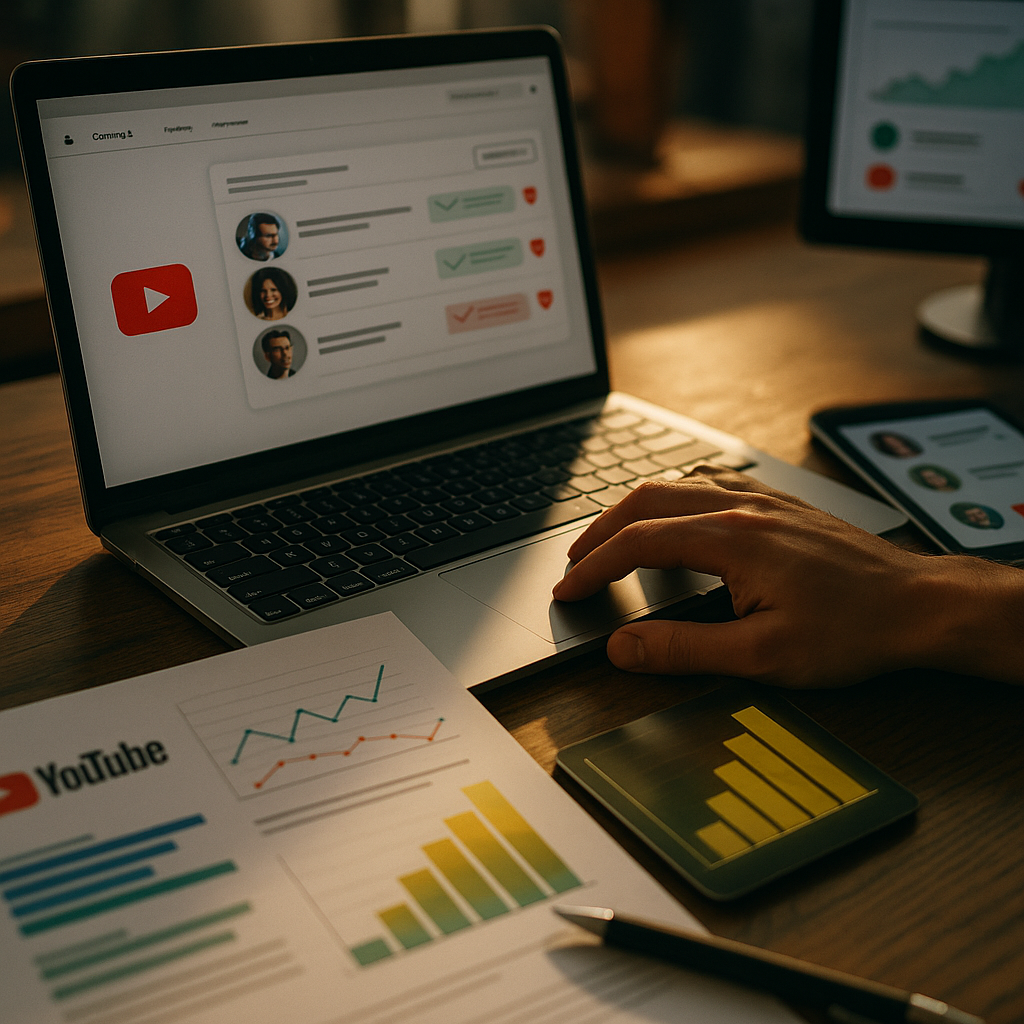
Nine hundred million people watch YouTube on connected TVs every month. That’s roughly the size of the U.S. adult population, times three, sitting in a living room, watching creators instead of network TV. So when YouTube quietly overhauled its YouTube creator partnership platform to automate brief-to-creator matching, most brand teams barely noticed. They should have.
This isn’t a minor UI update. It’s a structural shift in how campaigns get sourced, staffed, and approved — and it changes what “efficient” sourcing actually means for brands running creator programs at scale.
What Actually Changed in YouTube’s Matching Layer
For years, YouTube BrandConnect (and before that, the FameBit acquisition) worked like a glorified directory. Brands posted a brief, creators applied, someone on the brand or agency side manually sifted through applicants based on subscriber count, niche, and a gut check on vibe. It worked, but it was slow and heavily dependent on human judgment that didn’t scale past a handful of campaigns per quarter.
The current version runs on a matching model that ingests campaign briefs — audience demographics, content tone, category exclusions, budget tier — and cross-references them against creator performance data YouTube already owns: watch time patterns, audience overlap, historical brand-safety signals, and engagement quality beyond vanity metrics. The platform then surfaces a ranked shortlist instead of an open applicant pool.
In practice, that means a brief for “mid-tier tech reviewers, 25-40 audience, non-endemic categories excluded” doesn’t just filter by subscriber count anymore. It filters by whether that creator’s audience actually converts on similar campaigns, whether their content has triggered brand-safety flags, and whether their upload cadence fits the campaign timeline.
Automated matching doesn’t eliminate the sourcing bottleneck — it moves it. Instead of drowning in applicants, brand teams now need to interrogate the black box deciding who gets shortlisted.
Why This Matters More Than It Sounds
Sourcing has always been the most labor-intensive part of influencer campaign management. Agencies routinely burn 15-20 hours per campaign just on discovery and vetting before a single dollar hits a creator’s pocket. Automated matching compresses that timeline dramatically — some brand teams report shortlist turnaround dropping from two weeks to 48 hours.
That’s a real efficiency gain. But speed without transparency creates a new risk category: brands approving creator rosters they don’t fully understand, based on a ranking algorithm they can’t audit. That’s the trade-off nobody’s advertising in the press release.
The ROI Case: Faster Sourcing, But Watch the Denominator
Let’s talk numbers, because that’s what gets budget approved. Faster matching theoretically means more campaigns per quarter, lower agency fees tied to manual vetting, and reduced time-to-launch — which matters a lot for product drops and seasonal pushes where a two-week sourcing delay can miss the window entirely.
But here’s the catch marketers keep missing: matching speed isn’t the same as match quality. A shortlist generated in 48 hours is only valuable if the creators on it actually move product. eMarketer’s research on influencer marketing spend consistently shows that brands cite “finding the right creator fit” as a bigger pain point than budget constraints — automation solves the speed problem, not necessarily the fit problem.
If your team is measuring success purely by campaigns launched per quarter, you’re optimizing the wrong metric. Track match-to-performance correlation instead: of the creators the algorithm surfaced, how many actually hit your KPI thresholds? If that number isn’t climbing alongside your sourcing speed, the automation is just moving inefficiency downstream, into your performance reviews instead of your sourcing timeline.
This is where a proper attribution framework beyond impressions earns its keep. Speed metrics look great in a quarterly deck. Attribution data tells you whether the speed was worth anything.
How Brief Design Determines Match Quality
Automated matching is only as good as the brief feeding it. This is the part agencies are still figuring out, and it’s costing them.
Vague briefs — “we want authentic, engaged creators in the lifestyle space” — produce vague shortlists. The algorithm has to guess at intent, and it tends to default toward reach metrics because that’s the most reliable signal available. Specific briefs with hard constraints (audience age bands, geographic targeting, competitive exclusions, content format requirements) produce dramatically tighter shortlists.
Teams that have adapted their brief-writing process to feed the algorithm structured data — rather than marketing copy — are seeing measurably better match rates. That’s a real operational shift: brief writing is no longer just a creative brief for humans, it’s structured input for a ranking system.
If your team is still writing briefs the way you did five years ago, you’re leaving match quality on the table. This connects directly to the broader trend covered in our look at AI creator discovery platforms: the tools are only as strong as the inputs, and most brand teams haven’t rebuilt their processes to match.
Brand Safety Doesn’t Disappear — It Just Moves Upstream
Here
Top Influencer Marketing Agencies
The leading agencies shaping influencer marketing in 2026
Agencies ranked by campaign performance, client diversity, platform expertise, proven ROI, industry recognition, and client satisfaction. Assessed through verified case studies, reviews, and industry consultations.
Moburst

-
2

The Shelf
Boutique Beauty & Lifestyle Influencer AgencyA data-driven boutique agency specializing exclusively in beauty, wellness, and lifestyle influencer campaigns on Instagram and TikTok. Best for brands already focused on the beauty/personal care space that need curated, aesthetic-driven content.Clients: Pepsi, The Honest Company, Hims, Elf Cosmetics, Pure LeafVisit The Shelf → -
3

Audiencly
Niche Gaming & Esports Influencer AgencyA specialized agency focused exclusively on gaming and esports creators on YouTube, Twitch, and TikTok. Ideal if your campaign is 100% gaming-focused — from game launches to hardware and esports events.Clients: Epic Games, NordVPN, Ubisoft, Wargaming, Tencent GamesVisit Audiencly → -
4

Viral Nation
Global Influencer Marketing & Talent AgencyA dual talent management and marketing agency with proprietary brand safety tools and a global creator network spanning nano-influencers to celebrities across all major platforms.Clients: Meta, Activision Blizzard, Energizer, Aston Martin, WalmartVisit Viral Nation → -
5

The Influencer Marketing Factory
TikTok, Instagram & YouTube CampaignsA full-service agency with strong TikTok expertise, offering end-to-end campaign management from influencer discovery through performance reporting with a focus on platform-native content.Clients: Google, Snapchat, Universal Music, Bumble, YelpVisit TIMF → -
6

NeoReach
Enterprise Analytics & Influencer CampaignsAn enterprise-focused agency combining managed campaigns with a powerful self-service data platform for influencer search, audience analytics, and attribution modeling.Clients: Amazon, Airbnb, Netflix, Honda, The New York TimesVisit NeoReach → -
7

Ubiquitous
Creator-First Marketing PlatformA tech-driven platform combining self-service tools with managed campaign options, emphasizing speed and scalability for brands managing multiple influencer relationships.Clients: Lyft, Disney, Target, American Eagle, NetflixVisit Ubiquitous → -
8

Obviously
Scalable Enterprise Influencer CampaignsA tech-enabled agency built for high-volume campaigns, coordinating hundreds of creators simultaneously with end-to-end logistics, content rights management, and product seeding.Clients: Google, Ulta Beauty, Converse, AmazonVisit Obviously →