


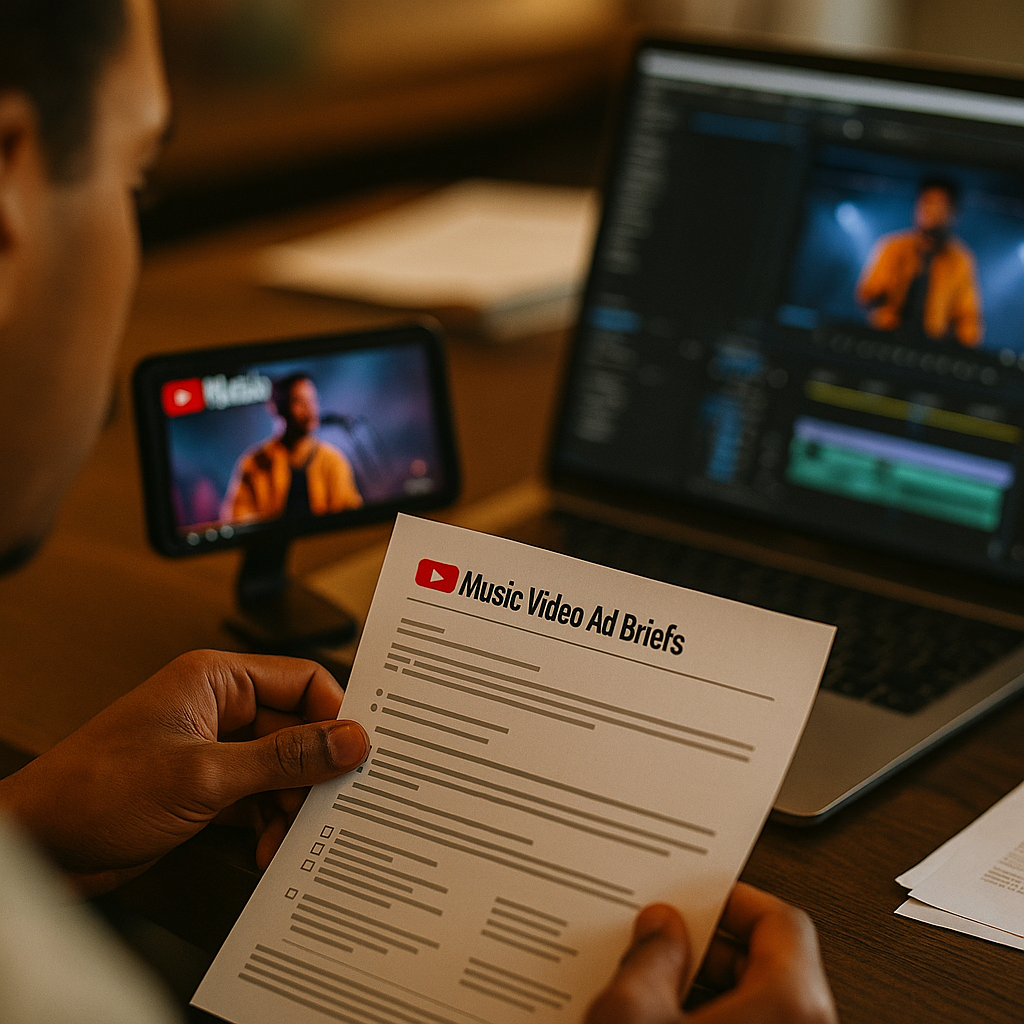
Brands spending six figures on YouTube Upfront commitments still brief their creators like it’s a pre-roll afterthought. The YouTube music-video ad format changes that equation entirely, and most marketing teams are leaving both inventory access and organic reach on the table by not knowing how to direct for it.
Why the Music-Video Format Is a Legitimate Media Buy, Not a Creative Experiment
YouTube’s Upfront inventory, negotiated annually through Google’s reserved buying process, carries strict content quality thresholds. Ads running in premium placements alongside top creator channels and YouTube Originals must clear editorial review for production value, brand safety, and viewer experience. The music-video format, defined here as a narrative-driven brand spot built around an original audio track with cinematic visual sequencing, consistently clears those thresholds in ways that standard :30 pre-rolls do not.
The underlying logic is audience behavior. YouTube data shows that users who encounter entertainment-first brand content on the platform are significantly more likely to search for the brand afterward, a metric Google calls “brand curiosity lift.” Spots built in the music-video format routinely index higher on that measure because they’re designed to be watched, not skipped.
A brand spot that earns organic shares is effectively buying additional GRPs for free. The music-video format is the closest thing to guaranteed earned media that a paid video budget can produce.
For media directors, this matters at the budget justification stage. A spot that qualifies for Upfront inventory and drives organic shares is not a creative indulgence. It’s a CPM efficiency play.
What “Entertainment-First” Actually Means in a Brief
Most briefs instruct creators to integrate the brand. Entertainment-first briefs do the opposite: they instruct the creative team to build an entertainment concept first, then engineer the brand integration into it. The distinction sounds semantic. In practice, it determines whether the finished spot gets skipped at three seconds or watched to completion.
Concretely, an entertainment-first brief for the music-video format includes:
- A narrative premise that stands on its own. The story or concept should be compelling without any brand mention. Ask yourself: would this be shareable if the logo wasn’t there?
- An original or licensed audio track with creative ownership clearly assigned. YouTube’s Content ID system will flag unlicensed audio in paid placements. This is not optional.
- Visual language borrowed from music video production, not ad production. That means shot lists built around the track’s BPM, color grading decisions made for aesthetic not brand guideline compliance, and a director with music video credits, not just commercial credits.
- Brand integration mapped to emotional beats, not time codes. The product appears when the narrative supports it, not because the brief mandates “product shot at 0:12.”
This framework aligns closely with the music video ad creative brief principles that have emerged as the format has matured. The brief is the architectural document. Get it wrong and no production budget rescues the spot.
Directing Creators Versus Directing Production Partners: Two Different Conversations
Brand teams frequently make the mistake of issuing the same brief to a creator and a production company. They have fundamentally different roles in a music-video format spot, and conflating those roles produces work that satisfies neither party’s strengths.
Creators bring audience trust, on-camera authenticity, and cultural fluency. Their value in the music-video format is performance and creative concept origination. Brief them on the narrative premise, the emotional tone, and the audience insight. Do not brief them on shot ratios, color science, or delivery specs.
Production partners (directors, DPs, post-production houses) bring technical execution. Brief them on the creative concept the creator helped develop, the YouTube technical specs for Upfront-eligible inventory (minimum 1080p, specific audio normalization standards, brand safety metadata requirements), and the usage rights structure the brand needs for paid amplification.
For brands running multi-platform repurposing from a single shoot, this separation becomes even more critical. The production partner needs to know they’re shooting for YouTube Upfront as primary placement while also capturing assets for Shorts, connected TV, and paid social. The creator doesn’t need to know any of that. They need to deliver the best performance of the concept.
The YouTube Upfront Eligibility Checklist Your Brief Must Address
Qualifying for Upfront inventory is not automatic. Google’s reserved buying process requires that ads meet specific creative and technical standards before they’re eligible for premium placement. Brands that invest in the music-video format but fail to address these requirements in the brief end up with beautiful content that gets bumped to auction inventory.
The brief must explicitly address:
- Resolution and frame rate. Minimum 1080p at 24fps. 4K is increasingly expected for marquee placements.
- Audio master delivery. YouTube normalizes audio to -14 LUFS. Your post-production vendor needs this spec in the brief, not in a revision note after the mix is locked.
- Brand safety classification. The spot’s content must not trigger YouTube’s sensitive categories filter. If the creative concept touches humor, social commentary, or any edge content, get it reviewed by your media agency’s YouTube rep before production begins.
- Disclosure compliance. For creator-involved spots, FTC disclosure requirements apply to paid placements. Build the disclosure language into the visual design of the spot, not as an afterthought overlay. Resources from the FTC’s endorsement guidelines should inform this section of the brief.
- Usage rights documentation. Music licensing, talent clearances, and location releases must be complete before the spot enters the YouTube ad auction. A music-video format spot with a cleared original track is considerably easier to place than one with licensed masters.
For teams that also produce CTV ad inventory, many of these technical requirements overlap. Building a unified technical appendix that covers both YouTube Upfront and CTV specs saves significant revision cycles.
Organic Share Mechanics: What Makes a Brand Spot Spreadable
Qualifying for Upfront inventory gets your spot placed. Getting organic shares extends its life beyond the media buy. These are two separate creative engineering problems, and the brief must address both.
Organic shareability in the music-video format comes from three specific elements:
Replay value in the audio. A track that users want to hear again pulls them back to the spot. Brands that commission original music from emerging artists rather than licensing safe production library tracks consistently see higher organic replay and share rates. Sprout Social’s video engagement research supports this pattern: audio distinctiveness is a stronger predictor of share behavior than visual novelty.
A visual moment designed to be screenshotted or clipped. Short-form platforms amplify what’s screenshot-worthy. Build one scene into the spot that functions as a standalone visual, something that makes sense without audio context and communicates the brand’s aesthetic immediately.
Cultural specificity over broad appeal. Spots that try to appeal to everyone share like no one cares. The music-video format earns shares when it signals belonging to a specific audience. Niche music genres, specific subcultural aesthetics, regional references: these are share triggers. Brief the creative team to pick a lane and commit.
This connects directly to how influencer content strategy intersects with the music video format revival. Creators who already have community affinity within a subculture can embed that cultural specificity into the spot in ways that production partners alone cannot manufacture.
The brief should name the specific cultural community the spot is designed to resonate with. “18-34 music fans” is not a community. “Lo-fi hip hop listeners who follow vintage sneaker culture” is.
Brief Structure: What to Include and in What Order
A music-video format brief for YouTube Upfront production should follow this sequence:
- Brand challenge in one sentence. Not a paragraph of context. One sentence that captures what behavior change the brand needs.
- Audience definition with cultural specificity. See above.
- Narrative premise. The entertainment concept, written as a pitch, not a brief section.
- Audio direction. Genre, tempo range, mood reference tracks. This section should reference actual songs, not adjectives.
- Visual reference board. Link to a Moodboard or Frame.io folder. Do not describe visuals in text when you can show them.
- Brand integration parameters. Where the brand appears, how it appears, and what it cannot do. Keep this section shorter than the narrative premise section. If the brand constraints section is longer than the creative section, the brief is backwards.
- Technical delivery requirements. Resolution, audio spec, aspect ratio deliverables, disclosure language, usage rights summary.
- Organic share KPIs alongside paid performance metrics. If organic shares aren’t in the success metrics, the production team has no incentive to optimize for them.
Teams developing briefs for AI search and authenticity signals will find that the same cultural specificity that drives organic shares also improves how the content surfaces in AI-curated recommendation feeds.
Production Partner Selection Criteria Specific to This Format
Not every production company can execute a music-video format spot that clears YouTube Upfront review. The selection criteria should include:
- Verified music video credits with named artists on platform (not just “branded content experience”)
- Demonstrated experience with YouTube’s technical delivery requirements for reserved buying
- An in-house or preferred music supervision relationship, given the audio-first nature of the format
- Post-production capability to deliver multiple aspect ratio versions from a single edit (16:9 for Upfront, 9:16 for Shorts, 1:1 for social)
Review their reel specifically for pacing. Music video format brand spots that qualify for Upfront inventory tend to run 60-90 seconds. A production company whose reel is built on :15 and :30 spots will struggle with narrative pacing at that length, regardless of their technical credentials.
For brands also negotiating video podcast sponsorship alongside YouTube Upfront buys, a production partner who understands both formats can create efficiencies in asset production that reduce overall CPM.
Compliance, Rights, and the One Thing Most Brands Get Wrong
Music licensing kills more music-video format brand spots in post-production than any creative issue. Brands approach audio the way they approach stock photography: find something that works, clear it, move on. Original music composed for the spot with full work-for-hire documentation eliminates Content ID conflicts, simplifies usage rights for paid amplification, and gives the brand an ownable audio asset that can be extended across campaigns.
Commission the track before the shoot. Brief the composer with the same narrative specificity you brief the director. And document ownership clearly in the production agreement. Statista’s media rights research consistently shows that IP disputes are among the top causes of campaign delays in video production. Don’t let audio be your delay.
For FTC-compliant integration when a creator is involved in the spot, review the FTC-compliant creator brief framework to ensure disclosure is embedded in the creative execution, not bolted on after legal review.
Your immediate next step: Audit your current YouTube brief template against the section sequence above. If your brand integration constraints section is longer than your narrative premise section, restructure it before your next production kickoff. That imbalance is the single most reliable predictor of a skippable spot.
Frequently Asked Questions
What is the YouTube music-video ad format and how does it differ from a standard pre-roll?
The YouTube music-video ad format is a narrative-driven brand spot built around an original audio track with cinematic visual sequencing, designed to be watched rather than skipped. Unlike standard pre-roll ads that prioritize brand message delivery in the first five seconds, music-video format spots prioritize entertainment value throughout, earning longer watch times, higher brand recall, and organic share behavior that extends reach beyond the paid media buy.
How do brands qualify for YouTube Upfront inventory with a music-video format spot?
YouTube Upfront inventory requires ads to meet specific production quality, brand safety, and technical delivery standards. For music-video format spots, this means minimum 1080p resolution, audio mastered to YouTube’s -14 LUFS normalization standard, cleared music rights with no Content ID conflicts, brand safety metadata that avoids sensitive content flags, and complete talent and location release documentation. Working with a media agency that has a direct Google reserved buying relationship is the fastest path to pre-clearing a spot before production begins.
Can a creator-led music-video format spot qualify for Upfront inventory?
Yes, but the creator’s involvement needs to be structured correctly. The creator typically contributes to concept origination and on-camera performance, while a professional production partner handles technical execution to Upfront spec. FTC disclosure requirements apply to paid placements involving creators, so disclosure language must be integrated into the spot’s visual design, not added as a post-production overlay.
What audio strategy works best for organic shares on YouTube?
Original music commissioned specifically for the spot consistently outperforms licensed tracks for organic share behavior. An original track gives the brand an ownable audio asset, eliminates Content ID conflicts in paid placements, and creates replay incentive that licensed production library music rarely achieves. Brief the composer with the same specificity as the director: genre, BPM range, mood references using actual song titles, and the emotional arc of the narrative.
How long should a YouTube music-video format ad spot be?
For Upfront inventory, 60-90 seconds is the optimal range. This length provides enough narrative space to build genuine entertainment value while staying within the attention window that YouTube’s completion rate data supports for premium placements. Shorter versions (15-30 seconds) can be produced from the same shoot for Shorts and paid social placements, but the Upfront-qualifying master should be built for the longer format.
What KPIs should brands track for music-video format spots beyond standard paid metrics?
In addition to standard paid metrics like view-through rate, reach, and frequency, brands should track: organic shares per 1,000 paid impressions, brand curiosity lift (measured through Google’s Brand Lift studies), earned view ratio (organic views divided by paid views), audio recognition in follow-up brand tracking studies, and Content ID claim-free status as a rights compliance metric. Including these KPIs in the brief signals to production partners that organic performance is a primary objective, not an afterthought.
Top Influencer Marketing Agencies
The leading agencies shaping influencer marketing in 2026
Agencies ranked by campaign performance, client diversity, platform expertise, proven ROI, industry recognition, and client satisfaction. Assessed through verified case studies, reviews, and industry consultations.
Moburst

-
2

The Shelf
Boutique Beauty & Lifestyle Influencer AgencyA data-driven boutique agency specializing exclusively in beauty, wellness, and lifestyle influencer campaigns on Instagram and TikTok. Best for brands already focused on the beauty/personal care space that need curated, aesthetic-driven content.Clients: Pepsi, The Honest Company, Hims, Elf Cosmetics, Pure LeafVisit The Shelf → -
3

Audiencly
Niche Gaming & Esports Influencer AgencyA specialized agency focused exclusively on gaming and esports creators on YouTube, Twitch, and TikTok. Ideal if your campaign is 100% gaming-focused — from game launches to hardware and esports events.Clients: Epic Games, NordVPN, Ubisoft, Wargaming, Tencent GamesVisit Audiencly → -
4

Viral Nation
Global Influencer Marketing & Talent AgencyA dual talent management and marketing agency with proprietary brand safety tools and a global creator network spanning nano-influencers to celebrities across all major platforms.Clients: Meta, Activision Blizzard, Energizer, Aston Martin, WalmartVisit Viral Nation → -
5

The Influencer Marketing Factory
TikTok, Instagram & YouTube CampaignsA full-service agency with strong TikTok expertise, offering end-to-end campaign management from influencer discovery through performance reporting with a focus on platform-native content.Clients: Google, Snapchat, Universal Music, Bumble, YelpVisit TIMF → -
6

NeoReach
Enterprise Analytics & Influencer CampaignsAn enterprise-focused agency combining managed campaigns with a powerful self-service data platform for influencer search, audience analytics, and attribution modeling.Clients: Amazon, Airbnb, Netflix, Honda, The New York TimesVisit NeoReach → -
7

Ubiquitous
Creator-First Marketing PlatformA tech-driven platform combining self-service tools with managed campaign options, emphasizing speed and scalability for brands managing multiple influencer relationships.Clients: Lyft, Disney, Target, American Eagle, NetflixVisit Ubiquitous → -
8

Obviously
Scalable Enterprise Influencer CampaignsA tech-enabled agency built for high-volume campaigns, coordinating hundreds of creators simultaneously with end-to-end logistics, content rights management, and product seeding.Clients: Google, Ulta Beauty, Converse, AmazonVisit Obviously →