


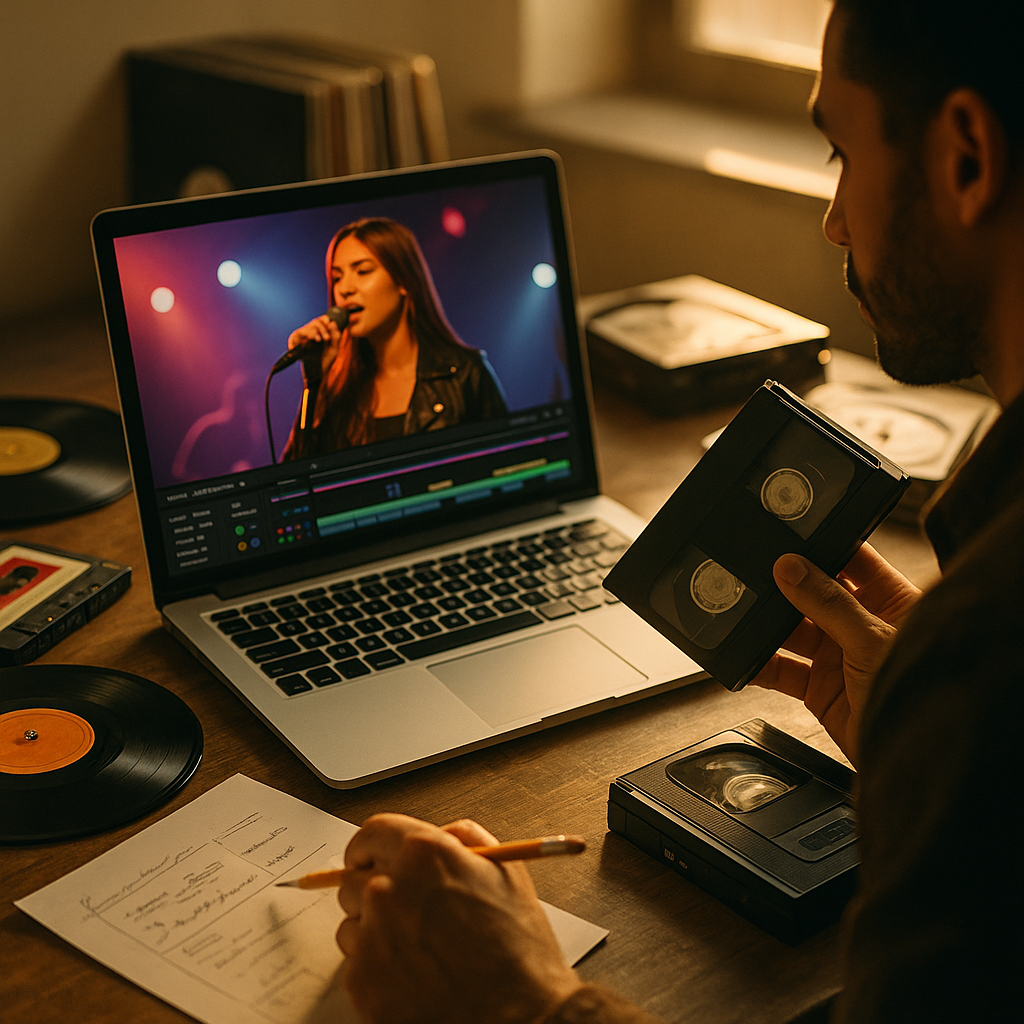
When Gap dropped its music video-style campaign and Hawaiian Tropic followed with a sun-soaked, choreography-driven spot, brand strategists took notice. Music video ads are staging a serious comeback, and the brands winning with this format understand something fundamental: audiences skip ads, but they replay entertainment. Here’s what’s driving the revival and how to brief for it.
Why Music Video Ads Are Back on the Media Plan
The attention economy has a short-form problem. Thirty-second product demos get scrolled past. Talking-head testimonials barely register. But a visually kinetic, music-driven narrative? That earns replays, shares, and organic reach that performance budgets can’t manufacture.
The numbers support this. According to HubSpot’s marketing research, video content that evokes strong emotional responses generates social sharing rates more than double those of purely informational video. Music video-format ads index exceptionally high on emotional arousal, which is exactly why brands are willing to put real production budgets behind them again.
Gap’s recent campaign leaned into nostalgia and kinetic energy simultaneously, pairing a contemporary sound with dance-forward creative reminiscent of the brand’s late-90s peak. Hawaiian Tropic went a different direction: aspirational, lifestyle-coded, with visual storytelling that felt closer to a Vevo drop than a sunscreen commercial. Both strategies share a common brief instruction: make it feel like something people would watch even without our logo on it.
The most effective music video ads pass a simple gut-check: if you removed every product shot and the brand name, would someone still watch it through to the end? If the answer is yes, the creative brief worked.
What Changed in the Production and Distribution Environment
The conditions enabling this revival aren’t accidental. Three structural shifts created the opening.
First, creator-grade production quality is now affordable at scale. Tools and workflows that once required a full agency production house are now accessible to mid-market teams. Brands can produce music video-caliber content without $500K budgets. If you’re planning multi-platform shoots, the single-session creator shoot framework is a practical model for capturing high-energy footage across TikTok, Reels, and Shorts in one production day.
Second, platform algorithm behavior rewards entertainment value over ad signals. TikTok’s recommendation engine, Instagram’s Reels distribution, and YouTube Shorts all prioritize watch-through rates and replays over clicks. Music video-format content is structurally optimized for these signals because the format is designed to be watched fully and rewatched.
Third, audio has been rehabilitated as a strategic lever. After years of “design for sound-off,” platforms are actively promoting sound-on experiences. TikTok has built an entire commerce and creator ecosystem around audio trends. This makes a format that’s fundamentally built around music suddenly feel native, not nostalgic.
The Brief Needs to Sound Different
Standard influencer or video ad briefs don’t translate here. A music video ad brief has to do different work, and the gaps tend to show up in production, not creative review.
Here’s what needs to change structurally:
- Music clearance as a day-one priority, not an afterthought. The track isn’t background audio in this format; it’s the creative engine. Licensing strategy (sync rights, master rights, royalty-free originals, or artist partnerships) needs to be resolved before the creative concept is approved, not after.
- Shot lists organized by music timing, not product beats. Traditional video briefs sequence shots around product reveals and CTAs. Music video ad briefs sequence around the track’s energy curve: the build, the drop, the resolution. Product integration should follow musical logic, not marketing logic.
- Choreography, movement direction, or visual rhythm instructions. Even if the concept isn’t literally dance-based, music video-format content requires explicit guidance on how on-screen movement aligns with audio. Without this, you get expensive footage that feels like a standard lifestyle ad with a better soundtrack.
- Clear platform priority with format-specific cut-downs specified upfront. A 60-second hero version, a 15-second hook-first Reels cut, and a 30-second YouTube pre-roll all require different edit logic. Specify all deliverables before production, not after. For briefs built around platform algorithm behavior, the hook design principles for Reels and TikTok apply directly to the short-form cuts.
- Brand integration guardrails that protect entertainment value. Over-integrating product kills the format. Logos, CTAs, and product features need to be woven into the visual grammar of the video, not superimposed on it. This is where most internal stakeholders push back hardest, and the brief needs to preemptively address it.
For brands operating with creator partners rather than traditional production teams, compliance framing matters too. The FTC’s guidelines on sponsored content apply regardless of how “artistic” the execution feels. A music video ad with paid placement still needs appropriate disclosure. Review the guidance on FTC-compliant creator briefs before the creative brief is finalized, not during legal review.
Measuring What Actually Matters
This is where music video ad investments often get mismanaged. The format’s value doesn’t show up cleanly in last-click attribution or ROAS dashboards, which creates internal friction when performance teams review the results.
The metrics that actually reflect the format’s impact are:
- Replay rate and average view duration (platform-native metrics)
- Organic share volume and save rates
- Branded search lift in the weeks following campaign launch
- Audio recognition scores in brand tracking studies
- Comment sentiment, especially unprompted product mentions
According to eMarketer’s video ad benchmarks, entertainment-forward video formats consistently outperform direct-response formats on upper-funnel brand metrics, including unaided awareness and purchase consideration among high-intent audiences. The trade-off is attribution clarity, which is a strategic conversation to have before the campaign launches, not a surprise in the post-mortem.
Brands using AI-assisted content distribution are also finding new ways to extend music video ad content into personalized, platform-specific experiences. The localized video ad approach, for example, allows brands to maintain the entertainment integrity of the hero asset while tailoring regional or audience-specific cuts at scale.
Creator Casting vs. Traditional Talent: A Strategic Choice
Gap and Hawaiian Tropic both made different casting choices, and both worked for different reasons. Gap leaned into recognizable cultural moments and aesthetic references. Hawaiian Tropic cast talent whose visual identity reinforced the brand world rather than overpowered it.
When working with creator talent specifically, the brief has to account for a fundamental difference: creators bring their own audience relationship to the production. That’s an asset, not a variable to be controlled. The brief should preserve enough creative latitude that the creator’s authentic voice comes through in the performance, while the music, visual style, and brand integration remain brand-controlled. This tension is manageable with the right brief structure. Briefs designed to work across multiple creator platforms simultaneously require particularly careful creative latitude calibration.
Traditional commercial talent, by contrast, executes against direction but doesn’t bring an existing audience. The creative brief can be more prescriptive in that scenario. The question is whether you’re paying for performance delivery or audience trust, and the answer shapes everything downstream.
Casting for a music video ad isn’t a creative decision made in isolation. It’s a strategic choice about whether the production budget is buying execution quality, audience trust, or cultural credibility. Often it’s all three, and they pull in different directions.
The Music Licensing Landmine Most Brands Hit
It deserves its own section because it derails otherwise excellent campaigns. Music licensing for ad formats is not the same as music licensing for organic creator content. Sync licensing (the right to use a song in timed relation to visual content) is separate from master rights (the right to use a specific recording). Both are typically required. Both involve negotiation, and both have usage restrictions related to platforms, territories, and duration.
Brands using popular tracks without proper clearance face takedowns, injunctions, and reputational damage, especially if the content goes viral before legal issues surface. Working through a music licensing partner like Musicbed or a dedicated sync agency reduces this risk significantly. Original compositions created specifically for the campaign (often in partnership with emerging artists) are increasingly the preferred route for brands wanting both creative control and clear rights ownership.
Regulatory clarity from the FTC on paid entertainment content continues to evolve, so disclosure requirements for branded music video content should be reviewed against current guidelines before distribution.
Building the Brief: A Framework Snapshot
A functional music video ad brief should answer six questions before production begins:
- What is the single emotional state we want the viewer to feel at the end of the video?
- What is the track, and are sync and master rights cleared?
- What is the visual grammar (color palette, movement style, location aesthetic)?
- How does the product appear in the video, and at what point in the music’s energy curve?
- What are all platform deliverables, specified by aspect ratio, duration, and hook structure?
- What are the non-negotiable brand guardrails, and what is genuinely up to creative direction?
That sixth question is where most briefs fail. Without explicit permission structures, creators and production directors default to caution, and cautious music video ads are forgettable ones.
For teams managing creator partnerships across entertainment-forward formats, briefing frameworks for immersive creator formats offer adjacent guidance on how to structure creative latitude without losing brand control.
The practical next step: pull your last three video campaign briefs and check whether they answer all six questions above. If the music licensing section is missing entirely, start there. Rights clearance is the longest lead-time item in any music video ad production, and it cannot be rushed retroactively.
Frequently Asked Questions
What makes a music video ad different from a standard brand video?
A music video ad prioritizes entertainment value and emotional resonance over product demonstration or direct-response mechanics. The creative structure follows the energy and narrative arc of the music track rather than a traditional advertising beat. Production choices, including casting, choreography, and visual style, are designed to make the content feel like something an audience would choose to watch, not skip. The brand and product are integrated into the visual and musical storytelling rather than presented as the primary subject.
How should brands handle music licensing for video ads?
Music licensing for advertising requires clearing both sync rights (the right to pair a song with visual content) and master rights (the right to use a specific recording). These are separate licenses and both are typically required. Brands should work with a dedicated music licensing partner or sync agency, or commission original compositions to retain full rights ownership. Licensing should be resolved before creative production begins, as it is the longest lead-time item in the process and cannot be expedited retroactively.
Which platforms work best for music video ad distribution?
TikTok, Instagram Reels, and YouTube are the primary platforms for music video ad formats because their algorithms actively reward high watch-through rates and replays, which entertainment-forward content naturally generates. YouTube supports longer hero versions (45 to 90 seconds), while TikTok and Reels require hook-first edits optimized for the first three seconds. Each platform requires a separate format cut, and these should be specified in the creative brief before production begins rather than as post-production adaptations.
How do you measure ROI on music video ads?
Traditional ROAS and last-click attribution models undervalue music video ad performance. Effective measurement focuses on replay rate, average view duration, organic share volume, branded search lift, and brand tracking metrics like unaided awareness and purchase consideration. These are upper-funnel and mid-funnel signals that reflect the format’s actual function. Brands should align internal stakeholders on this measurement framework before launch to avoid post-campaign disputes about performance.
Should brands use creator talent or traditional commercial talent for music video ads?
The choice depends on whether the primary asset being purchased is execution quality, audience trust, or cultural credibility. Traditional commercial talent delivers precise creative execution but does not bring an existing audience relationship. Creator talent brings authentic audience trust and cultural resonance but requires a brief structure that preserves creative latitude while maintaining brand control. Many successful music video ad campaigns combine both: creator talent for authentic platform-native energy and professional production direction for visual and audio quality.
Do music video ads still need FTC disclosures?
Yes. The FTC’s disclosure requirements apply to any paid brand content regardless of format or artistic execution. A music video ad produced with paid creator talent or featuring paid product placement requires clear and conspicuous disclosure. The entertainment format does not create a disclosure exemption. Brands should review current FTC guidance and ensure disclosure language is built into the brief and the final deliverables for every platform where the content appears.
Top Influencer Marketing Agencies
The leading agencies shaping influencer marketing in 2026
Agencies ranked by campaign performance, client diversity, platform expertise, proven ROI, industry recognition, and client satisfaction. Assessed through verified case studies, reviews, and industry consultations.
Moburst

-
2

The Shelf
Boutique Beauty & Lifestyle Influencer AgencyA data-driven boutique agency specializing exclusively in beauty, wellness, and lifestyle influencer campaigns on Instagram and TikTok. Best for brands already focused on the beauty/personal care space that need curated, aesthetic-driven content.Clients: Pepsi, The Honest Company, Hims, Elf Cosmetics, Pure LeafVisit The Shelf → -
3

Audiencly
Niche Gaming & Esports Influencer AgencyA specialized agency focused exclusively on gaming and esports creators on YouTube, Twitch, and TikTok. Ideal if your campaign is 100% gaming-focused — from game launches to hardware and esports events.Clients: Epic Games, NordVPN, Ubisoft, Wargaming, Tencent GamesVisit Audiencly → -
4

Viral Nation
Global Influencer Marketing & Talent AgencyA dual talent management and marketing agency with proprietary brand safety tools and a global creator network spanning nano-influencers to celebrities across all major platforms.Clients: Meta, Activision Blizzard, Energizer, Aston Martin, WalmartVisit Viral Nation → -
5

The Influencer Marketing Factory
TikTok, Instagram & YouTube CampaignsA full-service agency with strong TikTok expertise, offering end-to-end campaign management from influencer discovery through performance reporting with a focus on platform-native content.Clients: Google, Snapchat, Universal Music, Bumble, YelpVisit TIMF → -
6

NeoReach
Enterprise Analytics & Influencer CampaignsAn enterprise-focused agency combining managed campaigns with a powerful self-service data platform for influencer search, audience analytics, and attribution modeling.Clients: Amazon, Airbnb, Netflix, Honda, The New York TimesVisit NeoReach → -
7

Ubiquitous
Creator-First Marketing PlatformA tech-driven platform combining self-service tools with managed campaign options, emphasizing speed and scalability for brands managing multiple influencer relationships.Clients: Lyft, Disney, Target, American Eagle, NetflixVisit Ubiquitous → -
8

Obviously
Scalable Enterprise Influencer CampaignsA tech-enabled agency built for high-volume campaigns, coordinating hundreds of creators simultaneously with end-to-end logistics, content rights management, and product seeding.Clients: Google, Ulta Beauty, Converse, AmazonVisit Obviously →