


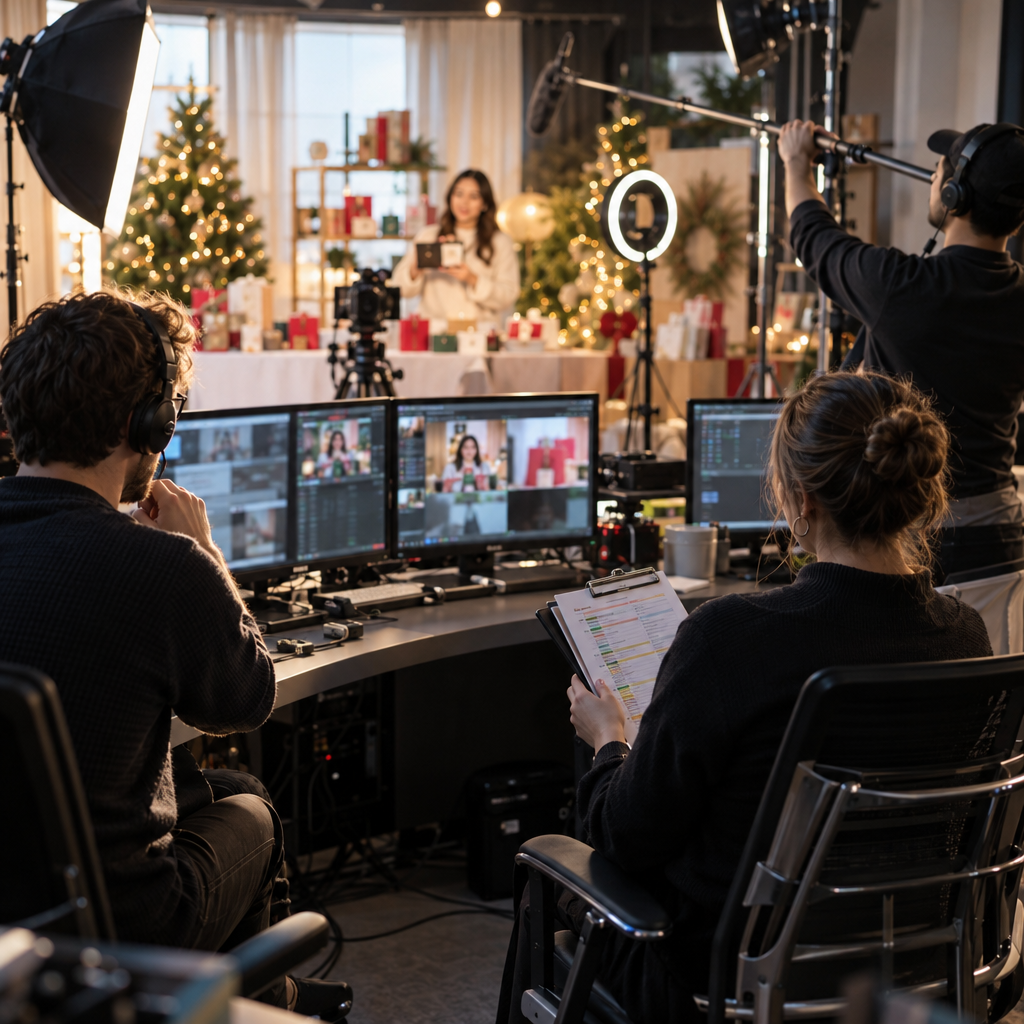
Most holiday live streams fail before anyone goes live. The product feed is stale, the creator hasn’t seen the offer, and nobody owns the disclosure script. YouTube Shopping Live rewards brands that treat a stream like a retail event, not a long ad read. Here is how to plan one that holds up from rehearsal to checkout.
Why the eligibility bar just dropped
The creator pool for live commerce on YouTube is bigger than it was a year ago. YouTube opened its Shopping affiliate program to Partner Program creators with at least 500 subscribers, and those creators can tag products across Shorts, video on demand, and Live.
For brands, that changes the sourcing math. You no longer need to chase a handful of mega-channels. You can run a roster of smaller, niche hosts whose audiences already trust their picks.
Geography is widening too. YouTube has extended the affiliate program to the UK, where Social Media Today reported partner merchants including Wayfair, Currys, Debenhams, Boots, M&S and Etsy. If you sell across borders, check market eligibility before you brief a single creator.
The Amazon wrinkle
Here is the part that surprises brand teams. Eligible U.S. creators can now tag Amazon products in Shorts, long-form videos, and livestreams.
That means your hero SKU may compete with an Amazon listing inside the very same stream. If you sell on both your own store and Amazon, decide in advance which destination you want creators to favor, and say so in the brief. Our guide to Amazon creator payouts covers the commission side of that trade-off.
A live stream is a shelf. If you don’t control which product sits at eye level, the creator’s affiliate settings will decide for you.
Build the run-of-show before you book talent
Start with the offer, not the host. A stream needs a reason to watch now: a launch drop, a bundle that exists only during the broadcast, or a limited allocation. Discounts alone rarely hold attention for an hour.
Then map the stream in segments. A workable structure for a 60 to 90 minute holiday broadcast:
- Opening (first 10 minutes): Hook, the offer, and a clear disclosure of the brand relationship.
- Product demos: One hero item per segment, with the tagged product shown on screen as it is discussed.
- Live Q&A: Sizing, shipping cutoffs, returns. These are the objections that kill carts.
- Close: Repeat the offer, the deadline, and the shipping date for holiday delivery.
Running more than one broadcast? Spacing them across the peak sales window beats one giant event. We break that approach down in our three-stream staging guide.
What does a good brief include?
Short answer: fewer adjectives, more logistics. Creators know their audience. They don’t know your inventory.
- The exact product list and which items to tag, with SKUs and landing pages.
- The offer terms, start and end times, and any stock limits.
- Shipping and returns language the creator can read without improvising.
- Claims that are off limits (efficacy, “best” comparisons, price guarantees).
- The disclosure wording and when to say it.
- An escalation contact who is online during the stream.
That last item matters more than it looks. Live means errors are public. A wrong price or a sold-out item stays on screen until someone fixes it.
Compliance is a live-stream problem too
Brands sometimes assume live content is exempt because it’s ephemeral. It isn’t. Replays stay on the channel, and viewers who join late miss the opening disclosure.
The FTC is direct about where scrutiny lands. Its endorsement guidance says that if law enforcement becomes necessary, its focus usually will be on advertisers or their agencies and PR firms. In other words, you.
Practical safeguards:
- Require the disclosure at the start and again at the midpoint, so late joiners hear it.
- Add a pinned comment or on-screen graphic that states the relationship.
- Review the replay within 24 hours and edit or caption it if needed.
- Keep a signed brief on file for every host.
For the platform-side mechanics of labeling, see our tagging audit guide. The audit logic transfers well to YouTube.
Measure beyond the stream
Live commerce rarely converts only in the moment. Viewers watch, leave, and buy two days later. If you judge a stream on in-broadcast sales alone, you will undercount it.
Track at least three things:
- Affiliate-tracked sales during and after the stream.
- Branded search and direct traffic lift in the 72 hours after.
- Replay views and clip performance, since a good segment can be recut into Shorts.
That last point is the efficiency play. One stream can feed weeks of short-form content, and our Shorts scripting guide shows how to turn those moments into a repeatable series.
Also compare notes across platforms. If you already run live selling elsewhere, the TikTok Shop LIVE formula offers a useful benchmark for pacing sales waves.
FAQs
What is YouTube Shopping Live?
It is the use of YouTube livestreams to sell products, with creators tagging items so viewers can shop while watching. Tagging is available to eligible creators in the YouTube Shopping affiliate program.
Who can tag products in a live stream?
Per YouTube’s announcement, Partner Program creators with at least 500 subscribers who meet eligibility guidelines can join the affiliate program and tag products in Live content. Always confirm current eligibility in your market.
Can creators tag Amazon products during a stream?
Yes, eligible U.S. creators in the affiliate program can tag Amazon products in livestreams. If you sell direct, brief your creators on which links to prioritize.
Who is responsible for FTC disclosure in a brand-sponsored stream?
Both parties carry risk, but the FTC has said its enforcement focus usually lands on advertisers and their agencies. Build disclosure scripts, monitoring, and replay review into your process.
How early should we plan a holiday live stream?
Lock the offer, SKUs, and creator contracts well before peak season, then run at least one full rehearsal. Inventory and shipping cutoffs should be confirmed in writing before the brief goes out.
This week, pick one hero SKU, write a one-page brief with the offer, disclosure script, and escalation contact, and run a 20-minute dry run with your lead creator.
Top Influencer Marketing Agencies
The leading agencies shaping influencer marketing in 2026
Agencies ranked by campaign performance, client diversity, platform expertise, proven ROI, industry recognition, and client satisfaction. Assessed through verified case studies, reviews, and industry consultations.
Moburst

-
2

The Shelf
Boutique Beauty & Lifestyle Influencer AgencyA data-driven boutique agency specializing exclusively in beauty, wellness, and lifestyle influencer campaigns on Instagram and TikTok. Best for brands already focused on the beauty/personal care space that need curated, aesthetic-driven content.Clients: Pepsi, The Honest Company, Hims, Elf Cosmetics, Pure LeafVisit The Shelf → -
3

Audiencly
Niche Gaming & Esports Influencer AgencyA specialized agency focused exclusively on gaming and esports creators on YouTube, Twitch, and TikTok. Ideal if your campaign is 100% gaming-focused — from game launches to hardware and esports events.Clients: Epic Games, NordVPN, Ubisoft, Wargaming, Tencent GamesVisit Audiencly → -
4

Viral Nation
Global Influencer Marketing & Talent AgencyA dual talent management and marketing agency with proprietary brand safety tools and a global creator network spanning nano-influencers to celebrities across all major platforms.Clients: Meta, Activision Blizzard, Energizer, Aston Martin, WalmartVisit Viral Nation → -
5

The Influencer Marketing Factory
TikTok, Instagram & YouTube CampaignsA full-service agency with strong TikTok expertise, offering end-to-end campaign management from influencer discovery through performance reporting with a focus on platform-native content.Clients: Google, Snapchat, Universal Music, Bumble, YelpVisit TIMF → -
6

NeoReach
Enterprise Analytics & Influencer CampaignsAn enterprise-focused agency combining managed campaigns with a powerful self-service data platform for influencer search, audience analytics, and attribution modeling.Clients: Amazon, Airbnb, Netflix, Honda, The New York TimesVisit NeoReach → -
7

Ubiquitous
Creator-First Marketing PlatformA tech-driven platform combining self-service tools with managed campaign options, emphasizing speed and scalability for brands managing multiple influencer relationships.Clients: Lyft, Disney, Target, American Eagle, NetflixVisit Ubiquitous → -
8

Obviously
Scalable Enterprise Influencer CampaignsA tech-enabled agency built for high-volume campaigns, coordinating hundreds of creators simultaneously with end-to-end logistics, content rights management, and product seeding.Clients: Google, Ulta Beauty, Converse, AmazonVisit Obviously →