


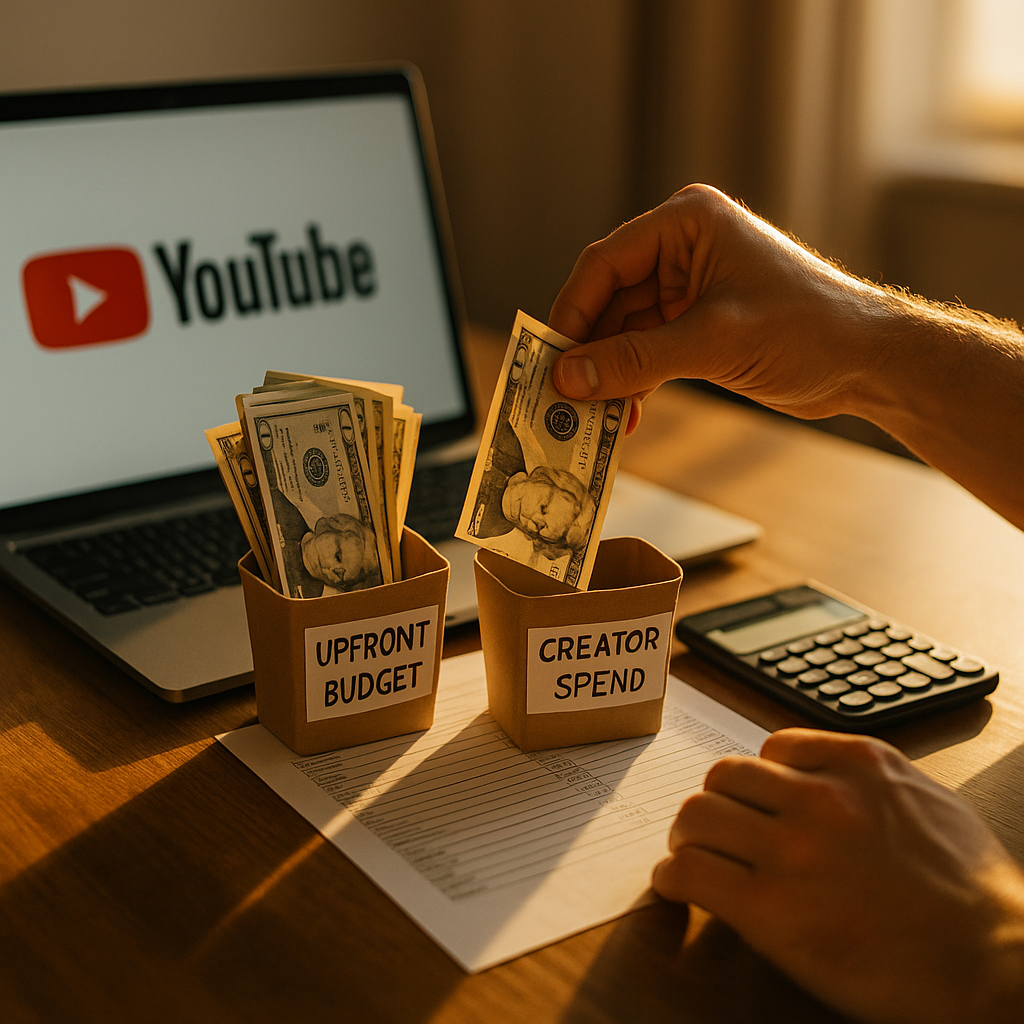
YouTube commands 12 to 13 percent of daily video viewing in the U.S., and it’s showing up in TV upfront negotiations. If your media plan still treats creator budgets and upfront buys as separate line items, that separation is costing you reach, efficiency, and leverage. Here’s how to think about the upfront-to-creator budget reallocation decision with rigor.
Why YouTube’s Upfront Presence Changes Everything
For years, upfront negotiations were about locking in linear TV inventory before scatter market prices climbed. YouTube was a performance channel. A social channel. Something the digital team handled after the “real” media plan was done.
That framing is obsolete. YouTube now reaches more 18–49-year-olds in the U.S. than any single cable network, and its presence in formal upfront conversations signals a structural shift in how major holding companies are treating it: not as a supplement to TV, but as a peer. Nielsen’s data placing YouTube at 12 to 13 percent of daily video consumption isn’t a rounding error; it’s a mandate for media planners to reconcile two previously siloed budget buckets.
The question isn’t whether YouTube deserves upfront investment. It’s whether your current budget architecture allows you to act on that without cannibalizing creator programs that are already driving measurable conversion.
The Structural Problem With How Most Brands Budget Today
Most enterprise brands still operate with a hard wall between their paid media team (which handles TV, CTV, and now YouTube reserve buys) and their creator/influencer team (which manages partnerships, content licensing, and amplification). The upfront migration of YouTube collapses that wall, and most org charts aren’t ready for it.
Here’s what typically happens: the media agency recommends shifting 8 to 15 percent of the linear TV upfront budget to YouTube. The brand agrees. But the YouTube allocation lands in the paid media bucket, managed against CPM targets, with no coordination with the creator team. Meanwhile, the creator team is separately negotiating with the same YouTubers for sponsored integrations. You end up with duplicated spend, conflicting creator briefs, and no shared attribution model.
When YouTube reserve buys and creator partnerships aren’t coordinated, brands routinely pay twice for the same audience: once through the media plan, once through the influencer budget. A unified channel strategy eliminates this overlap.
The fix isn’t to merge the teams. It’s to build a shared framework for how YouTube spend gets allocated, measured, and attributed across both channels. Our breakdown of upfront budget shifts to YouTube covers the tactical mechanics of that transition.
Sizing the Reallocation: What the Data Actually Supports
The 12 to 13 percent daily usage figure from Nielsen isn’t a ceiling; it’s a floor. Nielsen’s The Gauge data has shown YouTube’s share climbing consistently over the past two years while broadcast and cable combined continue to erode. For media planners, the implication is clear: audience attention has already moved, and the upfront system is now catching up.
What does a defensible reallocation look like? The range most media strategists are working with: 10 to 20 percent of what was previously committed to linear TV in upfront negotiations should migrate to YouTube, with a meaningful portion of that routed through creator-led inventory rather than pure programmatic or reserve placements.
Why creator-led? Because creator integrations on YouTube consistently outperform pre-roll and mid-roll ads on brand recall and purchase intent. Think with Google research has repeatedly shown that creator-driven content generates higher viewer retention than traditional ad formats on the same platform. You’re not just buying reach; you’re buying contextual trust.
The practical implication: if you’re moving $5M out of linear TV, the question isn’t just “how much goes to YouTube reserve buys?” It’s “how much of that goes to creator partnerships that live on YouTube, and how do we structure those deals to align with upfront timelines and measurement standards?”
Creator Budget vs. Reserve Buy: They’re Not Competing, They’re Complementary
This is where many brands get the strategy wrong. They treat the upfront YouTube allocation and the creator budget as a zero-sum trade. Reserve buys win because they feel more like “traditional media.” Creator partnerships get squeezed.
The smarter architecture treats them as different functions with different ROI profiles. Reserve buys through YouTube’s upfront process give you guaranteed reach, brand-safe placement controls, and measurement comparability with linear TV. Creator partnerships give you content authenticity, audience trust, search discoverability (YouTube is still the world’s second-largest search engine), and long-tail performance that compound after the campaign ends.
For brands managing YouTube Shorts as a distinct budget consideration, the calculus shifts slightly. Shorts inventory is priced differently, performs differently, and requires a different creator brief. Our coverage of YouTube Shorts in upfront planning unpacks that distinction in detail.
The operational goal is a blended YouTube strategy: reserve buys for reach and frequency guarantees, creator deals for contextual performance and evergreen content value. Neither replaces the other.
What Brands Need to Get Right Before They Shift the Budget
Before you move money, get these three things in order.
Unified attribution. If your media team measures YouTube on CPM and reach, and your creator team measures on engagement and conversions, you will never get a clean picture of combined ROI. Build a shared measurement framework before the upfront commitment is made. Multi-creator attribution models are a good starting point for brands still working through this.
Creator contract alignment with upfront timelines. Upfront commitments typically lock in Q4 through Q3 of the following year. Most creator deals are negotiated on a campaign-by-campaign basis. If you’re routing creator investment through the upfront process, your contracts need to reflect that timeline, including content delivery windows, usage rights, and exclusivity terms. Our creator program governance checklist covers the contractual infrastructure required at scale.
Production cost modeling. Creator-led YouTube content isn’t free to produce, even when the creator is doing most of the creative work. Brands still absorb briefing, review, legal, and amplification costs. Factor these into your reallocation math. A useful comparison of video production costs by model can help you benchmark realistically.
The TV Budget Is Not Disappearing. It’s Fragmenting.
Linear TV still reaches older demographics at scale, and for certain categories (auto, pharma, QSR) the upfront system still delivers CPMs that are hard to match elsewhere. The mistake isn’t abandoning linear. It’s treating the linear-to-digital shift as a binary choice rather than a portfolio optimization.
EMARKETER has projected that connected TV and digital video will collectively surpass linear TV in total ad spend, and YouTube’s formalization in upfront buys accelerates that timeline. But the brands that win this transition won’t be the ones that moved fastest. They’ll be the ones that built the measurement, attribution, and creator infrastructure to make the reallocation actually perform.
The upfront migration to YouTube is not a media planning trend. It’s a structural audience shift that has already happened. The budget is just now catching up.
Brands also need to think about how creator-led YouTube content fits into a broader cross-platform strategy. If you’re not measuring how YouTube creator content contributes alongside CTV, social, and search, you’re making reallocation decisions with incomplete data. The framework for cross-platform ROI measurement is essential reading before you finalize any upfront commitments.
The Next Step Isn’t a Budget Decision. It’s an Infrastructure Decision.
Before you reallocate a dollar, audit whether your creator program can actually absorb upfront-level investment. Most influencer programs are built for campaign sprints, not sustained, always-on commitments that upfront timelines demand. If you’re not sure where your infrastructure gaps are, start with a creator program infrastructure audit. The budget reallocation decision is only as good as the operational foundation underneath it.
Frequently Asked Questions
What does it mean for YouTube to appear in TV upfront buys?
TV upfronts are the annual negotiation period where advertisers commit to media budgets in advance, historically focused on broadcast and cable networks. YouTube’s inclusion means advertisers can now make guaranteed, forward-looking commitments to YouTube inventory through the same process, giving it comparable planning status to linear TV for the first time at scale.
How much of a TV upfront budget should shift to YouTube?
Most media strategists are working with a range of 10 to 20 percent of previous linear TV upfront commitments migrating to YouTube, depending on the brand’s category, target demographics, and measurement maturity. That allocation should include a mix of reserve buys and creator partnership investment, not just programmatic or pre-roll placements.
Should creator budgets and YouTube upfront buys come from the same pool?
They don’t need to come from the same budget line, but they absolutely need to be coordinated. Without coordination, brands end up paying separately for reach they could achieve more efficiently by combining reserve buys with creator integrations. A unified channel strategy with shared attribution prevents duplicated spend.
How does YouTube’s 12–13 percent daily video usage affect media planning?
It means YouTube is no longer a supplemental digital channel; it’s a primary video medium. For media planners, that shifts how YouTube should be treated in reach-and-frequency modeling, upfront commitments, and audience targeting. Plans that don’t account for YouTube’s share of daily video attention are likely overestimating linear TV’s actual reach with key demographics.
What measurement framework works best when combining YouTube creator deals with upfront reserve buys?
A unified attribution model that connects paid media metrics (CPM, reach, frequency) with creator performance metrics (engagement lift, view-through rate, conversion attribution) is essential. Brands should establish baseline KPIs for both channels before the upfront commitment is locked, and ensure both the media agency and creator team are reporting into the same dashboard or measurement system.
Top Influencer Marketing Agencies
The leading agencies shaping influencer marketing in 2026
Agencies ranked by campaign performance, client diversity, platform expertise, proven ROI, industry recognition, and client satisfaction. Assessed through verified case studies, reviews, and industry consultations.
Moburst

-
2

The Shelf
Boutique Beauty & Lifestyle Influencer AgencyA data-driven boutique agency specializing exclusively in beauty, wellness, and lifestyle influencer campaigns on Instagram and TikTok. Best for brands already focused on the beauty/personal care space that need curated, aesthetic-driven content.Clients: Pepsi, The Honest Company, Hims, Elf Cosmetics, Pure LeafVisit The Shelf → -
3

Audiencly
Niche Gaming & Esports Influencer AgencyA specialized agency focused exclusively on gaming and esports creators on YouTube, Twitch, and TikTok. Ideal if your campaign is 100% gaming-focused — from game launches to hardware and esports events.Clients: Epic Games, NordVPN, Ubisoft, Wargaming, Tencent GamesVisit Audiencly → -
4

Viral Nation
Global Influencer Marketing & Talent AgencyA dual talent management and marketing agency with proprietary brand safety tools and a global creator network spanning nano-influencers to celebrities across all major platforms.Clients: Meta, Activision Blizzard, Energizer, Aston Martin, WalmartVisit Viral Nation → -
5

The Influencer Marketing Factory
TikTok, Instagram & YouTube CampaignsA full-service agency with strong TikTok expertise, offering end-to-end campaign management from influencer discovery through performance reporting with a focus on platform-native content.Clients: Google, Snapchat, Universal Music, Bumble, YelpVisit TIMF → -
6

NeoReach
Enterprise Analytics & Influencer CampaignsAn enterprise-focused agency combining managed campaigns with a powerful self-service data platform for influencer search, audience analytics, and attribution modeling.Clients: Amazon, Airbnb, Netflix, Honda, The New York TimesVisit NeoReach → -
7

Ubiquitous
Creator-First Marketing PlatformA tech-driven platform combining self-service tools with managed campaign options, emphasizing speed and scalability for brands managing multiple influencer relationships.Clients: Lyft, Disney, Target, American Eagle, NetflixVisit Ubiquitous → -
8

Obviously
Scalable Enterprise Influencer CampaignsA tech-enabled agency built for high-volume campaigns, coordinating hundreds of creators simultaneously with end-to-end logistics, content rights management, and product seeding.Clients: Google, Ulta Beauty, Converse, AmazonVisit Obviously →