


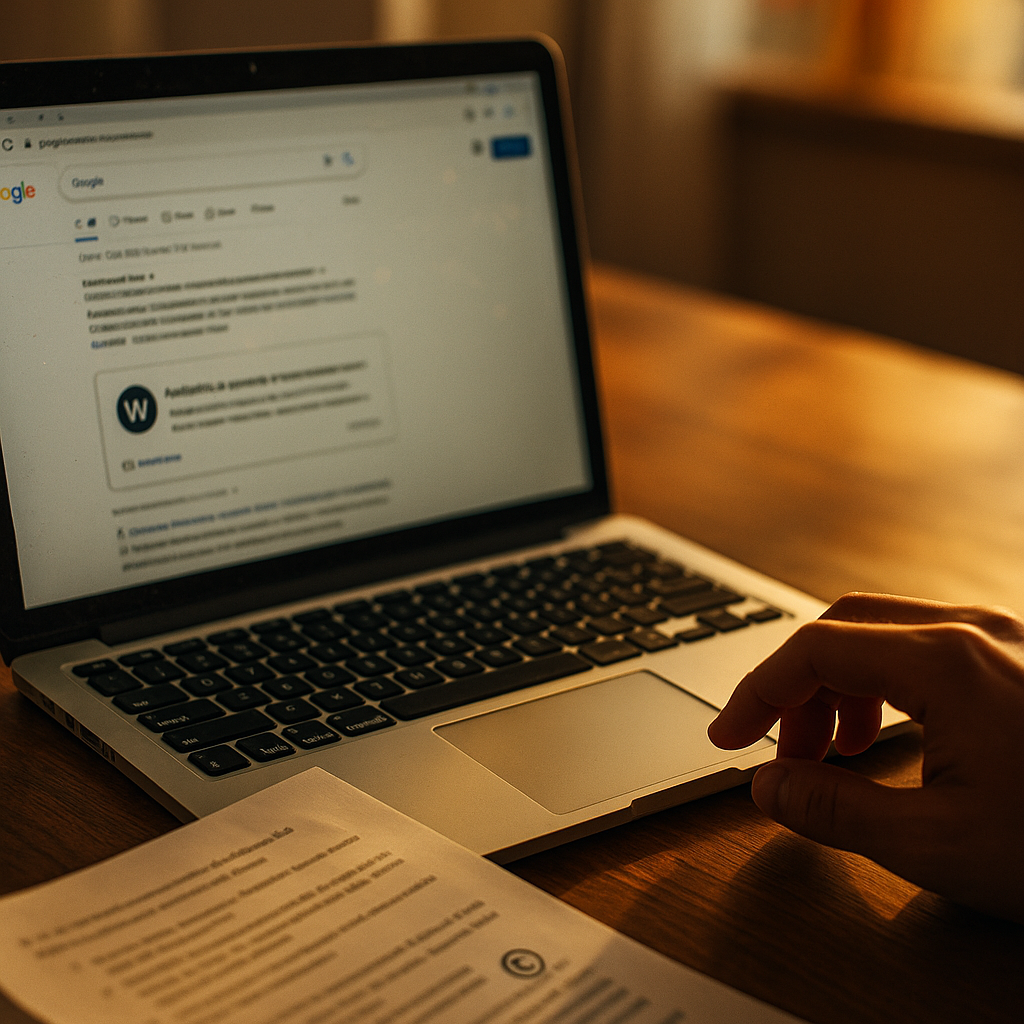
More than 60% of Google searches now end without a click, and for product-related queries, that number climbs even higher. Zero-click search isn’t a niche phenomenon anymore. It’s the default outcome. If your brand strategy still assumes a linear path from search to landing page to cart, you’re planning for a funnel that quietly stopped existing.
The Funnel Didn’t Shrink. It Collapsed.
For two decades, marketers treated the funnel as gospel: awareness, consideration, conversion. Search engines were the connective tissue, the place where curiosity turned into a click, and a click turned into a customer. That assumption is dead.
AI Overviews, featured snippets, and conversational answers from tools like ChatGPT and Perplexity now resolve the query before the user ever reaches a website. A shopper asking “best hydrating serum for combination skin” gets a synthesized answer, complete with product names, pulled directly into the search results page. No click required. No landing page visit. No pixel fired.
This isn’t a Google-specific quirk, either. It’s a structural shift in how information gets consumed. AI overviews are redefining discovery across nearly every vertical, from skincare to software.
When the answer lives on the results page, the brand that wins isn’t the one with the best landing page. It’s the one the AI decided to cite.
Why Product Queries Are Ground Zero
Informational queries have been zero-click for years. “What time is it in Tokyo” never needed a click. But product queries were supposed to be different, protected by commercial intent, by the need to compare, to see reviews, to check prices.
That protection is gone. Generative engines now handle comparison shopping natively. Ask an AI assistant to compare three running shoes, and it will summarize weight, cushioning, price, and reviews in one response, often sourced from Reddit threads, YouTube reviews, and UGC rather than brand websites.
This matters enormously for brands, because product queries were always the highest-intent, highest-conversion segment of search traffic. Losing the click doesn’t just mean losing a session in Google Analytics. It means losing the moment where consideration turns into purchase intent, and that moment is now happening inside a chat window or an AI summary box you don’t control.
Our earlier analysis on AI-mediated product discovery found that brands cited in AI-generated answers saw meaningful lift in unaided awareness, even without a corresponding traffic increase. Visibility and traffic have decoupled. That’s the uncomfortable part.
What “Winning” Looks Like Now
If clicks aren’t the scoreboard anymore, what is? Citations. Mentions. Being the brand an AI system chooses to reference when it answers a customer’s question.
This requires a fundamentally different content strategy, one built for extraction rather than engagement. Long, SEO-bloated buying guides written to maximize time-on-page are exactly the wrong format for an AI summarizer. What works instead:
- Direct, structured answers near the top of content, not buried under 800 words of preamble.
- Specific claims with evidence, like third-party test results, verifiable specs, or original data, that AI systems can quote with confidence.
- Consistent entity signals across your site, Wikipedia, review platforms, and social profiles, so AI models have a clear, corroborated picture of what your brand is and does.
- Creator and UGC content that generative engines increasingly weight as trustworthy, unbiased sources compared to brand-authored copy.
We covered the mechanics of this shift in writing for AI and human readers simultaneously, and the short version is: you’re now optimizing for a machine reader first, a human second, without sacrificing either.
Creators Are the New Backlinks
Here’s the part that should reframe influencer budgets entirely. AI systems trained on web-scale data disproportionately surface creator content, TikTok reviews, YouTube unboxings, Reddit threads, because that content reads as authentic, comparative, and unaffiliated. A branded product page says “our serum works.” A creator saying “I tested this against three competitors and here’s what happened” reads as evidence.
That distinction is exactly why sensory UGC consistently outperforms studio content for categories like beauty and food, where texture, scent, and real-use context matter. It’s also why the creator supply chain model, treating influencers as a media line item rather than a one-off campaign, is becoming standard practice. You’re not just buying reach. You’re buying the raw material that trains the next answer an AI gives about your category.
The Budget Conversation Nobody Wants to Have
Zero-click search breaks the attribution models most CMOs still report against. If a customer sees your product cited in an AI Overview, then later searches your brand name directly and converts, most analytics platforms will credit that sale to “direct” or “branded search.” The AI touchpoint, the actual influence event, disappears from the report entirely.
This is not a hypothetical measurement gap. It’s already reshaping how smart teams allocate spend. Influencer investment now sits around a quarter of total marketing budgets at many CPG and DTC brands, per recent industry benchmarking, and that shift tracks almost exactly with the rise of zero-click behavior. Rebuilding the media mix model around influence and citation, rather than last-click attribution, isn’t optional anymore. It’s survival.
If your reporting only credits the last click, you’re measuring a funnel that no longer describes how people actually decide what to buy.
Industry data backs this up. eMarketer’s research on search behavior has repeatedly flagged declining organic click-through rates even as query volume rises, and Statista’s search engine data shows AI-assisted search adoption climbing across every major demographic, not just younger users. This isn’t a Gen Z quirk. It’s universal behavior change.
Risk and Compliance: The Part Brand Teams Keep Skipping
There’s a governance angle here that legal and compliance teams need to catch up on. When creator content becomes the raw training data for AI answers about your product, disclosure and accuracy matter more, not less. If an AI system surfaces a creator’s claim as fact, and that claim was never vetted, your brand inherits the reputational risk even though you didn’t write the words.
The FTC’s endorsement guidelines already require clear disclosure for sponsored content, but zero-click discovery adds a new wrinkle: claims made in a five-second TikTok video can now get amplified, decontextualized, and presented as settled fact by an AI summarizer months later. Standardizing creator briefs and contract language around accuracy isn’t just good practice anymore. Our piece on turning CTAs into contract terms covers exactly this kind of operational tightening, and it’s worth revisiting given how much further creator content now travels.
So What Do You Actually Do Monday Morning?
Start small, but start now. A few concrete moves:
- Audit your top twenty product pages for “extractability.” Can an AI model pull a clean, quotable answer, or is the useful information buried in marketing fluff?
- Run brand and product queries through ChatGPT, Perplexity, and Google’s AI Overview manually. See who gets cited. If it’s not you, find out who is and why.
- Shift a portion of paid search budget toward creator-generated comparison and review content, the format generative engines trust most.
- Push your analytics team to track brand mentions and AI citations as a leading indicator, not just an afterthought metric.
None of this replaces traditional SEO or paid search entirely. But treating them as the whole strategy, in a world where citations matter more than clicks, is how brands quietly lose share to competitors who adapted first.
The Uncomfortable Bottom Line
Traditional funnel thinking assumed a visible, trackable journey. Zero-click search breaks that visibility without breaking the journey itself. Customers are still discovering, comparing, and deciding. They’re just doing it somewhere your analytics dashboard can’t see.
Sprout Social’s consumer research has consistently shown that trust in peer and creator content outpaces trust in brand messaging, and that gap is exactly what’s fueling AI systems’ preference for UGC as source material. The brands adapting fastest aren’t the ones with the biggest ad budgets. They’re the ones rebuilding measurement and content strategy around a simple premise: be the answer, not just the advertiser.
Next step: pull your last thirty days of branded search volume against your organic click-through rate. If clicks are flat or declining while brand search interest holds steady or grows, you already have zero-click erosion happening. Stop waiting for a bigger dataset to confirm what your funnel is already telling you.
FAQs
What is zero-click search?
Zero-click search refers to search queries that get answered directly on the results page, through featured snippets, AI Overviews, or knowledge panels, without the user clicking through to a website. It’s increasingly common for product research queries, not just simple factual questions.
Why are product queries especially affected by zero-click search?
Generative AI tools can now synthesize product comparisons, pricing, and reviews from multiple sources into a single answer. This removes the need for shoppers to visit individual retailer or brand sites during the comparison phase of buying.
How can brands measure influence if clicks are declining?
Track brand mention frequency, AI citation rates across tools like ChatGPT and Perplexity, and branded search volume alongside traditional click metrics. These leading indicators reveal influence that last-click attribution models miss entirely.
Does zero-click search mean SEO is dead?
No, but the goals of SEO have shifted. Instead of optimizing purely for click-through rate, brands need to optimize for being cited as a trusted source within AI-generated answers, which requires structured, evidence-backed, easily extractable content.
Why does creator content perform better than brand content in AI search results?
AI models tend to weight creator and user-generated content as more authentic and less biased than brand-authored marketing copy, particularly for comparative or experiential claims like product texture, taste, or real-world performance.
FAQs
What is zero-click search?
Zero-click search refers to search queries that get answered directly on the results page, through featured snippets, AI Overviews, or knowledge panels, without the user clicking through to a website. It’s increasingly common for product research queries, not just simple factual questions.
Why are product queries especially affected by zero-click search?
Generative AI tools can now synthesize product comparisons, pricing, and reviews from multiple sources into a single answer. This removes the need for shoppers to visit individual retailer or brand sites during the comparison phase of buying.
How can brands measure influence if clicks are declining?
Track brand mention frequency, AI citation rates across tools like ChatGPT and Perplexity, and branded search volume alongside traditional click metrics. These leading indicators reveal influence that last-click attribution models miss entirely.
Does zero-click search mean SEO is dead?
No, but the goals of SEO have shifted. Instead of optimizing purely for click-through rate, brands need to optimize for being cited as a trusted source within AI-generated answers, which requires structured, evidence-backed, easily extractable content.
Why does creator content perform better than brand content in AI search results?
AI models tend to weight creator and user-generated content as more authentic and less biased than brand-authored marketing copy, particularly for comparative or experiential claims like product texture, taste, or real-world performance.
Top Influencer Marketing Agencies
The leading agencies shaping influencer marketing in 2026
Agencies ranked by campaign performance, client diversity, platform expertise, proven ROI, industry recognition, and client satisfaction. Assessed through verified case studies, reviews, and industry consultations.
Moburst

-
2

The Shelf
Boutique Beauty & Lifestyle Influencer AgencyA data-driven boutique agency specializing exclusively in beauty, wellness, and lifestyle influencer campaigns on Instagram and TikTok. Best for brands already focused on the beauty/personal care space that need curated, aesthetic-driven content.Clients: Pepsi, The Honest Company, Hims, Elf Cosmetics, Pure LeafVisit The Shelf → -
3

Audiencly
Niche Gaming & Esports Influencer AgencyA specialized agency focused exclusively on gaming and esports creators on YouTube, Twitch, and TikTok. Ideal if your campaign is 100% gaming-focused — from game launches to hardware and esports events.Clients: Epic Games, NordVPN, Ubisoft, Wargaming, Tencent GamesVisit Audiencly → -
4

Viral Nation
Global Influencer Marketing & Talent AgencyA dual talent management and marketing agency with proprietary brand safety tools and a global creator network spanning nano-influencers to celebrities across all major platforms.Clients: Meta, Activision Blizzard, Energizer, Aston Martin, WalmartVisit Viral Nation → -
5

The Influencer Marketing Factory
TikTok, Instagram & YouTube CampaignsA full-service agency with strong TikTok expertise, offering end-to-end campaign management from influencer discovery through performance reporting with a focus on platform-native content.Clients: Google, Snapchat, Universal Music, Bumble, YelpVisit TIMF → -
6

NeoReach
Enterprise Analytics & Influencer CampaignsAn enterprise-focused agency combining managed campaigns with a powerful self-service data platform for influencer search, audience analytics, and attribution modeling.Clients: Amazon, Airbnb, Netflix, Honda, The New York TimesVisit NeoReach → -
7

Ubiquitous
Creator-First Marketing PlatformA tech-driven platform combining self-service tools with managed campaign options, emphasizing speed and scalability for brands managing multiple influencer relationships.Clients: Lyft, Disney, Target, American Eagle, NetflixVisit Ubiquitous → -
8

Obviously
Scalable Enterprise Influencer CampaignsA tech-enabled agency built for high-volume campaigns, coordinating hundreds of creators simultaneously with end-to-end logistics, content rights management, and product seeding.Clients: Google, Ulta Beauty, Converse, AmazonVisit Obviously →