


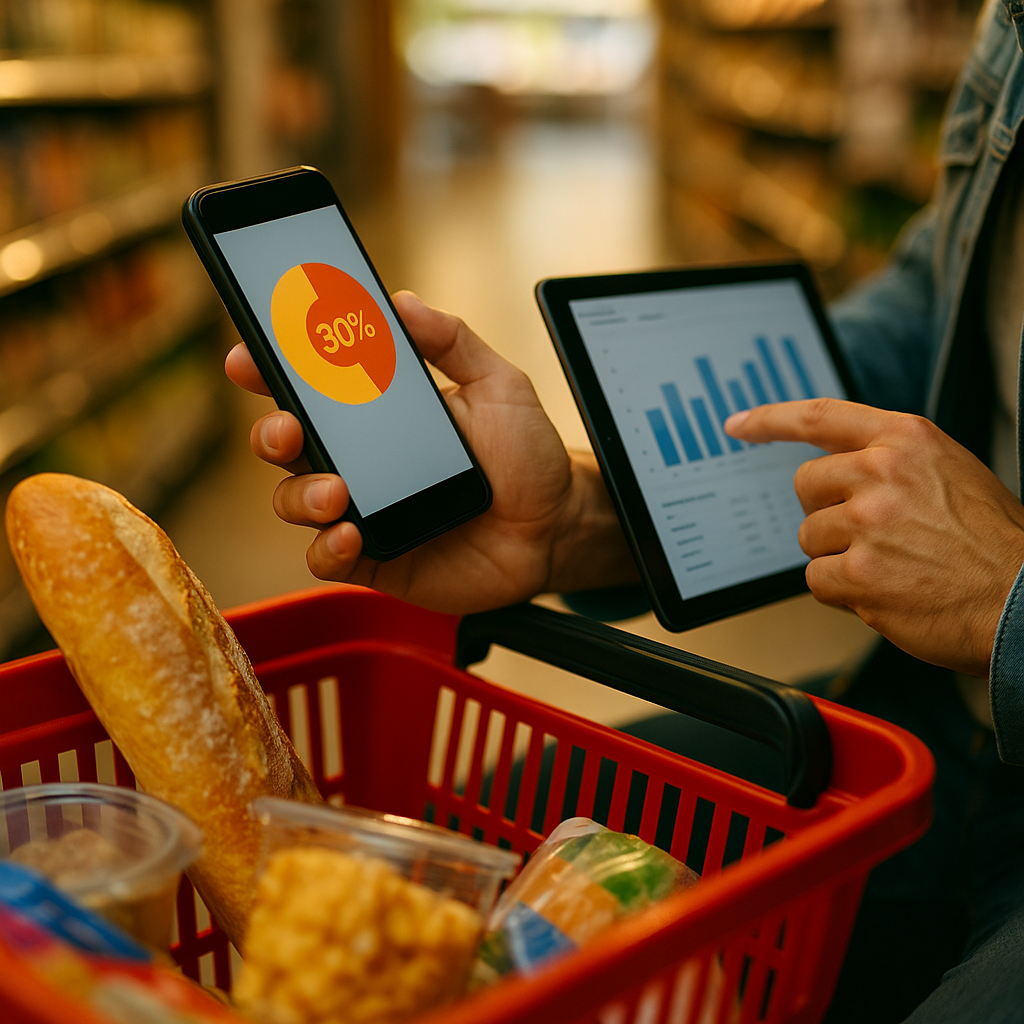
Retailers running creator-linked in-store activations are seeing basket sizes jump as much as 30 percent compared to standard store traffic, according to retail media data circulating among enterprise brand teams this year. That single number should stop any CMO mid-scroll. Phygital marketing, the blend of physical retail and digital creator content, has moved from pilot budget to line-item priority. The question is no longer whether creator content influences offline purchases. It’s whether your measurement stack can prove it.
Why Phygital Suddenly Matters to the P&L
For years, influencer marketing lived in a measurement ghetto. Brands could track clicks, saves, and maybe a promo code redemption, but the walk from “I saw a TikTok” to “I bought it at Target” was invisible. That gap made it easy for finance teams to treat creator spend as a brand awareness line item rather than a performance channel.
That’s changed. Retail media networks, QR-driven attribution, and in-store sensor data have given marketers a way to connect a creator’s video to an actual register swipe. Walmart Connect, Kroger Precision Marketing, and Target Roundel have all expanded offline attribution products in the past year, and agencies report that brands are reallocating budget toward creators whose content can be tagged and traced into physical locations.
Brands that can tie a specific creator post to a specific in-store transaction are the ones winning incremental budget in 2026 planning cycles, because finance teams trust transaction data more than impression counts.
This isn’t a niche trend reserved for QR codes on shelf talkers. It’s a full rethink of how creator briefs get written, how retail partners get looped into campaign planning, and how agencies justify spend to procurement. Our earlier coverage of QR tied creator campaigns showed early proof points. What’s happening now is that proof point becoming standard operating procedure.
What “Phygital Marketing” Actually Means for Brand Teams
Strip away the buzzword and phygital marketing is simple: creator content that drives a measurable action in a physical retail environment. That could be a scannable code on packaging, a geofenced push notification tied to a creator’s location tag, or an in-store display featuring a creator’s face next to a sell-through tracker.
The mechanics vary, but the common thread is closed-loop measurement. Marketers are no longer satisfied with “this creator has reach in our target zip codes.” They want attribution that survives a budget review. That shift mirrors a broader pattern across the industry, where creator content is forcing paid media teams to rebuild their entire measurement logic from the ground up.
Three tactics are driving most of the momentum right now:
- QR and NFC-tagged packaging that routes directly from a creator’s unboxing video to a product page or in-store locator.
- Geofenced retargeting that serves a creator’s content to shoppers within walking distance of a retail partner, often timed to coincide with a posted video.
- Creator-fronted displays where the in-store signage features the same face and hook from the digital campaign, creating recognition at the shelf.
None of this is revolutionary technology. QR codes have existed since the 1990s. What’s new is the willingness of retail partners to share transaction-level data back with brands and agencies, closing a loop that used to dead-end at “video views.”
The Retail Media Connection Nobody’s Pricing In Correctly
Here’s the uncomfortable part for a lot of brand teams: phygital creator campaigns only work if retail media budgets and creator budgets stop living in separate spreadsheets. Right now, most organizations still run influencer marketing out of brand or social teams and retail media out of shopper marketing or trade budgets. That silo is the single biggest barrier to scaling in-store conversion from creator content.
Brands that have cracked this, think large CPG players working with Kroger or Walmart on joint business plans, are building unified briefs where the creator deliverable and the retail media placement are negotiated together. The creator isn’t just making content for social. They’re making content that gets licensed into the retailer’s media network, shown on connected TV in-store screens, and tagged for walk-in attribution.
This requires a different kind of internal structure. It’s part of why we’re seeing new roles like the one described in creator operations strategist positions, where someone owns the full handoff between creator content and downstream retail execution. Without that connective tissue, phygital campaigns stall at the “nice case study” stage and never scale.
Enterprise brands are also consolidating their martech stacks to support this, favoring platforms that can handle creator sourcing, content rights, and retail attribution in one system rather than stitching together point solutions. That consolidation trend, covered in our piece on platform versus point solution decisions, is directly relevant here. Fragmented tools make phygital attribution nearly impossible to report on cleanly.
Trust Is the Hidden Variable
There’s a risk angle that doesn’t get enough airtime in phygital discussions: synthetic and AI-generated content is muddying the trust signals that make in-store conversion work in the first place. If a shopper can’t tell whether the creator unboxing video on the shelf display is a real person or an AI composite, the entire “I trust this creator so I’ll buy this product” mechanism breaks down.
This matters more in physical retail than it does online. A shopper scrolling past a sponsored post can skip it without a second thought. A shopper standing in an aisle, holding a product, looking at a screen that shows a creator they don’t recognize or don’t trust, is a different psychological moment. Retailers and brands both have skin in the game to keep that moment authentic. Our analysis of synthetic UGC networks forcing a rebuild of trust metrics applies directly to in-store creator placements, maybe even more urgently than to feed-based content.
Brands running phygital campaigns need disclosure practices that hold up at the shelf, not just in the caption. The FTC’s endorsement guidelines already require clear disclosure of material connections, and that obligation doesn’t disappear when the content moves from a phone screen to a store display. Legal and compliance teams reviewing phygital activations should treat in-store creator placements with the same scrutiny as paid social, not less.
What’s Actually Driving Conversion at the Shelf
It’s worth being specific about the mechanisms, because “creator content drives conversion” is too vague to act on. The research and case studies circulating among retail marketers point to a few concrete levers:
- Recognition at the point of decision. Shoppers who’ve seen a creator’s video in the week before a store visit are statistically more likely to pick up the featured product, largely because the shelf moment resolves a decision they’d already started making online.
- Scannable proof of social validation. QR codes that link to a creator’s review or comment section give hesitant shoppers a fast way to confirm “other people like this too” without leaving the aisle.
- Localized creator selection. Campaigns using creators with genuine regional ties outperform national mega-influencer placements in local store conversion, because the trust transfer is stronger when the creator feels like a neighbor rather than a celebrity.
That last point connects to a broader industry correction. Brands are increasingly wary of rosters stacked with reach-heavy creators who haven’t been vetted for actual audience overlap with a retail footprint. The risks of that approach are well documented in our piece on unvetted mega creator rosters, and the in-store conversion data is only reinforcing the point. Reach without relevance doesn’t move product off a shelf.
Marketers should also expect faster creative cycles here. Retail windows for seasonal and promotional content are short, and the broader industry shift toward 48 hour production turnarounds applies just as much to phygital creative as it does to pure social content. A creator video tied to an in-store display that takes three weeks to produce will miss the promotional window entirely.
Measurement: The Part Everyone Gets Wrong
Ask ten marketers how they measure phygital creator ROI and you’ll get ten different answers, most of them incomplete. The honest baseline right now looks like this: unique QR codes or short links per creator, geofenced foot traffic lift measured against a control store group, and point-of-sale data matched to campaign flight dates with a lag window built in for purchase delay.
None of that is perfect. Attribution windows are fuzzy, control groups are hard to isolate in multi-channel campaigns, and not every retailer shares POS data at the granularity brands want. But “imperfect and directional” beats “no measurement at all,” which was the previous standard for most in-store creator work.
Tools like Sprout Social and reporting from eMarketer are increasingly building retail media and offline attribution into their creator reporting frameworks, which signals the market expects this to become table stakes rather than a specialty capability. If your current measurement stack can’t produce a store-level conversion estimate tied to a creator flight, that’s a gap worth flagging to leadership before the next planning cycle, not after.
Building the Internal Case for Budget
Getting phygital budget approved requires a different pitch than a standard influencer campaign. Finance wants to see the attribution chain explained plainly: creator posts content, content carries a trackable mechanism, mechanism ties to a retail transaction, transaction gets reported against a baseline. Skip any link in that chain and the pitch sounds like hand-waving.
It also helps to frame phygital work as risk mitigation, not just upside. Brands that can prove in-store lift from creator content have a defensible answer when a board member asks “why are we still spending on influencers?” That question is coming up more often as boards shift scrutiny from follower count to retention and conversion metrics. Phygital proof points are some of the strongest ammunition available for that conversation.
Start small if you have to. A single regional retail partner, a handful of vetted local creators, and a clean QR attribution setup will teach you more about what works than a national rollout with sloppy measurement. Prove the mechanism, then scale the budget.
Frequently Asked Questions
What is phygital marketing in the context of influencer campaigns?
Phygital marketing combines physical retail experiences with digital creator content, using mechanisms like QR codes, geofencing, and in-store displays to connect a creator’s online content directly to an in-store purchase decision.
How do brands measure in-store conversion from creator content?
Most brands use a combination of unique trackable links or QR codes per creator, geofenced foot traffic data compared to control stores, and point-of-sale data matched against campaign flight dates, accounting for a purchase delay window.
Which retailers are leading on phygital creator attribution?
Walmart Connect, Kroger Precision Marketing, and Target Roundel have all expanded retail media products that support offline attribution, making them common partners for brands piloting phygital creator campaigns.
Do FTC disclosure rules apply to in-store creator content?
Yes. The FTC’s endorsement guidelines require clear disclosure of material connections regardless of whether the content appears on social media or on an in-store display, and brands should apply the same compliance review to both.
Why do local creators often outperform mega-influencers in retail conversion?
Local creators tend to carry stronger regional trust and audience overlap with a specific store’s shopper base, which increases the likelihood that their content translates into an actual in-store purchase rather than passive viewing.
Next step: audit one upcoming creator campaign for a trackable in-store mechanism before launch. If you can’t name the attribution path from post to purchase in one sentence, fix that before you fix the creative brief.
Frequently Asked Questions
What is phygital marketing in the context of influencer campaigns?
Phygital marketing combines physical retail experiences with digital creator content, using mechanisms like QR codes, geofencing, and in-store displays to connect a creator’s online content directly to an in-store purchase decision.
How do brands measure in-store conversion from creator content?
Most brands use a combination of unique trackable links or QR codes per creator, geofenced foot traffic data compared to control stores, and point-of-sale data matched against campaign flight dates, accounting for a purchase delay window.
Which retailers are leading on phygital creator attribution?
Walmart Connect, Kroger Precision Marketing, and Target Roundel have all expanded retail media products that support offline attribution, making them common partners for brands piloting phygital creator campaigns.
Do FTC disclosure rules apply to in-store creator content?
Yes. The FTC’s endorsement guidelines require clear disclosure of material connections regardless of whether the content appears on social media or on an in-store display, and brands should apply the same compliance review to both.
Why do local creators often outperform mega-influencers in retail conversion?
Local creators tend to carry stronger regional trust and audience overlap with a specific store’s shopper base, which increases the likelihood that their content translates into an actual in-store purchase rather than passive viewing.
Top Influencer Marketing Agencies
The leading agencies shaping influencer marketing in 2026
Agencies ranked by campaign performance, client diversity, platform expertise, proven ROI, industry recognition, and client satisfaction. Assessed through verified case studies, reviews, and industry consultations.
Moburst

-
2

The Shelf
Boutique Beauty & Lifestyle Influencer AgencyA data-driven boutique agency specializing exclusively in beauty, wellness, and lifestyle influencer campaigns on Instagram and TikTok. Best for brands already focused on the beauty/personal care space that need curated, aesthetic-driven content.Clients: Pepsi, The Honest Company, Hims, Elf Cosmetics, Pure LeafVisit The Shelf → -
3

Audiencly
Niche Gaming & Esports Influencer AgencyA specialized agency focused exclusively on gaming and esports creators on YouTube, Twitch, and TikTok. Ideal if your campaign is 100% gaming-focused — from game launches to hardware and esports events.Clients: Epic Games, NordVPN, Ubisoft, Wargaming, Tencent GamesVisit Audiencly → -
4

Viral Nation
Global Influencer Marketing & Talent AgencyA dual talent management and marketing agency with proprietary brand safety tools and a global creator network spanning nano-influencers to celebrities across all major platforms.Clients: Meta, Activision Blizzard, Energizer, Aston Martin, WalmartVisit Viral Nation → -
5

The Influencer Marketing Factory
TikTok, Instagram & YouTube CampaignsA full-service agency with strong TikTok expertise, offering end-to-end campaign management from influencer discovery through performance reporting with a focus on platform-native content.Clients: Google, Snapchat, Universal Music, Bumble, YelpVisit TIMF → -
6

NeoReach
Enterprise Analytics & Influencer CampaignsAn enterprise-focused agency combining managed campaigns with a powerful self-service data platform for influencer search, audience analytics, and attribution modeling.Clients: Amazon, Airbnb, Netflix, Honda, The New York TimesVisit NeoReach → -
7

Ubiquitous
Creator-First Marketing PlatformA tech-driven platform combining self-service tools with managed campaign options, emphasizing speed and scalability for brands managing multiple influencer relationships.Clients: Lyft, Disney, Target, American Eagle, NetflixVisit Ubiquitous → -
8

Obviously
Scalable Enterprise Influencer CampaignsA tech-enabled agency built for high-volume campaigns, coordinating hundreds of creators simultaneously with end-to-end logistics, content rights management, and product seeding.Clients: Google, Ulta Beauty, Converse, AmazonVisit Obviously →