


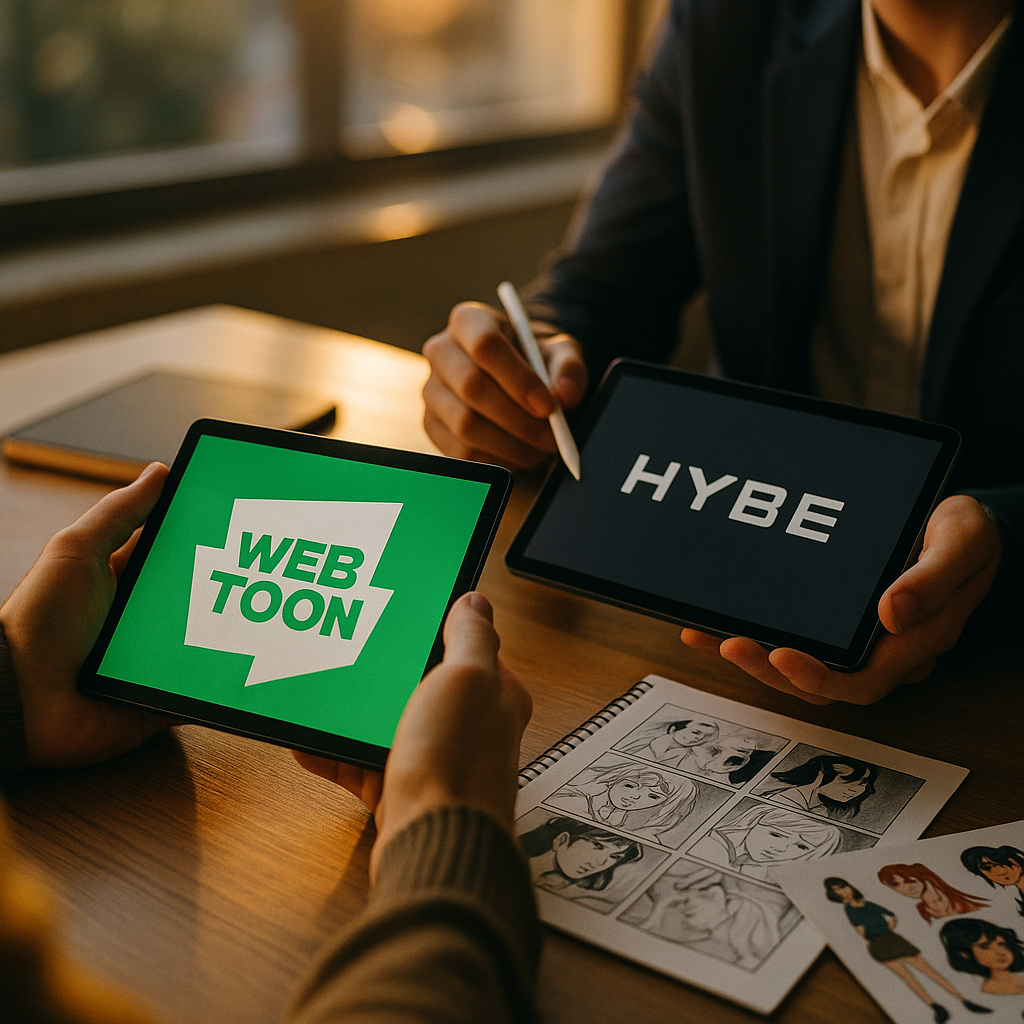
Two companies that didn’t exist in a brand’s media plan five years ago are now hiring the exact talent roles that CMOs are struggling to fill. WEBTOON and HYBE Americas have both posted openings for creator partnerships, talent relations, and influencer strategy leads in recent months. That’s not a staffing footnote. It’s a signal that the creator hiring race just got a lot more crowded, and brands are no longer competing only against each other for talent and attention.
The Hiring Moves Nobody Saw Coming
WEBTOON, the webcomics platform owned by Naver, has quietly built out roles focused on creator monetization and partnership management. HYBE Americas, the US arm of the K-pop powerhouse behind BTS and a growing roster of global acts, has gone further, recruiting for positions that look almost identical to the influencer marketing manager roles sitting inside CPG and retail brands right now.
This isn’t an isolated blip. It follows a broader pattern already covered in our look at the Discord, WEBTOON, HYBE hiring spree, where platform companies started treating creator relationships as a core operating function rather than a side deal handled by business development.
Why does this matter to a brand marketer sitting in a budget meeting? Because every platform that hires a dedicated creator relations team is a platform that’s about to get better at locking down exclusive talent, faster content pipelines, and tighter IP control. That’s talent a brand might have wanted for its next campaign.
Why Platforms Are Hiring Like Talent Agencies
WEBTOON’s business model depends on creators who can produce serialized content that keeps readers coming back weekly. HYBE’s model depends on managing artists and expanding into creator-adjacent content formats, think behind-the-scenes series, fan engagement shows, and cross-platform drops. Both companies realized the same thing agencies figured out years ago: creator relationships are an asset class, and someone needs to own the acquisition, retention, and negotiation of that asset full time.
This mirrors what’s happened at YouTube and other major platforms, where internal creator teams have grown substantially to support monetization and partner success. Our earlier coverage of the YouTube UK jobs data showed the same pattern: platform-side hiring forces brand-side teams to build equivalent capability or get outbid on talent relationships.
When platforms start hiring creator talent leads with the same job titles brands use internally, it’s a clear sign the war for creator attention has a new category of competitor, and that competitor controls the distribution pipes too.
HYBE’s move is particularly notable. This is a company that already manages artist rosters at a scale most talent agencies would envy. Bringing that operational muscle into Americas-based creator hiring means they can offer creators things brands can’t easily match: cross-border fan bases, music integration, and production infrastructure built for serialized content.
What This Means for Brand Competition for Talent
Here’s the uncomfortable part. Brands have spent the last several cycles building internal creator teams, in-house content studios, and retainer-based creator relationships. That work isn’t wasted, but it now has to compete against platform companies that can offer creators something brands structurally cannot: ownership stakes in a larger ecosystem, built-in audience discovery, and monetization tools baked into the platform itself.
Think about it from a mid-tier creator’s perspective. A brand offers a one-off sponsored post or a short-term ambassador deal. WEBTOON offers a revenue-share publishing deal with audience infrastructure attached. HYBE offers access to a global entertainment machine. Which deal looks more durable?
This is the same dynamic we flagged in creator franchise strategy coverage: brands that treat creator relationships as transactional spend will keep losing out to organizations offering creators a long-term stake in something bigger. Platforms are now that “something bigger.”
The Budget Math Brands Need to Run
If platforms are raising the price of creator loyalty by offering better structural deals, brand marketers need to recalculate what “competitive” looks like. A few questions worth asking in your next planning cycle:
- Are you offering creators anything beyond a single campaign fee, or is every deal purely transactional?
- Do you have a retention strategy for creators you’ve worked with more than twice, or are you starting from zero every quarter?
- Is your legal and IP framework flexible enough to co-create, not just license content, the way platform-owned studios now operate?
Our analysis of creator studios and IP renegotiation dug into exactly this problem. Brands that still treat content licensing as a boilerplate clause are going to lose creators to entities offering cleaner, more creator-favorable terms.
Retention, Not Just Reach, Is the New Battleground
There’s a reason platform hiring postings increasingly use titles like “creator relationship manager” instead of “influencer marketing coordinator.” Relationship implies longevity. Coordinator implies a transaction. Brands that are serious about competing need to shift their internal vocabulary and their org charts to match.
We’ve already seen boards move away from follower count as a north star metric in favor of retention rate, a shift documented in creator retention benchmarks. That shift matters even more now. If WEBTOON and HYBE are optimizing for creator retention at the platform level, brands optimizing only for reach per campaign are playing a different, weaker game.
According to eMarketer, creator economy spend continues to climb year over year, but the share going to long-term partnerships versus one-off posts has been rising steadily. That trend line should worry any brand still running influencer programs through a procurement-style RFP process.
Is In-House Creator Talent Still Worth Building?
Short answer: yes, but the bar just moved. Brands debating whether to build internal creator ops teams or lean on agencies should read this moment as additional pressure to professionalize, not a reason to retreat. The rise of the creator operations strategist role inside brand organizations was already a response to this kind of competitive pressure. Platforms entering the hiring race just raises the stakes.
It also reinforces a point we made in our coverage of creator lifecycle ownership: someone inside the brand needs to own the full relationship arc, discovery, negotiation, activation, renewal, or that relationship will leak to whoever offers a more coherent long-term deal. Right now, that competitor might be a webcomics platform or a K-pop entertainment company, not another brand.
Agencies aren’t off the hook either. Our data on the agency versus in-house reversal showed brands shifting back toward agency partners for execution speed. If platforms are now absorbing top creator talent into owned ecosystems, agencies will need sharper sourcing capability to keep client rosters competitive.
The Compliance Angle Brands Can’t Ignore
When creators split time between platform-owned content deals and brand sponsorships, disclosure and compliance get messier. A creator under a HYBE-style content partnership and a brand sponsorship simultaneously needs clear guardrails on what’s disclosed, how, and under whose contract terms. The FTC’s endorsement guidelines still apply regardless of who else is paying that creator, and brand legal teams should be auditing contracts now, not after a dispute surfaces.
This also ties into broader platform risk management. Our piece on enterprise platform risk strategy makes the case that fragmented tools and fragmented creator relationships both increase compliance exposure. Add platform-owned talent pools to the mix, and the case for consolidated oversight gets stronger.
What Brands Should Do Before the Next Hiring Cycle
Don’t wait for a quarterly review to react to this. A few moves worth making now:
- Audit your top-performing creator relationships and identify which ones are at risk of being absorbed into a platform-owned deal structure.
- Benchmark your creator compensation and deal terms against what platforms like WEBTOON and HYBE are reportedly offering, revenue share, production support, cross-promotion.
- Invest in retention-focused creator ops, not just acquisition. Treat your best creators like partners, not vendors.
- Tighten contract language around disclosure and exclusivity so you’re not caught flat-footed when a creator signs elsewhere.
None of this requires a massive budget shift overnight. It requires a mindset shift: the competition for creator talent no longer looks like a bidding war between brands. It looks like a three-way negotiation between brands, agencies, and platforms that are increasingly acting like talent agencies themselves.
Frequently Asked Questions
Why are WEBTOON and HYBE Americas hiring creator talent roles?
Both companies depend on strong creator relationships to drive their core business, serialized content for WEBTOON and artist and content management for HYBE. Hiring dedicated creator partnership and talent relations staff lets them acquire, retain, and monetize creator relationships directly rather than through ad hoc deals.
Does this mean brands will have less access to top creators?
Not necessarily less access, but more competition. Brands that only offer transactional, one-off deals will find it harder to retain creators who have more structural, long-term offers from platforms. Brands offering genuine partnership terms will remain competitive.
How should brands respond to platforms entering the creator hiring race?
Brands should benchmark their creator deal structures against platform offers, invest in retention focused creator operations, and tighten contract and disclosure language to reduce compliance risk as creators juggle multiple simultaneous partnerships.
Is this trend limited to WEBTOON and HYBE?
No. YouTube, Discord, and other platforms have also expanded creator-facing staff in recent years. WEBTOON and HYBE are notable because their business models are built around content and talent management, making their entry into creator hiring especially direct competition for brand talent strategies.
What internal role should brands prioritize to stay competitive?
A creator lifecycle or operations owner who manages the full relationship arc, discovery, negotiation, activation, and renewal, is increasingly necessary to prevent creator relationships from drifting toward better-structured platform deals.
Top Influencer Marketing Agencies
The leading agencies shaping influencer marketing in 2026
Agencies ranked by campaign performance, client diversity, platform expertise, proven ROI, industry recognition, and client satisfaction. Assessed through verified case studies, reviews, and industry consultations.
Moburst

-
2

The Shelf
Boutique Beauty & Lifestyle Influencer AgencyA data-driven boutique agency specializing exclusively in beauty, wellness, and lifestyle influencer campaigns on Instagram and TikTok. Best for brands already focused on the beauty/personal care space that need curated, aesthetic-driven content.Clients: Pepsi, The Honest Company, Hims, Elf Cosmetics, Pure LeafVisit The Shelf → -
3

Audiencly
Niche Gaming & Esports Influencer AgencyA specialized agency focused exclusively on gaming and esports creators on YouTube, Twitch, and TikTok. Ideal if your campaign is 100% gaming-focused — from game launches to hardware and esports events.Clients: Epic Games, NordVPN, Ubisoft, Wargaming, Tencent GamesVisit Audiencly → -
4

Viral Nation
Global Influencer Marketing & Talent AgencyA dual talent management and marketing agency with proprietary brand safety tools and a global creator network spanning nano-influencers to celebrities across all major platforms.Clients: Meta, Activision Blizzard, Energizer, Aston Martin, WalmartVisit Viral Nation → -
5

The Influencer Marketing Factory
TikTok, Instagram & YouTube CampaignsA full-service agency with strong TikTok expertise, offering end-to-end campaign management from influencer discovery through performance reporting with a focus on platform-native content.Clients: Google, Snapchat, Universal Music, Bumble, YelpVisit TIMF → -
6

NeoReach
Enterprise Analytics & Influencer CampaignsAn enterprise-focused agency combining managed campaigns with a powerful self-service data platform for influencer search, audience analytics, and attribution modeling.Clients: Amazon, Airbnb, Netflix, Honda, The New York TimesVisit NeoReach → -
7

Ubiquitous
Creator-First Marketing PlatformA tech-driven platform combining self-service tools with managed campaign options, emphasizing speed and scalability for brands managing multiple influencer relationships.Clients: Lyft, Disney, Target, American Eagle, NetflixVisit Ubiquitous → -
8

Obviously
Scalable Enterprise Influencer CampaignsA tech-enabled agency built for high-volume campaigns, coordinating hundreds of creators simultaneously with end-to-end logistics, content rights management, and product seeding.Clients: Google, Ulta Beauty, Converse, AmazonVisit Obviously →