


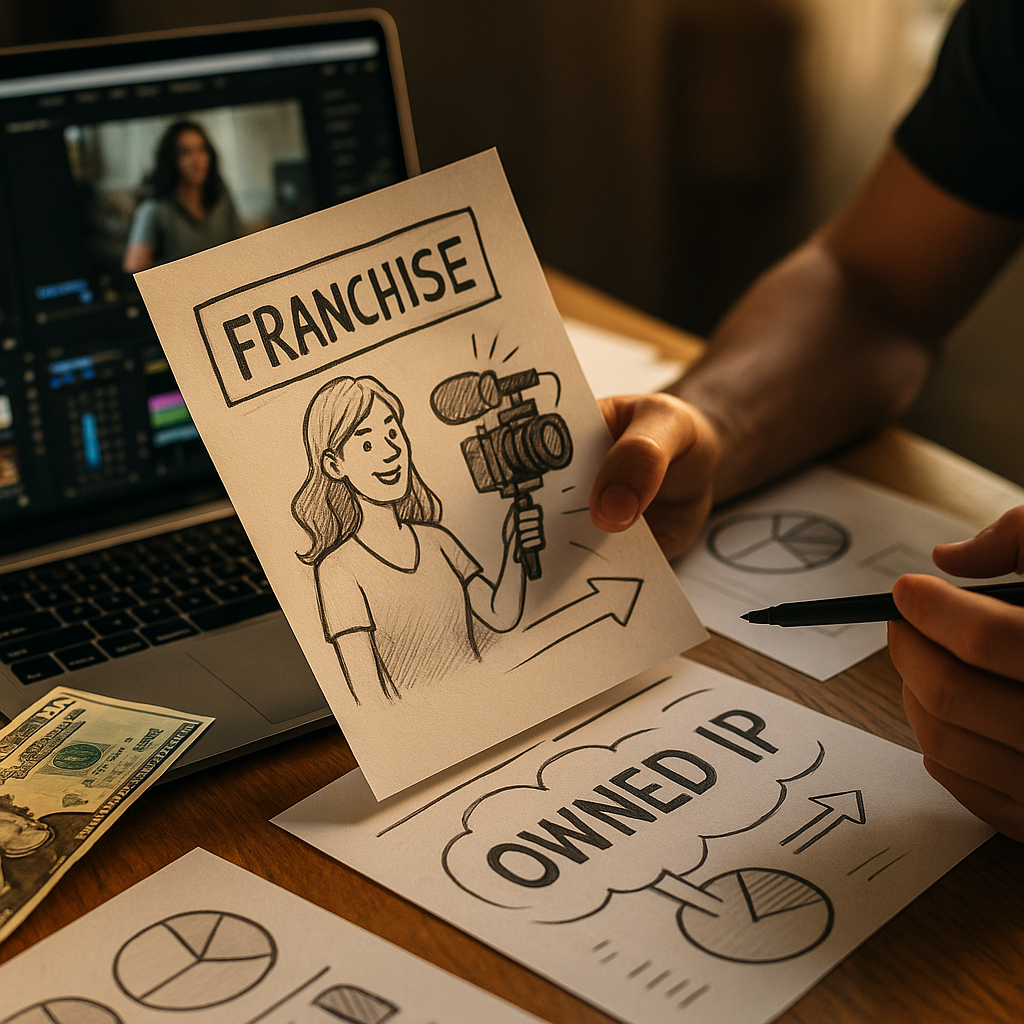
One mid-size beverage brand spent $380,000 on a single creator campaign last quarter. It generated a spike, then nothing. Meanwhile, a competitor invested roughly the same amount in a recurring creator series and is still collecting views, leads, and licensing revenue eight months later. That gap is why creator franchise strategy has become the phrase every brand strategist is now Googling at 11pm before a budget meeting.
The One Off Deal Is Dying, and Brands Know It
For years, influencer marketing ran on a simple transaction: pay a creator, get a post, measure a bump, repeat next quarter. It worked when the channel was young and CPMs were cheap. It stopped working when every competitor started buying the same creators for the same single-use content, flattening differentiation into a sea of interchangeable sponsored posts.
Brands are now asking a harder question. Why rent attention once when you can own a recurring format that compounds? That shift in logic is what’s driving the move toward episodic IP, licensed segments, recurring characters, and branded series that live across TikTok, YouTube, and CTV. It’s not a trend anymore. It’s becoming the default operating model for any brand serious about creator spend.
Brands that commission a recurring creator series retain roughly three times the audience engagement of those running isolated one off posts, because repeat formats build habitual viewing instead of one time impressions.
What Is a Creator Franchise, Exactly?
Think of it less like a sponsored post and more like a TV pilot. A creator franchise is a recurring, branded content property built around a creator or creator duo, with a consistent format, title, visual identity, and release cadence. It might be a weekly product review series, a recurring game show segment, or a scripted mini drama that reappears every month with new episodes.
The brand doesn’t just sponsor an episode. It co-owns the IP, or licenses it outright, which means the content keeps generating value long after the initial flight ends. Reruns, clip compilations, paid amplification, even spinoff merchandise all become possible once a brand has actual rights to the format, not just a one time usage license.
This is a structural departure from the influencer contracts most legal teams are used to. For a deeper look at how ownership terms are being rewritten, see our breakdown on how creator franchises force brands to rewrite licensing contracts.
Why the Math Actually Works Better
Here’s the uncomfortable truth agencies don’t love admitting: a single branded post has a shelf life measured in hours. A franchise has a shelf life measured in seasons. When a brand commissions episode six of a series its audience already follows, it isn’t starting from zero awareness each time. It’s compounding an existing relationship.
- Lower cost per engagement over time, because audience retention from episode to episode reduces the need for fresh discovery spend.
- Owned media value, since franchise IP can be repurposed across paid social, CTV, and retail media without renegotiating usage rights every time.
- Predictable production cadence, which lets brand teams plan content calendars months out instead of chasing trend cycles.
- Built in measurement continuity, because the same format across episodes makes performance benchmarking far cleaner than comparing unrelated one off posts.
This is also why media buyers are paying closer attention to how franchise content performs on connected TV, where episodic formats are a more natural fit than scroll based feeds. Our coverage of how creator led CTV series outpace brand measurement tools is worth a read if your team is weighing a move into streaming placements.
The Brands Already Doing This Well
You don’t need to look far. Beauty brands have been quietly building recurring “get ready with me” series with the same creator pairs for over a year, essentially running a soap opera with product placement baked in. CPG brands are commissioning monthly taste test franchises instead of one off unboxings. Fintech apps are backing recurring explainer series that double as lightweight entertainment, because nobody wants to watch a single sponsored finance video, but plenty will tune in weekly for a familiar host.
What ties these examples together is a willingness to treat the creator relationship less like a vendor engagement and more like a studio partnership. Brands that have made this leap are increasingly trading simple sponsorship for actual co ownership. We covered this shift in detail in brands trade sponsored posts for co owned franchise IP, which is essentially the playbook version of this article.
It also mirrors what’s happening at the infrastructure level. Platforms and talent agencies alike are staffing up for a franchise-first future. The hiring sprees at companies like Discord, WEBTOON, and HYBE aren’t random, they’re a direct signal of where creator power and investment are headed. If you haven’t read our analysis of that hiring spree and what it signals, it’s relevant context for anyone building a franchise strategy right now.
The Risk Nobody’s Budgeting For
Franchise IP sounds great until legal asks who owns the format if the creator walks. This is the part brand teams consistently underestimate. A one off deal has clean, simple risk: you pay, you get content, the relationship ends. A franchise has ongoing risk: character rights, format ownership, creator exclusivity, and what happens to seasons one through four if the talent signs with a competitor mid contract.
Smart brands are solving this with structured IP agreements up front, defining exactly who owns the format versus who owns the creator’s personal likeness, and building in options to recast or rebrand if the relationship sours. This is why creator studios, the production shops that build and manage these franchises on behalf of brands, are becoming a bigger part of the conversation. Their emergence is forcing brands to renegotiate IP and licensing terms that were never designed for recurring content.
There’s also a measurement gap worth flagging. Episodic content doesn’t fit neatly into the attribution models most brands built for single post campaigns. Episode three’s performance is influenced by episodes one and two, which standard last touch measurement tools weren’t built to account for. If your analytics stack still treats every piece of creator content as an isolated event, you’re going to misread franchise performance badly.
How to Actually Start Building One
You don’t need a six figure production budget to test this model. Start small and treat it like a pilot, literally.
- Pick a format, not a creator. Decide on the recurring structure (a weekly review, a monthly challenge, a recurring interview segment) before you lock talent. Formats outlive individual creator relationships.
- Negotiate IP terms before episode one. Define ownership, usage rights, and exit terms in writing. Retrofit contracts almost never go well.
- Commit to a minimum run. Three to six episodes is usually the threshold where audiences start recognizing the format and retention data becomes meaningful.
- Measure retention, not just reach. Franchise success is about whether episode four’s audience includes people from episode one, not just raw view counts.
- Assign ownership internally. Someone on your team needs to own the franchise relationship long term, the same way a creator lifecycle owner role closes agency renewal gaps elsewhere in the funnel.
None of this requires abandoning one off deals entirely. There’s still a place for quick, tactical creator posts around product launches or timely moments. But if your entire creator budget is one off deals and nothing recurring, you’re leaving compounding value on the table, and your competitors are picking it up.
Where This Is Headed
Expect franchise formats to keep migrating toward connected TV and retail media networks over the next few budget cycles, since both channels reward recurring, bingeable content far more than isolated posts. Expect legal teams to get faster at drafting franchise specific contracts as the model matures. And expect measurement vendors to finally build attribution tools that treat episodic series as a single connected asset rather than a string of unrelated posts.
According to industry data tracked by eMarketer, brand spend on recurring creator content formats has been rising steadily as marketers look for more durable returns than single post campaigns typically deliver. That trend lines up with broader shifts in how brands are restructuring creator budgets, something we examined closely in our piece on how brands are rebuilding line items as creators act like media companies.
Platforms are adapting too. TikTok’s advertising tools and Meta’s business platform have both expanded support for series style content formats, recognizing that recurring creator programming keeps users on platform longer than single posts. If you’re building a measurement framework for this, pairing platform native analytics with a third party tool via resources like HubSpot or Sprout Social will give you a more complete retention picture than platform dashboards alone.
None of this absolves brands from basic disclosure compliance, by the way. Franchise or not, every sponsored episode still needs to meet FTC disclosure requirements, and recurring content actually raises the compliance bar since you’re now responsible for consistent labeling across an entire series, not just a single post.
Frequently Asked Questions
FAQs
What makes a creator franchise different from a regular brand sponsorship?
A regular sponsorship pays for a single piece of content with limited usage rights. A creator franchise involves a recurring format with defined IP ownership, meaning the brand can reuse, repurpose, and build on the content across multiple episodes and channels.
How much does it cost to launch a creator franchise compared to one off deals?
Initial per episode costs are often similar to a standard sponsored post, but total program costs are usually higher upfront because brands commit to a multi episode run and often negotiate IP rights, which adds legal and production overhead compared to a single transaction.
Who owns the content if a creator franchise ends or the creator leaves?
This depends entirely on the contract. Brands should negotiate explicit IP ownership terms before production begins, specifying who retains rights to the format, title, and existing episodes if the relationship ends or the creator departs.
Can small and mid-size brands realistically run a creator franchise?
Yes. A franchise doesn’t require a large production budget, it requires a consistent format and a committed run of at least three to six episodes. Many mid-size brands start with a simple recurring segment before scaling production value.
How should brands measure the success of a creator franchise versus a one off post?
Franchise success should be measured on audience retention across episodes, not just individual view counts. Tracking whether viewers return for subsequent episodes is a stronger indicator of franchise value than isolated reach metrics.
If your next planning cycle still has a line item called “one off creator posts,” that’s the first thing to cut. Redirect it toward a single pilot franchise, lock the IP terms before you shoot episode one, and measure retention from day one instead of waiting for quarter end to find out it didn’t stick.
Top Influencer Marketing Agencies
The leading agencies shaping influencer marketing in 2026
Agencies ranked by campaign performance, client diversity, platform expertise, proven ROI, industry recognition, and client satisfaction. Assessed through verified case studies, reviews, and industry consultations.
Moburst

-
2

The Shelf
Boutique Beauty & Lifestyle Influencer AgencyA data-driven boutique agency specializing exclusively in beauty, wellness, and lifestyle influencer campaigns on Instagram and TikTok. Best for brands already focused on the beauty/personal care space that need curated, aesthetic-driven content.Clients: Pepsi, The Honest Company, Hims, Elf Cosmetics, Pure LeafVisit The Shelf → -
3

Audiencly
Niche Gaming & Esports Influencer AgencyA specialized agency focused exclusively on gaming and esports creators on YouTube, Twitch, and TikTok. Ideal if your campaign is 100% gaming-focused — from game launches to hardware and esports events.Clients: Epic Games, NordVPN, Ubisoft, Wargaming, Tencent GamesVisit Audiencly → -
4

Viral Nation
Global Influencer Marketing & Talent AgencyA dual talent management and marketing agency with proprietary brand safety tools and a global creator network spanning nano-influencers to celebrities across all major platforms.Clients: Meta, Activision Blizzard, Energizer, Aston Martin, WalmartVisit Viral Nation → -
5

The Influencer Marketing Factory
TikTok, Instagram & YouTube CampaignsA full-service agency with strong TikTok expertise, offering end-to-end campaign management from influencer discovery through performance reporting with a focus on platform-native content.Clients: Google, Snapchat, Universal Music, Bumble, YelpVisit TIMF → -
6

NeoReach
Enterprise Analytics & Influencer CampaignsAn enterprise-focused agency combining managed campaigns with a powerful self-service data platform for influencer search, audience analytics, and attribution modeling.Clients: Amazon, Airbnb, Netflix, Honda, The New York TimesVisit NeoReach → -
7

Ubiquitous
Creator-First Marketing PlatformA tech-driven platform combining self-service tools with managed campaign options, emphasizing speed and scalability for brands managing multiple influencer relationships.Clients: Lyft, Disney, Target, American Eagle, NetflixVisit Ubiquitous → -
8

Obviously
Scalable Enterprise Influencer CampaignsA tech-enabled agency built for high-volume campaigns, coordinating hundreds of creators simultaneously with end-to-end logistics, content rights management, and product seeding.Clients: Google, Ulta Beauty, Converse, AmazonVisit Obviously →