


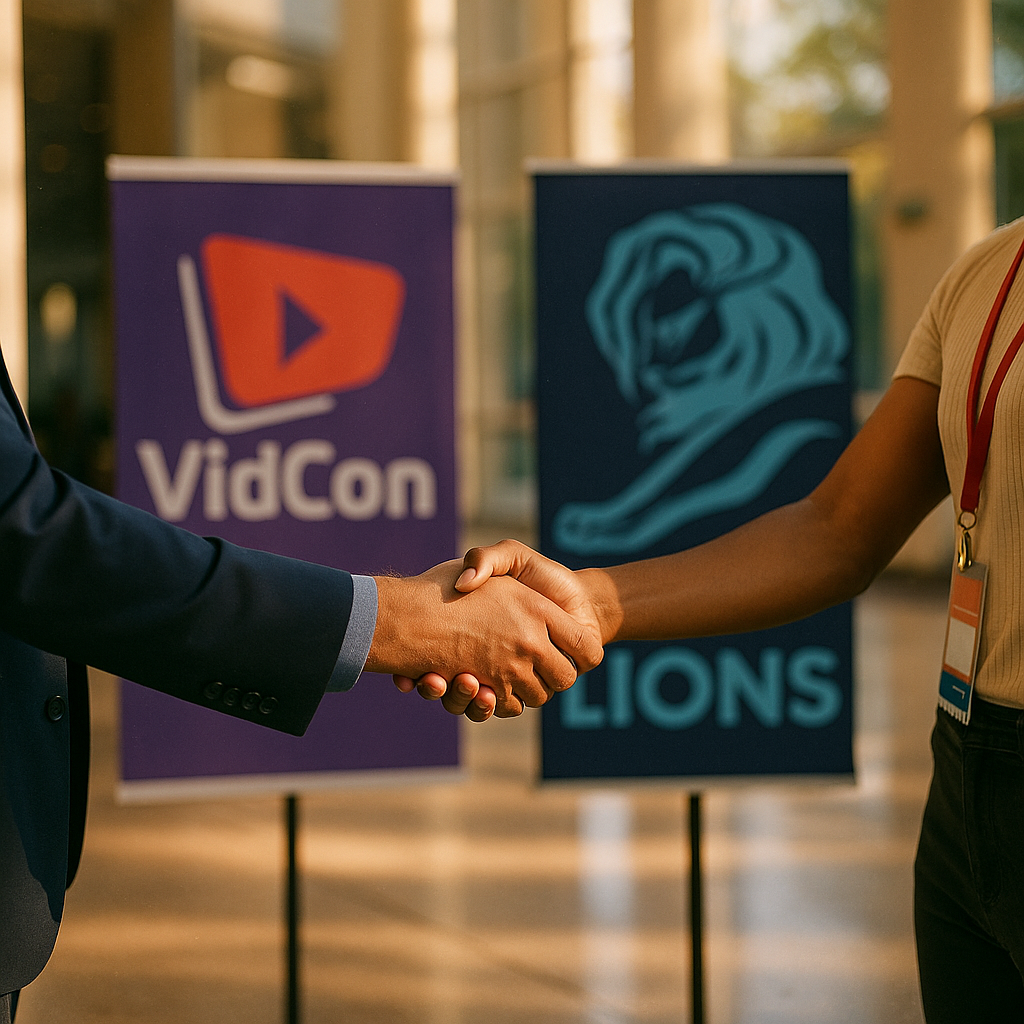
VidCon just stopped being a standalone creator convention and became a line item inside one of advertising’s biggest holding structures. The announcement that VidCon is joining LIONS, the parent organization behind Cannes Lions, lands at a moment when half the event calendar marketers relied on five years ago has already disappeared. If you manage a creator budget, this deal is not trivia. It is a signal about where influencer marketing sits in the broader ad economy, and who gets to set the price of admission.
What the VidCon LIONS Deal Actually Changes
On paper, this looks like a simple acquisition. LIONS, which built its brand on prestige awards shows and executive summits, now owns the largest creator fan convention in North America. In practice, it merges two very different audiences: the Cannes crowd of CMOs and agency holding company executives, and the VidCon crowd of creators, MCNs, and platform reps chasing audience growth.
That matters because VidCon was never just a fan event. It functioned as a de facto trade show for the influencer marketing industry, where brand partnerships teams scouted talent, platforms launched creator funds, and MCNs pitched roster deals. Folding that into LIONS signals an intent to formalize creator marketing as a budget category that sits alongside traditional advertising, not a scrappy adjacent discipline that brands funded out of experimental budgets.
When a creator convention gets absorbed by the same company that runs Cannes Lions, it tells every CFO in the building that influencer spend is no longer a rounding error on the media plan.
Why Is Festival Consolidation Happening Now?
This is not an isolated move. The event calendar across marketing has been shrinking for several cycles, and we have tracked it closely, including in our coverage of how a shrinking event calendar is forcing brands to pick fewer conferences rather than spreading travel budgets thin. The fall circuit told the same story: fewer, smarter creator budgets, not more events competing for the same marketing dollars, as we noted when covering the fall conference circuit.
Three forces are driving the roll up. First, travel and sponsorship budgets tightened industry wide after several years of belt tightening, and eMarketer data has repeatedly shown marketers prioritizing measurable channels over brand awareness plays like event sponsorships. Second, holding companies and event groups realized that owning the creator pipeline, not just the agency pitch meetings, gives them leverage over where brand dollars actually land. Third, creators themselves have matured into media companies with their own production arms, a shift we detailed in creators as media companies, which means the events built to serve them need enterprise grade infrastructure, not a scrappy convention center booth.
Put simply: smaller, independent events cannot compete on data, sponsorship packaging, or global reach against a consolidated player. VidCon joining LIONS is the creator economy’s version of what already happened in digital advertising, where a handful of platforms absorbed the ad tech middle layer.
The Budget Math Brands Need to Run
Here is the practical question every brand strategist should be asking right now: does this merger make creator event spend more efficient, or does it just raise the price of entry?
Early signals point toward consolidation of sponsorship tiers. Expect LIONS to bundle VidCon activations with Cannes adjacent packages, meaning brands that want a presence at both will likely see combined pricing rather than separate negotiations. That can cut procurement overhead, but it also raises the floor for entry. Mid-tier brands that used VidCon as an affordable alternative to Cannes may get priced out entirely.
This mirrors a pattern we have already flagged around sub $5 blended CPMs forcing brands to rebuild entire budget models, covered in our piece on blended CPM economics. When the unit economics of a channel shift, brands that do not recalculate their cost per impression or cost per lead assumptions end up overpaying without realizing it. The same logic applies to event sponsorships now carrying a LIONS premium.
A sponsorship line that cost $75,000 at a standalone VidCon could easily become part of a six figure bundled package once LIONS controls pricing, and brands need to model that before next year’s budget cycle closes.
What This Means for Creator Vetting and Talent Scouting
Brands have historically used VidCon as a scouting ground, a place to meet mid-tier creators before they get locked into expensive management deals. Consolidation under LIONS could formalize that process, which sounds efficient but introduces new risk. A more corporate, pay to play structure may push out the grassroots creators who made VidCon valuable in the first place, replacing organic discovery with curated rosters that MCNs and agencies pay to feature.
That risk is not theoretical. We covered how mega creator rosters assembled without proper vetting create real brand exposure in mega creator rosters without vetting. If LIONS turns VidCon into a pay to play showcase, brand teams need to apply the same due diligence they would use for any paid media placement, not assume festival presence equals vetted quality.
There is an upside too. A more structured event under a global events company could bring better data transparency, standardized reporting on creator reach, and tighter brand safety protocols than the scrappier independent version ever offered. Sprout Social and similar platforms have been pushing the industry toward unified measurement standards for years, and a LIONS owned VidCon could finally adopt them at scale.
Conference Budgets Are Becoming Portfolio Decisions
Marketing leaders now treat the event calendar the way they treat media mix, as a portfolio to optimize rather than a checklist to complete. NAB Show New York already pushed brands toward five specific budget shifts, detailed in our coverage of NAB Show New York, and Content Marketing World turned AI hype into actual line items worth funding, as we broke down in Content Marketing World’s AI shift.
VidCon joining LIONS fits the same pattern: fewer independent events, more consolidated mega conferences that try to cover creator discovery, measurement, and executive networking under one roof. That is good news for travel budgets. It is bad news for brands who liked having specialized, lower cost options for different objectives. You used to send your junior partnerships manager to VidCon and your CMO to Cannes. Now that distinction gets blurrier, and so does the budget justification for sending both.
According to Statista, global spend on influencer marketing continues to climb year over year, which means the stakes for getting event ROI right keep rising too. A bad bet on the wrong consolidated conference now costs more than it did when VidCon and Cannes were separate, lower priced options.
How Should Brands Respond?
Do not wait for LIONS to publish pricing before building a response plan. A few moves make sense immediately.
- Audit your current event spend against outcomes. Pull attendance data from the last two years and map it against actual creator deals signed, not just badges scanned.
- Assign ownership. Someone on your team needs to own the creator lifecycle relationship end to end, closing the gaps that typically open up between agency renewals and internal expectations, a problem we unpacked in creator lifecycle ownership.
- Negotiate bundled packages early. If LIONS is combining sponsorship tiers across its portfolio, early movers will likely get better terms than brands that wait until the packages are locked.
- Diversify discovery channels. Do not rely solely on consolidated festivals for talent scouting. Platform native tools and agency partnerships remain valid, often cheaper, alternatives.
Brand creator misalignment, not budget size, is usually what caps real ROI on influencer programs, a point we made directly in brand creator misalignment. Consolidated festivals will not fix that problem automatically. They might even mask it behind more polished marketing and bigger keynote stages.
Takeaway
Treat the VidCon LIONS merger as a pricing and access signal, not a reason to panic. Lock in next year’s sponsorship conversations now, before bundled packages replace the standalone rates you have budgeted around, and keep your creator vetting process independent of whatever the festival circuit decides to sell you.
Frequently Asked Questions
What does VidCon joining LIONS mean for brand sponsorship costs?
Expect bundled pricing that combines VidCon activations with other LIONS properties like Cannes Lions. This likely raises the entry cost for mid-tier brands while offering more negotiating leverage to larger advertisers who sponsor across multiple LIONS events.
Will VidCon still function as a creator talent scouting event?
It should, but expect a more structured, pay to play format. Brands should apply the same vetting standards they use for any paid creator placement rather than assuming festival presence guarantees quality or audience fit.
How should brands adjust event budgets in response to festival consolidation?
Audit past event spend against actual outcomes, negotiate bundled sponsorship terms early, and diversify creator discovery beyond festival attendance to avoid overpaying for access that used to be available at lower independent event rates.
Is festival consolidation a sign the creator economy is maturing?
Largely yes. Holding companies absorbing creator focused events signals that influencer marketing budgets are being treated with the same rigor as traditional ad spend, which brings both better measurement standards and higher costs of entry.
Does this change how brands should measure creator event ROI?
Yes. Brands should map attendance and sponsorship costs directly against signed creator deals and campaign outcomes, not vanity metrics like booth traffic or badge scans, since consolidated pricing raises the cost of getting that calculation wrong.
Top Influencer Marketing Agencies
The leading agencies shaping influencer marketing in 2026
Agencies ranked by campaign performance, client diversity, platform expertise, proven ROI, industry recognition, and client satisfaction. Assessed through verified case studies, reviews, and industry consultations.
Moburst

-
2

The Shelf
Boutique Beauty & Lifestyle Influencer AgencyA data-driven boutique agency specializing exclusively in beauty, wellness, and lifestyle influencer campaigns on Instagram and TikTok. Best for brands already focused on the beauty/personal care space that need curated, aesthetic-driven content.Clients: Pepsi, The Honest Company, Hims, Elf Cosmetics, Pure LeafVisit The Shelf → -
3

Audiencly
Niche Gaming & Esports Influencer AgencyA specialized agency focused exclusively on gaming and esports creators on YouTube, Twitch, and TikTok. Ideal if your campaign is 100% gaming-focused — from game launches to hardware and esports events.Clients: Epic Games, NordVPN, Ubisoft, Wargaming, Tencent GamesVisit Audiencly → -
4

Viral Nation
Global Influencer Marketing & Talent AgencyA dual talent management and marketing agency with proprietary brand safety tools and a global creator network spanning nano-influencers to celebrities across all major platforms.Clients: Meta, Activision Blizzard, Energizer, Aston Martin, WalmartVisit Viral Nation → -
5

The Influencer Marketing Factory
TikTok, Instagram & YouTube CampaignsA full-service agency with strong TikTok expertise, offering end-to-end campaign management from influencer discovery through performance reporting with a focus on platform-native content.Clients: Google, Snapchat, Universal Music, Bumble, YelpVisit TIMF → -
6

NeoReach
Enterprise Analytics & Influencer CampaignsAn enterprise-focused agency combining managed campaigns with a powerful self-service data platform for influencer search, audience analytics, and attribution modeling.Clients: Amazon, Airbnb, Netflix, Honda, The New York TimesVisit NeoReach → -
7

Ubiquitous
Creator-First Marketing PlatformA tech-driven platform combining self-service tools with managed campaign options, emphasizing speed and scalability for brands managing multiple influencer relationships.Clients: Lyft, Disney, Target, American Eagle, NetflixVisit Ubiquitous → -
8

Obviously
Scalable Enterprise Influencer CampaignsA tech-enabled agency built for high-volume campaigns, coordinating hundreds of creators simultaneously with end-to-end logistics, content rights management, and product seeding.Clients: Google, Ulta Beauty, Converse, AmazonVisit Obviously →