


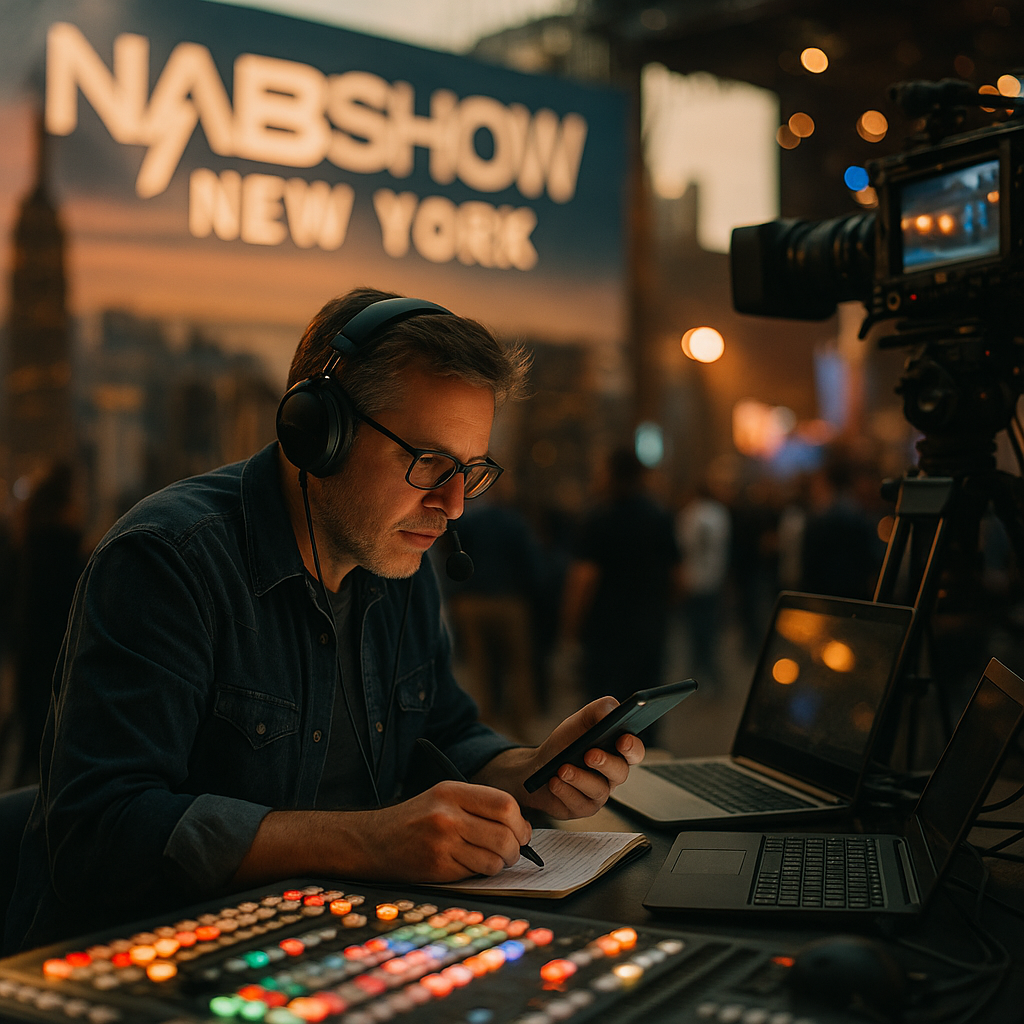
NAB Show New York 2026 drew a different crowd than it did five years ago. Broadcast engineers still packed the floor, but the loudest conversations happened in sessions about creator licensing, AI-generated content disclosure, and retail media tie-ins. If you lead brand or agency strategy and skipped it, here’s the problem: the five signals that surfaced there will shape your next budget cycle whether you were in the room or not.
Creator Content Is Now a Licensing Problem, Not a Media Buy
For years, brands treated influencer content like a media placement. Pay for the post, run it, move on. That model is breaking. Panels at NAB Show New York featured entertainment lawyers and rights management vendors discussing how creator-made video now gets licensed, reformatted, and resold across platforms the original deal never contemplated.
This matters because brands increasingly want to repurpose creator content into paid ads, retail displays, and even connected TV spots. Without airtight usage rights baked into the original contract, that’s a legal exposure waiting to happen. The shift toward bundled deals, where media, creative production, and endorsement rights get priced as one package, is already changing how procurement teams negotiate. We’ve covered how creator deals bundle media and endorsement rights into single contracts, and NAB sessions confirmed this is accelerating, not slowing.
The bigger trend underneath this: creators with recurring characters, formats, or franchises are forcing brands to rewrite how they license intellectual property altogether. That’s not a niche legal issue anymore. It’s a budget line.
Brands that still treat influencer contracts as simple “post and done” agreements are the ones most likely to get caught flat-footed when that content resurfaces in a competitor’s retargeting campaign eighteen months later.
What This Means for Your Legal Review Process
If your legal team isn’t already reviewing creator contracts with the same rigor as traditional talent licensing, start now. Ask specifically about usage windows, platform exclusivity, and whether AI training rights are addressed. Most standard influencer agreements from two years ago say nothing about whether a brand can use creator likeness to train a generative model. That gap is already costing brands negotiating leverage.
Retail Media and Creator Content Are Merging at the Point of Sale
NAB’s retail technology track leaned hard into phygital commerce this year. Vendors showed QR-code activations that tie a creator’s video directly to in-store purchase data, closing the attribution loop that’s plagued influencer marketing since the beginning.
This isn’t theoretical. We’ve reported on how QR-tied creator campaigns prove phygital pays off at checkout, and NAB exhibitors are now building hardware and software specifically to capture that data in real time. For brand leaders tired of justifying influencer spend with vanity metrics, this is the attribution model finance teams have been asking for.
Retailers are paying attention too. Expect more retail media networks to court creators directly, cutting out some of the traditional agency middle layer. If you haven’t mapped how your creator program intersects with your retail media strategy, that’s your next planning meeting.
AI Disclosure Rules Are Tightening Faster Than Brands Are Adapting
A recurring theme across NAB’s AI-focused sessions: regulators and platforms are moving faster on synthetic content labeling than most marketing teams realize. The Federal Trade Commission has signaled ongoing scrutiny of undisclosed AI-generated endorsements, and the UK’s Information Commissioner’s Office continues to publish guidance on synthetic media transparency that touches advertising.
Why does this matter for creator partnerships specifically? Because a growing share of “creator” content now includes AI-assisted editing, voice cloning, or fully synthetic avatars standing in for human talent. Brands that don’t have a clear disclosure policy baked into their creator briefs are exposed to regulatory risk they probably haven’t modeled.
Practical fix: add an AI-use disclosure clause to every creator contract template this quarter. Specify what counts as AI assistance, require disclosure in the content itself where platforms mandate it, and keep a record. It’s a small operational lift now versus a compliance headache later.
Agencies Are Winning Back Ground from In-House Teams
This one surprised some attendees. After years of brands building in-house creator teams to cut agency fees, NAB panels pointed to a reversal. Agencies with specialized creator vetting tools, data infrastructure, and platform relationships are outperforming internal teams on speed and risk management.
We’ve tracked this shift in detail: a recent 43 percent reversal signals agencies beating in-house teams on key performance measures, and NAB speakers echoed the same finding from a different angle, specifically around vetting mega-creator rosters for brand safety. One agency executive on a panel noted that in-house teams often lack the tooling to screen creator rosters at scale, which leaves brands exposed to the kind of reputational risk we detailed in our piece on mega creator rosters without proper vetting.
That doesn’t mean bring back every function you brought in-house. It means the calculus has shifted. Run the math again on cost-per-vetted-creator before assuming in-house is still cheaper.
The Event Calendar Itself Is Becoming a Strategic Filter
Here’s a meta-signal worth noting: the fact that NAB Show New York is now a meaningful creator economy event at all says something. Marketing conferences are consolidating. Budget-conscious teams are choosing fewer, higher-yield events rather than spreading travel and sponsorship dollars thin.
We’ve written about how the shrinking event calendar forces brands to pick fewer conferences, and that same logic applies to where brands show up for creator economy intelligence. Expect events like Advertising Week and Content Marketing World to keep fighting for the same attention and sponsorship budgets that used to be split across a dozen smaller gatherings. NAB’s pivot toward creator content, licensing, and AI governance is a direct response to that competition. If broadcast-focused shows don’t adapt their programming to cover what marketing leaders actually care about, they’ll lose relevance fast.
For brand leaders, this is a planning cue. Audit your own conference attendance budget against actual deal flow and intelligence gained, not habit. According to eMarketer, marketing budgets overall remain under pressure even as creator spend grows, which means every travel and sponsorship dollar needs to justify itself harder than it did two years ago.
What Brand Leaders Should Do With This Information
None of these five signals exist in isolation. Licensing complexity, retail attribution, AI disclosure, agency resurgence, and event consolidation are all symptoms of the same underlying shift: the creator economy is maturing into a regulated, data-rich, professionally managed discipline. The improvisational era is ending.
That’s good news if you’re prepared. It’s a liability if you’re still running creator programs the way you did three years ago.
- Update creator contract templates to address AI usage, licensing scope, and cross-platform resale rights.
- Build or buy attribution infrastructure that connects creator content to retail point-of-sale data.
- Reassess your agency versus in-house mix based on vetting capability, not just cost per post.
- Audit conference and sponsorship spend against measurable deal flow.
Platforms like Sprout Social and reporting tools from HubSpot increasingly build attribution and compliance features directly into their creator workflow modules, which suggests the market already expects brands to operationalize these five shifts rather than treat them as one-off news items.
Frequently Asked Questions
What was the biggest creator economy theme at NAB Show New York?
Content licensing and rights management dominated conversations, specifically how brands can legally repurpose creator-made video across platforms and formats without renegotiating every time.
Why are retail media networks getting involved with creator marketing?
Retailers want direct attribution from creator content to in-store or online purchase, and QR-tied campaigns now make that tracking possible at checkout, closing a gap that’s frustrated marketers for years.
How should brands handle AI disclosure in creator contracts?
Add a clause defining what counts as AI assistance, require on-content disclosure where platforms or regulators mandate it, and keep documentation in case of FTC or ICO inquiry.
Are agencies really outperforming in-house creator teams again?
Recent data points to agencies winning back ground, largely due to better vetting infrastructure and faster access to platform relationships that in-house teams often lack the tooling to replicate.
Should brands attend more creator economy events or fewer?
Fewer, higher-yield events. Budget pressure is pushing brands to consolidate conference spend toward shows that deliver measurable deal flow rather than general networking.
Frequently Asked Questions
What was the biggest creator economy theme at NAB Show New York?
Content licensing and rights management dominated conversations, specifically how brands can legally repurpose creator-made video across platforms and formats without renegotiating every time.
Why are retail media networks getting involved with creator marketing?
Retailers want direct attribution from creator content to in-store or online purchase, and QR-tied campaigns now make that tracking possible at checkout, closing a gap that’s frustrated marketers for years.
How should brands handle AI disclosure in creator contracts?
Add a clause defining what counts as AI assistance, require on-content disclosure where platforms or regulators mandate it, and keep documentation in case of FTC or ICO inquiry.
Are agencies really outperforming in-house creator teams again?
Recent data points to agencies winning back ground, largely due to better vetting infrastructure and faster access to platform relationships that in-house teams often lack the tooling to replicate.
Should brands attend more creator economy events or fewer?
Fewer, higher-yield events. Budget pressure is pushing brands to consolidate conference spend toward shows that deliver measurable deal flow rather than general networking.
The brands that treat these five signals as a checklist, not a trend piece, will enter next year’s budget cycle with contracts, attribution, and compliance already locked down. Start with your creator contract template this week; it’s the fastest fix with the highest downside risk if ignored.
Top Influencer Marketing Agencies
The leading agencies shaping influencer marketing in 2026
Agencies ranked by campaign performance, client diversity, platform expertise, proven ROI, industry recognition, and client satisfaction. Assessed through verified case studies, reviews, and industry consultations.
Moburst

-
2

The Shelf
Boutique Beauty & Lifestyle Influencer AgencyA data-driven boutique agency specializing exclusively in beauty, wellness, and lifestyle influencer campaigns on Instagram and TikTok. Best for brands already focused on the beauty/personal care space that need curated, aesthetic-driven content.Clients: Pepsi, The Honest Company, Hims, Elf Cosmetics, Pure LeafVisit The Shelf → -
3

Audiencly
Niche Gaming & Esports Influencer AgencyA specialized agency focused exclusively on gaming and esports creators on YouTube, Twitch, and TikTok. Ideal if your campaign is 100% gaming-focused — from game launches to hardware and esports events.Clients: Epic Games, NordVPN, Ubisoft, Wargaming, Tencent GamesVisit Audiencly → -
4

Viral Nation
Global Influencer Marketing & Talent AgencyA dual talent management and marketing agency with proprietary brand safety tools and a global creator network spanning nano-influencers to celebrities across all major platforms.Clients: Meta, Activision Blizzard, Energizer, Aston Martin, WalmartVisit Viral Nation → -
5

The Influencer Marketing Factory
TikTok, Instagram & YouTube CampaignsA full-service agency with strong TikTok expertise, offering end-to-end campaign management from influencer discovery through performance reporting with a focus on platform-native content.Clients: Google, Snapchat, Universal Music, Bumble, YelpVisit TIMF → -
6

NeoReach
Enterprise Analytics & Influencer CampaignsAn enterprise-focused agency combining managed campaigns with a powerful self-service data platform for influencer search, audience analytics, and attribution modeling.Clients: Amazon, Airbnb, Netflix, Honda, The New York TimesVisit NeoReach → -
7

Ubiquitous
Creator-First Marketing PlatformA tech-driven platform combining self-service tools with managed campaign options, emphasizing speed and scalability for brands managing multiple influencer relationships.Clients: Lyft, Disney, Target, American Eagle, NetflixVisit Ubiquitous → -
8

Obviously
Scalable Enterprise Influencer CampaignsA tech-enabled agency built for high-volume campaigns, coordinating hundreds of creators simultaneously with end-to-end logistics, content rights management, and product seeding.Clients: Google, Ulta Beauty, Converse, AmazonVisit Obviously →