


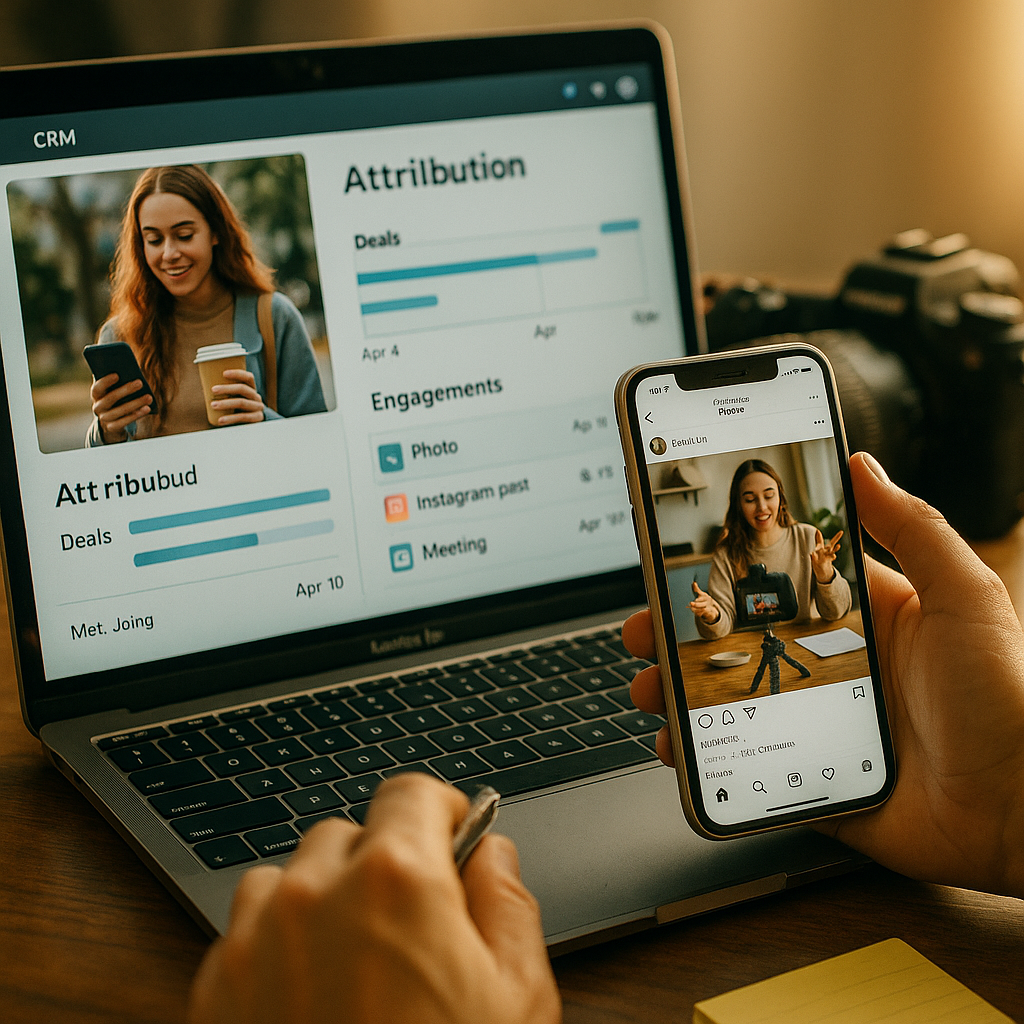
Marketers log an average of just 11% of creator touchpoints manually, according to internal CRM audits cited by HubSpot’s own product team. That gap between what actually happens in a creator relationship and what shows up in your CRM has quietly been costing brands attribution accuracy for years. Smart CRM auto-capture is HubSpot’s attempt to close it, and it changes more about creator relationship tracking than most marketing ops leads have clocked yet.
What Smart CRM Auto-Capture Actually Does
Smart CRM auto-capture is HubSpot’s expanded data layer that automatically logs emails, calls, meeting notes, and now creator-specific interactions (DM exchanges synced through connected apps, content submission timestamps, payment milestone triggers) without a human typing anything into a contact record. It’s an extension of the auto-capture logic HubSpot already applies to captured call data, but pushed into the creator workflow specifically.
For brands running influencer programs through HubSpot, this means a creator’s entire lifecycle (first outreach, negotiation thread, contract signature, content delivery, payout) gets stitched into one timeline automatically. No more exporting spreadsheets from three different tools to figure out when a creator actually went quiet.
Is that a good thing? Mostly. But “automatic” and “accurate” aren’t the same word, and that’s where this gets interesting for anyone responsible for program ROI.
Why Manual Tracking Was Already Breaking Down
Here’s the honest version of what most influencer teams were doing before this: an account manager fields a DM pitch on Instagram, moves the conversation to email, negotiates rate over a call, and maybe (maybe) logs a summary in HubSpot three days later if they remember. Multiply that across 40 to 200 active creators and you get a CRM that’s technically populated but functionally unreliable.
This isn’t a HubSpot-specific problem. HubSpot’s own research has repeatedly flagged CRM data entry as the single biggest drag on sales and marketing productivity. Add the multi-platform chaos of creator relationships (Instagram DMs, TikTok Creator Marketplace messages, email, Discord, WhatsApp) and manual logging becomes close to theater. You’re recording what you remember, not what happened.
A CRM built on manual entry doesn’t track your creator relationships. It tracks your account managers’ memory of your creator relationships, and those are not the same dataset.
That distinction matters when finance asks for cost-per-engagement by creator tier, or legal asks when a specific disclosure clause was last discussed with a partner.
The Data Layer Change, Explained Without the Marketing Spin
What HubSpot has actually shipped is a middleware layer that sits between connected communication channels and the CRM object model. Instead of relying on a rep to create an activity log, the system listens for qualifying events (an email thread with a tagged creator contact, a calendar event marked “content review,” a payment trigger from a connected finance tool) and writes the interaction automatically, timestamped and attributed.
This sounds subtle but it’s structurally significant. Previously, creator relationship data lived in silos that required manual bridging. Now the bridging happens at ingestion. It’s the same architectural shift that’s playing out across the martech stack generally, where identity resolution layers are being built to unify fragmented creator attribution data across platforms.
The practical upshot for brand teams: you can now pull a report showing exactly when a creator relationship stalled, how many touchpoints preceded a deal close, and which outreach channel actually converts, without anyone having manually tagged that data. That’s a real operational win if you’re managing creator programs at scale and reporting to a CMO who wants numbers, not anecdotes.
Where This Gets Risky Fast
Auto-capture doesn’t ask permission before it logs something. That’s the design intent, and it’s also the problem. If a creator’s manager emails your team something they expected to stay off the record, informal pricing feedback, a complaint about a brand rep, a personal detail shared in confidence, it now gets written into a permanent, searchable CRM record by default.
We’ve already seen this play out with HubSpot Breeze agent routing, where automated data handling outpaced the consent frameworks brands had in place. Auto-capture raises the same question at a bigger scale, because it’s not one feature, it’s the default data layer underneath nearly every creator touchpoint.
Consider what regulators are already watching. The FTC’s guidance on data collection and consumer disclosures increasingly treats automated logging of third-party communications as a compliance surface, not just a convenience feature. If your creator contracts don’t explicitly address CRM data capture, you have a gap. The UK’s ICO takes a similarly strict view on automated processing of personal data without clear consent mechanisms, and creators increasingly operate across both jurisdictions.
Auto-capture doesn’t create a new compliance problem so much as it makes your existing consent gaps impossible to ignore. Every automated log is a timestamped record of a conversation nobody formally agreed to document.
What Changes for Attribution and ROI Reporting
Set the risk conversation aside for a second, because the upside here is genuinely useful. Attribution has always been the soft underbelly of influencer marketing reporting. Brands can tell you what a campaign cost and roughly what it returned, but the path between “first contact” and “content goes live” has historically been a black box built on inconsistent manual notes.
With auto-captured timelines, marketing ops teams can finally answer questions like:
- How long does it take, on average, to move a creator from first outreach to signed agreement, and where are the bottlenecks?
- Which outreach channel (cold email, platform marketplace, agency introduction) produces the fastest conversion?
- Do creators who received personalized negotiation follow-up close at a meaningfully different rate than those who got templated responses?
That last question connects directly to findings from manual creator vetting research, which found automated personalization alone doesn’t reliably outperform human judgment in creator relationships. Auto-capture gives you the dataset to actually test that claim internally instead of guessing.
It also sharpens budget conversations. If finance can see, down to the timestamp, how many touchpoints a $50,000 creator partnership actually required, that’s a much stronger input into next quarter’s rate negotiations than a gut feeling. This is the same budget-leakage logic explored in coverage of the Maestro engine’s performance against rule-based automation, where granular tracking data directly improved spend discipline.
How This Compares to What Salesforce and Marketo Are Building
HubSpot isn’t alone in this race. Salesforce’s push into creator ops through Agentforce’s marketing cloud expansion is tackling similar ground from the agent-orchestration side rather than the data-capture side. Marketo, meanwhile, has been exposing more raw operational surface through its MCP server architecture, which comes with its own access-governance headaches.
The direct head-to-head matters if you’re choosing a platform right now. A recent comparison of Marketo AI agents against HubSpot Breeze for creator ROI found HubSpot’s edge comes from tighter native integration between capture and reporting, while Marketo’s strength is customizability for teams with dedicated ops engineering resources. Auto-capture widens that gap further in HubSpot’s favor for mid-market brands that don’t have a full-time CRM architect on staff, but it also means you’re more locked into HubSpot’s default data-handling assumptions.
Governance is the recurring theme across all of this tooling, and it’s worth reading alongside broader reporting on how AI agents are replacing rule-based systems faster than governance can keep up. Auto-capture is a data layer, not an agent, but it feeds the same downstream automation that governance frameworks are struggling to regulate.
Practical Steps Before You Flip the Switch
If auto-capture is live or about to go live on your instance, don’t treat it as a passive upgrade. A few things worth doing this quarter:
- Audit your creator contracts for explicit CRM data capture language, not generic data processing clauses.
- Set field-level permissions so sensitive negotiation notes (rates, personal disclosures) route to restricted views rather than default visibility.
- Run a 30-day shadow period where auto-captured data is reviewed against manual logs before you trust it for reporting.
- Brief your creator-facing team on what gets logged automatically, so nobody assumes a casual DM thread is off the record.
None of this is complicated. It’s just easy to skip when a new feature promises to save your team hours of admin work, and that’s exactly when skipping it costs the most.
Bottom line: treat smart CRM auto-capture as infrastructure, not a feature toggle. Pressure-test your consent language and field permissions before launch, then use the resulting data to sharpen attribution and renegotiate rates with actual evidence instead of guesswork.
FAQs
What is smart CRM auto-capture in HubSpot?
It’s a data layer that automatically logs interactions, emails, calls, meeting notes, and creator-specific touchpoints into CRM records without manual entry, timestamping and attributing each event as it occurs.
Does auto-capture work across all creator communication channels?
It works across channels connected to HubSpot through native or third-party integrations, including email, calendar, and certain synced messaging tools. Unconnected channels like raw DMs on some platforms still require manual bridging.
What are the main compliance risks with auto-capture?
The biggest risk is logging communications creators or their reps assumed were informal or off the record, without a clear consent mechanism covering automated CRM capture specifically.
How does auto-capture improve influencer campaign ROI reporting?
It creates a complete, timestamped relationship timeline from first outreach to payout, letting teams measure conversion speed, channel effectiveness, and touchpoint volume per deal with real data instead of manual estimates.
Should smaller brands with limited creator rosters bother with this?
Yes, though the ROI scales with roster size. Even at 15 to 20 active creators, auto-capture removes the admin burden of manual logging and gives smaller teams reporting accuracy previously only available to larger programs with dedicated ops staff.
Top Influencer Marketing Agencies
The leading agencies shaping influencer marketing in 2026
Agencies ranked by campaign performance, client diversity, platform expertise, proven ROI, industry recognition, and client satisfaction. Assessed through verified case studies, reviews, and industry consultations.
Moburst

-
2

The Shelf
Boutique Beauty & Lifestyle Influencer AgencyA data-driven boutique agency specializing exclusively in beauty, wellness, and lifestyle influencer campaigns on Instagram and TikTok. Best for brands already focused on the beauty/personal care space that need curated, aesthetic-driven content.Clients: Pepsi, The Honest Company, Hims, Elf Cosmetics, Pure LeafVisit The Shelf → -
3

Audiencly
Niche Gaming & Esports Influencer AgencyA specialized agency focused exclusively on gaming and esports creators on YouTube, Twitch, and TikTok. Ideal if your campaign is 100% gaming-focused — from game launches to hardware and esports events.Clients: Epic Games, NordVPN, Ubisoft, Wargaming, Tencent GamesVisit Audiencly → -
4

Viral Nation
Global Influencer Marketing & Talent AgencyA dual talent management and marketing agency with proprietary brand safety tools and a global creator network spanning nano-influencers to celebrities across all major platforms.Clients: Meta, Activision Blizzard, Energizer, Aston Martin, WalmartVisit Viral Nation → -
5

The Influencer Marketing Factory
TikTok, Instagram & YouTube CampaignsA full-service agency with strong TikTok expertise, offering end-to-end campaign management from influencer discovery through performance reporting with a focus on platform-native content.Clients: Google, Snapchat, Universal Music, Bumble, YelpVisit TIMF → -
6

NeoReach
Enterprise Analytics & Influencer CampaignsAn enterprise-focused agency combining managed campaigns with a powerful self-service data platform for influencer search, audience analytics, and attribution modeling.Clients: Amazon, Airbnb, Netflix, Honda, The New York TimesVisit NeoReach → -
7

Ubiquitous
Creator-First Marketing PlatformA tech-driven platform combining self-service tools with managed campaign options, emphasizing speed and scalability for brands managing multiple influencer relationships.Clients: Lyft, Disney, Target, American Eagle, NetflixVisit Ubiquitous → -
8

Obviously
Scalable Enterprise Influencer CampaignsA tech-enabled agency built for high-volume campaigns, coordinating hundreds of creators simultaneously with end-to-end logistics, content rights management, and product seeding.Clients: Google, Ulta Beauty, Converse, AmazonVisit Obviously →