


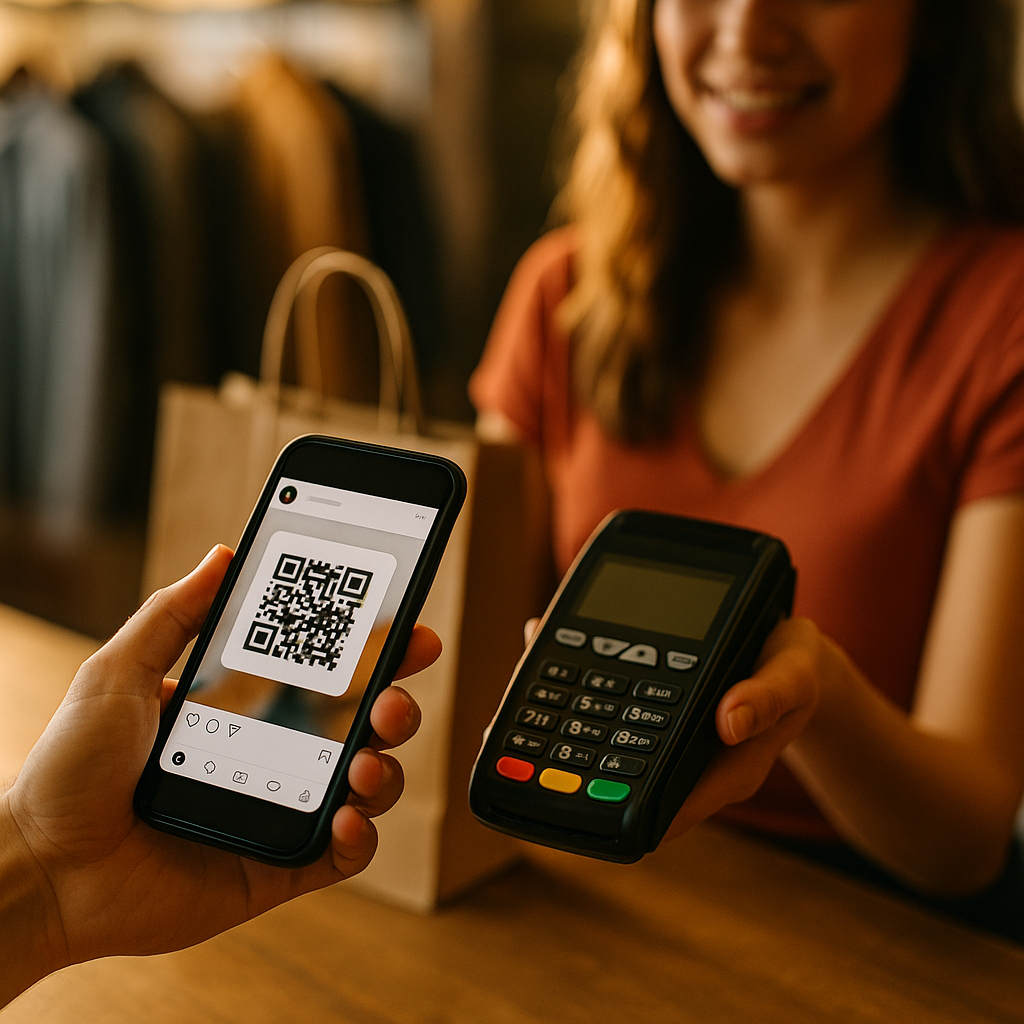
A shopper watches a TikTok haul video, screenshots the store locator, and walks into a mall location within 48 hours. That sequence, once a marketer’s fantasy, is now a tracked, attributed, budget-justifying event. Phygital marketing, the blending of physical retail with digital creator influence, has moved from buzzword to line item. Retailers running creator-tagged in-store promotions are reporting foot traffic lifts that paid social simply cannot match.
The question for brand leads isn’t whether phygital works. It’s whether your measurement stack can prove it before the CFO asks.
Why Foot Traffic Became a Creator KPI
For years, influencer marketing lived entirely online. Views, saves, link clicks. Retail was a separate universe with its own attribution logic (loyalty cards, POS data, geofenced ads). Those two worlds have collided, and the collision is reshaping budgets.
Retail media networks now sit alongside creator programs in the same planning deck. Target, Sephora, and Ulta have all expanded creator partnerships that explicitly push shoppers toward physical locations, not just e-commerce carts. Walgreens and CVS have tested creator-driven “come see it in person” campaigns tied to exclusive in-store drops. The logic is simple: online discovery still ends in a physical transaction for a huge share of categories, especially beauty, apparel, and home goods.
Brands running geofenced creator campaigns tied to specific store locations are seeing foot traffic lifts that outperform standard local awareness ads, largely because the content arrives with built-in trust from a familiar face rather than a banner.
This isn’t just a retail trend story. It’s an attribution story. Our earlier coverage of the phygital shift forcing retail attribution changes flagged this exact pivot months ago: brands that can’t connect a creator post to a store visit are flying blind on half their funnel.
What’s Actually Driving the Shift
Three forces converged to make phygital marketing a 2026 priority instead of a side experiment.
- QR and NFC proliferation. Packaging, shelf-talkers, and window displays now carry scannable codes tied directly to creator campaign IDs, making the digital-to-physical handoff trackable for the first time at scale.
- Retail media maturity. Platforms like Walmart Connect and Kroger Precision Marketing have built infrastructure that can match loyalty card purchases back to upstream media exposure, including creator content.
- Creator fatigue with pure UGC. Audiences are tired of studio-polished ads. Raw, location-tagged content (think “I went to the store and this happened”) performs better precisely because it reads as spontaneous, not scripted.
That last point matters more than it sounds. Meta’s Reels algorithm now favors raw content over studio polish, which means the same low-fidelity clips that drive engagement online are also the ones that read as authentic enough to pull someone off the couch and into a car.
The Numbers Brands Are Actually Chasing
Marketers don’t move budget on vibes anymore. They move it on verified lift. According to eMarketer, retail media spend continues to climb as a share of total marketing budgets, with a growing slice earmarked specifically for creator-driven, location-tagged campaigns. Meanwhile, Statista data on local search and “near me” behavior shows that a majority of mobile searches with local intent result in a store visit within a day, which is exactly the window phygital creator campaigns are built to exploit.
The UK market offers a useful proof point. Our report on UK influencer spend hitting 1.217 billion on verified ROI found that a meaningful chunk of that growth came from campaigns explicitly measured against offline conversion, not just impressions. Brands aren’t just experimenting with phygital anymore. They’re budgeting for it with the same rigor they apply to paid search.
How Brands Are Structuring Phygital Creator Campaigns
The mechanics are less mysterious than they sound. Most successful programs follow a similar architecture:
- Geo-tagged content briefs. Creators are given specific store locations, often with exclusive or early-access products, and asked to film on-site rather than in a studio.
- Trackable calls to action. Unique promo codes, QR codes, or “show this video at checkout” mechanics replace generic swipe-up links.
- Dwell time and visit verification. Mobile location data (via partners like Placer.ai or Foursquare) confirms whether exposed audiences actually entered the store, not just searched for it.
- Closed-loop reporting back to the creator. Some brands now share store-visit data with creators themselves, turning it into a retention tool. Creators who can see their real-world impact tend to renegotiate for longer deals rather than one-off posts.
That last point connects directly to a broader shift in how brands structure creator relationships. As covered in multi-year retainers replacing one-off creator campaigns, phygital success metrics are becoming a key justification for longer-term deals. It’s hard to argue against renewing a creator partnership when you have POS data showing a 12 percent lift in a specific zip code during the campaign window.
Attribution Still Isn’t Solved. Here’s the Honest Gap.
Let’s not pretend this is fully figured out. Matching a specific creator post to a specific store visit still relies on proxies: geofenced impression data, promo code redemption, loyalty program matching. None of it is as clean as a last-click e-commerce conversion.
Inflated metrics remain a real risk here too. If impression counts on the digital side are already questionable, as our piece on inflated impression counts forcing brands to demand verification explored, then layering unreliable digital numbers on top of imprecise foot traffic attribution compounds the problem. Brands need third-party verification on both ends of the funnel, not just one.
Compliance adds another wrinkle. Location-based tracking, especially anything tied to mobile device data, sits under increasing regulatory scrutiny. The FTC has signaled ongoing interest in how location data is collected and shared, and UK brands should keep an eye on ICO guidance around consent for geolocation tracking tied to marketing campaigns. Phygital attribution without clean consent practices is a lawsuit waiting to happen, not a growth channel.
Where This Fits Inside Broader Creator Strategy
Phygital campaigns don’t exist in isolation. They’re increasingly folded into the same creator ops teams handling paid social, affiliate, and retail media. The rise of in-house creator hires at companies like Salesforce and ByteDance, as detailed in our coverage of in-house creator shifts, reflects a broader push to centralize creator strategy so that online and offline metrics live under one roof instead of two competing teams with two competing dashboards.
Short production timelines matter here too. Store-specific drops and limited-time in-store activations move fast, often within a 48-hour trend window. Brands that can’t turn around location-tagged content quickly are already covered in our piece on 48-hour trend lifecycles forcing faster production, and the same speed pressure applies directly to phygital campaigns tied to a single weekend promotion or flash in-store event.
A Quick Gut Check for Brands Considering Phygital
Before greenlighting a phygital creator campaign, ask these questions internally:
- Do we have location-level sales or visit data clean enough to measure lift?
- Can our legal team sign off on the location tracking mechanism we’re planning to use?
- Are we briefing creators for authenticity (raw, on-site) or defaulting to polished studio content that won’t read as genuine?
- Is this a one-off activation or part of a sustained retainer where we can build a trend line over multiple quarters?
If you can’t answer most of these confidently, you’re not ready to scale phygital. You’re ready to run a small pilot, measure it honestly, and build the case internally before asking for a bigger budget next quarter.
FAQs
What is phygital marketing in the context of influencer campaigns?
Phygital marketing refers to campaigns where creator content is designed to drive measurable action in physical retail locations, such as store visits, in-person redemptions, or on-site purchases, rather than purely digital conversions like website clicks or app downloads.
How do brands measure foot traffic from creator campaigns?
Brands typically combine geofenced mobile location data, QR code or promo code redemption at checkout, and loyalty program matching to connect a specific creator post or video to a verified store visit within a defined time window.
Which retail categories benefit most from phygital creator campaigns?
Beauty, apparel, home goods, and grocery have shown the strongest results, largely because these categories combine high discovery-driven browsing with frequent, low-friction physical purchases.
Is location tracking for phygital campaigns legally risky?
It can be, if consent and data handling aren’t properly managed. Brands should review guidance from regulators like the FTC in the US and the ICO in the UK before launching campaigns that rely on granular location data.
Do creators need special training to run phygital campaigns?
Not special training exactly, but creators do need clear briefs on filming on-site, using trackable codes or links, and keeping content raw rather than overly produced, since authenticity tends to drive stronger in-store conversion.
The takeaway: if your creator program still ends its measurement at a click, you’re missing the half of the funnel that actually pays the rent. Start small, verify the data end to end, and let the store-visit numbers justify the next budget conversation.
FAQs
What is phygital marketing in the context of influencer campaigns?
Phygital marketing refers to campaigns where creator content is designed to drive measurable action in physical retail locations, such as store visits, in-person redemptions, or on-site purchases, rather than purely digital conversions like website clicks or app downloads.
How do brands measure foot traffic from creator campaigns?
Brands typically combine geofenced mobile location data, QR code or promo code redemption at checkout, and loyalty program matching to connect a specific creator post or video to a verified store visit within a defined time window.
Which retail categories benefit most from phygital creator campaigns?
Beauty, apparel, home goods, and grocery have shown the strongest results, largely because these categories combine high discovery-driven browsing with frequent, low-friction physical purchases.
Is location tracking for phygital campaigns legally risky?
It can be, if consent and data handling aren’t properly managed. Brands should review guidance from regulators like the FTC in the US and the ICO in the UK before launching campaigns that rely on granular location data.
Do creators need special training to run phygital campaigns?
Not special training exactly, but creators do need clear briefs on filming on-site, using trackable codes or links, and keeping content raw rather than overly produced, since authenticity tends to drive stronger in-store conversion.
Top Influencer Marketing Agencies
The leading agencies shaping influencer marketing in 2026
Agencies ranked by campaign performance, client diversity, platform expertise, proven ROI, industry recognition, and client satisfaction. Assessed through verified case studies, reviews, and industry consultations.
Moburst

-
2

The Shelf
Boutique Beauty & Lifestyle Influencer AgencyA data-driven boutique agency specializing exclusively in beauty, wellness, and lifestyle influencer campaigns on Instagram and TikTok. Best for brands already focused on the beauty/personal care space that need curated, aesthetic-driven content.Clients: Pepsi, The Honest Company, Hims, Elf Cosmetics, Pure LeafVisit The Shelf → -
3

Audiencly
Niche Gaming & Esports Influencer AgencyA specialized agency focused exclusively on gaming and esports creators on YouTube, Twitch, and TikTok. Ideal if your campaign is 100% gaming-focused — from game launches to hardware and esports events.Clients: Epic Games, NordVPN, Ubisoft, Wargaming, Tencent GamesVisit Audiencly → -
4

Viral Nation
Global Influencer Marketing & Talent AgencyA dual talent management and marketing agency with proprietary brand safety tools and a global creator network spanning nano-influencers to celebrities across all major platforms.Clients: Meta, Activision Blizzard, Energizer, Aston Martin, WalmartVisit Viral Nation → -
5

The Influencer Marketing Factory
TikTok, Instagram & YouTube CampaignsA full-service agency with strong TikTok expertise, offering end-to-end campaign management from influencer discovery through performance reporting with a focus on platform-native content.Clients: Google, Snapchat, Universal Music, Bumble, YelpVisit TIMF → -
6

NeoReach
Enterprise Analytics & Influencer CampaignsAn enterprise-focused agency combining managed campaigns with a powerful self-service data platform for influencer search, audience analytics, and attribution modeling.Clients: Amazon, Airbnb, Netflix, Honda, The New York TimesVisit NeoReach → -
7

Ubiquitous
Creator-First Marketing PlatformA tech-driven platform combining self-service tools with managed campaign options, emphasizing speed and scalability for brands managing multiple influencer relationships.Clients: Lyft, Disney, Target, American Eagle, NetflixVisit Ubiquitous → -
8

Obviously
Scalable Enterprise Influencer CampaignsA tech-enabled agency built for high-volume campaigns, coordinating hundreds of creators simultaneously with end-to-end logistics, content rights management, and product seeding.Clients: Google, Ulta Beauty, Converse, AmazonVisit Obviously →