


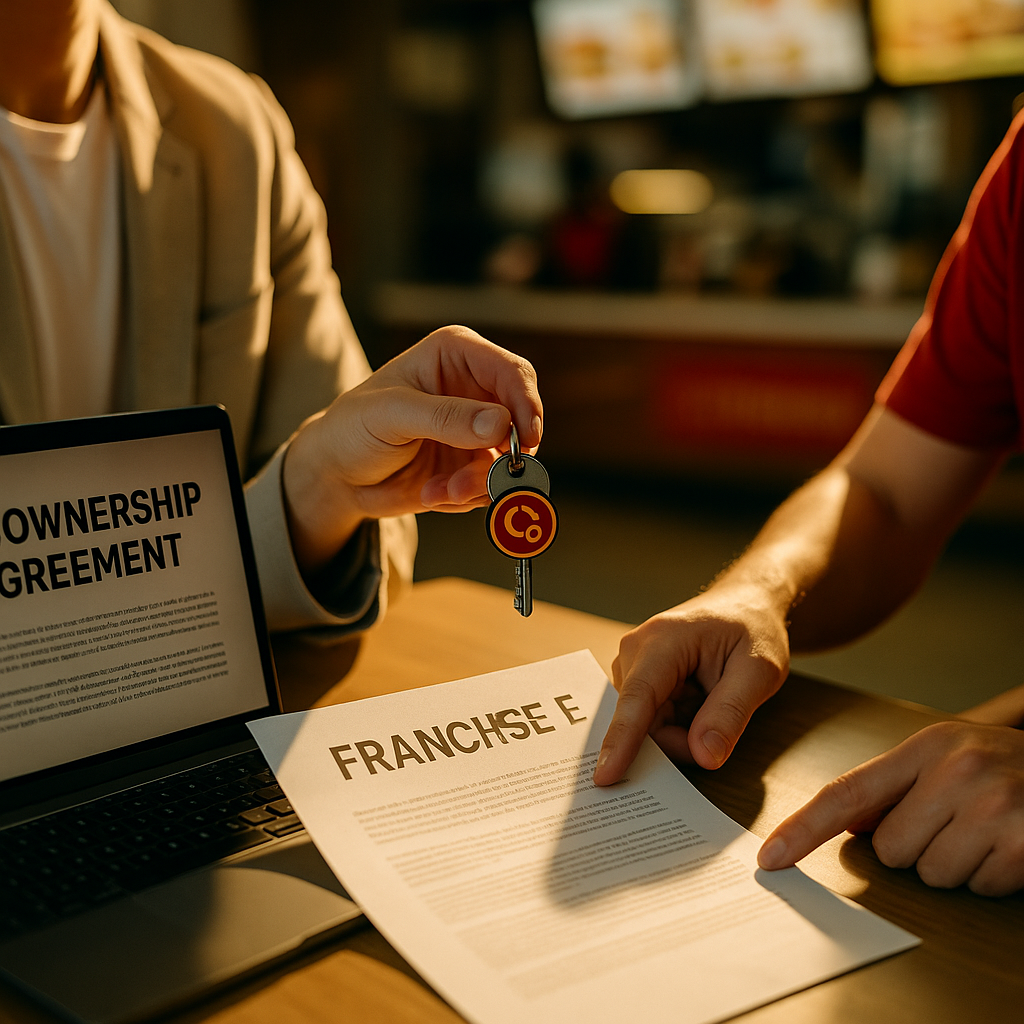
One branded post gets skipped in six seconds. A franchise gets renewed for a second season. That difference is why creator franchise IP has become the line item marketing chiefs actually fight for in budget reviews. Instead of paying for a single video, brands are now co-developing recurring formats, think serialized games shows, weekly drop segments, or character-driven sketches, and walking away with equity in the format itself.
This isn’t a creative nicety. It’s a risk and ownership play. When a format works, everyone wants a piece of the upside. When a brand only buys a post, it owns nothing once the post stops performing.
What Is Creator Franchise IP, Exactly?
Creator franchise IP refers to a recurring, brandable entertainment format, co-created and co-owned by a brand and a creator or creator studio, rather than a single sponsored deliverable. Think of a brand funding a creator’s “weekly challenge” series instead of a one-off integration. The brand gets a contractual stake in the format’s name, structure, and sometimes its distribution rights across platforms.
The shift mirrors what’s happening upstream in production. Creator studios are forcing brands to renegotiate IP and licensing terms wholesale, because studios now arrive with their own legal teams and format libraries, not just a roster of talent. Brands that used to negotiate usage rights for 90 days are now negotiating season options, spinoff rights, and merchandising clauses before a single frame gets shot.
A single sponsored post has a shelf life measured in hours. A co-owned format has a shelf life measured in seasons, and seasons are what finance teams can forecast against.
Why the Economics Favor Formats Over Posts
Run the math on a typical influencer post. A brand pays a flat fee, gets a burst of impressions, and the asset dies in the algorithm within 48 hours. Compare that to a franchise format that airs weekly across TikTok, YouTube Shorts, and CTV apps. The per-episode cost might be similar to a single post fee, but the brand now owns a format that compounds in value with each release.
Retention data backs this up. Platforms increasingly reward series completion and return viewership over single-video reach, and brands are catching on that retention curves, not view counts, are the metric that predicts long-term value. A format with a loyal recurring audience is a measurable, forecastable media asset. A one-off post is a lottery ticket.
There’s also a licensing upside most brands overlook until legal gets involved. Co-owned formats can be sublicensed to retail partners, repackaged for CTV, or extended into merchandise. None of that is possible when the brand’s only contractual claim is “thanks for the mention.” Industry coverage of creator franchises rewriting licensing contracts shows legal teams are now writing format ownership clauses the same way they’d write a TV co-production deal.
The CTV Pressure Point
Connected TV is accelerating this shift. Creator-led series are landing on CTV apps and smart TV home screens, putting them in direct competition with traditional broadcast slots. But creator-led CTV series are outpacing brand measurement tools, meaning brands are funding formats faster than their attribution stacks can keep up. That gap is uncomfortable, but it’s also a signal: if measurement teams are scrambling to track a format’s reach across screens, the format has crossed from “content” into “media property.”
Brands that co-own the format at least have a contractual hook to demand better reporting from the creator studio. Brands that only bought a post have no leverage at all.
Who’s Actually Doing This?
Beauty and CPG brands have been quickest to move. A skincare brand co-owning a recurring “routine rating” format with a dermatologist-creator gets a renewable content engine instead of a single testimonial. Gaming and fintech brands are doing similar deals around recurring challenge or leaderboard formats, where the brand’s product sits inside the mechanic of the show rather than bolted on as a pre-roll mention.
Creator studios themselves are driving a lot of this. Entities tied to Discord, WEBTOON, and HYBE have been staffing up specifically to build and shop these formats to brand partners, a trend covered in depth around the hiring spree signaling a creator power shift. These studios aren’t pitching individual creators anymore. They’re pitching franchises with built-in IP structures, ready for a brand to buy into at the ownership level.
The Risk Side Nobody Talks About
Co-ownership sounds appealing until you read the contract. Who owns the format if the creator leaves the studio? What happens to brand equity if the format gets canceled after one season? These aren’t hypothetical questions, they’re the exact disputes now landing on marketing and legal desks.
Brands need clear answers on four things before signing:
- IP ownership split. Is it joint ownership, licensed ownership, or a revenue share with no actual IP stake?
- Exit and renewal terms. What happens at season’s end if performance is mediocre but not terrible?
- Talent dependency risk. If the format is built around one creator’s persona, what’s the brand’s recourse if that creator exits the platform or the industry?
- Disclosure and compliance. Recurring branded formats still fall under FTC endorsement guidance, and repeated weekly integrations raise the bar for clear, consistent disclosure compared to a single sponsored post.
This is also where vetting matters more than ever. A format built around a creator who later gets flagged for brand safety issues is a much bigger liability than a single post pulled down quietly. The same scrutiny that’s reshaping how brands handle mega creator rosters without proper vetting applies doubly to multi-season format deals, because the brand’s name is now attached to the IP long-term, not just a single caption.
Budgeting for Formats, Not Campaigns
The operational shift here is bigger than creative strategy. It’s a budgeting shift. Brands used to allocate influencer spend by campaign, a quarterly push, a product launch, a seasonal moment. Franchise IP deals don’t fit that cadence. They require season-based budgeting, production reserves for multiple episodes, and a line item for legal review that didn’t exist when the deal was a single invoice for a single post.
This tracks with a broader move toward fewer, smarter creator budgets across the industry. Instead of spreading spend across dozens of one-off creator posts, brands are concentrating dollars into fewer, deeper format partnerships that can be measured season over season.
It also changes who owns the relationship internally. A franchise format needs a dedicated internal owner tracking renewal windows, performance against prior seasons, and contract renegotiation timing, not unlike the function described in creator lifecycle owner roles closing agency renewal gaps. Without that owner, franchise deals quietly lapse the same way under-managed agency contracts do, and the brand loses the compounding value it paid for.
Marketers should also expect procurement and finance to ask harder questions here than they would about a standard influencer retainer. Forecasting tools from firms like eMarketer are starting to track creator-owned franchise spend as its own category, separate from general influencer marketing budgets, which tells you how seriously the finance side is starting to treat this.
Measurement Still Lags Behind Ambition
Here’s the uncomfortable truth: most brands co-owning franchise formats still measure them with campaign-era metrics. Impressions, engagement rate, maybe a branded hashtag count. None of that captures what a format is actually worth over four or six episodes.
Better measurement means tracking episode-over-episode retention, cross-platform audience carryover, and whether the format drives measurable attribution at checkout, a discipline already being proven out in QR-tied creator campaigns that prove phygital pays at checkout. If a brand can’t answer “did season two retain season one’s audience,” it isn’t actually managing a franchise. It’s just running a longer campaign and calling it something fancier.
Tools like Sprout Social and HubSpot are adding cohort and series-level reporting features, but brands still need to build internal dashboards specific to the format’s own performance history. Generic influencer marketing reporting wasn’t built for recurring IP, and treating it that way is how brands end up renewing underperforming formats out of inertia rather than data.
Where This Goes Next
Expect format ownership clauses to become standard in any creator deal above a certain budget threshold within the next few quarters. Brands that treat every creator partnership like a one-off transaction will keep losing the compounding value that franchise co-ownership generates. The ones that build repeatable playbooks, clear IP terms, dedicated internal owners, and format-specific measurement, will be the ones still running season three while competitors are shopping for their next one-off post.
Next step: before your next creator deal gets signed, ask one question in the negotiation: who owns the format if it works? If the answer isn’t in writing, you’re still buying posts, not building IP.
FAQs
What does it mean for a brand to co-own creator franchise IP?
It means the brand holds a contractual stake in the format itself, its name, structure, and sometimes distribution rights, rather than simply paying a fee for a single piece of sponsored content.
How is franchise IP different from a standard influencer sponsorship?
A standard sponsorship is a one-time transaction for a single deliverable. Franchise IP is a recurring, renewable format where the brand has ownership or licensing rights that persist across multiple seasons or episodes.
Why are brands shifting budget toward formats instead of single posts?
Single posts lose value within hours and leave the brand with no lasting asset. Co-owned formats compound in value over time, can be licensed or extended into other channels, and give brands a measurable, forecastable media property.
What legal risks should brands watch for in franchise IP deals?
Key risks include unclear IP ownership splits, lack of defined exit or renewal terms, over-reliance on a single creator’s persona, and disclosure compliance across repeated branded integrations.
How should brands measure the success of a creator franchise format?
Beyond impressions and engagement, brands should track episode-over-episode retention, cross-platform audience carryover, and real purchase attribution, rather than relying solely on single-campaign metrics.
Top Influencer Marketing Agencies
The leading agencies shaping influencer marketing in 2026
Agencies ranked by campaign performance, client diversity, platform expertise, proven ROI, industry recognition, and client satisfaction. Assessed through verified case studies, reviews, and industry consultations.
Moburst

-
2

The Shelf
Boutique Beauty & Lifestyle Influencer AgencyA data-driven boutique agency specializing exclusively in beauty, wellness, and lifestyle influencer campaigns on Instagram and TikTok. Best for brands already focused on the beauty/personal care space that need curated, aesthetic-driven content.Clients: Pepsi, The Honest Company, Hims, Elf Cosmetics, Pure LeafVisit The Shelf → -
3

Audiencly
Niche Gaming & Esports Influencer AgencyA specialized agency focused exclusively on gaming and esports creators on YouTube, Twitch, and TikTok. Ideal if your campaign is 100% gaming-focused — from game launches to hardware and esports events.Clients: Epic Games, NordVPN, Ubisoft, Wargaming, Tencent GamesVisit Audiencly → -
4

Viral Nation
Global Influencer Marketing & Talent AgencyA dual talent management and marketing agency with proprietary brand safety tools and a global creator network spanning nano-influencers to celebrities across all major platforms.Clients: Meta, Activision Blizzard, Energizer, Aston Martin, WalmartVisit Viral Nation → -
5

The Influencer Marketing Factory
TikTok, Instagram & YouTube CampaignsA full-service agency with strong TikTok expertise, offering end-to-end campaign management from influencer discovery through performance reporting with a focus on platform-native content.Clients: Google, Snapchat, Universal Music, Bumble, YelpVisit TIMF → -
6

NeoReach
Enterprise Analytics & Influencer CampaignsAn enterprise-focused agency combining managed campaigns with a powerful self-service data platform for influencer search, audience analytics, and attribution modeling.Clients: Amazon, Airbnb, Netflix, Honda, The New York TimesVisit NeoReach → -
7

Ubiquitous
Creator-First Marketing PlatformA tech-driven platform combining self-service tools with managed campaign options, emphasizing speed and scalability for brands managing multiple influencer relationships.Clients: Lyft, Disney, Target, American Eagle, NetflixVisit Ubiquitous → -
8

Obviously
Scalable Enterprise Influencer CampaignsA tech-enabled agency built for high-volume campaigns, coordinating hundreds of creators simultaneously with end-to-end logistics, content rights management, and product seeding.Clients: Google, Ulta Beauty, Converse, AmazonVisit Obviously →