


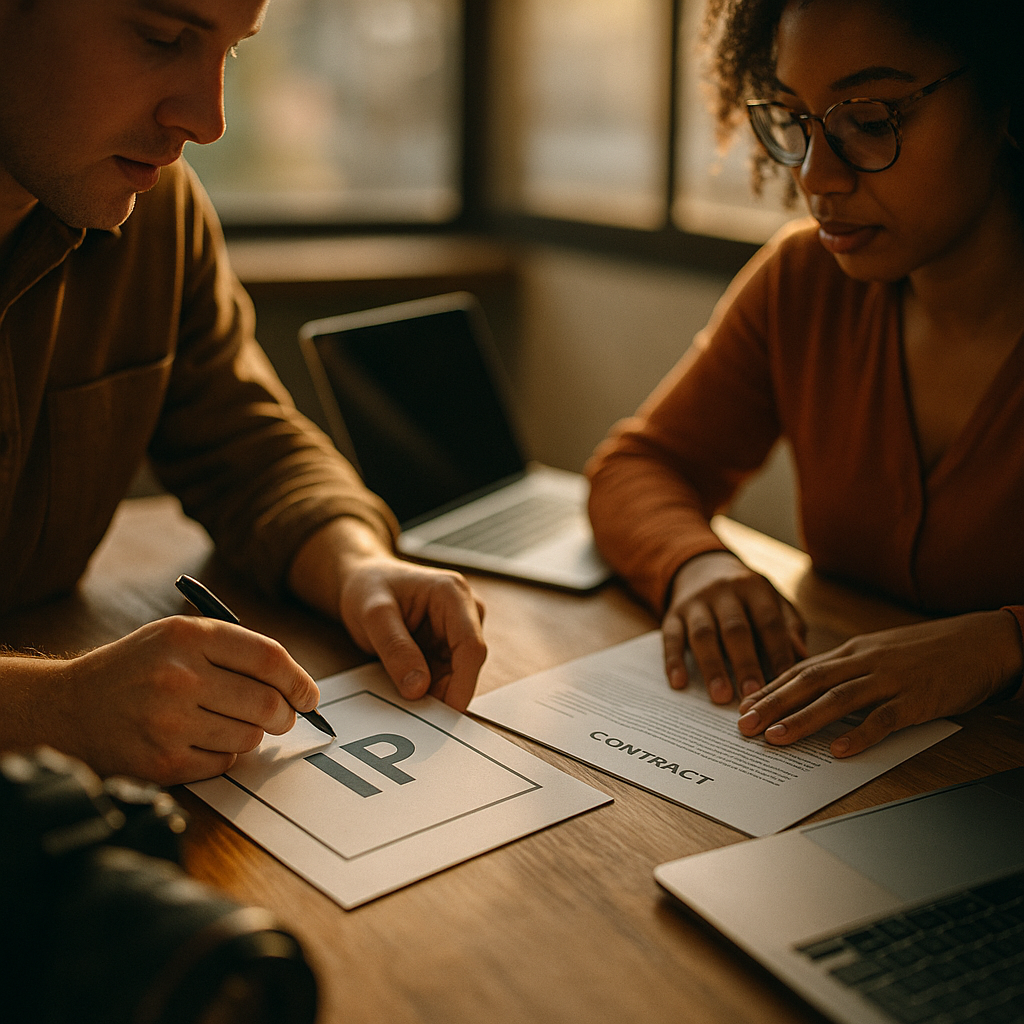
A brand pays a creator to develop a recurring series. It takes off. Six months later, a competitor licenses the same format, from the same creator, for half the budget. Nobody breached a contract. Nobody had to, because nobody wrote one that addressed creator-owned IP in the first place.
That scenario is playing out more often as brands move from one-off sponsored posts into genuine co-creation: recurring segments, branded challenges, original show formats. The creative upside is real. So is the legal exposure if format rights aren’t negotiated before a single frame gets shot.
Why Format Ownership Became a Problem Now
Five years ago, most influencer deals were transactional. Pay a creator, get a post, move on. Ownership rarely mattered because nobody expected the content to outlive the campaign.
Co-creation flipped that math. Brands now fund recurring formats, think “weekly try-on hauls” or “ask the founder” interview series, because they perform better than single posts. Sprout Social’s research on content strategy consistently shows recurring, serialized content outperforming one-off posts on engagement and retention. That’s exactly why brands keep greenlighting more of it.
The catch: a “format” isn’t just content, it’s intellectual property. The structure, the recurring segments, the visual hooks, the catchphrase. If a creator originates that structure, under most default copyright assumptions they own it, even if the brand paid for the pilot episode. Brands have been treating these engagements like production jobs when they’re actually closer to format licensing deals, and the paperwork hasn’t caught up.
If your contract only covers the deliverable and never mentions the underlying format, you’ve paid to build an asset you don’t control.
What Counts as “the Format,” Legally Speaking?
This is where most brand-side legal teams get vague, and vagueness is expensive later. A format typically includes: the recurring structure or segments, distinctive naming or branding elements, the visual or editing style if it’s unique enough to be recognizable, and any catchphrases or hooks tied to the series.
Individual episodes are usually treated as separate copyrighted works. The format itself, the reusable template, is a different kind of asset, closer to a TV format license than a single piece of content. US copyright law doesn’t have a clean “format protection” category the way some broadcast markets do, which makes contract language the only real safeguard you have.
That ambiguity cuts both ways. Creators are increasingly aware that their format, not just their follower count, is their leverage. Expect more creators to ask pointed questions before signing: who owns this if it works? That’s a healthy sign of a maturing market, but it means brands need to walk into co-creation conversations with a position already drafted, not negotiated on the fly after the first viral episode.
Negotiate Rights Before the First Shoot, Not After It Works
Here’s the uncomfortable truth: once a format succeeds, negotiating leverage shifts hard toward the creator. Before launch, you’re one of many brands a creator might work with. After three viral episodes, you’re the brand that needs them to keep saying yes. Smart brand teams lock in rights language at the pilot stage, when the format has zero proven value and the creator is more flexible.
This isn’t about being adversarial. It’s about sequencing. A few structural questions should be answered in writing before any co-creation work begins:
- Who owns the format if it’s a joint creation versus the creator’s pre-existing concept?
- Can the brand continue the format with a different creator if the relationship ends?
- Can the creator take the format to a competing brand, and under what time or category restrictions?
- Does the brand get exclusive category rights, or just a non-exclusive license to use the format?
- What happens to past episodes if the partnership ends: do they stay live, get pulled, or get re-licensed?
None of these questions are exotic. They’re standard in TV format licensing and should be standard in creator co-creation too. The gap is that most influencer agreements were templated from basic sponsorship contracts, not format deals, so these clauses simply don’t exist yet in a lot of brand paperwork. If your legal team is still using a boilerplate from single-post campaigns, it’s time to revisit that template alongside how you’re pricing content, reach and usage separately in other deal structures.
Three Ownership Models Worth Building Into Your Contract Playbook
There’s no single correct ownership structure. The right one depends on who originated the concept and how much the brand is investing. Three models cover most real-world cases.
Work-for-hire with full assignment. The brand originates the format concept and pays the creator to execute it. Full IP ownership transfers to the brand, including the right to recast the series with another creator later. This is the cleanest model but requires the highest upfront pay, since the creator is giving up long-term upside.
Licensed format, creator retains ownership. The creator originated the format. The brand licenses it for a defined term, category, and territory, similar to how a broadcaster licenses a show format. The brand gets usage rights without ownership, and the creator can’t shop the identical format to a direct competitor during the license period.
Joint ownership with defined exit terms. Both parties contribute meaningfully to the concept. Ownership is shared, but the contract spells out exactly what happens if either side wants to walk away, including who can keep producing the format and under what name.
Most brand legal teams default to wanting full ownership every time. That’s understandable, but it’s not always realistic or necessary. If a creator’s established voice is the reason the format works at all, trying to strip them of any rights usually kills the deal or breeds resentment that shows up on camera later. Match the ownership model to who’s actually driving the creative engine.
Pricing Follows Rights, Not the Other Way Around
One mistake shows up constantly: brands negotiate a flat fee for a format pilot, then try to bolt on IP terms afterward once the series is already performing. That’s backwards. Rights and compensation have to be negotiated together, because the ownership model directly determines fair pricing.
A work-for-hire deal with full assignment should command a premium fee, since the creator is permanently giving up upside. A licensed format with a time limit should be priced lower upfront but include renewal or royalty terms if the series keeps running. This is the same unbundling logic that’s reshaping how brands think about pricing content, reach and usage apart in standard sponsorship deals. Format rights are simply the next layer of that same pricing conversation.
A format that drives real ROI will always get more expensive to license later than it is to own outright now.
Finance teams should be looped in early here too, since format rights change the long-term cost profile of a creator program. If you’re already building a CPA framework for creator budgets, format IP needs its own line item, because renewal and licensing costs compound differently than one-off content fees.
What Happens When the Relationship Ends
Every co-created format eventually faces a breakup scenario: the creator wants out, the brand wants to pivot, or performance simply drops. Few brands plan for this at the outset, and it’s usually the most expensive oversight.
Build exit terms directly into the original agreement, not as a future negotiation. Specify whether past episodes can remain published, whether the brand can recast the format with a new creator, and whether there’s a cooling-off period before the creator can launch something similar elsewhere. This overlaps with broader creator governance practices, but format exit terms deserve their own clause rather than getting buried in a generic termination section.
It’s also worth stress-testing format rights against platform risk. If a format lives primarily on one platform and that platform faces disruption or bans, as brands have had to plan for with TikTok scenario planning, your rights agreement should specify whether the format can be ported to another platform without renegotiation. Format IP that’s locked to a single channel is a riskier asset than one that’s platform-agnostic by design.
Where AI Complicates the Picture
Synthetic and AI-assisted content adds another wrinkle. If a brand later wants to use AI tools to extend a format, generating additional episodes, voice clones, or localized versions without the original creator, that needs explicit contract language too. Default IP clauses written before generative AI became mainstream often don’t address this at all. Pair your format rights negotiation with the same scrutiny you’d apply through an AI governance review, since synthetic extension of a creator’s format without consent is both a legal and a trust risk. The FTC’s endorsement guidance also increasingly touches on disclosure obligations when AI is used to replicate a creator’s likeness or voice, so legal and compliance teams should be reviewing this jointly, not in separate silos.
None of this needs to slow deals down if it’s built into the standard contract flow rather than treated as a special negotiation. Brands running structured agency selection processes should be asking prospective partners directly how they handle format IP, since agencies vary wildly on this and it’s a good signal of operational maturity.
Building This Into Your Standard Operating Process
The brands getting this right aren’t treating format IP as a one-time legal exercise. They’re building it into how creator deals get scoped from day one, alongside creator vetting and content approval workflows. A few operational habits make this sustainable rather than a recurring fire drill.
Flag any engagement with recurring-format potential at the pitch stage, before the first brief goes out. Route those deals through a standard IP rights checklist rather than relying on legal to catch it during contract review, by which point the creative direction is often already locked. And review format-based partnerships quarterly as part of a broader content audit rhythm, since ownership terms that made sense at launch may need renegotiation as a series scales or a creator’s audience shifts.
Industry data on creator spend keeps climbing. eMarketer’s creator economy forecasts point to continued double-digit growth in influencer budgets, and a growing share of that spend is going toward longer-term, format-driven partnerships rather than single posts. The brands that negotiate IP terms properly now will be the ones who can actually scale their best-performing formats later, instead of watching a competitor license the exact same idea.
FAQs
Next step: Before your next co-creation brief goes out, add a format rights clause to the contract template itself, so ownership terms are a default part of the deal rather than a negotiation you have after the format already works.
Frequently Asked Questions
Who owns a content format if a brand pays for the pilot episode?
It depends on contract language, not just who paid. If the agreement doesn’t explicitly assign format ownership to the brand, default copyright assumptions often favor the creator as the originator, even when the brand funded production.
What’s the difference between owning content and owning a format?
Individual pieces of content, like a single video, are typically treated as standalone copyrighted works. A format is the reusable structure, recurring segments, or distinctive concept behind a series, and it requires separate, explicit ownership or licensing terms in the contract.
Should brands always insist on full IP ownership in co-creation deals?
Not necessarily. Full ownership usually requires a higher upfront fee and can strain the relationship if the creator’s voice is central to the format’s success. A licensed format model often works better when the creator originated the concept.
How should pricing change based on the ownership model chosen?
Work-for-hire deals with full IP assignment should command premium fees since the creator gives up long-term upside. Licensed formats can be priced lower upfront but should include renewal or royalty terms if the series continues performing.
What happens to past episodes if a brand and creator part ways?
This should be defined in the original contract, not negotiated after the fact. Specify whether existing episodes stay published, get removed, or can be re-licensed, and whether the brand can recast the format with a different creator.
Does AI-generated content complicate format ownership?
Yes. If a brand wants to use AI to extend a format, such as generating additional episodes or localized versions without the original creator, that requires explicit contract language. Standard IP clauses written before generative AI became common often don’t cover this scenario.
Top Influencer Marketing Agencies
The leading agencies shaping influencer marketing in 2026
Agencies ranked by campaign performance, client diversity, platform expertise, proven ROI, industry recognition, and client satisfaction. Assessed through verified case studies, reviews, and industry consultations.
Moburst

-
2

The Shelf
Boutique Beauty & Lifestyle Influencer AgencyA data-driven boutique agency specializing exclusively in beauty, wellness, and lifestyle influencer campaigns on Instagram and TikTok. Best for brands already focused on the beauty/personal care space that need curated, aesthetic-driven content.Clients: Pepsi, The Honest Company, Hims, Elf Cosmetics, Pure LeafVisit The Shelf → -
3

Audiencly
Niche Gaming & Esports Influencer AgencyA specialized agency focused exclusively on gaming and esports creators on YouTube, Twitch, and TikTok. Ideal if your campaign is 100% gaming-focused — from game launches to hardware and esports events.Clients: Epic Games, NordVPN, Ubisoft, Wargaming, Tencent GamesVisit Audiencly → -
4

Viral Nation
Global Influencer Marketing & Talent AgencyA dual talent management and marketing agency with proprietary brand safety tools and a global creator network spanning nano-influencers to celebrities across all major platforms.Clients: Meta, Activision Blizzard, Energizer, Aston Martin, WalmartVisit Viral Nation → -
5

The Influencer Marketing Factory
TikTok, Instagram & YouTube CampaignsA full-service agency with strong TikTok expertise, offering end-to-end campaign management from influencer discovery through performance reporting with a focus on platform-native content.Clients: Google, Snapchat, Universal Music, Bumble, YelpVisit TIMF → -
6

NeoReach
Enterprise Analytics & Influencer CampaignsAn enterprise-focused agency combining managed campaigns with a powerful self-service data platform for influencer search, audience analytics, and attribution modeling.Clients: Amazon, Airbnb, Netflix, Honda, The New York TimesVisit NeoReach → -
7

Ubiquitous
Creator-First Marketing PlatformA tech-driven platform combining self-service tools with managed campaign options, emphasizing speed and scalability for brands managing multiple influencer relationships.Clients: Lyft, Disney, Target, American Eagle, NetflixVisit Ubiquitous → -
8

Obviously
Scalable Enterprise Influencer CampaignsA tech-enabled agency built for high-volume campaigns, coordinating hundreds of creators simultaneously with end-to-end logistics, content rights management, and product seeding.Clients: Google, Ulta Beauty, Converse, AmazonVisit Obviously →