


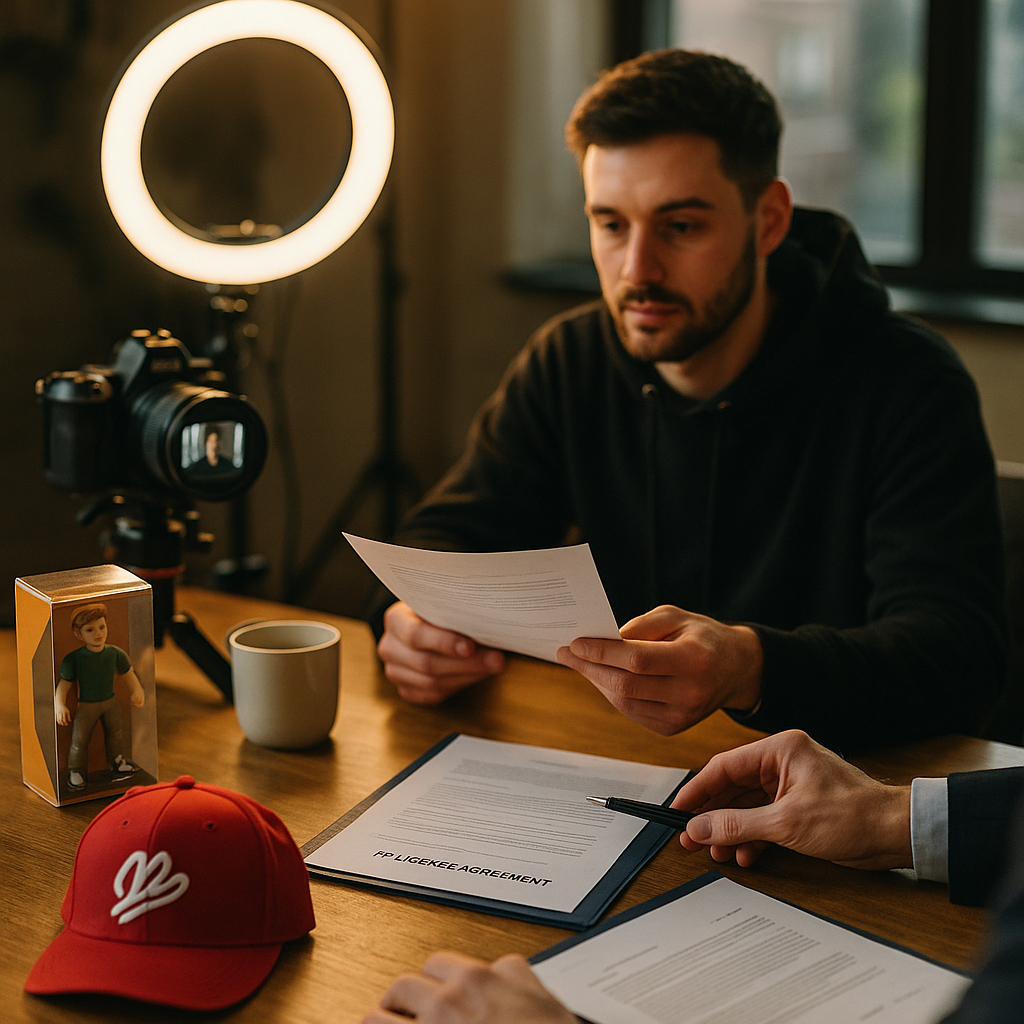
MrBeast’s operation employs hundreds of people and reportedly brings in revenue that rivals a mid-size television network. Alix Earle has a production team. Ms Rachel’s channel now functions like a children’s media house with licensing deals attached. If you’re still booking these people through a single-line influencer contract, you’re negotiating with the wrong org chart. The era of the premium entertainment creator as a solo talent is over. What’s replacing it is something closer to a studio, and brands that don’t adjust their deal structures are about to overpay for underleveraged assets or, worse, get outmaneuvered by competitors who understood the shift first.
The Studio Shift Is Already Here
Call it what it is: vertical integration. The top tier of entertainment creators, the ones pulling eight and nine figure annual revenue, have stopped thinking like talent and started thinking like production companies. They own writers’ rooms. They run in-house editing pipelines. They negotiate IP and merchandising rights the way a studio executive would, not the way a creator manager used to.
This isn’t a niche trend limited to YouTube’s biggest names. It’s showing up across CTV-native creator series, in licensing disputes over creator-built franchises, and in hiring patterns at platforms like Discord and WEBTOON that are staffing up for exactly this kind of professionalized content production. Our earlier coverage of creator-led CTV series flagged this months ago: creators are building distribution and production muscle faster than most brand measurement frameworks can track.
When a creator controls writing, production, distribution, and licensing in-house, the brand deal stops being a sponsorship and starts being a co-production negotiation.
Why does this matter for brand strategists specifically? Because the entire operating assumption behind influencer marketing, that you’re renting an audience from an individual, breaks down when that individual is actually a vertically integrated media business with its own P&L, legal team, and content calendar set six months out.
What Does “Creator as Studio” Actually Mean?
A studio-model creator typically has four things a solo creator doesn’t: a dedicated writing or ideation team, an internal production pipeline (not freelance editors on retainer, actual staff), licensing and merchandising infrastructure, and multi-platform distribution strategy that doesn’t depend on a single algorithm. Think Dude Perfect, Hot Ones’ parent company Chicken Shop Date adjacent operations, or Logan Paul’s Prime empire. These aren’t creators with side businesses. The content and the business are the same entity.
This tracks with a broader pattern we flagged in creators functioning as media companies: the line item on your budget labeled “influencer spend” increasingly needs to be split into media buy, production partnership, and licensing categories, because that’s how the other side of the table is already organized internally.
Why Your Deal Terms Are Probably Out of Date
Most brand influencer agreements were written for a world of one creator, one camera, one edit. Studio-model creators operate with production slates, multiple concurrent series, and franchise IP that outlives any single campaign. If your legal team is still using a template built around deliverable counts and usage rights for a single video, you’re going to run into friction fast, or worse, sign away more than you intended.
Consider what’s already happening with creator-built franchises forcing licensing rewrites. When a creator’s format becomes a recurring show with its own fanbase, a one-off sponsorship fee undervalues what you’re actually buying: access to an ongoing IP universe with built-in retention. Brands that negotiated early into Dude Perfect’s or Airrack’s longer-running formats got in at sponsorship rates. Late entrants are now negotiating licensing rates, and the gap is significant.
There’s also a bundling trend worth watching closely. Studio-model creators increasingly package media, creative production, and endorsement into a single negotiated rate rather than itemizing each. We’ve covered how creator deals now bundle media, creative, and endorsement as one price, which sounds efficient until your procurement team tries to benchmark it against last year’s rate card and finds no comparable line item.
The ROI Math Changes When Creators Own Distribution
Here’s the uncomfortable part for media planners: studio-model creators often don’t need your platform budget. They’ve built owned distribution across YouTube, CTV apps, podcasts, and sometimes licensed TV deals. That means the leverage in negotiation has shifted. You’re no longer the gatekeeper providing reach; you’re one of several reach channels they could choose not to use.
This is part of why blended CPMs have cratered. Our analysis of sub $5 blended CPMs showed that scaled creator operations are driving down cost-per-impression simply because their production efficiency and distribution reach dwarf what traditional media buys deliver per dollar. A studio-model creator with 40 million subscribers across three platforms isn’t pricing like a talent fee anymore. They’re pricing like a network slot, and in some cases underpricing relative to linear TV equivalents, which is exactly why smart brands are moving budget there.
eMarketer and similar research firms have tracked this reallocation for several cycles now, noting that creator economy spend is increasingly competing directly with traditional video ad budgets rather than sitting in a separate “influencer” bucket. If your finance team still treats these as separate pools, you’re missing the actual competitive dynamic at play. For broader context on how creator economy data gets tracked and benchmarked, eMarketer’s research is a useful ongoing reference point.
Risk Mitigation Gets More Complicated, Not Less
You’d think professionalized creator operations would reduce brand risk. Sometimes they do: better legal compliance, clearer contracts, more predictable deliverables. But studio-model creators also introduce new risk categories. Larger teams mean more people touching your brand assets. More platforms mean more places for a compliance misstep to occur. And because these operations run multiple content lines simultaneously, your campaign might get less dedicated attention than a solo creator would give it, even at a higher price point.
There’s also the vetting problem. We’ve written about how mega creator rosters without proper vetting create brand risk, and that risk compounds when the “creator” is actually a studio with dozens of staff members, sub-brands, and franchise spinoffs you may not have fully audited. Ask who actually approves brand integrations before you sign. Is it still the named creator, or has that decision moved to a content director three layers down?
A studio-model creator’s scale can mask the fact that your campaign is being handled by a junior producer, not the face of the channel you thought you were buying access to.
Compliance also gets trickier across territories. The FTC’s endorsement guidelines and the UK’s ICO data and advertising standards both apply with more force when a creator operation is producing dozens of branded assets per month across a distributed team, where disclosure consistency becomes harder to enforce centrally.
Measurement Tools Haven’t Caught Up
Most attribution tools were built to measure a single creator’s single post. Studio-model creators generate content across owned apps, licensed CTV placements, podcast feeds, and social clips simultaneously, often repurposing the same IP six or seven ways. Our piece on CTV series outpacing measurement tools is directly relevant here: if your attribution stack can’t follow a piece of content across formats, you’re going to undercount performance and misjudge ROI on exactly the partnerships that deserve more budget, not less.
This is also why creator attribution has become a headline topic at major industry events. Platforms like Meta Business and TikTok Ads Manager offer partial visibility, but neither captures cross-platform studio output comprehensively. Brands relying solely on platform-native dashboards are getting an incomplete picture of studio-model creator performance.
How Should Brands Actually Restructure Their Approach?
Start by auditing your current roster for studio-model indicators: dedicated production teams, multi-platform distribution, existing licensing or merchandise lines. Anyone who checks two or more boxes needs a different negotiation playbook than your standard creator template.
- Negotiate IP terms explicitly. If a creator’s format becomes a recurring franchise, define upfront what happens to your brand integration when the format gets licensed, spun off, or adapted for other platforms.
- Separate media, production, and licensing value. Even if the creator bundles pricing, your internal budget tracking should unbundle it so you can benchmark fairly against other channels.
- Assign a single point of accountability internally. Studio-model creator relationships benefit from the same ownership structure we described in the creator lifecycle owner role, someone who tracks the relationship across its full arc rather than per-campaign.
- Push for cross-platform measurement commitments. Don’t accept single-platform metrics as the full performance picture when the creator operation spans five channels.
- Build in multi-year thinking. The shift toward multi-year retainers replacing one-off campaigns applies especially here, since studio-model creators plan content slates quarters in advance and value partners who commit at the same horizon.
None of this requires a bigger budget, necessarily. It requires a smarter budget structure that reflects what you’re actually negotiating with. A quick internal gut check: if your legal and finance teams can’t tell you whether a given creator deal counts as media spend, production spend, or licensing spend, you don’t have a studio-model strategy yet. You have a legacy template stretched over a new kind of partner, and eventually that stretch is going to tear.
Frequently Asked Questions
What distinguishes a studio-model creator from a traditional influencer?
A studio-model creator operates with dedicated production staff, in-house writing or ideation teams, licensing infrastructure, and distribution across multiple owned and platform channels, rather than relying on a single social account and freelance support.
Do studio-model creators cost more than traditional influencer partnerships?
Often yes, but the pricing logic differs. You’re typically paying for bundled media, production quality, and sometimes licensed IP access, which can deliver stronger ROI per dollar than fragmented smaller deals despite the higher sticker price.
How should brands structure contracts differently with these creators?
Contracts should explicitly address IP ownership, licensing rights if the content becomes a franchise, cross-platform usage terms, and clear points of internal accountability on the creator’s side, not just deliverable counts.
Can smaller brands still work with studio-model creators?
Yes, though smaller brands may need to negotiate narrower scopes, such as single-platform placements or limited-run integrations, rather than full franchise-level partnerships that larger budgets can support.
What measurement challenges should brands anticipate?
Most attribution tools weren’t built to track content repurposed across CTV, podcasts, and social simultaneously. Brands should ask creator studios directly for cross-platform performance data rather than relying solely on native platform dashboards.
Audit your top three creator relationships this quarter for studio-model indicators, then rebuild those specific contracts around IP, licensing, and cross-platform measurement before your next renewal cycle locks you into outdated terms.
Top Influencer Marketing Agencies
The leading agencies shaping influencer marketing in 2026
Agencies ranked by campaign performance, client diversity, platform expertise, proven ROI, industry recognition, and client satisfaction. Assessed through verified case studies, reviews, and industry consultations.
Moburst

-
2

The Shelf
Boutique Beauty & Lifestyle Influencer AgencyA data-driven boutique agency specializing exclusively in beauty, wellness, and lifestyle influencer campaigns on Instagram and TikTok. Best for brands already focused on the beauty/personal care space that need curated, aesthetic-driven content.Clients: Pepsi, The Honest Company, Hims, Elf Cosmetics, Pure LeafVisit The Shelf → -
3

Audiencly
Niche Gaming & Esports Influencer AgencyA specialized agency focused exclusively on gaming and esports creators on YouTube, Twitch, and TikTok. Ideal if your campaign is 100% gaming-focused — from game launches to hardware and esports events.Clients: Epic Games, NordVPN, Ubisoft, Wargaming, Tencent GamesVisit Audiencly → -
4

Viral Nation
Global Influencer Marketing & Talent AgencyA dual talent management and marketing agency with proprietary brand safety tools and a global creator network spanning nano-influencers to celebrities across all major platforms.Clients: Meta, Activision Blizzard, Energizer, Aston Martin, WalmartVisit Viral Nation → -
5

The Influencer Marketing Factory
TikTok, Instagram & YouTube CampaignsA full-service agency with strong TikTok expertise, offering end-to-end campaign management from influencer discovery through performance reporting with a focus on platform-native content.Clients: Google, Snapchat, Universal Music, Bumble, YelpVisit TIMF → -
6

NeoReach
Enterprise Analytics & Influencer CampaignsAn enterprise-focused agency combining managed campaigns with a powerful self-service data platform for influencer search, audience analytics, and attribution modeling.Clients: Amazon, Airbnb, Netflix, Honda, The New York TimesVisit NeoReach → -
7

Ubiquitous
Creator-First Marketing PlatformA tech-driven platform combining self-service tools with managed campaign options, emphasizing speed and scalability for brands managing multiple influencer relationships.Clients: Lyft, Disney, Target, American Eagle, NetflixVisit Ubiquitous → -
8

Obviously
Scalable Enterprise Influencer CampaignsA tech-enabled agency built for high-volume campaigns, coordinating hundreds of creators simultaneously with end-to-end logistics, content rights management, and product seeding.Clients: Google, Ulta Beauty, Converse, AmazonVisit Obviously →