


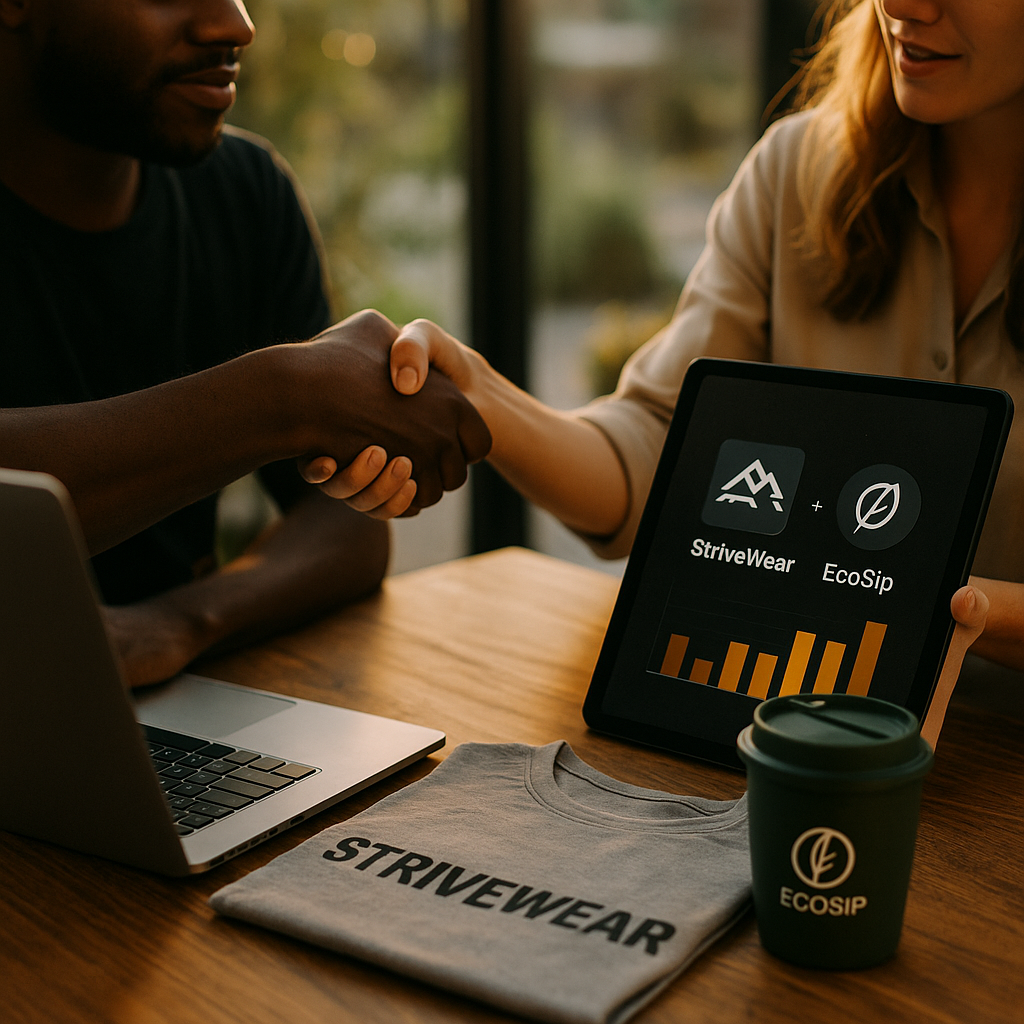
In this case study of a successful co-marketing campaign between two non-competing brands, we explore how smart collaboration and strategic partnership drove remarkable results. Discover the techniques these brands used, the benefits they gained, and how you can apply similar tactics to your business. Learn how a great co-marketing campaign breaks new ground and boosts results.
Understanding Co-Marketing Partnerships: How Non-Competing Brands Win
Co-marketing campaigns between non-competing brands create powerful synergies by blending unique strengths and audiences. Unlike traditional partnerships, these collaborations unite brands with complementary—but not overlapping—offerings. In 2025, as businesses seek efficient ways to reach new customers, co-marketing offers a low-risk solution to expand without significant extra spend.
Co-marketing typically involves the joint creation and promotion of shared content, events, or offers. Each partner leverages its own resources, brand equity, and audience, providing mutual benefits without diluting their core value propositions. Real-world examples include travel brands teaming up with lifestyle product companies, or tech firms working alongside educational platforms. The common thread is a shared target demographic—not competition.
Recent studies by HubSpot indicate 82% of marketers now consider co-marketing a key strategy for 2025’s digital landscape. Let’s see how this approach played out between two standout brands.
Choosing the Right Partners: The Foundation for Effective Brand Collaboration
Successful brand collaboration starts with choosing the right co-marketing partner. A study published in Spring 2025 by Forrester found that 68% of failed brand partnerships stemmed from improper partner alignment. The most effective co-marketing campaigns pair brands that:
- Share similar values and brand ethos
- Appeal to a closely-related, but not identical, audience
- Can offer one another clear, measurable benefits
- Communicate openly and have aligned campaign goals
For this case study, we examine the partnership between a premium athletic apparel company, “StriveWear”, and a leading eco-friendly hydration brand, “EcoSip”. While StriveWear specializes in activewear, EcoSip’s focus is on sustainable water bottles and accessories—making them ideal, non-competing allies targeting an active, health-conscious consumer base.
Both brands wanted to signal their commitment to health, wellness, and environmental responsibility, strengthening their appeal and extending reach through the partnership.
Creating the Campaign: Crafting a Compelling Co-Marketing Strategy
With their collaboration confirmed, StriveWear and EcoSip developed a unified strategy. Their goals included increasing website traffic, growing their combined social followings, and driving e-commerce conversions. Here’s how they approached campaign design in 2025:
- Shared Storytelling: The brands co-produced a series of fitness challenge videos featuring athletes using StriveWear gear and EcoSip bottles, distributed on YouTube and Instagram.
- Joint Offers: Customers purchasing from one brand received an exclusive discount code for the other, driving cross-site conversions.
- Co-Branded Content: A downloadable eBook, “Eco-Active: The 2025 Guide to Sustainable Fitness”, offered expert tips and was released on both websites, driving email sign-ups.
- Influencer Reach: Both brands partnered with micro-influencers who highlighted the benefits of integrating both brands into wellness routines.
- Live Virtual Event: They hosted a joint livestreamed workout and Q&A session, providing real-time engagement and product giveaways.
The key to their strategy was value creation for customers—not just cross-promotion. Each arrow of the campaign answered a real consumer need: education, inspiration, and exclusive access.
Executing the Plan: Building Trust Through Joint Marketing Efforts
Execution determines the success of any co-marketing campaign. StriveWear and EcoSip set up clear responsibilities and established regular communication—including weekly progress check-ins—to ensure seamless alignment. To maximize impact, they:
- Coordinated social content calendars for consistent and timely messaging across platforms
- Unified brand aesthetics—consistent logos, colors, and tone for all joint content
- Deployed advanced analytics tools to track cross-site conversions, referrals, and individual content performance
- Ensured all campaign materials reflected both brands’ values, strengthening audience trust
- Established rapid feedback loops with customers by monitoring comments and responding as a team
This level of transparency and teamwork not only created stronger messaging but reassured both loyal and new customers of the partnership’s authenticity. By prioritizing the customer experience in every touchpoint, the brands built long-term goodwill—not just short-term sales.
Measuring Results: Key Metrics from a Winning Joint Marketing Campaign
The StriveWear and EcoSip campaign ran from January to March 2025. Both teams committed to rigorous data analysis. Their core success metrics included:
- Website traffic: StriveWear saw a 34% increase; EcoSip’s traffic rose by 29% during the campaign period (Google Analytics, April 2025).
- Conversion rates: A/B testing showed a 22% boost in purchases through cross-promotion compared to regular ads.
- Email list growth: Both brands expanded subscriber numbers by over 15% due to co-branded content downloads.
- Social engagement: Joint posts reached more than 500,000 unique users, with likes, shares, and comments doubling versus solo content.
- Brand sentiment: Post-campaign surveys showed a 28% increase in positive brand perception, especially regarding their joint commitment to sustainability.
The data confirmed what both brands hoped: by working together, they achieved greater reach, higher engagement, and more conversions than solo efforts could deliver. Most importantly, the campaign strengthened their positions as leaders in active, eco-conscious lifestyles.
Best Practices for Co-Marketing Campaigns: Insights and Future Trends
Based on the StriveWear and EcoSip experience, several best practices emerge for designing successful co-marketing campaigns in 2025:
- Choose partners with a clear overlap in customer values but no product competition.
- Set transparent goals and provide measurable outcomes for both brands.
- Focus on consumer benefit—joint content must educate, inspire, or reward the end user.
- Maintain regular, open communication throughout the campaign.
- Leverage analytics from both brands to evaluate impact and guide future optimizations.
Looking forward, expect co-marketing to continue evolving with tech innovations like AI-driven personalization, immersive virtual events, and sophisticated data sharing between partners. These trends promise even more dynamic, customer-centered collaborations.
FAQs: Co-Marketing Campaigns Between Non-Competing Brands
-
What is a co-marketing campaign?
A co-marketing campaign is a collaborative marketing initiative between two or more brands, typically non-competing, to co-create and promote content, offers, or experiences. Each partner amplifies the campaign through their own channels, expanding reach and results for both sides.
-
How do you choose the right co-marketing partner?
Look for a brand with complementary products or services, a similar audience, shared values, and mutual benefit potential. Transparent communication and aligned goals are also essential.
-
What are the main advantages of co-marketing?
Key benefits include extended reach, increased engagement, lowered promotion costs, shared expertise, and fresh, high-value experiences for both brands’ audiences.
-
How do you measure the success of a co-marketing campaign?
Track quantifiable metrics like website traffic, conversion rates, email signups, social engagement, and shifts in brand sentiment. Use analytics tools to connect results to specific campaign elements.
-
Is co-marketing the same as co-branding?
No—co-marketing typically involves joint promotional activities, while co-branding often results in a combined product or service. They can overlap, but the scope and goals differ.
In summary, a successful co-marketing campaign between non-competing brands, like StriveWear and EcoSip, leverages shared values, clear strategy, and authentic collaboration. Prioritize consumer value, transparent goals, and open communication—then watch as partnership drives measurable growth and lasting brand impact.
Top Influencer Marketing Agencies
The leading agencies shaping influencer marketing in 2026
Agencies ranked by campaign performance, client diversity, platform expertise, proven ROI, industry recognition, and client satisfaction. Assessed through verified case studies, reviews, and industry consultations.
Moburst

-
2

The Shelf
Boutique Beauty & Lifestyle Influencer AgencyA data-driven boutique agency specializing exclusively in beauty, wellness, and lifestyle influencer campaigns on Instagram and TikTok. Best for brands already focused on the beauty/personal care space that need curated, aesthetic-driven content.Clients: Pepsi, The Honest Company, Hims, Elf Cosmetics, Pure LeafVisit The Shelf → -
3

Audiencly
Niche Gaming & Esports Influencer AgencyA specialized agency focused exclusively on gaming and esports creators on YouTube, Twitch, and TikTok. Ideal if your campaign is 100% gaming-focused — from game launches to hardware and esports events.Clients: Epic Games, NordVPN, Ubisoft, Wargaming, Tencent GamesVisit Audiencly → -
4

Viral Nation
Global Influencer Marketing & Talent AgencyA dual talent management and marketing agency with proprietary brand safety tools and a global creator network spanning nano-influencers to celebrities across all major platforms.Clients: Meta, Activision Blizzard, Energizer, Aston Martin, WalmartVisit Viral Nation → -
5

The Influencer Marketing Factory
TikTok, Instagram & YouTube CampaignsA full-service agency with strong TikTok expertise, offering end-to-end campaign management from influencer discovery through performance reporting with a focus on platform-native content.Clients: Google, Snapchat, Universal Music, Bumble, YelpVisit TIMF → -
6

NeoReach
Enterprise Analytics & Influencer CampaignsAn enterprise-focused agency combining managed campaigns with a powerful self-service data platform for influencer search, audience analytics, and attribution modeling.Clients: Amazon, Airbnb, Netflix, Honda, The New York TimesVisit NeoReach → -
7

Ubiquitous
Creator-First Marketing PlatformA tech-driven platform combining self-service tools with managed campaign options, emphasizing speed and scalability for brands managing multiple influencer relationships.Clients: Lyft, Disney, Target, American Eagle, NetflixVisit Ubiquitous → -
8

Obviously
Scalable Enterprise Influencer CampaignsA tech-enabled agency built for high-volume campaigns, coordinating hundreds of creators simultaneously with end-to-end logistics, content rights management, and product seeding.Clients: Google, Ulta Beauty, Converse, AmazonVisit Obviously →