


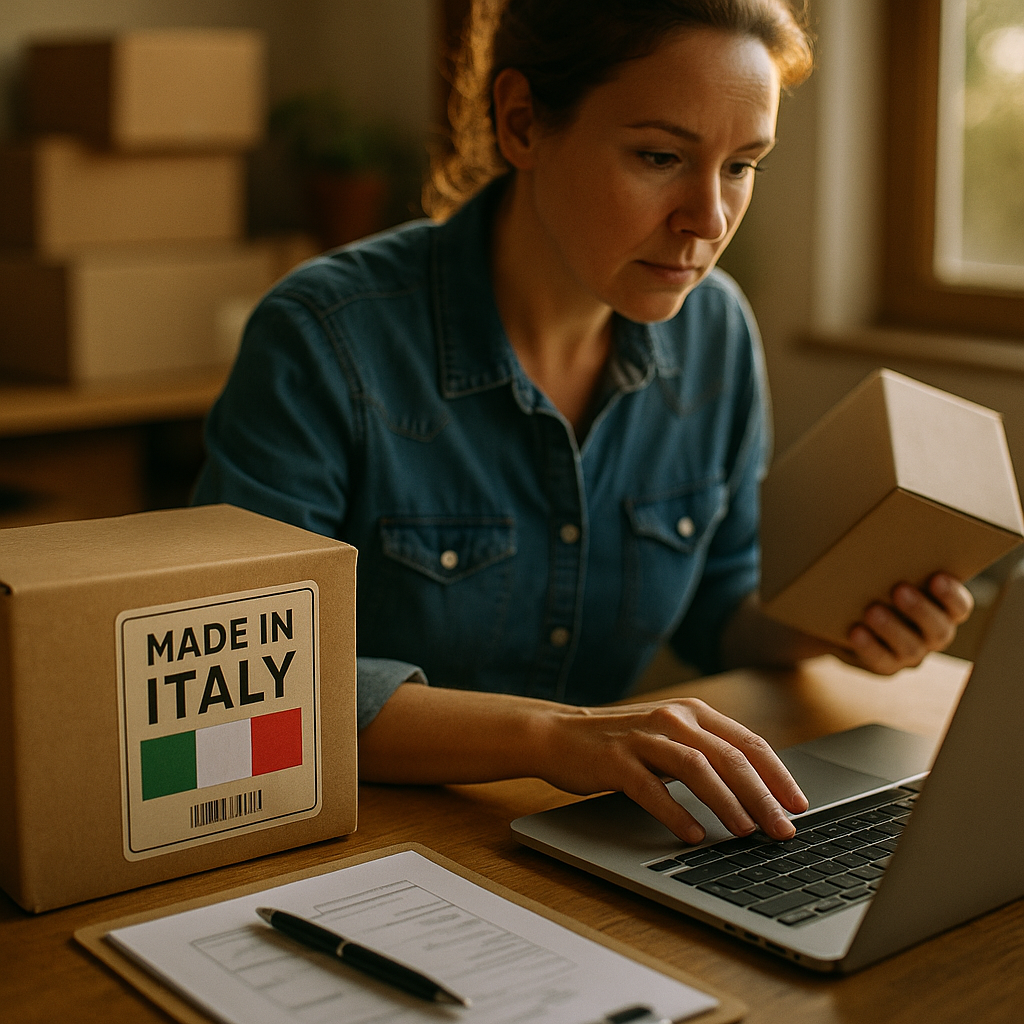
The “Made in” and Country of Origin labeling rules are critical for e-commerce businesses navigating global markets in 2025. Accurately disclosing product origin influences buyer decisions, compliance, and brand trust. But regulations can be complex and vary widely. Here’s what every online seller needs to know—and how to get it right.
What is Country of Origin Labeling and Why Does It Matter?
Country of Origin labeling informs consumers where a product was manufactured, produced, or grown. Commonly seen as “Made in” statements, this information is required by governments worldwide to protect consumers from misleading claims and promote transparent commerce. Beyond legal compliance, correct origin labeling impacts consumer trust, international shipping, and even tariff rates—making it a cornerstone of global e-commerce strategy.
Did you know? A 2024 report from the International Trade Centre found that over 77% of online shoppers actively check product origin before purchasing, underlining the impact that “Made in” claims have on conversion rates and customer perception.
Global Compliance: Navigating “Made in” Labeling Requirements
Compliance with country of origin labeling is not optional—it’s a legal requirement with major e-commerce implications. Requirements differ by market:
- United States: The Federal Trade Commission (FTC) enforces “Made in USA” claims, with strict guidelines on what qualifies. Products must be “all or virtually all” made in the USA.
- European Union: The EU mandates origin disclosures for certain products, especially food, textiles, and electronics. False claims result in penalties or bans.
- Australia and Canada: Local authorities have their own thresholds for what “Made in” means, and retailers must adapt accordingly.
E-commerce sellers must also be aware that customs declarations, product listings, and physical packaging can each have distinct labeling requirements. For example, Chinese origin goods sold in the EU must state “Made in China” both on packaging and in product descriptions.
Best Practices for E-commerce Product Origin Disclosure
Providing transparent, accurate country of origin information is both a compliance necessity and a trust builder. Here are best practices tailored for online merchants in 2025:
- Disclose Clearly and Prominently: Integrate the country of origin in your product listings, shipping invoices, and—where required—the product itself.
- Be Consistent Across Platforms: Mismatched origin information between your website, marketplaces, or packaging invites consumer confusion and regulatory scrutiny.
- Support Claims with Documentation: Secure supply chain evidence such as manufacturing records or customs documentation to back up made-in claims if questioned or audited.
- Stay Updated: Laws shift. Subscribe to trade authorities’ updates or work with trade attorneys to monitor regulatory changes affecting your top markets.
- Train Customer Support Teams: Empower your team to confidently and accurately answer questions about product origin—a frequent pre-purchase inquiry.
Understanding Supply Chain Complexity in Product Labeling
Modern supply chains often span continents. This poses challenges in determining which country a product is truly “from.” The accepted practice is to assign origin based on the country where the “last substantial transformation” occurs. For example, if fabric is woven in India but cut and sewn into shirts in Vietnam, the finished apparel’s origin is typically Vietnam.
For private label and dropshipping businesses, this means:
- Communicate regularly with suppliers to confirm where product transformation occurs
- Seek written assurances or certifications when possible
- Be cautious with “Made in…” statements for complex, multi-origin goods—err on the side of transparency
Investing in supply chain traceability tools can help automate and monitor origin data, minimizing risk and supporting rapid compliance if rules change.
Risks of Non-Compliance: Penalties and Consumer Backlash
Falsely labeling a product’s country of origin carries serious consequences for e-commerce businesses. Enforcement actions may include:
- Seizure or destruction of goods at customs
- Fines that scale with the severity or frequency of infractions (in the US, penalties can run to $43,280 per violation)
- Marketplace bans or delisting of non-compliant products
- Litigation from competitors or consumer protection groups
Beyond regulatory risks, customer backlash can be severe. Consumers discovering misleading labels can generate viral negative reviews, returns, and lasting brand damage. Trust, once lost, is difficult to regain.
Optimizing Cross-Border Sales: “Made in” as a Competitive Advantage
Country of origin labeling isn’t just about legal compliance; it’s also a tool for differentiation. In 2025’s competitive landscape, “Made in” claims can influence buying behavior:
- Quality Assurance: Many consumers associate certain countries with quality, safety, or craftsmanship (e.g., “Made in Germany” for engineering products).
- Local Preference: As sustainability and “shop local” movements grow, shoppers increasingly seek out items made in their own regions.
- Supply Chain Transparency: Transparent labeling supports ethical purchasing and aligns with consumer demand for traceability.
Brands that embrace origin labeling proactively—showcasing local, artisanal, or ethical sourcing—can turn regulatory compliance into a brand-building asset.
Conclusion: Country of Origin Labeling for E-commerce Success
Mastering “Made in” and Country of Origin labeling is essential for e-commerce growth and trust in 2025. Accurate, transparent origin disclosure ensures legal compliance and strengthens your competitive edge. Make labeling a priority in your global selling strategy for compliance—and customer loyalty—that lasts.
FAQs: “Made in” and Country of Origin Labeling for E-commerce
- When is country of origin labeling required for e-commerce?
Requirements vary by country and product category, but it’s generally mandatory for imported goods and products subject to customs checks. Always list origin information in your product description and physical packaging when shipping internationally. - How is the country of origin determined for goods made in multiple countries?
The country where the last “substantial transformation” happens is typically considered the origin. Check local regulations and seek supplier documentation for complex supply chains. - Are “Made in” claims relevant for dropshippers and private label sellers?
Yes. Even if you never touch the product, you are responsible for accurate origin claims on your product listings and packaging. - What happens if I mislabel a product’s country of origin?
Mislabeling exposes your business to customs delays, fines, product seizures, and reputation loss. Always verify before making a “Made in” claim. - How can I stay updated with changing labeling rules?
Subscribe to official customs, trade, or marketplace newsletters, and consider consulting a trade compliance expert, especially for frequently updated markets or new product categories.
Top Influencer Marketing Agencies
The leading agencies shaping influencer marketing in 2026
Agencies ranked by campaign performance, client diversity, platform expertise, proven ROI, industry recognition, and client satisfaction. Assessed through verified case studies, reviews, and industry consultations.
Moburst

-
2

The Shelf
Boutique Beauty & Lifestyle Influencer AgencyA data-driven boutique agency specializing exclusively in beauty, wellness, and lifestyle influencer campaigns on Instagram and TikTok. Best for brands already focused on the beauty/personal care space that need curated, aesthetic-driven content.Clients: Pepsi, The Honest Company, Hims, Elf Cosmetics, Pure LeafVisit The Shelf → -
3

Audiencly
Niche Gaming & Esports Influencer AgencyA specialized agency focused exclusively on gaming and esports creators on YouTube, Twitch, and TikTok. Ideal if your campaign is 100% gaming-focused — from game launches to hardware and esports events.Clients: Epic Games, NordVPN, Ubisoft, Wargaming, Tencent GamesVisit Audiencly → -
4

Viral Nation
Global Influencer Marketing & Talent AgencyA dual talent management and marketing agency with proprietary brand safety tools and a global creator network spanning nano-influencers to celebrities across all major platforms.Clients: Meta, Activision Blizzard, Energizer, Aston Martin, WalmartVisit Viral Nation → -
5

The Influencer Marketing Factory
TikTok, Instagram & YouTube CampaignsA full-service agency with strong TikTok expertise, offering end-to-end campaign management from influencer discovery through performance reporting with a focus on platform-native content.Clients: Google, Snapchat, Universal Music, Bumble, YelpVisit TIMF → -
6

NeoReach
Enterprise Analytics & Influencer CampaignsAn enterprise-focused agency combining managed campaigns with a powerful self-service data platform for influencer search, audience analytics, and attribution modeling.Clients: Amazon, Airbnb, Netflix, Honda, The New York TimesVisit NeoReach → -
7

Ubiquitous
Creator-First Marketing PlatformA tech-driven platform combining self-service tools with managed campaign options, emphasizing speed and scalability for brands managing multiple influencer relationships.Clients: Lyft, Disney, Target, American Eagle, NetflixVisit Ubiquitous → -
8

Obviously
Scalable Enterprise Influencer CampaignsA tech-enabled agency built for high-volume campaigns, coordinating hundreds of creators simultaneously with end-to-end logistics, content rights management, and product seeding.Clients: Google, Ulta Beauty, Converse, AmazonVisit Obviously →