


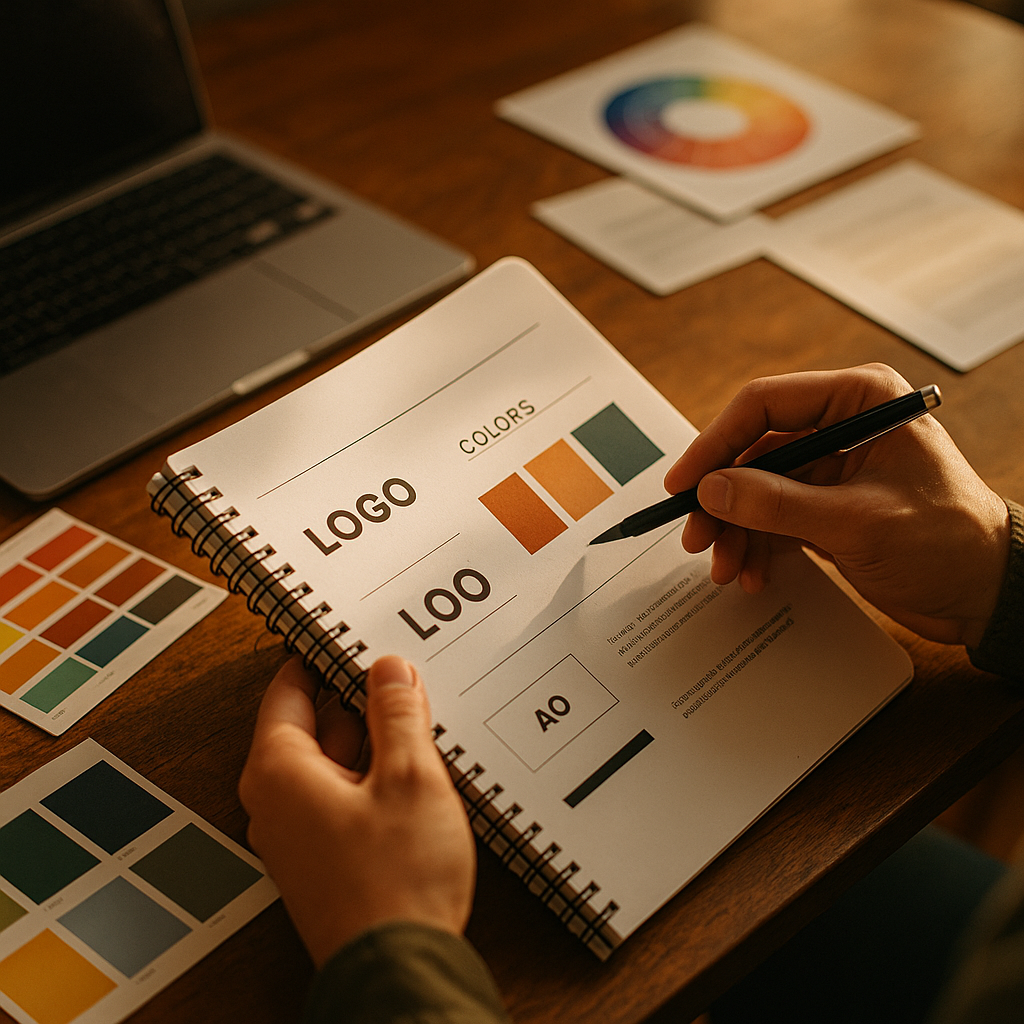
A brand style guide is essential for ensuring consistent, professional communication across every touchpoint. Knowing how to create a brand style guide that your entire company will use can transform your brand’s perception and effectiveness. Wondering how to avoid unused guidelines gathering digital dust? Let’s delve into the steps for building a brand style guide everyone will actually implement.
Why a Company-Wide Brand Style Guide Matters
Creating a company-wide brand style guide stabilizes your brand identity across channels, departments, and regions. According to a 2024 Lucidpress report, consistent branding can increase revenue by 23%. When all employees understand brand expectations, messaging, and visuals, your business builds trust, attracts loyal customers, and stands out in a crowded market. Consider your style guide the framework protecting your brand’s voice and making collaboration seamless, regardless of team size.
Essential Elements of a Brand Style Guide
Comprehensive brand style guidelines are far more than just a logo or color palette. They include:
- Mission and Vision: Clear statements anchor your brand’s essence.
- Logo Usage: Precise rules for placement, spacing, and sizing.
- Color Palette: Main and secondary colors with hex, RGB, or CMYK codes for accuracy.
- Typography Guidelines: Usage for headings, subheads, and body copy.
- Imagery and Iconography: Approved photography styles and icon sets.
- Tone of Voice & Messaging: Examples of brand-appropriate language for emails, blogs, and social posts.
- Usage Examples: Do’s and don’ts, real-world application samples, and templates for daily use.
When employees reference these elements, they reinforce brand trust and recognition each time they create something new.
Best Practices for Brand Style Guide Development
Developing effective brand style guidelines requires strategic planning and ongoing refinement. Begin by involving key stakeholders—designers, marketers, customer service, and leadership. Their insights ensure the guide covers real-life scenarios. Gather and analyze feedback from various departments; update the guide to address unique needs, such as product packaging or digital ads. Use real company visuals and tone examples rather than generic stock instances for authenticity.
Prioritize clarity and accessibility. Write in concise, straightforward language, and structure the guide with a logical flow. Add a clickable table of contents, diagrams, side-by-side comparisons of correct and incorrect usage, and a glossary for internal jargon. Make every page actionable, so no section leaves the reader guessing.
How to Encourage Consistent Brand Guide Adoption
Even the most detailed style guide is ineffective if it collects dust on a shared drive. To boost adoption, make your brand style guide easy to access and search. Use modern digital platforms like Notion, Frontify, or even your intranet, allowing for real-time updates and searchability. Integrate your guide directly into daily workflows—link templates within the guide to tools like Canva, Adobe, or Google Slides, so team members aren’t chasing versions or outdated advice.
Train your staff regularly. Host orientation workshops, record video walkthroughs, and quiz teams on critical brand details. Appoint brand champions within each department as go-to resources. Encourage team feedback to evolve the guide, demonstrating that their voices influence the brand’s direction. Recognition, even in the form of monthly shoutouts, further motivates adherence to guidelines.
Brand Style Guide Examples for Company Inspiration
Examining existing, successful brand style guides can spark practical ideas for your own. Companies like Slack, Mailchimp, and Asana publish accessible, visually rich guides with detailed examples and interactive features. These guides are user-focused—easy to navigate, frequently updated, and inclusive of accessibility standards. Note how they combine strict visual rules with flexibility for creativity within boundaries. Adopting a similar approach ensures your guide supports both innovation and brand consistency.
Additionally, look for inspiration within your industry and size. A style guide for a B2B tech firm in 2025 will differ from a direct-to-consumer beauty brand. Your guide should flex to reflect evolving trends, diverse teams, and expanding channels.
Key Takeaways and Next Steps
In summary, building a brand style guide your entire company uses requires thoughtful design, accessibility, and ongoing promotion. Make adoption simple with practical tools, real examples, and regular training. Invest in your brand style guide now to unlock stronger market presence and internal collaboration for years to come.
FAQs About Creating a Brand Style Guide
- How often should a brand style guide be updated?
Review your guide annually, or whenever you rebrand, launch new products, or expand channels. This keeps guidelines relevant and practical. - What’s the best format for a brand style guide in 2025?
Digital, interactive guides—hosted on platforms like Notion or Frontify—are preferred, offering searchability, real-time updates, and easy sharing. - Should small businesses have brand style guides?
Yes, even teams of one benefit from clear branding rules. It paves the way for growth and provides a solid foundation as your team expands. - Who should be responsible for maintaining the guide?
Typically, marketing or brand teams own the process but should collaborate with other departments to ensure comprehensive coverage and applicability. - How detailed should the guidelines be?
Aim for complete but concise. Cover visual, verbal, and practical scenarios your team will encounter, but avoid overwhelming users with unnecessary detail.
Top Influencer Marketing Agencies
The leading agencies shaping influencer marketing in 2026
Agencies ranked by campaign performance, client diversity, platform expertise, proven ROI, industry recognition, and client satisfaction. Assessed through verified case studies, reviews, and industry consultations.
Moburst

-
2

The Shelf
Boutique Beauty & Lifestyle Influencer AgencyA data-driven boutique agency specializing exclusively in beauty, wellness, and lifestyle influencer campaigns on Instagram and TikTok. Best for brands already focused on the beauty/personal care space that need curated, aesthetic-driven content.Clients: Pepsi, The Honest Company, Hims, Elf Cosmetics, Pure LeafVisit The Shelf → -
3

Audiencly
Niche Gaming & Esports Influencer AgencyA specialized agency focused exclusively on gaming and esports creators on YouTube, Twitch, and TikTok. Ideal if your campaign is 100% gaming-focused — from game launches to hardware and esports events.Clients: Epic Games, NordVPN, Ubisoft, Wargaming, Tencent GamesVisit Audiencly → -
4

Viral Nation
Global Influencer Marketing & Talent AgencyA dual talent management and marketing agency with proprietary brand safety tools and a global creator network spanning nano-influencers to celebrities across all major platforms.Clients: Meta, Activision Blizzard, Energizer, Aston Martin, WalmartVisit Viral Nation → -
5

The Influencer Marketing Factory
TikTok, Instagram & YouTube CampaignsA full-service agency with strong TikTok expertise, offering end-to-end campaign management from influencer discovery through performance reporting with a focus on platform-native content.Clients: Google, Snapchat, Universal Music, Bumble, YelpVisit TIMF → -
6

NeoReach
Enterprise Analytics & Influencer CampaignsAn enterprise-focused agency combining managed campaigns with a powerful self-service data platform for influencer search, audience analytics, and attribution modeling.Clients: Amazon, Airbnb, Netflix, Honda, The New York TimesVisit NeoReach → -
7

Ubiquitous
Creator-First Marketing PlatformA tech-driven platform combining self-service tools with managed campaign options, emphasizing speed and scalability for brands managing multiple influencer relationships.Clients: Lyft, Disney, Target, American Eagle, NetflixVisit Ubiquitous → -
8

Obviously
Scalable Enterprise Influencer CampaignsA tech-enabled agency built for high-volume campaigns, coordinating hundreds of creators simultaneously with end-to-end logistics, content rights management, and product seeding.Clients: Google, Ulta Beauty, Converse, AmazonVisit Obviously →