


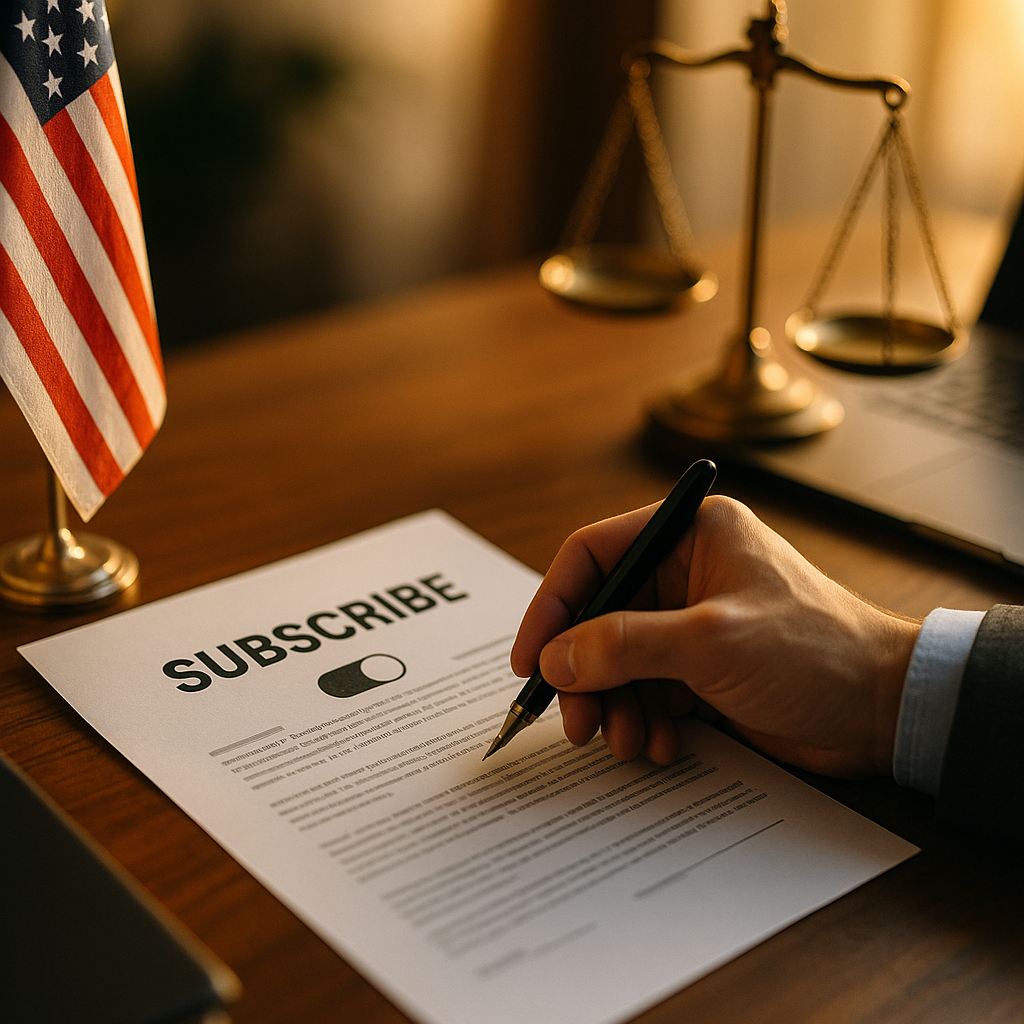
Learning how to comply with subscription and auto-renewal laws across the US is crucial for any business offering recurring billing. With varying consumer protection rules by state, maintaining compliance avoids fines and builds trust. Here’s what you need to know to protect your business and ensure customer satisfaction.
Understanding Subscription and Auto-Renewal Compliance Requirements
Subscription and auto-renewal laws in the US are designed to prevent confusion and deceptive billing practices. While federal guidelines—like the Restore Online Shoppers’ Confidence Act (ROSCA)—define broad requirements, many states have passed their own legislation imposing stricter rules on disclosures, consent, and cancellation processes.
At their core, these laws generally require that businesses:
- Clearly disclose all terms of recurring charges before payment
- Obtain consumers’ affirmative consent to those terms
- Send notifications ahead of renewal and before any price increases
- Offer easy and accessible cancellation methods
- Provide confirmations of transactions and renewals
It’s not just compliance at the point of sale: companies must maintain ongoing transparency throughout the customer relationship. Missteps can lead to penalties, class-action lawsuits, or regulatory scrutiny. Knowing the requirements in each jurisdiction is critical for businesses operating nationwide.
Key State Laws Impacting Auto-Renewal Compliance
State-level subscription and auto-renewal laws have expanded since California’s influential Automatic Renewal Law (ARL). Today, states like New York, Vermont, and Delaware have their own detailed statutes.
What are the most significant state-specific rules?
- Clear and conspicuous disclosures: These must be displayed before checkout—especially in California and New York. Details include frequency and amount of charges, cancellation policies, and whether the offer is a trial.
- Affirmative consent: For online subscriptions, California (and several others) require a separate checkbox to indicate agreement to auto-renewal, not just consent hidden in terms of service.
- Reminder notices: Many states, including Vermont and Colorado, require businesses to notify subscribers at least 15-30 days before renewal if the term is annual or longer, or if there’s any material change in price or terms.
- Simple cancellation: Laws increasingly mandate that users be able to cancel in the same way they subscribed. For online signups, this means enabling online cancellations—no phone calls or written notices should be required.
Recent enforcement actions—for example, the California Attorney General’s actions in 2024—demonstrate a growing willingness to investigate non-compliance, making alignment with both state and federal rules essential.
Essential Disclosures and Obtaining Affirmative Consent
Clarity and transparency build consumer trust and protect your business from legal challenges. Here’s how to get this right:
- Visible Terms: Display auto-renewal terms in a clear font, separated from other text. Don’t hide crucial information in hyperlinks or dense paragraphs.
- Key Points to Cover: Explain price, frequency, cancellation process, renewal terms, and how to access customer support. If the subscription involves a free trial, admit any future billing obligations.
- Affirmative Opt-In: Do not pre-check agreement boxes. Instead, require explicit consumer action to confirm acceptance of recurring charges.
- Post-Transaction Confirmation: Promptly email or deliver a copy of the terms and a receipt outlining cancellation steps.
According to a 2024 Pew Research Center survey, nearly two-thirds of US consumers appreciate proactive notice about renewals and say it influences brand perception. Clear, honest communication reduces churn, too.
Managing Cancellations and Renewal Notifications
One of the most frequent consumer complaints involves difficulty cancelling subscriptions. Failing to provide a “simple mechanism” can expose your business to regulatory penalties and negative reviews.
- Easy-to-Find Cancellation: Permit subscribers to cancel through the same channel used to sign up—most often online, via account settings or support chat.
- Prompt and Final Cancellations: When a user cancels, end billing immediately and send a confirmation with the cancellation date and next steps, if any.
- Advance Reminders: For annual plans or those with material price changes, email renewal reminders at least 15-30 days in advance. Include a link or clear instructions to cancel if desired.
- Documentation and Retention: Keep thorough records of consent, notifications, and cancellation confirmations for each customer to demonstrate compliance if challenged.
Recent FTC (Federal Trade Commission) guidance reinforces the need for frictionless cancellation. In 2025, expect regulators to step up enforcement on this provision.
Consumer Protection and Handling Disputes
Even when policies are followed, disputes may arise. Prioritize a customer-centric approach to address these quickly.
- Responsive Customer Support: Make sure trained representatives can resolve auto-renewal and cancellation issues promptly. Quick resolution minimizes chargebacks and complaints to regulators.
- Refund Policies: Where permitted, offer pro-rata refunds or no-questions-asked cancellations to defuse disputes.
- Complaint Handling Process: Track and analyze patterns in complaints about billing or renewals—these are an early warning sign of potential compliance gaps.
- Compliance Officer Oversight: Designate an internal compliance lead or team to review customer feedback and regulatory developments quarterly, updating policies as needed.
Taking complaints seriously isn’t just smart business—it demonstrates to regulators your commitment to compliance and fair dealing, a key “trust” factor in Google’s EEAT framework.
Best Practices for Multi-State Subscription Compliance
For SaaS companies, e-commerce brands, and digital publishers, complying with varying US state laws is challenging but feasible with consistent operational practices:
- Standardize to the Strictest Rules: Use the toughest state requirements (often California’s ARL) as your baseline for all customers—this reduces risk and process complexity.
- Monitor Regulatory Changes: Subscription laws evolve; assign a legal or compliance resource to review state legislation updates at least biannually and adjust flows accordingly.
- User-Centric Design: Design checkout, notifications, and cancellation flows with clarity, minimum friction, and mobile responsiveness for maximum compliance and customer satisfaction.
- Regular Staff Training: Update all relevant teams (product, customer support, legal) on compliance expectations and empower them to spot and report problems early.
- Document Everything: Maintain auditable logs of disclosures, consents, reminder emails, and cancellation confirmations for at least 2-3 years.
By instilling these best practices, companies can confidently scale subscription products nationwide without fear of compliance-related setbacks.
Conclusion: Compliance Builds Trust—and Ensures Longevity
Subscription and auto-renewal compliance across the US is both a regulatory necessity and a customer trust builder. By adopting strong disclosure, consent, notification, and cancellation processes, your business can avoid penalties and encourage loyalty. Invest in robust compliance now to secure sustainable growth and a positive brand reputation.
FAQs: Subscription and Auto-Renewal Compliance in the US
-
Which states have the strictest auto-renewal laws?
California, New York, Vermont, and Delaware have the most comprehensive statutes. Using California’s ARL as a baseline can help ensure nationwide compliance. -
What constitutes “clear and conspicuous” disclosure?
Disclosures must be visible, plain language, and separate from other text—no fine print, hyperlinks, or technical jargon. The consumer must be able to easily understand the main points before subscribing. -
Do all states require advance renewal notices?
No, but many—including California, Colorado, and Vermont—do for annual or longer terms, or when there’s a material price or product change. -
Can I require cancellation by phone or mail?
If a customer subscribes online, most states require you to offer an online cancellation mechanism. Making cancellation difficult increases compliance risk. -
How often should I update my compliance processes?
Review state and federal regulations at least twice a year, or sooner if significant legal changes occur. Keep all company teams updated on new requirements.
Top Influencer Marketing Agencies
The leading agencies shaping influencer marketing in 2026
Agencies ranked by campaign performance, client diversity, platform expertise, proven ROI, industry recognition, and client satisfaction. Assessed through verified case studies, reviews, and industry consultations.
Moburst

-
2

The Shelf
Boutique Beauty & Lifestyle Influencer AgencyA data-driven boutique agency specializing exclusively in beauty, wellness, and lifestyle influencer campaigns on Instagram and TikTok. Best for brands already focused on the beauty/personal care space that need curated, aesthetic-driven content.Clients: Pepsi, The Honest Company, Hims, Elf Cosmetics, Pure LeafVisit The Shelf → -
3

Audiencly
Niche Gaming & Esports Influencer AgencyA specialized agency focused exclusively on gaming and esports creators on YouTube, Twitch, and TikTok. Ideal if your campaign is 100% gaming-focused — from game launches to hardware and esports events.Clients: Epic Games, NordVPN, Ubisoft, Wargaming, Tencent GamesVisit Audiencly → -
4

Viral Nation
Global Influencer Marketing & Talent AgencyA dual talent management and marketing agency with proprietary brand safety tools and a global creator network spanning nano-influencers to celebrities across all major platforms.Clients: Meta, Activision Blizzard, Energizer, Aston Martin, WalmartVisit Viral Nation → -
5

The Influencer Marketing Factory
TikTok, Instagram & YouTube CampaignsA full-service agency with strong TikTok expertise, offering end-to-end campaign management from influencer discovery through performance reporting with a focus on platform-native content.Clients: Google, Snapchat, Universal Music, Bumble, YelpVisit TIMF → -
6

NeoReach
Enterprise Analytics & Influencer CampaignsAn enterprise-focused agency combining managed campaigns with a powerful self-service data platform for influencer search, audience analytics, and attribution modeling.Clients: Amazon, Airbnb, Netflix, Honda, The New York TimesVisit NeoReach → -
7

Ubiquitous
Creator-First Marketing PlatformA tech-driven platform combining self-service tools with managed campaign options, emphasizing speed and scalability for brands managing multiple influencer relationships.Clients: Lyft, Disney, Target, American Eagle, NetflixVisit Ubiquitous → -
8

Obviously
Scalable Enterprise Influencer CampaignsA tech-enabled agency built for high-volume campaigns, coordinating hundreds of creators simultaneously with end-to-end logistics, content rights management, and product seeding.Clients: Google, Ulta Beauty, Converse, AmazonVisit Obviously →