


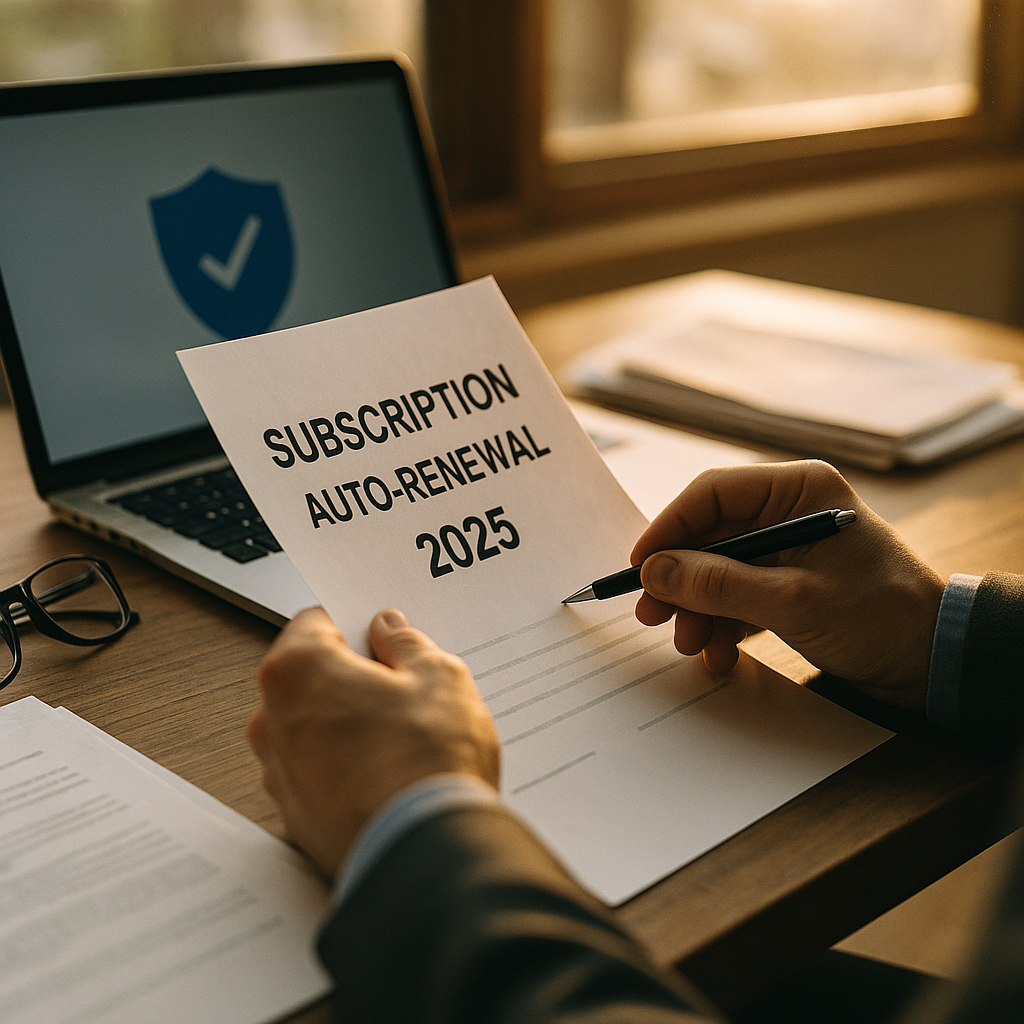
Understanding how to comply with subscription and auto-renewal laws across the US is crucial for businesses offering recurring billing. With increased legal scrutiny and evolving regulations, non-compliance can lead to lawsuits, fines, and damaged reputations. In 2025, keeping up with these requirements is not just best practice—it’s essential. Ready to make your subscription business risk-proof? Read on.
Understanding US Subscription and Auto-Renewal Compliance
Subscription and auto-renewal models are thriving, but so is regulatory enforcement. Laws vary by state, and several high-profile settlements have underscored the need for airtight compliance. The primary purpose of these laws is to protect consumers from unwanted charges and unclear terms. Staying informed about federal and state standards is your best defense against legal exposure.
The Federal Trade Commission (FTC) enforces key federal rules under the Restore Online Shoppers’ Confidence Act (ROSCA), mandating “clear and conspicuous” disclosures, consent, and straightforward cancellation. States like California, New York, and Vermont add their own requirements, often going beyond federal mandates. In 2025, enforcement is rising as auto-renewal complaints hit new highs, so your compliance plan must address both federal and state-specific obligations.
Key Requirements of Subscription Laws Across Major States
Each state in the US can impose different, sometimes stricter, obligations on subscription businesses. California’s Automatic Renewal Law (ARL) is the most comprehensive and influential. As of 2025, businesses targeting California residents must:
- Disclose auto-renewal terms in a clear, conspicuous manner before collecting payment.
- Obtain explicit affirmative consent to those terms—pre-ticked boxes are not allowed.
- Send reminder notices for annual (and in some cases monthly) renewals at least 15-45 days before charging the customer, depending on the renewal length.
- Provide simple online cancellation—cancellation must not require calling or mailing, especially if the purchase was online.
Other major states like New York and Vermont require:
- Advance notice prior to renewal for subscriptions exceeding one month.
- Accessible cancellation paths matching the purchase method (e.g., online or in-app).
- Specific record-keeping regarding consent and cancellation requests.
Failure to comply can result in class-action lawsuits, Attorney General enforcement, and per-violation fines. If your service is nationwide, you must comply with the strictest state law applicable to your subscribers—usually California’s ARL. A “one size fits all” legal approach reduces risk and builds consumer trust.
Creating Compliant Disclosures for Recurring Billing
Transparent, upfront disclosures are the backbone of auto-renewal compliance. Under both ROSCA and leading state laws, you must present key subscription terms to consumers before they complete a purchase. Disclosures should include:
- The fact that the subscription will automatically renew until canceled.
- The renewal period (monthly, annually, etc.).
- Recurring charges, including the amount and frequency.
- How to cancel, with a link or clear instructions.
- Your contact information for queries or cancellation.
These disclosures must be “clear and conspicuous.” Avoid fine print or hard-to-find links. Use plain language, contrasting font, and positioning near the purchase button. In 2025, leading e-commerce platforms and payment providers are adopting prompts to remind sellers to include legally required statements—leverage these built-in features to improve compliance and avoid costly fixes.
Obtaining and Documenting Affirmative Consent
Affirmative consent means a clear, voluntary, and informed action by the user to accept auto-renewal terms. Pre-checked boxes, silence, or inactivity are insufficient. Instead, users should check a box or click a button explicitly stating acceptance of recurring billing.
- The consent statement should appear near the checkout button.
- Use unambiguous language, like: “I understand my subscription will renew automatically unless canceled.”
- Digital records of each consent (timestamp, IP address, agreement text) must be maintained, as several states require proof of user acceptance in the event of disputes.
Keep these records securely for as long as the subscription is active, plus the statute of limitations period that may apply in each jurisdiction—often 3-4 years. Rely on your CRM or subscription management platform’s logging features to automate this record-keeping.
Building a User-Friendly and Legally Sound Cancellation Process
Complicated, hidden, or burdensome cancellation methods are a leading cause of regulatory enforcement and consumer complaints. By law—and per user expectations—cancellation must be:
- Simple: A few clicks, no multi-step barriers.
- Accessible: The same method as sign-up, e.g., online if they joined online.
- Timely: Immediate or processed within a short window stated in your terms.
Best practices in 2025 include providing a cancellation link in subscription confirmation emails, offering direct cancellation via user dashboards, and promptly confirming account closure. Several major software-as-a-service providers have faced penalties for not accepting cancellations submitted via email or mobile apps—even if those options were not explicitly advertised—so err on the side of broader accessibility.
Also, avoid aggressive “save” tactics or obstructions (“dark patterns”). Regulators now penalize excessive retention strategies that keep users from canceling—such as endless surveys or required customer support calls. Make the path to end a subscription as easy as signing up.
Maintaining Compliance: Monitoring, Auditing, and Training
With evolving state laws and federal attention, ongoing compliance is a process—not a one-time setup. To keep your subscription business safe in 2025 and beyond:
- Monitor laws: Assign legal or compliance staff to track updates in your key states.
- Audit workflows: Regularly review sign-up flows, email templates, and customer support scripts to ensure disclosures and cancellation paths meet regulations.
- Staff training: Educate marketing, support, and dev teams on new requirements and “red flags” to spot abuse or complaints early.
- Customer feedback loop: Collect and review cancellation and complaint data to spot potential compliance problems before they trigger regulatory scrutiny.
- Post-renewal communication: Send regular billing reminders and post-renewal confirmations as part of your standard operating procedures.
Leverage legal counsel and stay involved with industry associations for updates on enforcement priorities and “gray areas.” Proactive compliance is both a brand advantage and a buffer against ever-increasing enforcement.
FAQs About Subscription and Auto-Renewal Law Compliance
-
What happens if I don’t comply with California’s auto-renewal law?
You risk legal action from the California Attorney General, class-action lawsuits, and fines for each violation. Non-compliance can also force refunds, harm your brand, and block sales in the state.
-
Do I need to send renewal reminders for monthly subscriptions?
Some states, including California as of 2025, now require reminders for both annual and, in some cases, monthly subscriptions before renewal charges are billed. Check your target state’s law for specifics.
-
Are verbal or phone consents valid for recurring billing?
While verbal consents may be valid in some contexts, written or digital documentation is always preferable. Explicit digital consent ensures legal protection and better user experience.
-
How long do I need to keep consent records?
Maintain consent records and cancellation logs for at least the duration of the subscription plus the relevant statute of limitations period in the jurisdiction, usually 3-4 years.
-
Do these laws apply to B2B subscriptions?
Most states focus on consumer protections, but some extend rules to B2B subscriptions. Always verify if your customer type falls under state law definitions and, when in doubt, follow the strictest consumer standard.
Staying compliant with subscription and auto-renewal laws across the US can be complex but is entirely manageable with the right processes. Prioritize clear disclosures, obtain affirmative consent, make cancellation easy, and keep current with evolving regulations. Your commitment safeguards both your business and your customers in 2025’s demanding legal environment.
Top Influencer Marketing Agencies
The leading agencies shaping influencer marketing in 2026
Agencies ranked by campaign performance, client diversity, platform expertise, proven ROI, industry recognition, and client satisfaction. Assessed through verified case studies, reviews, and industry consultations.
Moburst

-
2

The Shelf
Boutique Beauty & Lifestyle Influencer AgencyA data-driven boutique agency specializing exclusively in beauty, wellness, and lifestyle influencer campaigns on Instagram and TikTok. Best for brands already focused on the beauty/personal care space that need curated, aesthetic-driven content.Clients: Pepsi, The Honest Company, Hims, Elf Cosmetics, Pure LeafVisit The Shelf → -
3

Audiencly
Niche Gaming & Esports Influencer AgencyA specialized agency focused exclusively on gaming and esports creators on YouTube, Twitch, and TikTok. Ideal if your campaign is 100% gaming-focused — from game launches to hardware and esports events.Clients: Epic Games, NordVPN, Ubisoft, Wargaming, Tencent GamesVisit Audiencly → -
4

Viral Nation
Global Influencer Marketing & Talent AgencyA dual talent management and marketing agency with proprietary brand safety tools and a global creator network spanning nano-influencers to celebrities across all major platforms.Clients: Meta, Activision Blizzard, Energizer, Aston Martin, WalmartVisit Viral Nation → -
5

The Influencer Marketing Factory
TikTok, Instagram & YouTube CampaignsA full-service agency with strong TikTok expertise, offering end-to-end campaign management from influencer discovery through performance reporting with a focus on platform-native content.Clients: Google, Snapchat, Universal Music, Bumble, YelpVisit TIMF → -
6

NeoReach
Enterprise Analytics & Influencer CampaignsAn enterprise-focused agency combining managed campaigns with a powerful self-service data platform for influencer search, audience analytics, and attribution modeling.Clients: Amazon, Airbnb, Netflix, Honda, The New York TimesVisit NeoReach → -
7

Ubiquitous
Creator-First Marketing PlatformA tech-driven platform combining self-service tools with managed campaign options, emphasizing speed and scalability for brands managing multiple influencer relationships.Clients: Lyft, Disney, Target, American Eagle, NetflixVisit Ubiquitous → -
8

Obviously
Scalable Enterprise Influencer CampaignsA tech-enabled agency built for high-volume campaigns, coordinating hundreds of creators simultaneously with end-to-end logistics, content rights management, and product seeding.Clients: Google, Ulta Beauty, Converse, AmazonVisit Obviously →