


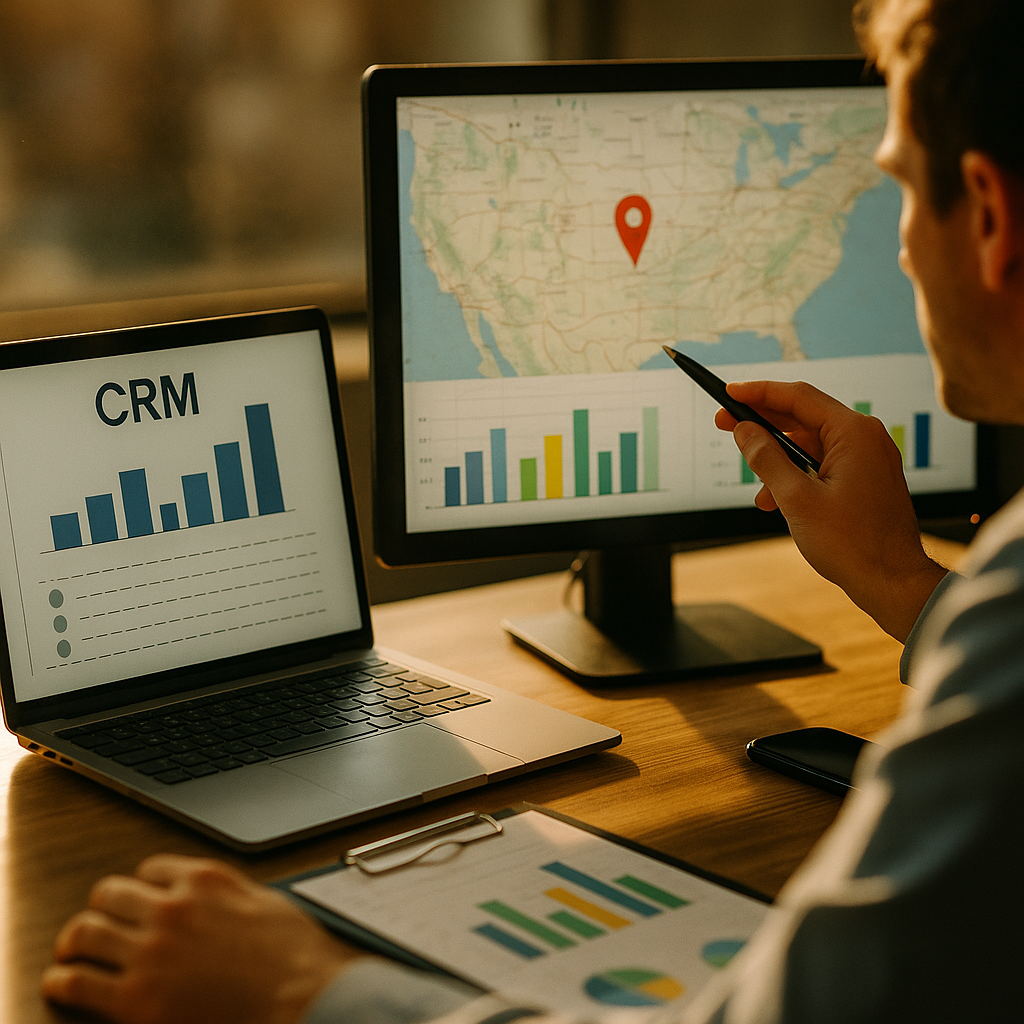
Google AI Mode’s persistent background agents are making brand decisions before a single click ever fires. If your attribution model requires a URL visit to count a touchpoint, you are already blind to a growing share of your pipeline.
The Click Was Never the Whole Story — Now It’s Not Even Half
Traditional web analytics was built on a simple premise: intent flows through clicks, and clicks leave trails. That premise is collapsing. Google’s AI Mode doesn’t browse on behalf of users the way a human does. Its persistent background agents synthesize information, compare vendors, filter options, and surface recommendations, often without ever triggering the referral events your GA4 or Adobe Analytics instance is waiting for.
The operational consequence is brutal. A prospect researches your category, an AI agent evaluates your brand against three competitors using your public-facing content, your structured data, and third-party review signals, and your CRM sees nothing. No session. No lead source. No touchpoint. The deal either moves forward or dies, and your attribution model has no record of the conversation that determined the outcome.
Forrester estimates that over 40% of B2B buying research is now conducted through AI-mediated environments where conventional click-tracking is structurally unable to capture intent signals.
This is not a tracking gap you can patch with better UTM hygiene. It requires a fundamental rethink of what a “touchpoint” means and where in your infrastructure you capture proof of brand interaction.
How Persistent Background Agents Actually Work
Google AI Mode’s agent architecture does something qualitatively different from earlier search behaviors. When a user sets up a persistent research task, the agent runs continuously in the background, checking sources, monitoring for new information, and building a synthesized answer over time. Think of it as a tireless analyst your prospect has on retainer, pulling from your brand’s knowledge graph, review platforms, structured product data, and publisher content without ever putting your URL in a browser tab.
The agent reads your schema markup. It reads your product feeds. It reads editorial coverage about your brand. It evaluates structured product data in ways that look nothing like a traditional crawler pass. And when it synthesizes a recommendation, that recommendation is presented to the user as a near-final answer, bypassing the comparison-shopping behavior that used to drive mid-funnel clicks to your site.
For brands selling in competitive categories, this means your GEO (Generative Engine Optimization) infrastructure is now a pre-click sales layer. It is not supplementary to your funnel. It is the top of your funnel, operating invisibly.
What Your CRM Is Missing and Why It Matters
Most CRM configurations are built to ingest lead-source data tied to identifiable user sessions. HubSpot, Salesforce, and similar platforms pull in UTM parameters, form submissions, chat transcripts, and ad click data. None of those mechanisms capture an AI agent’s evaluation pass.
The result is a lead source distribution that is systematically understating organic and AI-driven influence. “Direct” traffic attribution inflates. Assisted conversion paths look shorter than they are. And when your CMO asks which channels are working, the honest answer is: you don’t know, because your model cannot see the interactions that are increasingly shaping purchase decisions.
There are three specific failure modes to address:
- Dark funnel inflation: AI agent evaluations that influence decisions without leaving any session trace are landing in your “direct” bucket and distorting channel ROI calculations.
- Compressed attribution windows: Because the research phase is invisible, it looks like conversions are happening faster than they are, leading to underinvestment in awareness and consideration content.
- Competitive blind spots: You cannot see which agent evaluations your brand lost, meaning you cannot identify what structured data, review signals, or content gaps caused you to be filtered out.
Understanding the scope of this problem requires an honest data foundation audit before layering on new tooling. Brands that skip this step end up with expensive integrations measuring the wrong things.
Restructuring CRM Integration for the Agent Era
The practical fix starts not with technology but with the definition of a “lead event.” Expand it. An AI agent pulling your structured product data is a brand interaction. A review platform summary being cited in an AI response is a brand interaction. Neither generates a click, but both influence outcomes.
Here is how to build CRM infrastructure that captures these invisible touchpoints:
- Server-side event logging for schema requests: Instrument your web infrastructure to log structured data fetch patterns. Significant spikes in schema.org markup requests from non-human user agents correlated with commercial intent queries are signals. These can be piped into a data warehouse and correlated against downstream CRM conversion events.
- Review platform API integration: Platforms like G2, Trustpilot, and Gartner Peer Insights are being heavily indexed by AI agents for social proof signals. Pull your review velocity and sentiment data directly into your CRM via their APIs so you can correlate review profile health with pipeline movement.
- Share-of-voice tracking in AI responses: Tools like Profound, Goodie AI, and similar GEO monitoring platforms track when and how your brand appears in AI-generated answers. Integrate these signals into your marketing data lake. They are leading indicators of pre-click brand evaluation.
- Intent data enrichment at the account level: For B2B brands, platforms like Bombora and 6sense capture intent signals at the company level even when individual users are not identified. Map these against AI-relevant topic clusters to infer when target accounts are in an AI-mediated research phase.
The brands that win in the agent era will not be those with the best click-through rates. They will be those with the cleanest structured data, the strongest third-party validation signals, and the CRM architecture to connect invisible interactions to revenue outcomes.
GEO Infrastructure as a Revenue Operations Asset
GEO is often framed as an SEO evolution. That framing undersells it to the people who control budgets. Reframe it: GEO infrastructure is the mechanism by which your brand participates in AI agent evaluations. It deserves a line item in your revenue operations budget, not your content marketing budget.
Building GEO infrastructure that captures touchpoints requires four layers. First, your schema markup must be comprehensive, accurate, and machine-parseable. Review your brand’s AI search visibility and identify where structured data gaps are causing agent evaluations to skip your brand or misrepresent your offering.
Second, your third-party presence must be actively managed. AI agents weight authoritative external sources heavily. That means your Wikipedia entry (if you have one), your Crunchbase profile, your presence on vertical review platforms, and editorial coverage on sites with high E-E-A-T signals. These are not optional PR hygiene tasks. They are agent-facing sales assets.
Third, your knowledge panel and entity associations in Google’s Knowledge Graph need regular auditing. Brands with incomplete or inaccurate entity data are being misrepresented in AI-synthesized responses at scale. For more on how GEO affects vendor shortlisting, the operational stakes are significant.
Fourth, connect these signals to your existing identity resolution pipelines so that when a prospect does eventually click through, that first-click event is enriched with context about what the AI agent ecosystem was saying about your brand in the weeks prior.
Measurement That Survives the Invisible Funnel
Attribution modeling needs to evolve alongside these infrastructure changes. Last-click and even data-driven multi-touch models are structurally incapable of accounting for AI agent evaluation passes. The practical path forward involves three adjustments.
Replace session-based attribution as the primary revenue signal with a pipeline-velocity model that maps content and structured data investments to deal acceleration. If accounts that encounter your brand through AI-cited review content close 20% faster, that is attributable value even without a click trace.
Build a GEO share-of-voice index as a leading indicator KPI. Track how often your brand appears in AI responses for category-relevant queries across tools like Perplexity and Google Gemini. Correlate quarterly movements in this index against pipeline generation. The correlation will not be perfect, but it will be directionally useful and will justify GEO investment to finance stakeholders.
Finally, bring your RevOps team into the conversation early. The gap between marketing’s invisible touchpoint problem and sales’ “where did this lead come from” problem is actually the same problem. Aligning on shared definitions of influence, informed by HubSpot’s or Salesforce’s multi-object reporting capabilities, gives you a framework to capture qualitative signal where quantitative tracking fails.
For brands running influencer programs alongside these AI channels, the same invisible attribution problem applies. AI agents are synthesizing creator content, brand mentions in editorial, and social proof from influencer audiences without generating trackable clicks. Understanding how Google AI Mode agents affect brand discovery is foundational before layering influencer investment on top of a broken attribution model. Similarly, CMO readiness for agentic campaigns should be assessed before scaling creator spend into this environment.
External validation from platforms like Gartner and eMarketer consistently shows that AI-mediated research is compressing consideration phases and shifting first-meaningful-contact earlier in the buying process than most CRM configurations acknowledge. The brands updating their infrastructure now are building a measurement advantage that compounds.
Start this week: Pull your current “direct” traffic percentage and treat anything above 25% as probable dark funnel contamination. That number is your baseline for measuring how much invisible attribution your current stack is missing, and it is the first number your GEO and CRM restructuring should move.
FAQs
What are Google AI Mode persistent background agents?
Google AI Mode persistent background agents are continuously running AI processes that research topics, compare options, and synthesize recommendations on behalf of users without requiring the user to actively browse. They operate across multiple sources simultaneously and can influence purchase decisions before a user ever visits a brand’s website directly.
Why do background agents create an attribution problem for brands?
Because persistent background agents do not generate standard browser sessions or referral events, conventional analytics platforms like GA4 or Adobe Analytics cannot record these interactions as touchpoints. The result is a systematic undercounting of AI-mediated brand evaluations in CRM data, which distorts channel ROI calculations and compresses apparent attribution windows.
What is GEO infrastructure and why does it matter for this problem?
GEO (Generative Engine Optimization) infrastructure refers to the structured data, entity signals, third-party citations, and knowledge graph presence that determine how AI agents evaluate and represent your brand. Strong GEO infrastructure increases the likelihood that your brand is included and accurately represented in AI-synthesized recommendations, even when no click is generated.
How should brands update their CRM to capture invisible touchpoints?
Brands should implement server-side logging of structured data fetch patterns, integrate review platform APIs to pull social proof signals into their CRM, deploy GEO monitoring tools that track brand share-of-voice in AI responses, and use B2B intent data platforms to infer AI-mediated research activity at the account level. These inputs create a richer pre-click picture of buyer behavior.
What attribution model works best when clicks are not available?
A pipeline-velocity model works better than session-based attribution in AI agent environments. Instead of assigning credit based on click sequences, this approach measures how content assets, structured data quality, and AI share-of-voice correlate with deal acceleration and close rates. This gives finance stakeholders a defensible ROI framework even when individual touchpoints are not directly trackable.
How do I start measuring my brand’s exposure to the invisible attribution problem?
Begin by auditing your current “direct” traffic percentage in your analytics platform. A figure significantly above 25% often indicates substantial dark funnel activity, including AI agent evaluations that are not being attributed. Simultaneously, use GEO monitoring tools to benchmark how frequently your brand appears in AI-generated responses for key category queries. These two baselines give you a starting point for infrastructure improvements.
Top Influencer Marketing Agencies
The leading agencies shaping influencer marketing in 2026
Agencies ranked by campaign performance, client diversity, platform expertise, proven ROI, industry recognition, and client satisfaction. Assessed through verified case studies, reviews, and industry consultations.
Moburst

-
2

The Shelf
Boutique Beauty & Lifestyle Influencer AgencyA data-driven boutique agency specializing exclusively in beauty, wellness, and lifestyle influencer campaigns on Instagram and TikTok. Best for brands already focused on the beauty/personal care space that need curated, aesthetic-driven content.Clients: Pepsi, The Honest Company, Hims, Elf Cosmetics, Pure LeafVisit The Shelf → -
3

Audiencly
Niche Gaming & Esports Influencer AgencyA specialized agency focused exclusively on gaming and esports creators on YouTube, Twitch, and TikTok. Ideal if your campaign is 100% gaming-focused — from game launches to hardware and esports events.Clients: Epic Games, NordVPN, Ubisoft, Wargaming, Tencent GamesVisit Audiencly → -
4

Viral Nation
Global Influencer Marketing & Talent AgencyA dual talent management and marketing agency with proprietary brand safety tools and a global creator network spanning nano-influencers to celebrities across all major platforms.Clients: Meta, Activision Blizzard, Energizer, Aston Martin, WalmartVisit Viral Nation → -
5

The Influencer Marketing Factory
TikTok, Instagram & YouTube CampaignsA full-service agency with strong TikTok expertise, offering end-to-end campaign management from influencer discovery through performance reporting with a focus on platform-native content.Clients: Google, Snapchat, Universal Music, Bumble, YelpVisit TIMF → -
6

NeoReach
Enterprise Analytics & Influencer CampaignsAn enterprise-focused agency combining managed campaigns with a powerful self-service data platform for influencer search, audience analytics, and attribution modeling.Clients: Amazon, Airbnb, Netflix, Honda, The New York TimesVisit NeoReach → -
7

Ubiquitous
Creator-First Marketing PlatformA tech-driven platform combining self-service tools with managed campaign options, emphasizing speed and scalability for brands managing multiple influencer relationships.Clients: Lyft, Disney, Target, American Eagle, NetflixVisit Ubiquitous → -
8

Obviously
Scalable Enterprise Influencer CampaignsA tech-enabled agency built for high-volume campaigns, coordinating hundreds of creators simultaneously with end-to-end logistics, content rights management, and product seeding.Clients: Google, Ulta Beauty, Converse, AmazonVisit Obviously →