


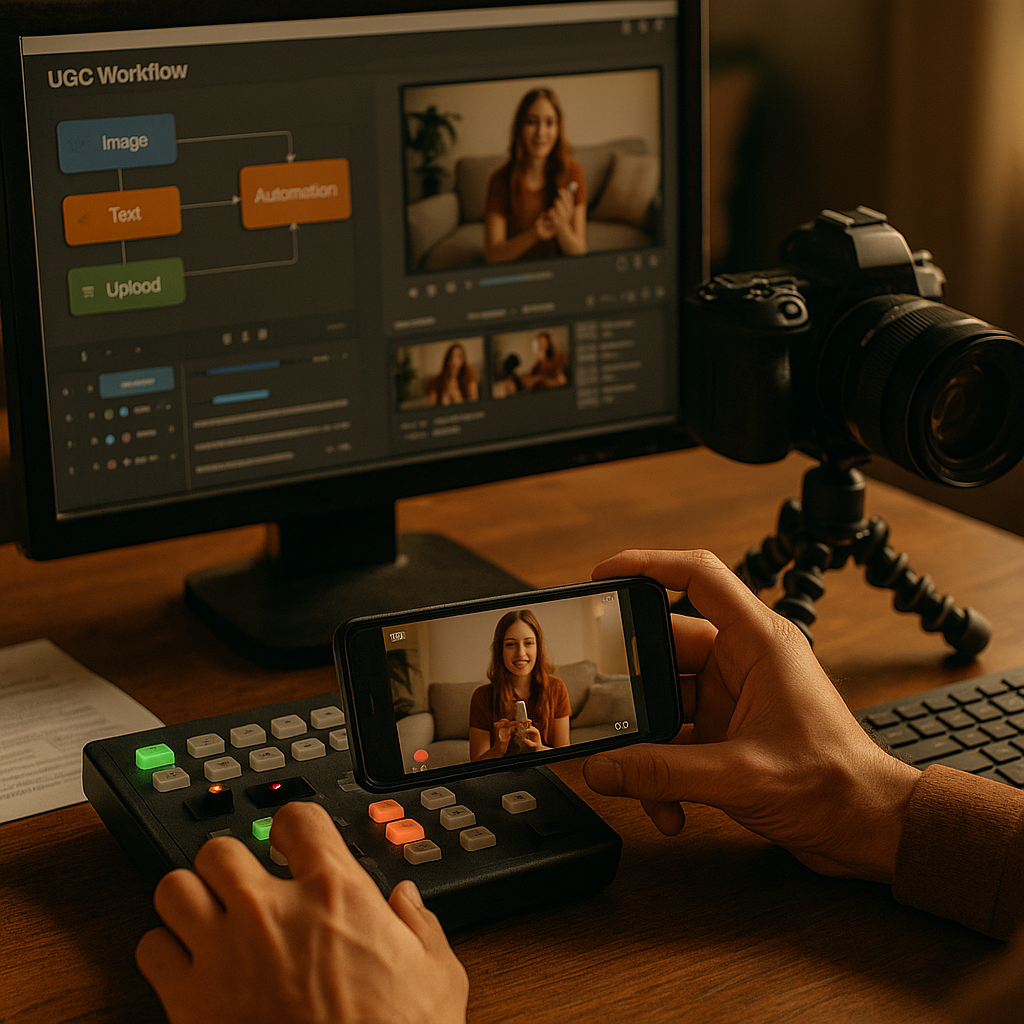
Agencies managing high-volume UGC programs in 2026 are making a costly mistake: defaulting to one operational mode across all campaigns. NewGen’s multiple platform three-mode workflow framework finally gives teams a structured way to stop guessing.
Why “One Mode Fits All” Is Burning Budget
The average brand running influencer programs across TikTok, Instagram Reels, and YouTube Shorts is producing hundreds of content assets per quarter. At that volume, the operational model matters as much as the creative brief. Apply full human review to every asset and you’ll miss publishing windows. Run everything on autopilot and you’ll ship brand-unsafe content at scale.
Brands that match their UGC operational mode to campaign type — not just campaign size — consistently report 20-35% lower cost-per-asset without sacrificing compliance benchmarks.
NewGen’s framework addresses this directly by defining three distinct operating modes: full-automation, hybrid, and human-led. Each has a specific cost profile, quality ceiling, and throughput capacity. The strategic question isn’t which mode is best; it’s which mode fits which campaign type in your portfolio.
The Three Modes: What They Actually Mean in Practice
Full-Automation Mode runs creator discovery, brief delivery, content ingestion, compliance flagging, and publishing through integrated platform logic with minimal human touchpoints. Platforms like TikTok Symphony and Meta’s Advantage+ Creative already enable significant portions of this pipeline. For agencies, this means defining rule sets upfront — brand safety thresholds, hashtag requirements, disclosure language — and letting the system execute. The tradeoff is that edge cases and nuanced brand voice issues get missed. Full-automation works when the content type is commoditized: product demos, seasonal offers, high-frequency awareness plays.
Human-Led Mode puts creative directors, brand strategists, and compliance reviewers at every stage. Every asset is briefed, reviewed, and approved by a person before it goes live. This is the right mode for brand launches, sensitive category campaigns (pharma, finance, alcohol), or any campaign tied to a major cultural moment where a single misstep carries real reputational cost. The throughput ceiling is low. The quality floor is high. Budget per asset is 3-5x the automation equivalent.
Hybrid Mode is where most mid-to-large programs should be operating — and where most aren’t. Automation handles ingestion, initial flagging, and metadata tagging. Humans review flagged content, approve final cuts, and handle anything the system scores below a confidence threshold. Think of it as AI doing the filtering, humans doing the judgment. This is the operational sweet spot for performance-driven UGC campaigns running across multiple platforms simultaneously. For agencies managing programs across TikTok, Instagram, and YouTube at once, UGC distribution operations at this layer need clearly defined escalation paths or the hybrid model collapses into reactive firefighting.
Matching Mode to Campaign Type: A Decision Framework
Before you assign a mode, answer four questions:
- What is the monthly asset volume? Under 50 assets per platform, human-led is viable. Over 200, automation must carry the baseline load.
- What is the brand risk profile? Regulated industries, high-profile sponsorships, and politically adjacent content require human review regardless of volume.
- What is the quality variance tolerance? Performance campaigns tolerate moderate quality variance if CTR and conversion hold. Brand equity campaigns do not.
- What is the publishing cadence? Real-time reactive content (live events, trending audio) demands automation. Editorial calendars with 72+ hour lead times can support human checkpoints.
Map your current campaign portfolio against these four parameters. You’ll almost certainly find you’re running two or three different campaign types that warrant different modes — but managing them all the same way.
Platform Architecture Matters More Than You Think
NewGen’s multiple platform framework isn’t just about operational workflow; it’s about how different platforms handle content differently at the infrastructure level. Creator distribution infrastructure on TikTok behaves differently than on YouTube: algorithmic amplification windows, aspect ratio requirements, caption compliance, and disclosure placement all vary. An automation layer that works cleanly on one platform can produce non-compliant outputs on another.
This is a practical problem. Agencies that have tried to run a single automated pipeline across TikTok and Instagram simultaneously report frequent disclosure placement errors and aspect ratio failures requiring manual correction, which erodes the efficiency case for full-automation. The fix is platform-specific rule sets within the automation layer, not a single universal template.
For teams evaluating or building this infrastructure, automating the content supply chain requires separate configuration logic per platform, not a one-size workflow. Budget for that complexity in your platform setup costs.
Platform-specific rule sets inside your automation layer are not a nice-to-have. They’re the difference between a hybrid model that scales and one that generates a compliance backlog your human reviewers can’t clear.
Budget Efficiency: Where the Numbers Actually Land
The cost math on three-mode operations is counterintuitive. Full-automation has the lowest per-asset cost but the highest failure remediation cost when brand safety issues slip through. Human-led has the highest per-asset cost but near-zero remediation overhead. Hybrid sits in between on both dimensions — but its efficiency advantage compounds at scale.
Here’s what agencies consistently underestimate: the cost of mode-switching mid-campaign. Shifting from hybrid to human-led because a brand escalation occurs mid-flight triggers resource spikes, publishing delays, and sometimes creator relationship damage. Build mode-switching protocols into your SLA before the campaign launches, not after something goes wrong. Tools supporting AI governance at scale are now including escalation routing logic specifically for this scenario.
When evaluating budget efficiency across modes, measure three things: cost-per-approved-asset (not cost-per-produced-asset), time-to-publish, and remediation rate. Agencies that track only the first metric systematically undervalue hybrid mode because remediation costs sit in a different budget line.
Quality Control Without Slowing Everything Down
Quality control in a three-mode system isn’t a single process; it’s a tiered function. In full-automation, quality control is entirely rule-based: compliance flags, brand safety scores from tools like AI vetting stacks, and automated disclosure checks via FTC-aligned language databases. In hybrid mode, AI handles the 80% that is clearly acceptable or clearly problematic; humans handle the 20% in the middle. In human-led mode, quality control is editorial.
The practical implication: your quality control team’s role changes depending on the mode. In hybrid operations, they become exception managers and threshold calibrators, not reviewers of every piece of content. That’s a skill shift, not just a workflow shift. Teams that try to run hybrid mode with reviewers trained for human-led operations end up over-reviewing, which kills the throughput advantage.
For campaigns running nano and micro creator vetting at volume, the quality control layer also needs to account for creator-level variance, not just content-level variance. A creator who passes vetting today can produce off-brand content tomorrow. Hybrid and full-automation modes need dynamic creator scoring, not static approval lists.
Building the Right Mix for Your Agency
The practical answer is portfolio-level mode assignment, reviewed quarterly. Categorize every campaign type you run into one of three buckets based on the four-question framework above. Assign a default mode. Define the conditions that trigger a mode escalation. Document the cost delta between modes so leadership can authorize escalation decisions without a full budget review every time.
Agencies that have operationalized this report faster campaign launches, clearer resource forecasting, and fewer mid-campaign escalations. Reviewing creator performance attribution at the campaign level also becomes more meaningful when you’re comparing like-for-like operational modes rather than mixing outputs from different workflow types in the same analysis.
Start with one campaign type. Map it against the three modes. Run the numbers on cost-per-approved-asset across all three. The answer to which mix is right for your agency will be in the data, not in the framework document.
Frequently Asked Questions
What is NewGen’s three-mode UGC workflow?
NewGen’s three-mode workflow is an operational framework that categorizes UGC production and distribution into three models: full-automation (AI-driven end-to-end), hybrid (AI filtering with human review for flagged content), and human-led (editorial oversight at every stage). The framework helps agencies and brands select the right operational model based on campaign volume, risk profile, and budget constraints.
When should a brand use full-automation mode for UGC?
Full-automation is most appropriate for high-volume, lower-risk content types such as product demos, seasonal promotions, and awareness-phase campaigns where content is relatively standardized. It works best when brand safety rule sets are well-defined, publishing cadence is high, and the cost of occasional quality misses is lower than the cost of manual review overhead.
What are the risks of running hybrid UGC operations?
The primary risks in hybrid mode are threshold miscalibration (where the AI flags too little or too much, overloading human reviewers) and mode-switching costs when a campaign escalates mid-flight. Teams also risk applying human-led review habits to a hybrid workflow, which eliminates the throughput advantage. Clear escalation protocols and trained exception managers are essential to hybrid operations performing as designed.
How should agencies measure budget efficiency across the three modes?
Agencies should track cost-per-approved-asset (not cost-per-produced-asset), time-to-publish, and remediation rate across all three modes. Cost-per-produced-asset understates the true expense of full-automation by excluding remediation costs when brand-unsafe content slips through. Measuring all three metrics gives a complete efficiency picture that supports accurate mode selection and budget forecasting.
Can a single campaign run across multiple operational modes simultaneously?
Yes, and for complex multi-platform campaigns, it often should. A single campaign might run full-automation on TikTok for trend-reactive short clips while using hybrid mode for Instagram Reels and human-led review for hero brand content on YouTube. The key requirement is platform-specific rule sets and clearly documented escalation paths so teams aren’t making mode decisions ad hoc under deadline pressure.
How does platform architecture affect the three-mode framework?
Different platforms have distinct compliance requirements, aspect ratios, disclosure placement rules, and algorithmic timing windows. A single automation pipeline applied across TikTok, Instagram, and YouTube simultaneously often produces platform-specific compliance failures. The NewGen framework requires platform-specific configuration logic within the automation layer, which adds setup complexity but prevents the remediation backlog that a universal template approach creates.
Top Influencer Marketing Agencies
The leading agencies shaping influencer marketing in 2026
Agencies ranked by campaign performance, client diversity, platform expertise, proven ROI, industry recognition, and client satisfaction. Assessed through verified case studies, reviews, and industry consultations.
Moburst

-
2

The Shelf
Boutique Beauty & Lifestyle Influencer AgencyA data-driven boutique agency specializing exclusively in beauty, wellness, and lifestyle influencer campaigns on Instagram and TikTok. Best for brands already focused on the beauty/personal care space that need curated, aesthetic-driven content.Clients: Pepsi, The Honest Company, Hims, Elf Cosmetics, Pure LeafVisit The Shelf → -
3

Audiencly
Niche Gaming & Esports Influencer AgencyA specialized agency focused exclusively on gaming and esports creators on YouTube, Twitch, and TikTok. Ideal if your campaign is 100% gaming-focused — from game launches to hardware and esports events.Clients: Epic Games, NordVPN, Ubisoft, Wargaming, Tencent GamesVisit Audiencly → -
4

Viral Nation
Global Influencer Marketing & Talent AgencyA dual talent management and marketing agency with proprietary brand safety tools and a global creator network spanning nano-influencers to celebrities across all major platforms.Clients: Meta, Activision Blizzard, Energizer, Aston Martin, WalmartVisit Viral Nation → -
5

The Influencer Marketing Factory
TikTok, Instagram & YouTube CampaignsA full-service agency with strong TikTok expertise, offering end-to-end campaign management from influencer discovery through performance reporting with a focus on platform-native content.Clients: Google, Snapchat, Universal Music, Bumble, YelpVisit TIMF → -
6

NeoReach
Enterprise Analytics & Influencer CampaignsAn enterprise-focused agency combining managed campaigns with a powerful self-service data platform for influencer search, audience analytics, and attribution modeling.Clients: Amazon, Airbnb, Netflix, Honda, The New York TimesVisit NeoReach → -
7

Ubiquitous
Creator-First Marketing PlatformA tech-driven platform combining self-service tools with managed campaign options, emphasizing speed and scalability for brands managing multiple influencer relationships.Clients: Lyft, Disney, Target, American Eagle, NetflixVisit Ubiquitous → -
8

Obviously
Scalable Enterprise Influencer CampaignsA tech-enabled agency built for high-volume campaigns, coordinating hundreds of creators simultaneously with end-to-end logistics, content rights management, and product seeding.Clients: Google, Ulta Beauty, Converse, AmazonVisit Obviously →