


Your Brand Might Already Be Invisible to AI Search
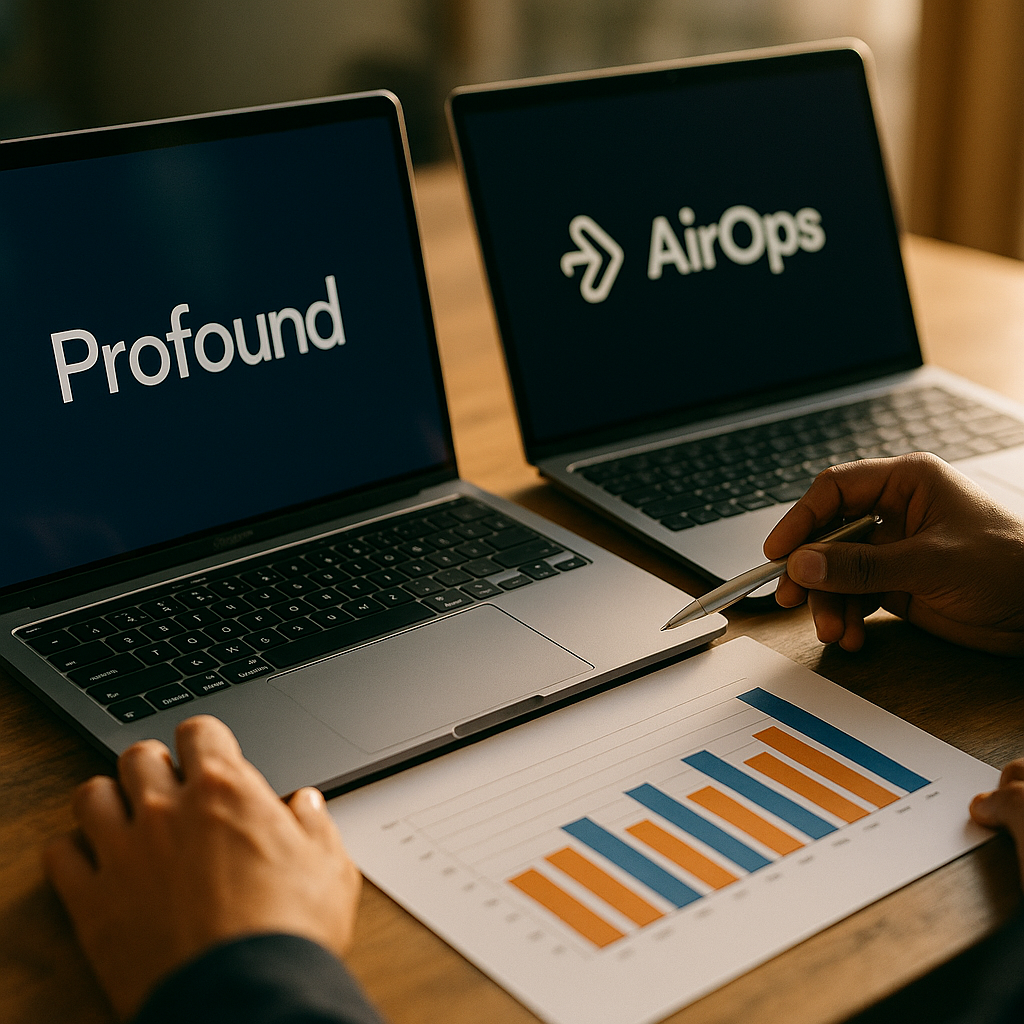
Over 40% of Google searches now return AI-generated answers before a single organic result. If your brand isn’t cited in those answers, you don’t have a visibility problem — you have an existential one. Generative search optimization is the new battleground, and tools like Profound and AirOps are emerging as the instruments brand teams need to measure, track, and grow share of model before competitors establish citation authority.
What “Share of Model” Actually Means for Brand Strategists
Share of model is the percentage of relevant AI-generated responses that cite, reference, or surface your brand — across ChatGPT, Gemini, Perplexity, Claude, and similar systems. It’s the LLM equivalent of share of voice, but harder to measure and faster to lose.
Unlike traditional SEO rankings, where a URL either ranks or it doesn’t, LLM citation behavior is probabilistic. The same query can return your competitor’s name one moment and ignore your brand entirely the next. That inconsistency is exactly why passive monitoring isn’t enough. You need tooling that tracks this at scale, across models, across query variations, and over time.
Brand teams that have historically measured success through impressions and click-through rates are not equipped for this. The AI marketing data fragmentation problem is real, and share of model tracking adds another layer of complexity that demands purpose-built solutions.
Profound: What It Does and Where It Earns Its Fee
Profound is a generative search monitoring platform built specifically for brand and agency teams. It runs structured query panels across major LLMs — think hundreds to thousands of prompts mapped to your category, product type, and buyer journey stage — and reports back on how often your brand appears, what context it appears in, and which competitors are being cited instead.
The core value proposition is citation rate tracking over time. If your brand is mentioned in 22% of relevant AI responses in January and 31% by March, Profound quantifies that lift and attributes it directionally to the content or PR activity you deployed. That’s the kind of signal a CMO can bring to a budget conversation.
Where Profound earns serious consideration is in its prompt panel design. The platform allows you to define query intent categories that mirror your actual customer acquisition funnel: awareness-stage questions, comparison queries, feature-specific questions, and post-purchase support queries. This matters because LLMs cite different sources depending on query intent. A brand that dominates awareness queries might be completely absent from high-intent comparison queries — and that’s where the real revenue loss happens.
Citation rate on high-intent comparison queries is the metric most directly correlated with AI-influenced purchase decisions. Monitoring awareness-only is like tracking impressions and ignoring conversion rate.
There are real limitations to acknowledge. Profound’s data reflects query simulation, not actual end-user behavior. The platform can tell you how an LLM responds to a crafted prompt, but it can’t tell you how many real users received that response. For teams accustomed to GA4-level granularity, that gap requires an honest conversation about what this data is and isn’t. If you’re already working to track AI referral traffic in GA4, Profound’s output becomes a leading indicator that complements your actual traffic data rather than replacing it.
AirOps: A Different Angle on LLM Visibility
AirOps approaches the problem from a content operations angle. Where Profound is primarily a monitoring and measurement tool, AirOps functions more as an LLM-optimized content production and workflow platform. Its relevance to generative search optimization comes from its ability to build content pipelines specifically structured to feed the training patterns and retrieval preferences of large language models.
In practical terms, AirOps helps brand teams produce the types of structured, authoritative content — comprehensive topic clusters, FAQ pages, comparison frameworks, definitional content — that LLMs are statistically more likely to retrieve and cite. It connects to your CMS, your data sources, and your brand guidelines, and it helps content teams produce at the volume and depth that AI citation authority requires.
The risk of misunderstanding AirOps is treating it like a content automation tool when it’s better understood as a content strategy infrastructure tool. The distinction matters for procurement. If you’re evaluating it purely on content output cost per piece, you’re measuring the wrong thing. The right question is: does this change the structural quality of our content in ways that improve LLM citation rates? That requires pairing AirOps output with monitoring data from a tool like Profound — or with the broader generative AI platform selection framework your team uses to evaluate the stack.
How to Run a Vendor Evaluation That Holds Up
Before you sign a contract with either platform, here’s a framework that protects the brand budget and sets measurable success criteria.
- Define your query universe first. Ask any vendor to demonstrate their results against prompts you provide, not prompts they select. Your category has specific language your customers use. Test against that, not generic industry terms.
- Request a baseline citation audit. Before any optimization work, get a current-state report showing your brand’s citation rate across at least three LLMs on a minimum of 50 relevant queries. This is your measurement baseline.
- Benchmark against named competitors. Share of model is a relative metric. A 25% citation rate means nothing if your top competitor is at 60%. Insist on competitive benchmarking as a core deliverable, not an add-on.
- Ask for the attribution methodology in writing. How does the vendor connect content changes to citation rate improvements? If the answer is “we run the same query panel before and after,” that’s acceptable. If there’s no methodology, that’s a red flag.
- Pilot with a product line, not the full brand. Run a 90-day pilot scoped to one product category or market segment. Set a target citation rate lift (10-15% is reasonable) and evaluate against it before scaling.
If you’re already managing GEO content agency relationships, these same evaluation principles translate directly. The measurement discipline required for generative engine optimization agencies applies to LLM monitoring tools as well.
The Competitive Timeline Brands Are Getting Wrong
The mistake most marketing teams are making is treating generative search optimization as a 2027 priority. It isn’t. LLM citation patterns are being shaped right now, based on the content, authority signals, and brand presence that exists today. The brands building citation authority in the next 12 to 18 months will have structural advantages that are difficult to displace, because LLMs trained on content that cites Brand A will continue to preferentially surface Brand A even as the underlying models are updated.
This is not theoretical. EMARKETER has projected that AI-influenced retail decisions will exceed $200 billion in the near term, and Statista data consistently shows accelerating adoption of AI assistant usage for product research across age groups. The buyers your brand needs to reach are already using these systems. The question is whether they’re hearing your name or a competitor’s.
Brands that wait for LLM visibility measurement to “mature” before investing are making the same mistake they made with SEO in 2003 — conceding first-mover advantage to competitors who moved while the category was still being defined.
Agencies managing high-volume creator programs should also understand that influencer content feeds the same content ecosystems that LLMs retrieve from. Creator-generated reviews, tutorials, and comparisons are increasingly showing up in AI-cited sources. This means your creator performance attribution framework needs to account for LLM citation potential, not just social metrics. If a creator’s video generates a transcript that gets indexed and cited by Perplexity, that’s a performance dimension most brand teams aren’t currently measuring.
Platform Selection Criteria: What Actually Differentiates Vendors
Beyond Profound and AirOps, the category is expanding rapidly. Tools like Semrush’s AI Visibility feature, Ahrefs’ emerging LLM tracking capabilities, and specialized players like Goodie AI and Otterly are all competing for the same budget line. When you’re evaluating vendors in this space, the differentiating criteria that matter most are:
- LLM breadth: Does the tool monitor ChatGPT only, or does it cover Gemini, Claude, Perplexity, Copilot, and Llama-based systems? Coverage breadth determines whether you’re getting a representative picture or a partial one.
- Query refresh rate: How often is the query panel re-run? Daily tracking catches volatility that weekly or monthly snapshots miss entirely.
- Semantic query clustering: Can the tool group related queries by intent, or does it only report on individual prompt responses? Clustering is essential for trend analysis.
- Integration with existing marketing stack: Does the vendor offer API access, Slack alerts, or dashboard embedding? Standalone tools that require manual report pulls create friction that kills adoption.
The vendor governance principles that apply to agentic marketing platforms apply here too. LLM monitoring vendors have access to sensitive competitive intelligence about your brand’s visibility gaps. Understand their data retention policies and confidentiality obligations before sharing your full query universe with them.
For the AI governance implications at scale, teams running enterprise programs should review how AI governance frameworks apply to LLM tooling procurement, particularly around data sharing and model training consent clauses.
External research from HubSpot and Sprout Social both point to the same finding: marketing teams that integrate AI-native measurement tools earlier in their planning cycles report higher confidence in budget allocation decisions. That pattern holds for LLM visibility tooling. The brands that instrument now will have the longitudinal data to make smarter optimization decisions when competitors are still figuring out what to measure.
The next step for most brand teams is straightforward: commission a 30-day baseline citation audit using Profound or a comparable tool, scoped to your top three product categories and your five most direct competitors. That single data set will clarify the urgency and scope of your generative search gap more decisively than any vendor pitch deck. Read the results, then build your roadmap from the actual numbers — not from assumptions about where AI search is heading.
Frequently Asked Questions
What is share of model in generative search optimization?
Share of model is the percentage of relevant AI-generated responses across major LLMs (ChatGPT, Gemini, Claude, Perplexity, etc.) that cite or reference your brand. It functions like share of voice in traditional media measurement, but applies specifically to how often and in what context AI systems surface your brand when users ask relevant questions.
How does Profound differ from traditional SEO rank tracking tools?
Profound runs structured query panels across multiple LLMs and reports on citation rate, context, and competitive presence in AI-generated answers — not organic search rankings. Traditional SEO tools measure URL position in search result pages. Profound measures whether your brand name and content appear in AI responses, which is a fundamentally different signal tied to a different part of the customer journey.
Is AirOps a monitoring tool or a content production tool?
AirOps is primarily a content operations and workflow platform, not a monitoring tool. It helps brand teams produce structured, authoritative content that LLMs are more likely to retrieve and cite. It’s most effective when paired with a monitoring tool like Profound that can validate whether the content produced through AirOps actually improves citation rates over time.
How long does it take to improve LLM citation rates through content investment?
Most practitioners report that meaningful citation rate improvements are visible within 60 to 90 days of targeted content deployment, assuming the content is structured for LLM retrieval and published on domains with existing authority signals. However, competitive dynamics matter: if competitors are also actively optimizing, holding share of model is as important as growing it.
Do influencer and creator campaigns affect LLM citation rates?
Yes. Creator-generated content — reviews, tutorials, comparisons — is increasingly indexed and retrieved by LLMs. A creator’s detailed product review that gets indexed and cited by Perplexity or ChatGPT becomes a citation authority signal that extends well beyond social media metrics. Brand teams should factor LLM citation potential into creator content briefs and attribution frameworks.
What budget should a mid-market brand allocate to LLM visibility monitoring?
Vendor pricing in this category varies significantly. Purpose-built tools like Profound typically start in the range of several thousand dollars per month for enterprise-grade query panel coverage. Before committing to annual contracts, brands should negotiate a 60 to 90-day pilot with clearly defined citation rate benchmarks and competitive comparison deliverables built into the agreement.
Top Influencer Marketing Agencies
The leading agencies shaping influencer marketing in 2026
Agencies ranked by campaign performance, client diversity, platform expertise, proven ROI, industry recognition, and client satisfaction. Assessed through verified case studies, reviews, and industry consultations.
Moburst

-
2

The Shelf
Boutique Beauty & Lifestyle Influencer AgencyA data-driven boutique agency specializing exclusively in beauty, wellness, and lifestyle influencer campaigns on Instagram and TikTok. Best for brands already focused on the beauty/personal care space that need curated, aesthetic-driven content.Clients: Pepsi, The Honest Company, Hims, Elf Cosmetics, Pure LeafVisit The Shelf → -
3

Audiencly
Niche Gaming & Esports Influencer AgencyA specialized agency focused exclusively on gaming and esports creators on YouTube, Twitch, and TikTok. Ideal if your campaign is 100% gaming-focused — from game launches to hardware and esports events.Clients: Epic Games, NordVPN, Ubisoft, Wargaming, Tencent GamesVisit Audiencly → -
4

Viral Nation
Global Influencer Marketing & Talent AgencyA dual talent management and marketing agency with proprietary brand safety tools and a global creator network spanning nano-influencers to celebrities across all major platforms.Clients: Meta, Activision Blizzard, Energizer, Aston Martin, WalmartVisit Viral Nation → -
5

The Influencer Marketing Factory
TikTok, Instagram & YouTube CampaignsA full-service agency with strong TikTok expertise, offering end-to-end campaign management from influencer discovery through performance reporting with a focus on platform-native content.Clients: Google, Snapchat, Universal Music, Bumble, YelpVisit TIMF → -
6

NeoReach
Enterprise Analytics & Influencer CampaignsAn enterprise-focused agency combining managed campaigns with a powerful self-service data platform for influencer search, audience analytics, and attribution modeling.Clients: Amazon, Airbnb, Netflix, Honda, The New York TimesVisit NeoReach → -
7

Ubiquitous
Creator-First Marketing PlatformA tech-driven platform combining self-service tools with managed campaign options, emphasizing speed and scalability for brands managing multiple influencer relationships.Clients: Lyft, Disney, Target, American Eagle, NetflixVisit Ubiquitous → -
8

Obviously
Scalable Enterprise Influencer CampaignsA tech-enabled agency built for high-volume campaigns, coordinating hundreds of creators simultaneously with end-to-end logistics, content rights management, and product seeding.Clients: Google, Ulta Beauty, Converse, AmazonVisit Obviously →